
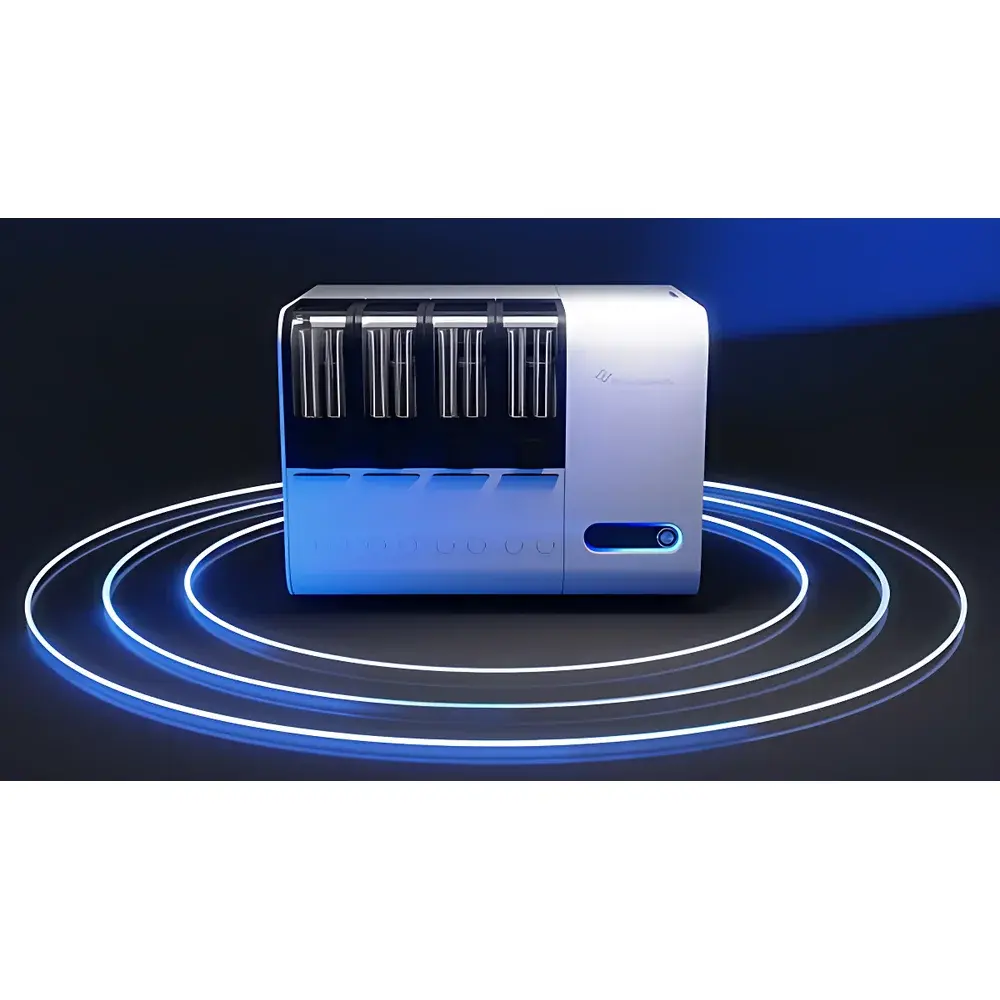
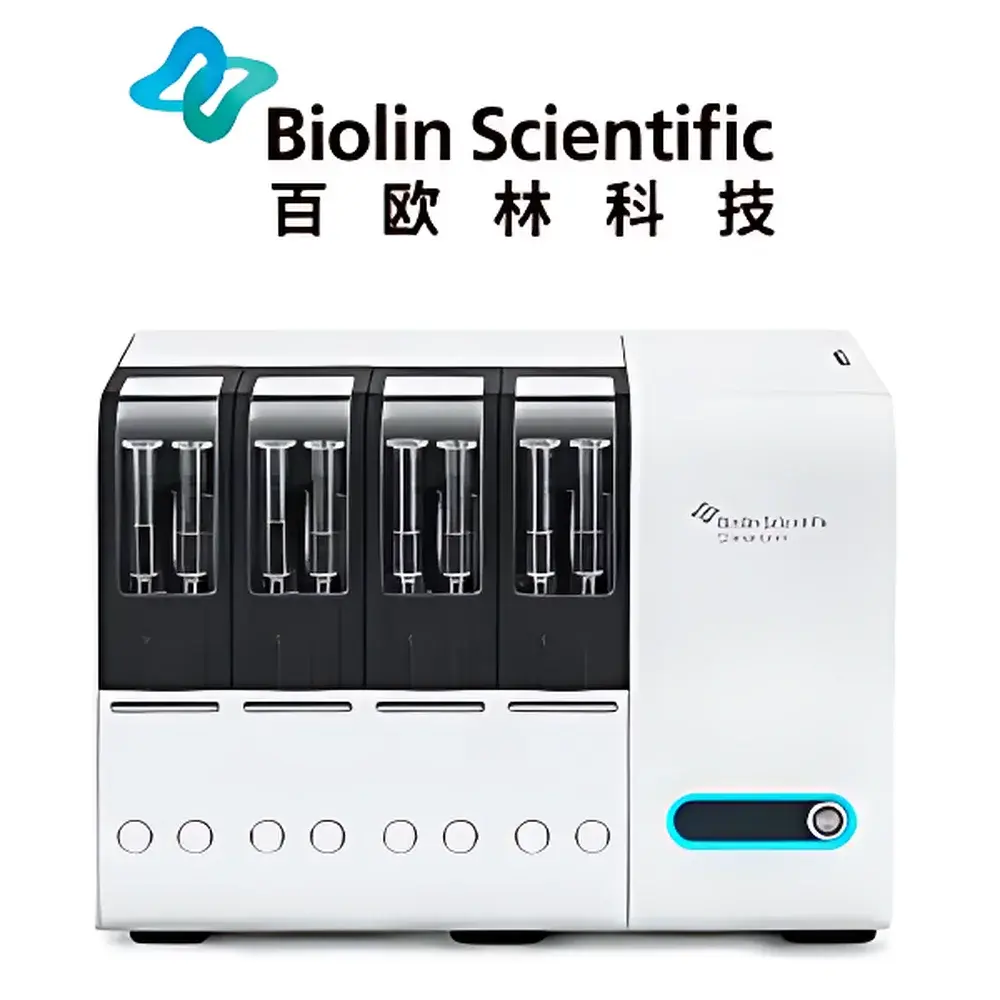
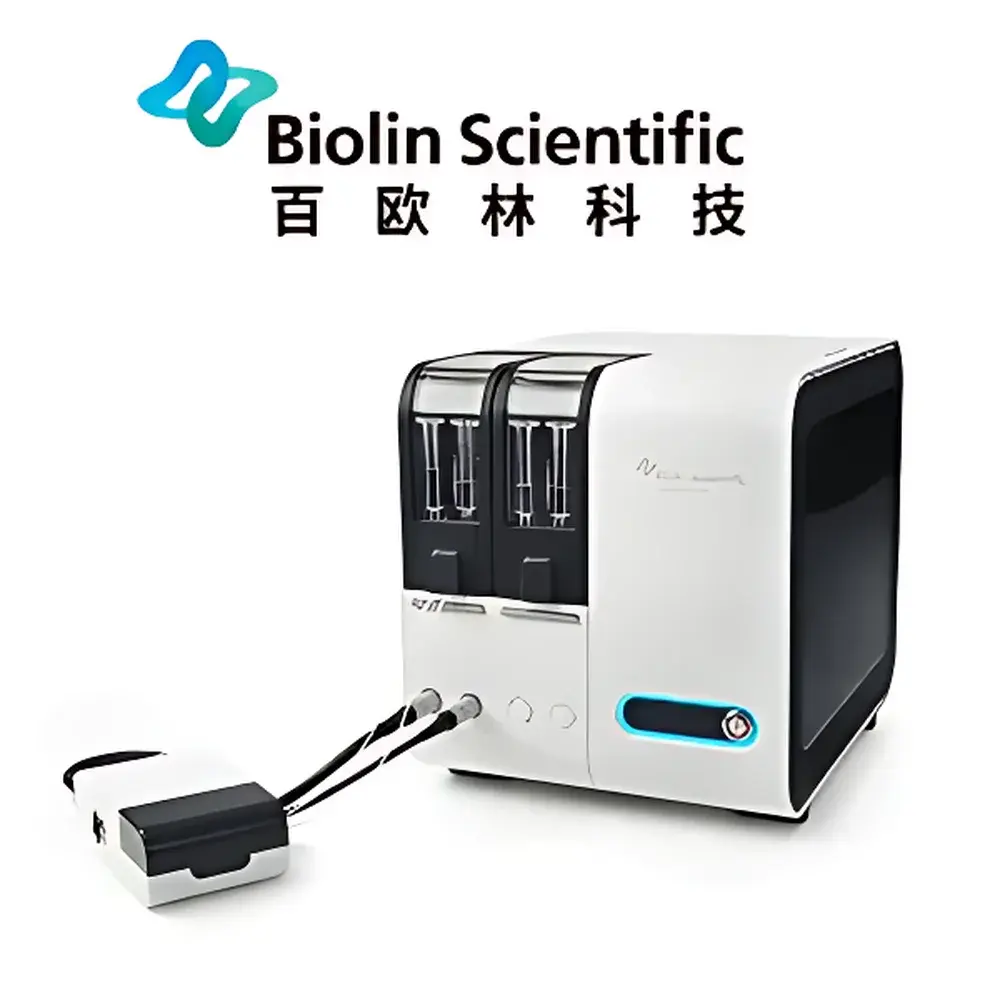
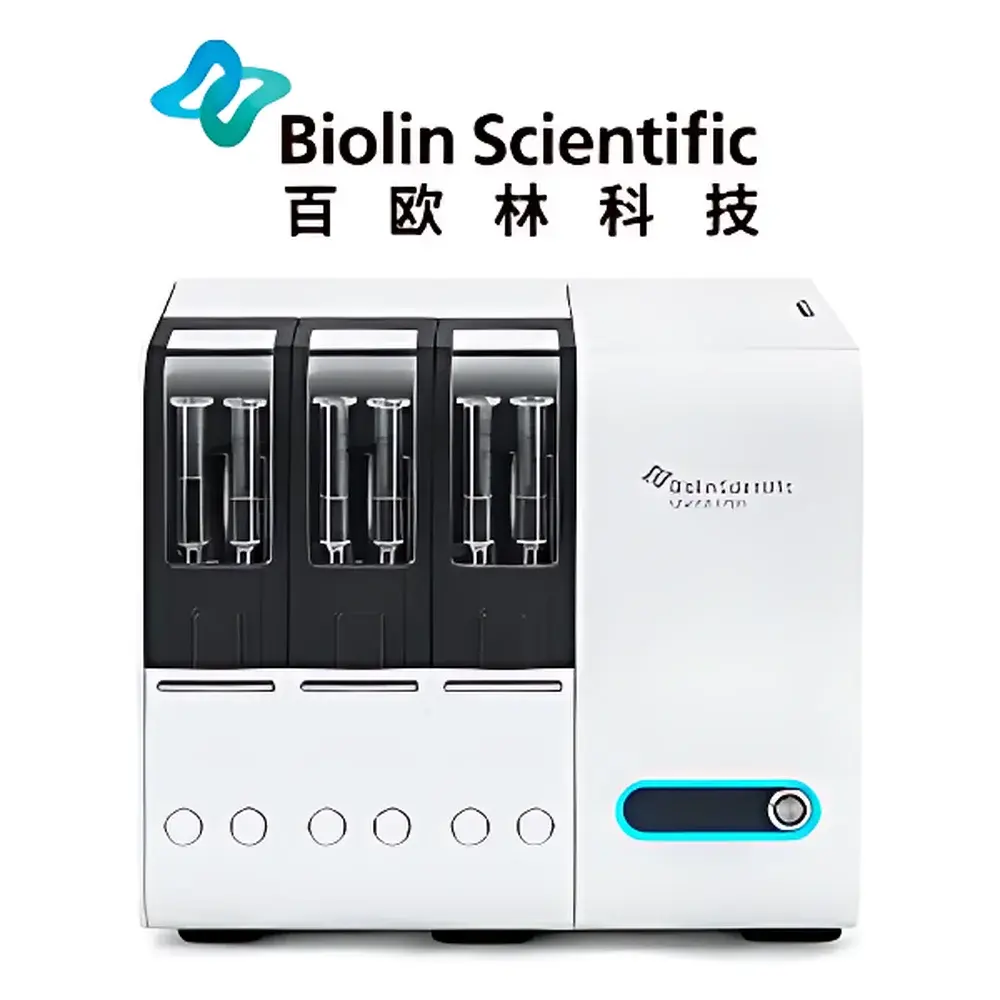
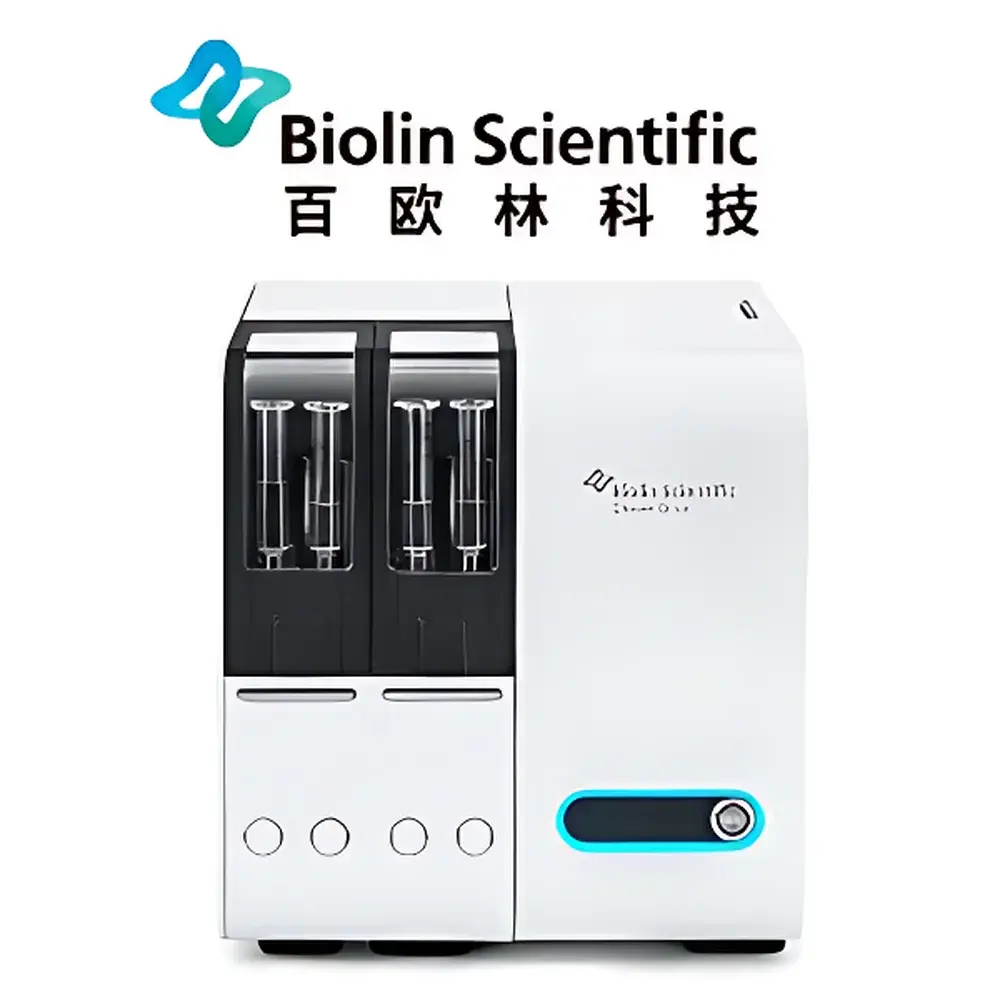
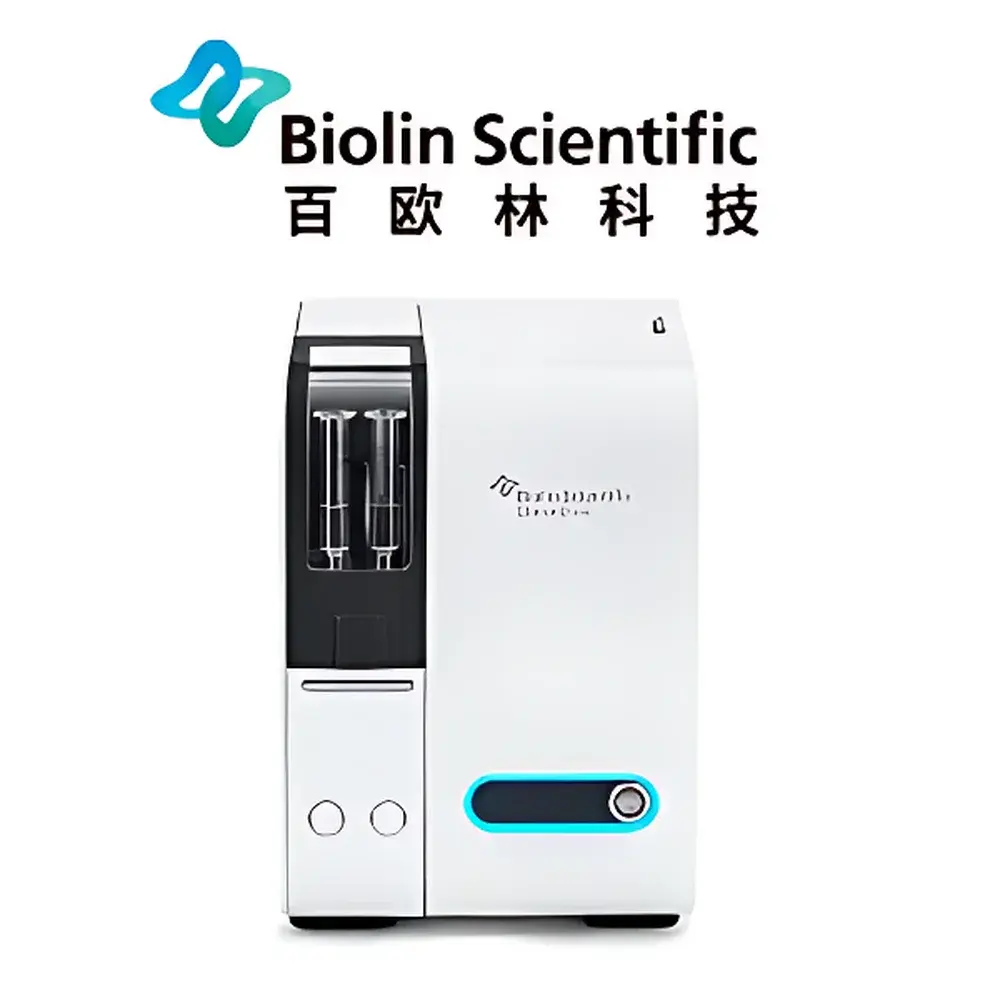
QSense Omni Dissipative Quartz Crystal Microbalance with Digital Monitoring (QCM-D)
| Brand | QSense |
|---|---|
| Origin | Sweden |
| Model | Omni |
| Minimum Sample Volume | 90 µL |
| Temperature Range | 4–70 °C |
| Frequency Range | 1–72 MHz |
Overview
The QSense® Omni Dissipative Quartz Crystal Microbalance with Digital Monitoring (QCM-D) is a next-generation, high-precision surface-sensitive analytical instrument engineered for real-time, label-free characterization of interfacial processes at solid–liquid and solid–gas interfaces. Based on the piezoelectric resonance principle, QCM-D measures both frequency shift (Δf, proportional to mass change) and energy dissipation (ΔD, indicative of viscoelasticity) across multiple harmonics (up to 7 overtones) of a quartz crystal sensor—enabling quantitative differentiation between rigidly adsorbed layers and soft, hydrated, or viscoelastic films. Unlike conventional QCM systems, QCM-D provides simultaneous, co-localized measurement of mass and structural compliance—critical for studying biomolecular interactions, polymer adsorption, thin-film swelling, corrosion kinetics, and electrochemical interface evolution under physiologically or industrially relevant conditions.
Key Features
- Modular 1–4 channel architecture supporting parallel, independent experiments with per-channel flow rate control (1–200 µL/min)
- Integrated temperature-controlled sample chamber (4–70 °C) with <0.003 °C/h long-term stability under controlled ambient conditions
- Automated liquid handling: direct injection, rapid buffer exchange (<5 s), chip auto-locking, and background QC routines executed pre-measurement
- High temporal resolution: up to 300 data points per second (per f/D pair per overtone), with configurable acquisition modes (Low-Noise, Normal, Fast)
- Ultra-low noise floor: frequency noise ≤0.005 Hz, dissipation noise ≤1×10⁻⁹, enabling mass detection limits down to 0.08 ng/cm²
- Digital signal processing architecture optimized for reproducible overtone tracking across the full 1–72 MHz range
- Open-module compatibility for volatile samples, photo-triggered reactions, and minimal-volume assays (as low as 20 µL active volume above sensor)
Sample Compatibility & Compliance
The QSense Omni accommodates a broad spectrum of sample types—including proteins, lipids, polysaccharides, synthetic polymers, nanoparticles, cells, and inorganic colloids—in aqueous, organic, or mixed solvent environments. Its modular design supports integration with humidity, electrochemical, optical window, ALD-compatible, and PTFE-flow modules—ensuring adaptability to ISO 10993 (biocompatibility), ASTM F2624 (polymer hydration), and USP (surface interaction testing) frameworks. All hardware and firmware comply with IEC 61000-6-3 (EMC) and IEC 61010-1 (safety). QSoft Omni software includes audit trail functionality, electronic signatures, and user access controls aligned with FDA 21 CFR Part 11 requirements for regulated laboratories operating under GLP or GMP protocols.
Software & Data Management
QSoft Omni is a purpose-built, Windows-native application delivering guided experimental setup, real-time monitoring, and integrated quality control. Its drag-and-drop protocol editor enables dynamic program modification during acquisition. Background QC routines verify baseline stability, sensor coupling, and fluidic integrity prior to data collection. Raw output includes synchronized f/n and D/n values for all 7 overtones, plus derived parameters: areal mass (ng/cm²), shear modulus (Pa), viscosity (Pa·s), film thickness (nm), kinetic rate constants, and time-resolved slope analysis. Export formats include SQLite (for relational database integration), CSV, XLSX, PDF, SVG, PNG, and proprietary OGW files compatible with Dfind—a dedicated modeling suite for Voigt-based viscoelastic fitting, Sauerbrey-to-DLVO transition analysis, and multi-layer structural deconvolution. System requirements: Windows 10/11 (64-bit), Intel i5 or equivalent, ≥8 GB RAM, ≥1920×1080 display resolution, USB 3.0 or Type-C interface.
Applications
- Biomolecular interaction analysis: Real-time binding kinetics of antibodies, receptors, and nucleic acids—accounting for hydration and conformational change via D/f ratio trends
- Colloid and nanoparticle deposition: Quantifying adsorption density, layer rigidity, and restructuring upon salt or pH perturbation
- Electrode/electrolyte interface studies: Coupled with QSense Electrochemical Module for simultaneous QCM-D and CV/EIS measurements during battery cycling or corrosion onset
- Thin-film hydration and swelling: Tracking water uptake in hydrogels, MOFs, or polymer brushes using humidity module integration
- Surface-initiated polymerization: Monitoring monomer adsorption, chain growth, and crosslinking dynamics in situ
- Cell adhesion and spreading: Resolving early-stage integrin-mediated attachment versus late-stage cytoskeletal remodeling through dissipation signatures
FAQ
What is the minimum required sample volume for flow-mode operation?
The system requires a minimum of 90 µL per injection in standard flow configuration; open-module configurations reduce active volume to ~20 µL above the sensor surface.
Can QSense Omni operate under non-aqueous or low-dielectric solvents?
Yes—compatible with alcohols, DMF, THF, and chlorinated solvents; sensor chips with gold, SiO₂, TiO₂, or custom hydrophobic coatings are recommended for optimal acoustic coupling.
How does QCM-D distinguish between mass uptake and viscoelastic softening?
By analyzing the ratio and trend of ΔD/Δf across multiple overtones: rigid mass addition yields similar Δf shifts at all harmonics with negligible ΔD; soft, hydrated layers produce divergent Δf(n) and measurable ΔD, resolvable via multi-harmonic Voigt modeling.
Is chip reuse supported?
QSense recommends single-use chips to ensure measurement integrity; rigorous cleaning protocols exist but risk residual contamination or coating degradation—especially for biological or polymeric films.
What level of temperature control accuracy is achievable during kinetic experiments?
Within the 4–70 °C range, stability is ±0.01 °C over 1 h under thermally stable lab conditions; external drafts or radiant heat sources exceeding ±1 °C ambient fluctuation may degrade performance.



