
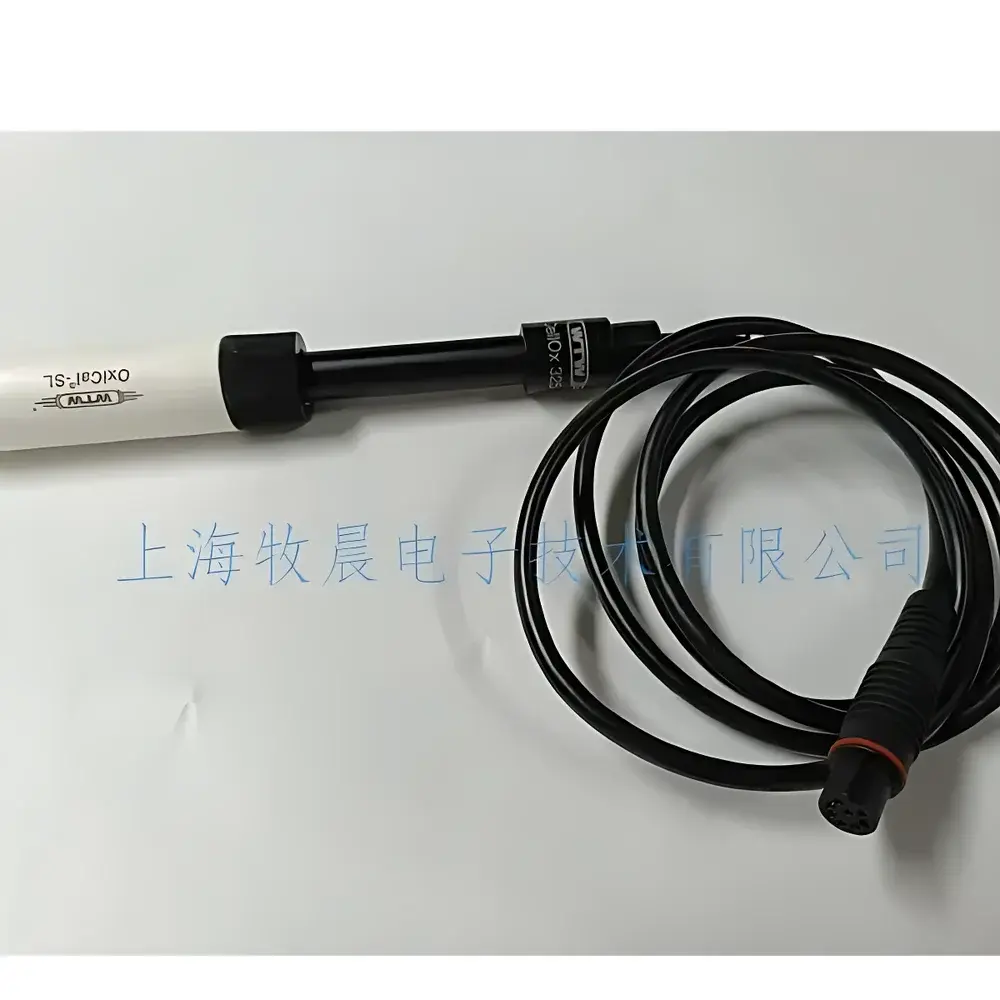
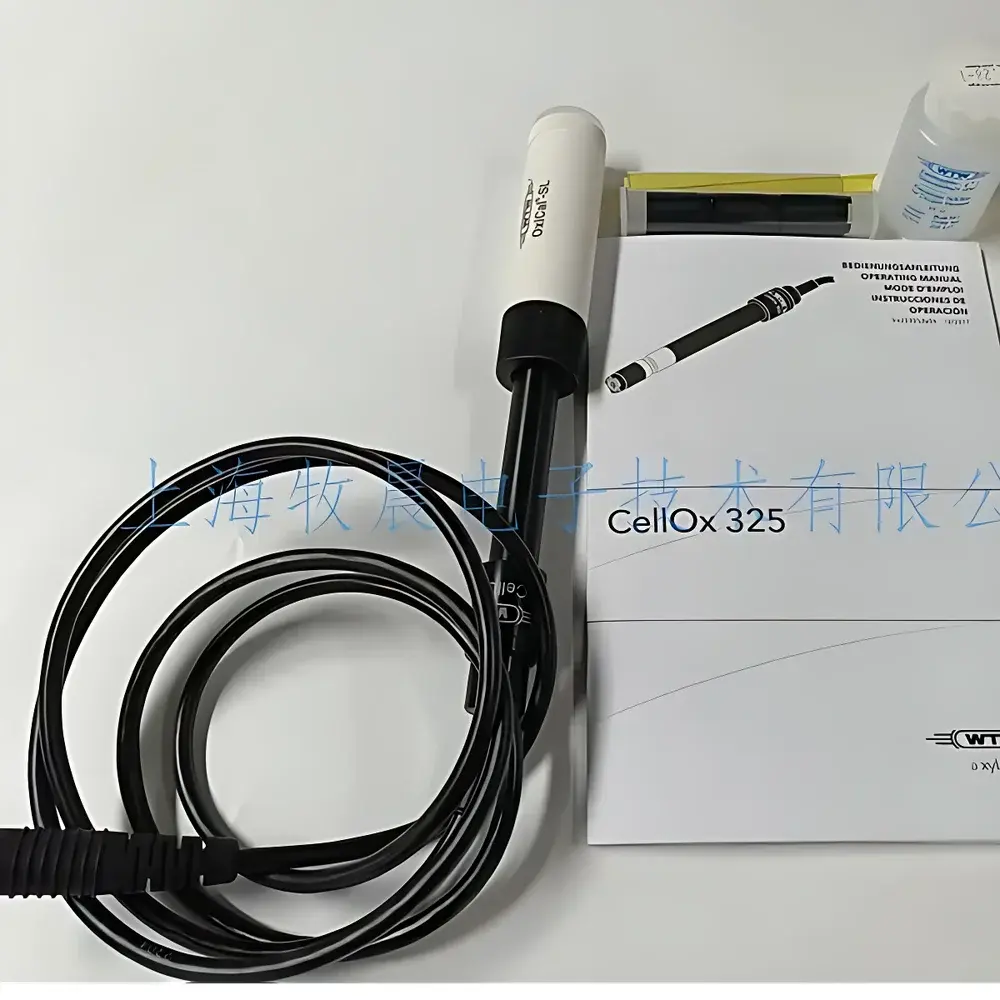
WTW CellOx 325 Polarographic Dissolved Oxygen Electrode
| Brand | WTW |
|---|---|
| Origin | Germany |
| Model | CellOx 325 |
| Measurement Principle | Polarographic Electrochemical Sensor |
| Measurement Range | 0–50 mg/L |
| Temperature Range | 0–50 °C (NTC probe) |
| Electrode Body Material | POM |
| Cathode Material | Gold |
| Cable Length | 1.5 m (standard, IP67 connector) |
| Electrolyte Service Life | Up to 6 months |
| Zero Drift | Negligible (no zero-point calibration required) |
| Oxygen Consumption Rate | 0.008 µg·h⁻¹·(mg·L⁻¹)⁻¹ |
Overview
The WTW CellOx 325 is a high-precision polarographic dissolved oxygen (DO) electrode engineered for laboratory-grade water quality analysis. Based on Clark-type amperometric detection with a gold cathode and silver/silver chloride reference system, it operates via controlled potential electrolysis at −0.8 V vs. Ag/AgCl — enabling selective reduction of molecular oxygen at the cathode surface while minimizing interference from redox-active species. The electrode employs a gas-permeable polytetrafluoroethylene (PTFE) membrane that regulates oxygen diffusion into the electrolyte-filled chamber, ensuring stable current response proportional to dissolved oxygen concentration. Its self-contained NTC temperature sensor enables real-time, dual-point temperature compensation (IMT), critical for accurate DO reporting across variable thermal conditions in environmental, wastewater, and aquaculture applications.
Key Features
- Polarographic sensing architecture with gold cathode and POM (polyoxymethylene) body — chemically inert, mechanically robust, and suitable for repeated immersion in aggressive or particulate-laden matrices.
- No pre-polarization required: achieves stable signal output within seconds after immersion, eliminating waiting time and improving workflow efficiency in high-throughput labs.
- Negligible zero drift: inherent electrochemical stability eliminates routine zero-point calibration — reducing operator dependency and procedural variability.
- Ultra-low oxygen consumption rate (0.008 µg·h⁻¹·(mg·L⁻¹)⁻¹): preserves sample integrity during measurement, especially vital for low-flow or static samples where oxygen depletion would otherwise bias results.
- Integrated dual-temperature compensation (IMT): two independent NTC sensors — one embedded in the electrode tip, another in the cable junction — provide redundant thermal referencing for enhanced accuracy across 0–50 °C.
- IP67-rated connector and 1.5 m reinforced cable (optional lengths available): ensures reliable electrical continuity and mechanical durability in humid or splash-prone lab environments.
- OxiCal®-SL storage and calibration kit included: standardized solution vials enable traceable, repeatable calibration and long-term electrode preservation between uses.
Sample Compatibility & Compliance
The CellOx 325 is validated for use with natural waters, treated effluents, process streams, and biological media across pH 4–12 and conductivity up to 50 mS/cm. It complies with ISO 5814:2012 (Water quality — Determination of dissolved oxygen — Electrochemical probe method) and supports adherence to EPA Method 360.1 and ASTM D888-22. Its design meets GLP documentation requirements when used with WTW’s IQ/OQ-certified meters (e.g., Oxi 340i, Multi 3630 IDS), including audit-trail-capable calibration logging and sensor history tracking. The POM housing and gold cathode resist fouling in organic-rich or sulfide-containing samples — a key advantage over traditional platinum-based probes.
Software & Data Management
When paired with WTW’s IDS-enabled instruments or LabX™-compatible data acquisition systems, the CellOx 325 supports automated sensor identification, firmware-assisted calibration validation, and timestamped measurement export in CSV or PDF formats. All calibration events — including slope, zero, and temperature offset — are stored internally with user-defined metadata (operator ID, location, sample ID). Data integrity conforms to FDA 21 CFR Part 11 requirements when deployed with electronic signature-enabled platforms, including full audit trails, role-based access control, and non-erasable calibration logs.
Applications
- Regulatory compliance testing for municipal wastewater discharge (BOD/COD correlation studies)
- Biological treatment process monitoring in activated sludge and MBR systems
- Quality control of pharmaceutical water (PW, WFI) per USP
- Aquaculture and hydroponic system optimization
- Research on microbial respiration kinetics and sediment oxygen demand (SOD)
- Educational laboratory exercises in environmental chemistry and analytical instrumentation
FAQ
Does the CellOx 325 require polarization before first use?
No — unlike classical polarographic electrodes, it delivers stable readings immediately upon immersion due to optimized cathode conditioning and membrane hydration.
How often must the electrolyte be replaced?
Under standard laboratory usage (≤20 measurements/day), the electrolyte remains effective for up to six months; replacement kits (Electrolyte Refill Set E-325) are available separately.
Can it be used with third-party meters?
Yes — provided the meter supplies a stable −0.8 V polarization voltage, accepts analog mV input, and supports NTC-based temperature compensation (10 kΩ at 25 °C). WTW recommends using certified IDS-compatible instruments for full functionality.
Is the electrode suitable for continuous immersion?
Yes — its POM body and IP67 connector support extended submersion; however, for long-term deployment (>72 h), periodic cleaning and membrane inspection are advised to maintain reproducibility.
What does IMT temperature compensation mean?
IMT (Intelligent Multi-Temperature) refers to WTW’s proprietary dual-sensor algorithm that cross-validates temperature readings from both the electrode tip and cable junction, correcting for thermal gradients and improving DO accuracy by up to ±0.05 mg/L in dynamic thermal environments.
Related Products







