
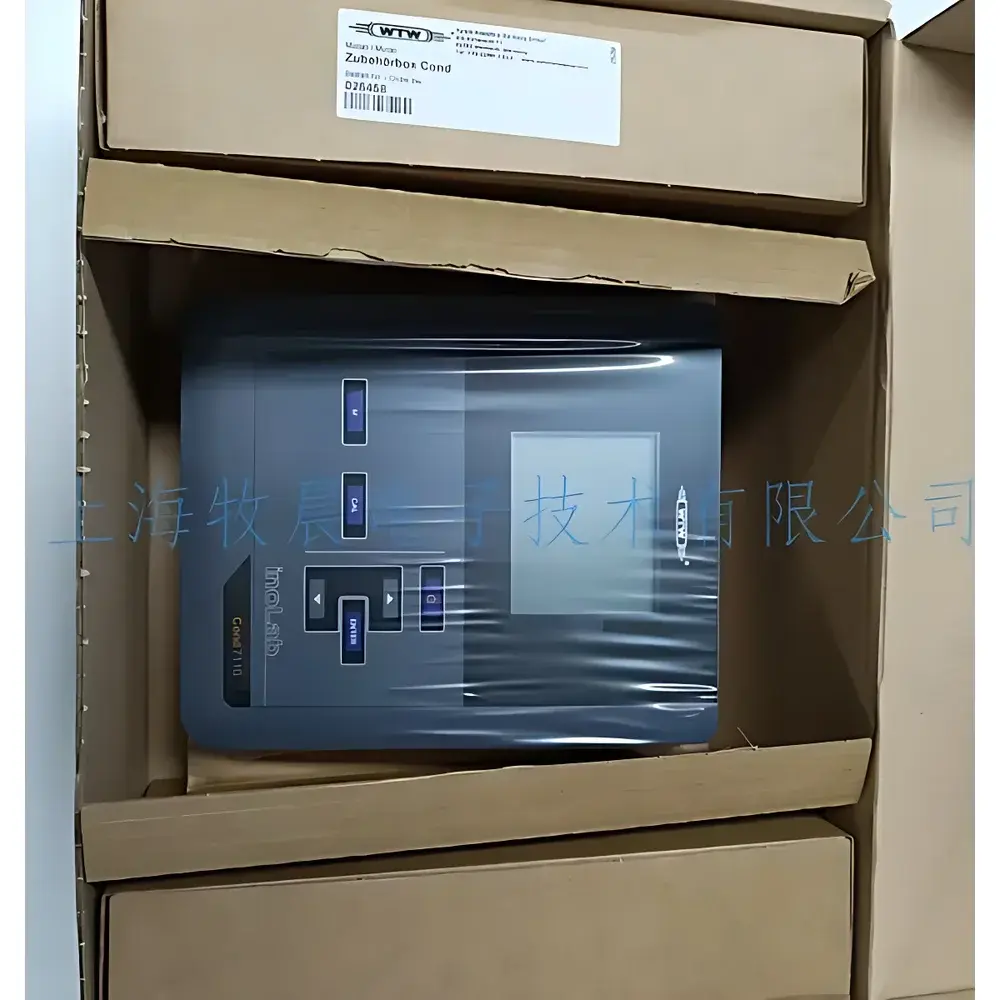
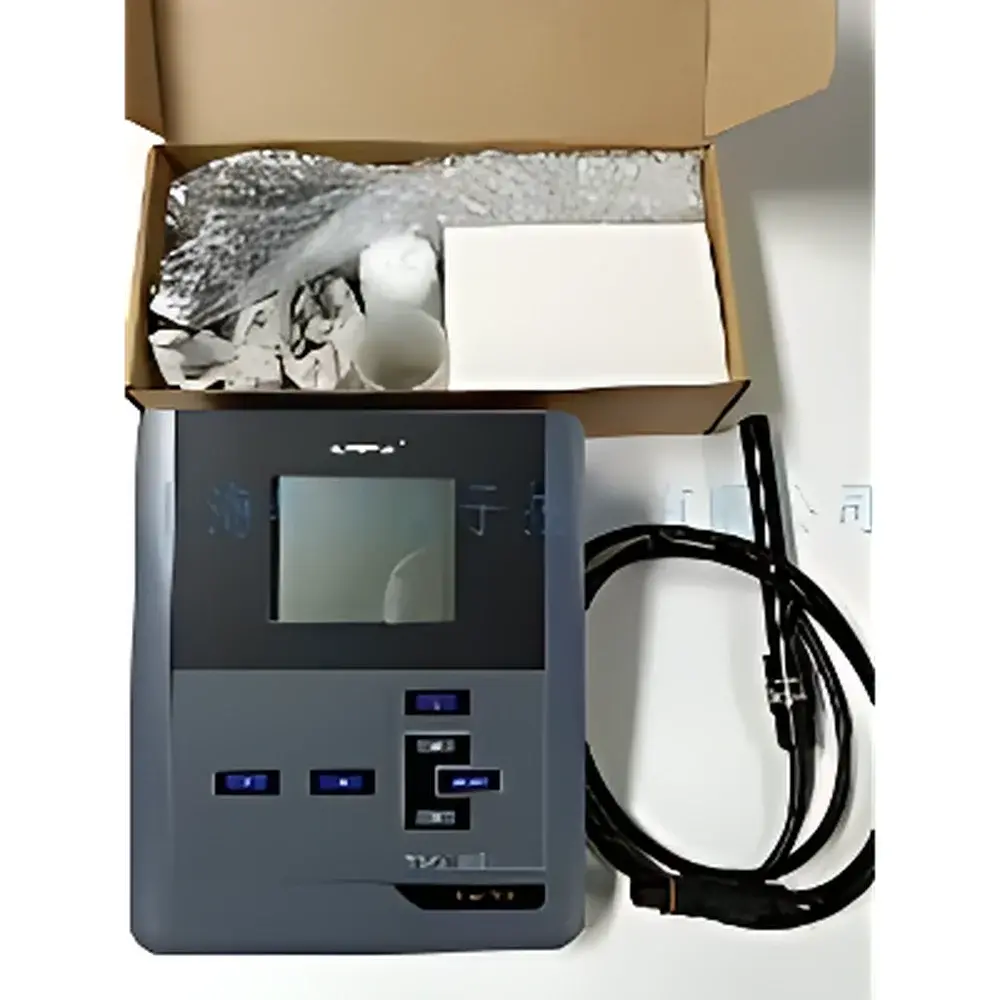
WTW inoLab Cond 7110 Benchtop Conductivity Meter
| Brand | WTW |
|---|---|
| Origin | Germany |
| Model | Cond 7110 |
| Measurement Parameter | Conductivity (Single-Parameter) |
| Portability | Portable |
| Intended Use | Laboratory |
| Conductivity Range | 0.0–1000 mS/cm |
| Accuracy | ±0.5% of reading |
| Electrode Constant Adjustment Range | 0.090–2.75 cm⁻¹ (standard KCl 0.01 mol/L) |
| Temperature Range | −5.0 to +105.0 °C (±0.1 °C) |
| Temperature Compensation | Linear (0.000–3.000 %/K), Non-Linear (nLF), or None |
| Calibration | Automatic 1-point |
| Calibration Memory | Up to 10 calibration records |
| Display | Backlit 7-segment LCD |
| Power Supply | 4 × 1.5 V AA batteries or 4 × 1.2 V rechargeable batteries |
| Interface | None (USB and printer options exclusive to Cond 7310 series) |
| Compliance | Designed for GLP-compliant laboratory environments per ISO/IEC 17025 guidance |
Overview
The WTW inoLab Cond 7110 is a precision-engineered benchtop conductivity meter designed for routine, high-reproducibility measurements in regulated and non-regulated laboratory settings. Based on four-electrode AC conductometric principle, the instrument eliminates polarization effects and electrode fouling artifacts—critical for stable readings across diverse sample matrices including aqueous solutions, process streams, environmental water samples, pharmaceutical buffers, and food & beverage formulations. Unlike handheld meters, the Cond 7110 integrates a robust industrial-grade chassis with ergonomic lab-centric design: splash-resistant housing, large tactile keypad, and a high-contrast backlit LCD that displays conductivity, temperature, unit, and stability indicator simultaneously. Its measurement architecture supports automatic endpoint detection (AutoRead™), ensuring consistent data capture only when signal drift falls below defined thresholds—essential for inter-operator comparability and method transfer validation.
Key Features
- AutoRead™ intelligent endpoint recognition for repeatable, operator-independent measurements
- Configurable temperature compensation modes: linear (0.000–3.000 %/K), non-linear (nLF), or none—enabling accurate conversion to reference temperatures (20 °C or 25 °C)
- Flexible electrode constant input (0.090–2.75 cm⁻¹) with support for standardized KCl 0.01 mol/L calibration solution
- Integrated calibration timer with visual alert—ensuring adherence to internal SOPs and external quality system requirements (e.g., ISO 9001, ISO/IEC 17025)
- Ergonomic, chemical-resistant front panel and spill-tolerant keypad—optimized for daily use in QC labs handling aggressive solvents or high-salinity samples
- Dual power operation: long-life alkaline batteries (up to 1,000 hours) or rechargeable NiMH cells—ideal for both fixed-bench and mobile lab applications
- GLP-ready functionality: timestamped calibration records (up to 10 entries), user-defined ID fields, and traceable parameter configuration
Sample Compatibility & Compliance
The Cond 7110 accommodates standard DIN/ISO-compliant conductivity electrodes—including TetraCon® 325 (for general-purpose use), KLE 325 (low-conductivity aqueous media), and LR 325/01 (ultra-pure water applications)—via its universal 8-pin sensor interface. It meets IOT (International Oceanographic Table) salt calculation standards and supports TDS conversion using configurable factors (0.4–1.0). While not equipped with USB or thermal printing hardware (features reserved for the Cond 7310 series), the Cond 7110 complies with fundamental metrological principles outlined in ASTM D1125, ISO 7888, and USP . Its design facilitates audit readiness under GMP/GLP frameworks by enabling documented calibration intervals, operator accountability, and full parameter traceability without reliance on proprietary software.
Software & Data Management
As a standalone benchtop instrument, the Cond 7110 does not include embedded data logging, USB connectivity, or PC synchronization capabilities—distinguishing it from the higher-tier Cond 7310 platform. All measurement data remain resident on-device only during active session; no internal memory stores historical readings. This architecture prioritizes simplicity, security, and regulatory neutrality—eliminating concerns related to electronic record integrity (e.g., FDA 21 CFR Part 11 compliance burden) while retaining full manual documentation control. Users may manually transcribe results into LIMS or ELN systems using standardized reporting templates aligned with ISO/IEC 17025 clause 7.7 (result reporting).
Applications
- Environmental monitoring: conductivity screening of surface water, groundwater, wastewater effluents, and leachates per EPA Method 120.1
- Pharmaceutical manufacturing: verification of purified water (PW) and water-for-injection (WFI) conductivity against USP limits
- Food & beverage QA/QC: batch release testing of brines, syrups, dairy permeates, and brewing wort
- Chemical process control: real-time monitoring of rinse bath conductivity in electroplating and semiconductor cleaning lines
- Academic research: teaching laboratories requiring rugged, intuitive instrumentation for electrochemistry fundamentals
FAQ
Does the Cond 7110 support data export via USB or Bluetooth?
No. Data export capability is exclusive to the Cond 7310 series. The Cond 7110 is a dedicated measurement terminal with no digital interface.
Can I use a TetraCon 325 electrode with this meter?
Yes. The Cond 7110 is fully compatible with all WTW 8-pin conductivity sensors, including TetraCon 325, KLE 325, and LR 325/01.
Is temperature compensation mandatory during measurement?
No. Temperature compensation mode (linear, nLF, or off) is fully user-selectable based on application requirements and regulatory context.
What is the maximum allowable sample temperature?
The instrument operates safely within −5.0 °C to +105.0 °C, with temperature sensor accuracy of ±0.1 °C.
How many calibration points can be stored?
Up to 10 independent calibration records—including date, electrode constant, reference temperature, and calibration solution used—are retained in non-volatile memory.
Does it meet FDA 21 CFR Part 11 requirements?
The Cond 7110 does not implement electronic signatures, audit trails, or secure data storage; therefore, it is not Part 11 compliant—but remains suitable for environments where paper-based records are authorized.





