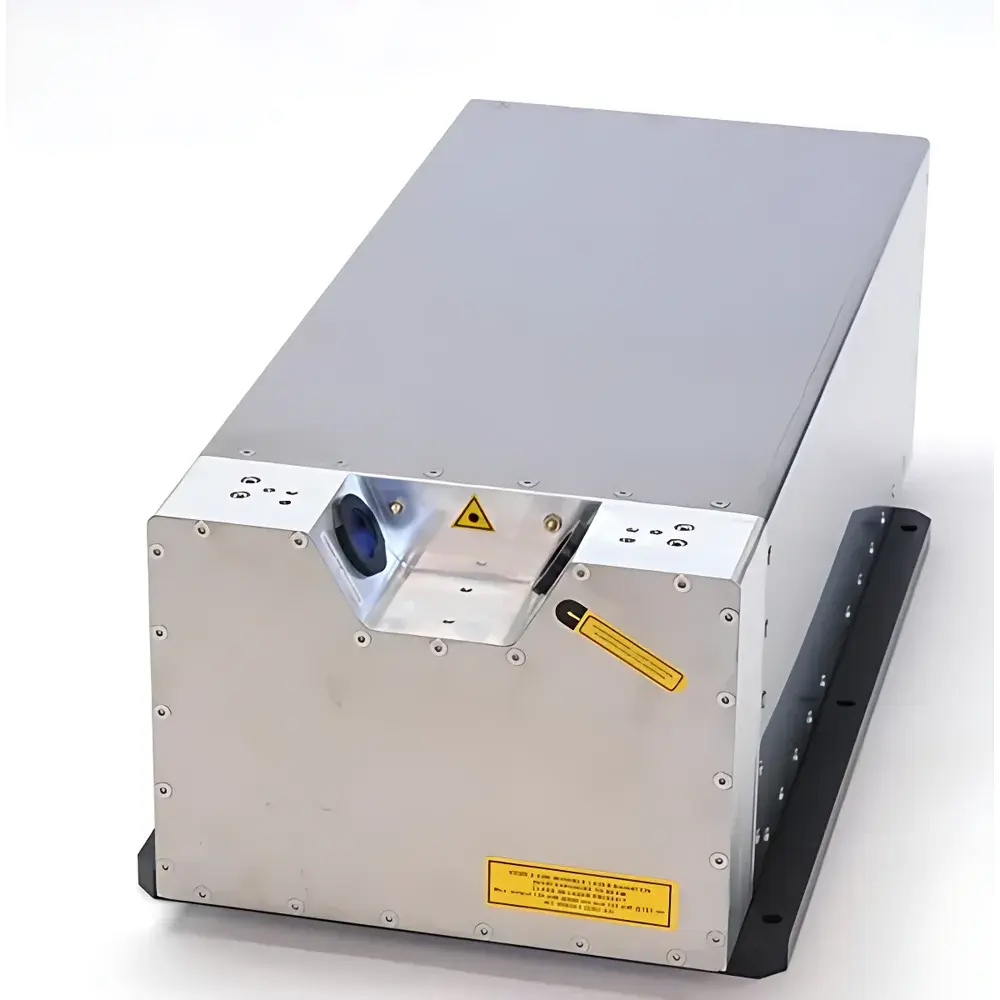
Dantec Dynamics IDS In-line Real-time Droplet Size and Velocity Analyzer
| Brand | Dantec Dynamics |
|---|---|
| Origin | Denmark |
| Model | IDS |
| Measurement Principle | Shadowgraphy (Optical Silhouette Imaging) |
| Particle Size Range | 1–90 µm (volume-equivalent spherical diameter, 0.0005–381 pL) |
| Size Resolution | < 0.1 µm |
| Velocity Range | 0–60 m/s |
| Velocity Components Measured | 2D (in-plane) |
| Max Sampling Frequency | 150 kHz |
| Droplet Sphericity Assessment | Yes |
| Particle Capture Efficiency | ~100% (at optimal setup) |
| Drift Sensitivity | Low (robust to axial spray drift) |
| Real-time Control Output Interface | Yes (analog/digital, compatible with PLC/DCS) |
| Compliance | Designed for industrial GLP/GMP-adjacent environments |
Overview
The Dantec Dynamics IDS (In-line Droplet System) is a purpose-built, non-intrusive optical analyzer engineered for continuous, real-time characterization of atomized sprays in industrial manufacturing processes. Unlike conventional laser diffraction (Mie scattering) or single-point phase-Doppler anemometry systems, the IDS employs high-speed shadowgraphy — a calibrated silhouette imaging technique — to capture two-dimensional projections of individual droplets at frame rates up to 150 kHz. This enables simultaneous, pixel-accurate determination of equivalent spherical diameter, in-plane velocity components (u, v), and morphological descriptors including aspect ratio and sphericity. The system operates without optical access limitations typical of interferometric methods and delivers quantitative metrics traceable to NIST-traceable calibration standards. Its architecture is optimized for integration into closed-loop process control environments where millisecond-scale feedback is required — such as inkjet printhead qualification, functional coating deposition, or precision aerosol delivery in biopharmaceutical formulation.
Key Features
- True in-line operation: Mounts directly on production lines with minimal beam path interruption; no sampling probes or dilution stages required.
- Shadowgraphy-based measurement: Eliminates Mie scattering ambiguities related to refractive index dependence, polydispersity bias, and signal saturation in dense sprays.
- Simultaneous size & velocity acquisition: Each detected droplet yields diameter (1–90 µm), 2D velocity vector (0–60 m/s), and shape fidelity metrics — all synchronized to microsecond timestamps.
- High temporal resolution: 150 kHz imaging rate supports statistical convergence for transient spray events (e.g., nozzle start-up, pulse modulation, thermal instability).
- Robust drift compensation: Algorithmic correction for axial spray displacement ensures stable sizing accuracy even under dynamic flow conditions.
- Industrial-grade interface: Analog (4–20 mA, 0–10 V) and digital (Ethernet/IP, Modbus TCP) outputs enable direct integration with PLCs, SCADA, and MES platforms for SPC and adaptive control logic.
Sample Compatibility & Compliance
The IDS is validated for aqueous, solvent-based, and viscous suspensions (up to ~20 cP) encountered in functional printing, pharmaceutical nebulization, and agricultural adjuvant delivery. It requires no sample preparation, carrier gas, or vacuum environment. Calibration is performed using traceable polystyrene latex (PSL) microspheres and NIST SRM 1963. While not certified to ISO 20977 (spray characterization) or ASTM E2980 (aerosol sizing), its measurement methodology aligns with the physical principles defined therein. Data acquisition firmware supports time-stamped metadata embedding (temperature, pressure, ambient humidity) and optional 21 CFR Part 11-compliant user authentication and electronic signature modules when deployed in regulated biomanufacturing settings.
Software & Data Management
IDS Control Suite provides real-time visualization, histogram generation, and statistical summary (D10, D50, D90, span, velocity distribution). Raw image sequences (12-bit TIFF) and processed event tables (CSV/Parquet) are stored locally or streamed to network-attached storage. Batch export includes ISO/IEC 17025-aligned uncertainty reporting per measurement cycle. API access (RESTful JSON) allows integration with LIMS, PAT frameworks, and digital twin models. Audit trails log all parameter changes, user actions, and calibration events — supporting GLP documentation requirements and internal quality audits.
Applications
- Inkjet printhead development and validation for printed electronics (OLED, PCB, MEMS)
- Bioprinting process monitoring (e.g., hydrogel droplet fidelity in cardiac tissue scaffold fabrication)
- Controlled deposition of catalyst layers in PEM fuel cells and perovskite solar cells
- Aerosolized therapeutic delivery system qualification (metered-dose inhalers, nasal sprays)
- Precision agrochemical spray nozzle certification under variable environmental loads
- Real-time feedback for closed-loop adjustment of piezoelectric actuation voltage and waveform shaping
FAQ
Does the IDS require optical access through transparent windows?
Yes — it requires two orthogonal line-of-sight paths: one for illumination (collimated LED or pulsed laser sheet) and one for imaging (telecentric lens + CMOS sensor). Standard quartz or sapphire viewport integration is supported.
Can IDS distinguish between overlapping droplets in dense sprays?
It applies advanced deconvolution algorithms based on edge gradient analysis and morphological filtering; performance degrades above ~5% volumetric obscuration — a threshold clearly defined in the system’s operational envelope.
Is temperature or pressure compensation built into the software?
Ambient temperature and static pressure inputs are accepted as metadata fields and used in post-processing for air-density-corrected velocity calculations, but the core sizing algorithm remains invariant to these parameters.
What is the minimum detectable droplet volume?
At 1 µm equivalent diameter, the system resolves volumes down to 0.0005 pL, assuming optimal contrast and signal-to-noise ratio (>25 dB).
Does Dantec provide application-specific validation reports?
Yes — application qualification packages (AQP) are available upon request, including method transfer documentation, repeatability studies (n ≥ 30 runs), and comparison against reference PDA or Phase Doppler systems per client-defined SOPs.