
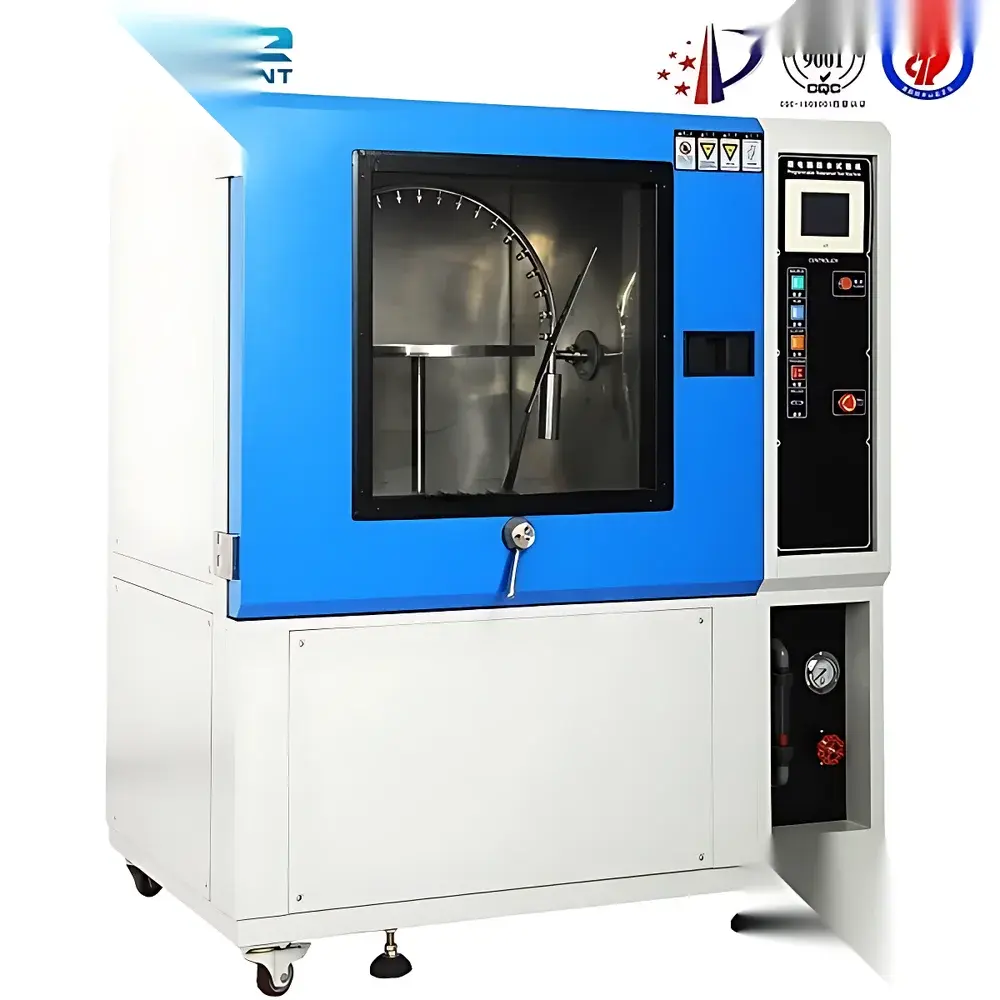
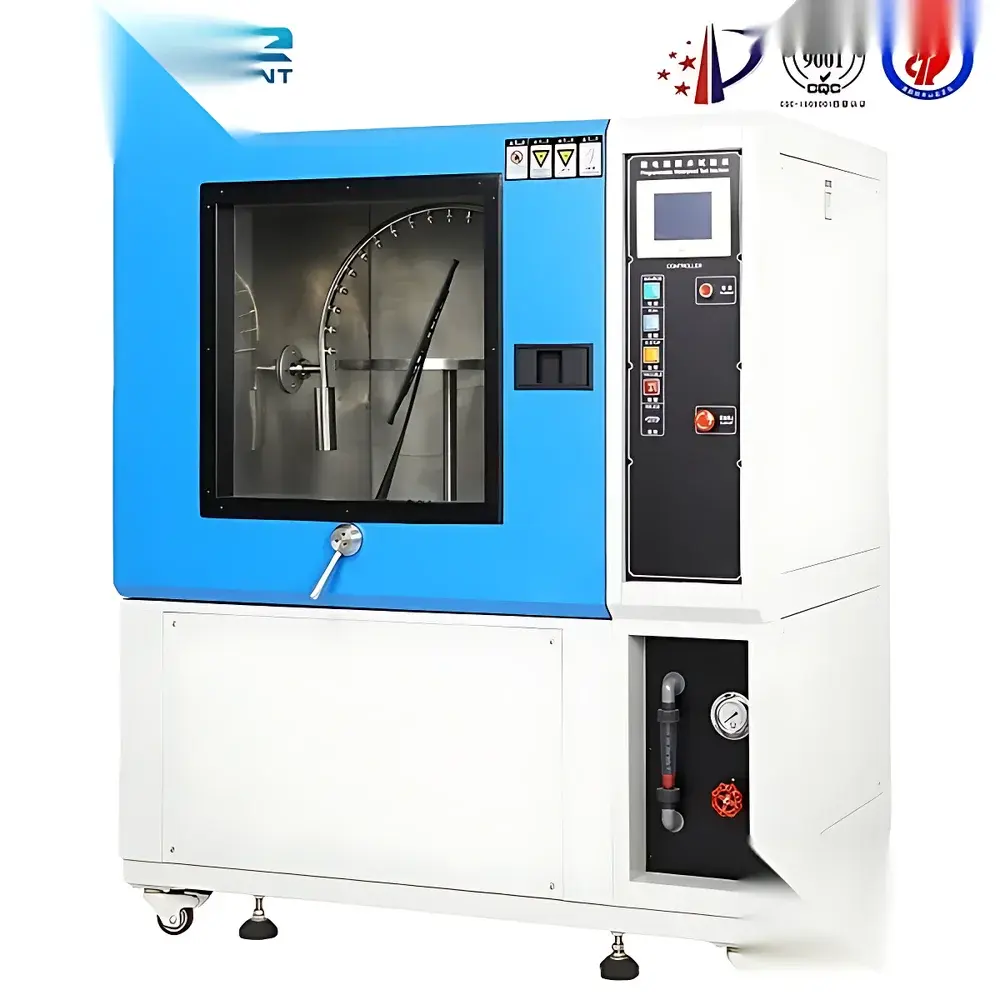
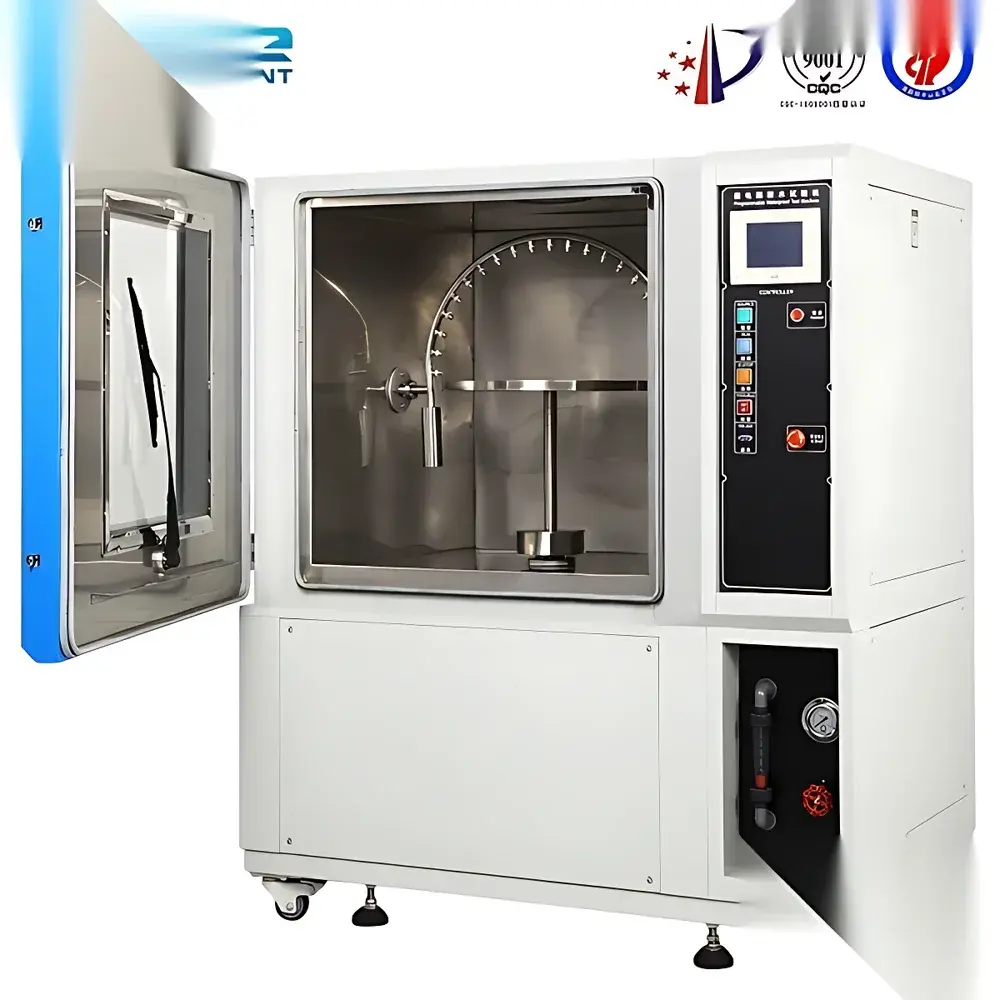
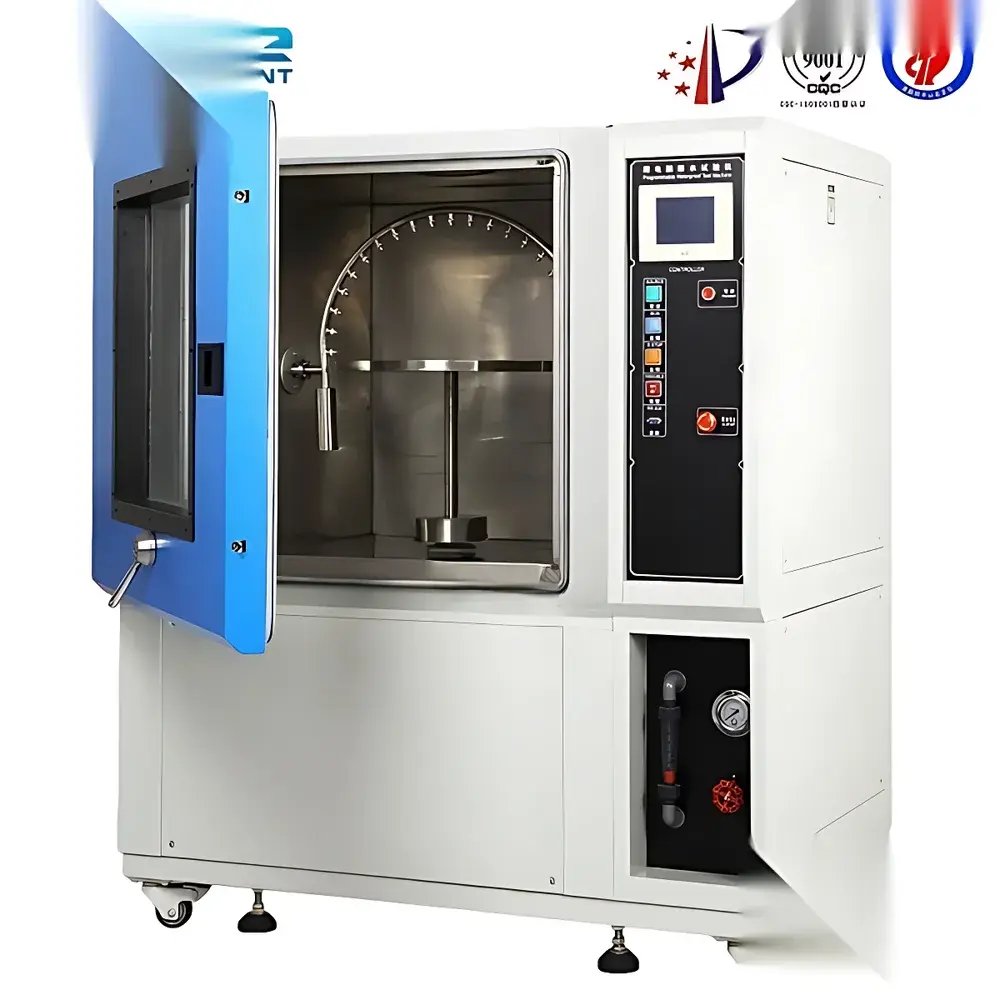
Industrial Water Resistance Test Chamber
| Brand | Other Brands |
|---|---|
| Origin | Imported |
| Manufacturer Type | General Distributor |
| Price | USD 3,500 (FOB) |
Overview
The Industrial Water Resistance Test Chamber is an engineered environmental simulation system designed to evaluate the ingress protection (IP) rating—specifically IPX1 through IPX6—of electrical enclosures, automotive lighting assemblies, outdoor signaling devices, and electronic components under controlled rain, dripping, splashing, and oscillating spray conditions. Based on the principles of calibrated water flow dynamics and reproducible mechanical actuation, this chamber replicates real-world exposure scenarios defined in international standards including IEC 60529, ISO 20653, SAE J575, and GB/T 4208. It is not a generic “waterproof tester” but a precision-configurable test platform where water pressure, nozzle geometry, spray angle, oscillation frequency, exposure duration, and specimen positioning are all traceably adjustable to meet laboratory-grade repeatability requirements.
Key Features
- Stainless steel inner chamber constructed from SUS304 grade stainless steel for long-term corrosion resistance and compliance with cleanroom-compatible surface finish standards.
- Integrated multi-stage water filtration system (including sediment, activated carbon, and fine particulate filters) to prevent nozzle clogging and ensure consistent flow profiles across extended test cycles.
- Thermal insulation composed of rigid polyurethane foam (≥30 mm thickness) combined with glass fiber layers, minimizing thermal bridging and maintaining ambient stability during prolonged operation.
- Motorized rotating turntable fabricated from PVC-hard board (chemical-resistant, non-conductive, dimensionally stable), supporting specimens up to 50 kg with ±0.5° angular positioning accuracy.
- Full stainless steel or copper-wetted components—including nozzles, manifolds, piping, and water collection trays—to eliminate galvanic corrosion and ensure material compatibility with deionized or tap water media.
- Dual-control architecture: optional basic programmable logic controller (PLC) interface or advanced full-color TFT touchscreen HMI developed in-house, featuring intuitive icon-based navigation, real-time parameter monitoring, and password-protected user levels.
- High-pressure centrifugal pump (rated 0–15 bar, variable frequency drive) coupled with inline heating elements enabling precise water temperature control (ambient to 40°C) without steam generation or thermal shock.
- Adjustable spray nozzles with fixed laminar-flow orifices (standard 0.4 mm or 0.8 mm diameters), each mounted on independent angular adjustment brackets for fine-tuned incidence alignment per IEC 60529 Annex B requirements.
- Automated water level elevation mechanism with linear actuator-driven lift stage, ensuring repeatable immersion depth control for IPX5/IPX6 horizontal/vertical spray tests.
- Stepper motor–driven oscillating pipe assembly with programmable sweep range (±30° to ±180°), frequency (0.5–5 Hz), dwell time, and automatic post-test compressed-air purge cycle to remove residual moisture from test surfaces.
Sample Compatibility & Compliance
The chamber accommodates specimens up to 1,200 mm × 1,200 mm × 1,200 mm (W×D×H) with customizable turntable diameter and nozzle array configuration. It supports static and dynamic testing modes per IEC 60529 Table 8–12, ISO 20653 Annex C, and automotive OEM specifications such as VW 80101 and Ford ES-XW7T-1A278-AC. All critical parameters—including flow rate (measured via calibrated electromagnetic flowmeter), water temperature (PT100 sensor), and spray angle (verified with digital inclinometer)—are logged and exportable for GLP/GMP audit trails. The system meets CE marking requirements for machinery safety (2006/42/EC) and EMC directive (2014/30/EU).
Software & Data Management
The proprietary touchscreen HMI firmware supports CSV data export (timestamped flow rate, temperature, pressure, cycle count, error logs), USB backup, and optional RS485/Modbus TCP integration into centralized lab information management systems (LIMS). Audit trail functionality includes operator ID, parameter changes, start/stop timestamps, and calibration event logging—all compliant with FDA 21 CFR Part 11 when paired with external electronic signature modules. No cloud dependency; all data remains on-device unless explicitly exported.
Applications
- Validation of IPX3–IPX6 ratings for LED headlamps, fog lamps, and rear combination lamps per ECE R112 and SAE J175.
- Pre-compliance screening of industrial control cabinets, junction boxes, and outdoor telecom enclosures prior to third-party IEC 60529 certification.
- Reliability assessment of consumer electronics housings (e.g., smart meters, IoT sensors) under simulated monsoon or high-humidity coastal transport conditions.
- Material-level evaluation of gasket compression set, sealant adhesion loss, and housing warpage after repeated wet/dry cycling.
- Process qualification of automated sealing lines—correlating robotic dispensing parameters with final enclosure IP performance.
FAQ
What IP ratings can this chamber validate?
It supports full validation of IPX1 through IPX6 per IEC 60529, including vertical/horizontal drip (X1/X2), oscillating tube (X3/X4), and powerful jet (X5/X6) test methods.
Is calibration documentation included?
Yes—NIST-traceable calibration certificates for flow meter, temperature sensor, and pressure transducer are provided at shipment, with recommended annual recalibration intervals.
Can the chamber be integrated into an existing test automation network?
Yes, via Modbus RTU over RS485 or Ethernet/IP with configurable polling intervals and alarm relay outputs.
What maintenance is required for long-term reliability?
Monthly filter replacement, quarterly nozzle inspection and cleaning, biannual pump oil check, and annual verification of stepper motor torque and air purge line integrity.
Does it support custom test profiles beyond standard IP codes?
Yes—the HMI allows user-defined sequences with variable dwell times, ramped pressure steps, multi-angle spray phases, and conditional branching based on real-time sensor feedback.



