
Hyper MPI Molecular Imaging and Magnetic Hyperthermia System for Small Animal In Vivo Imaging
| Origin | USA |
|---|---|
| Manufacturer Type | Authorized Distributor |
| Origin Category | Imported |
| Model | Hyper |
| Instrument Type | Tomographic Imaging System |
| Energy Resolution | 1.4–5.3 mT |
| Spatial Resolution | 100 µm |
| Scan Time | 10 s per volume |
| Field of View (FOV) | 60 mm × 60 mm × 120 mm |
| Sample Capacity | 1 animal |
Overview
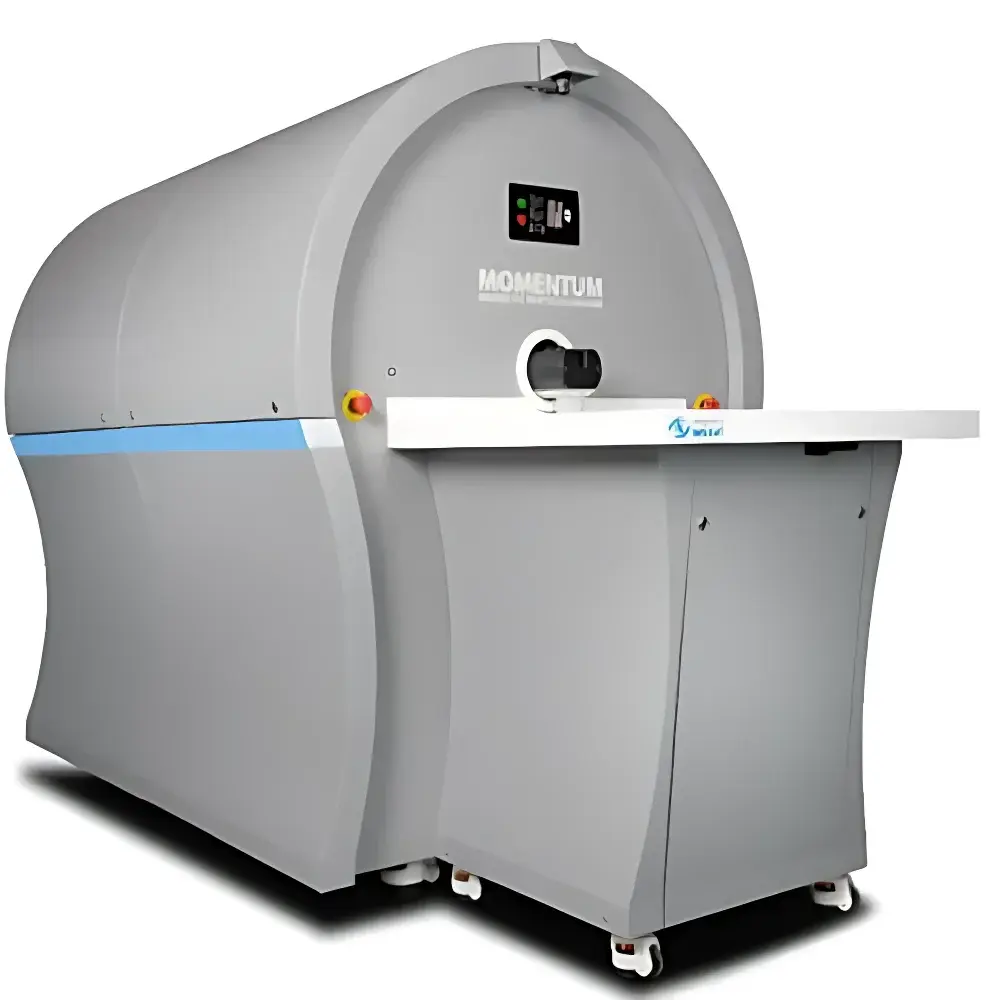
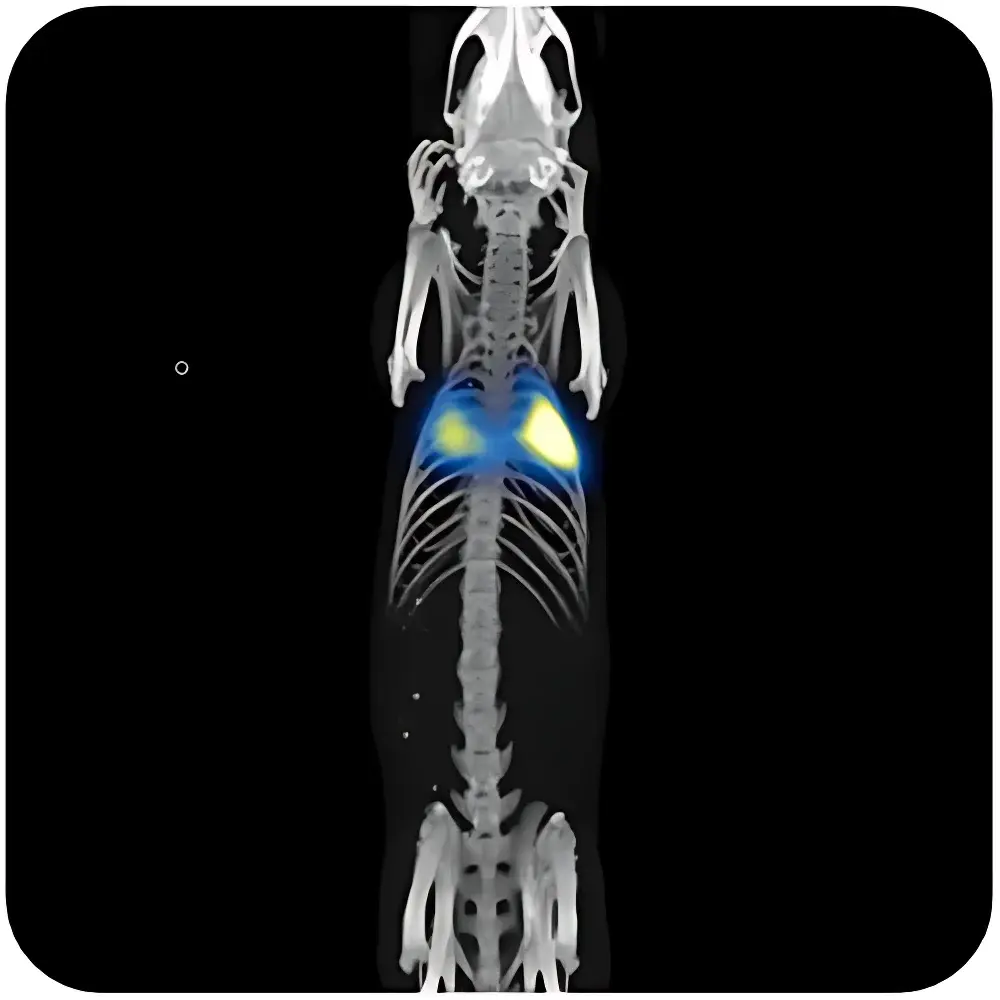
The Hyper MPI Molecular Imaging and Magnetic Hyperthermia System is a preclinical tomographic imaging platform engineered for quantitative, radiation-free, real-time visualization of superparamagnetic iron oxide nanoparticles (SPIOs) in living small animals. Unlike conventional modalities such as PET, CT, or MRI—each reliant on ionizing radiation, radioactive tracers, or endogenous contrast limitations—MPI operates on the physical principle of nonlinear magnetization response. It employs dynamically rotating, spatially varying magnetic gradient fields to spatially encode the unique harmonic signature emitted by SPIOs under alternating magnetic excitation. This direct detection mechanism yields inherently linear, background-free signal generation with no depth-dependent attenuation, enabling true 3D volumetric reconstruction at sub-millimeter resolution. Designed for translational research, the Hyper system utilizes clinically approved SPIO formulations (e.g., Ferumoxytol), ensuring seamless pathway toward human MPI implementation under FDA/EMA regulatory frameworks.
Key Features
- Radiation-free & tracer-safe operation: No ionizing radiation; leverages clinically validated, biodegradable SPIOs metabolized to endogenous hemoglobin precursors—ideal for longitudinal studies in renal-impaired models.
- High sensitivity & quantification fidelity: Capable of detecting single-cell-level SPIO loads (sub-ng sensitivity), with linear signal-response relationship enabling absolute nanoparticle concentration mapping.
- Depth-invariant 3D tomography: Achieves isotropic spatial resolution of 100 µm across full FOV (60 × 60 × 120 mm³), independent of tissue depth or optical scattering.
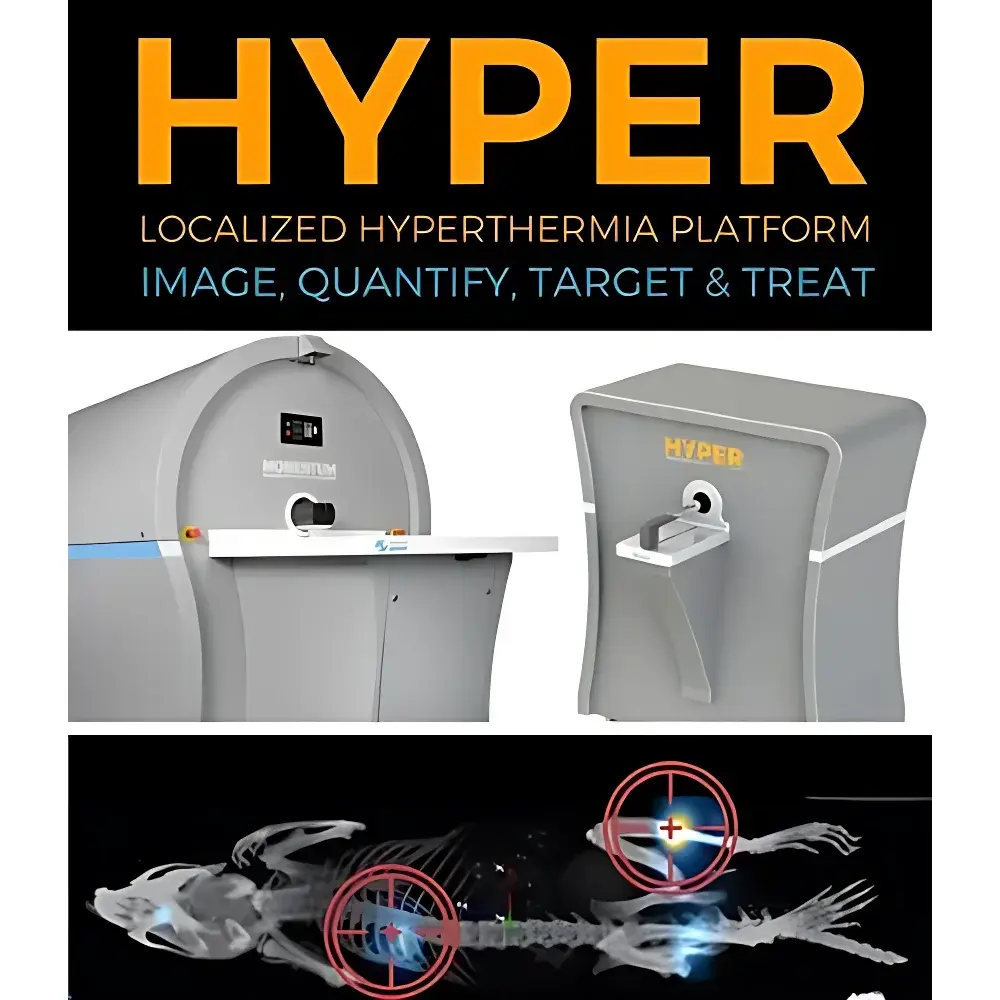
- Integrated magnetic hyperthermia capability: Dual-mode functionality supports simultaneous imaging and localized thermal ablation (via high-amplitude AC field application) with precise spatial targeting verified by real-time MPI feedback.
- Fast volumetric acquisition: Full 3D scan completion in ≤10 seconds—enabling dynamic perfusion studies, cardiac-gated imaging, and high-throughput screening protocols.
- Robust hardware architecture: Includes actively shielded gradient coils, high-stability field homogenization, and temperature-controlled animal bed with integrated physiological monitoring interfaces (ECG, respiration, temperature).
Sample Compatibility & Compliance
The Hyper system is optimized for murine and rat models (up to 500 g), accommodating standard anesthesia and physiological support configurations. All SPIO tracers used must comply with ISO 10993-5 (cytotoxicity) and ISO 10993-11 (hemocompatibility) standards. The platform supports GLP-compliant workflows through audit-trail-enabled acquisition logs and metadata embedding per scan (including field calibration timestamps, gradient amplitude profiles, and coil temperature records). While not a medical device, its design aligns with key elements of IEC 62304 (software lifecycle) and FDA 21 CFR Part 11 requirements for electronic records integrity—facilitating future clinical validation documentation packages.
Software & Data Management
Acquisition and reconstruction are managed via proprietary MPI Studio software, built on a modular C++/Python framework compliant with DICOM-SR (Structured Reporting) extensions for MPI-specific metadata. Reconstruction algorithms include iterative MLEM and compressed sensing-enhanced variants, supporting GPU-accelerated processing on NVIDIA A100-class hardware. Quantitative analysis modules provide voxel-wise SPIO concentration maps, time-intensity curve fitting (e.g., for vascular permeability modeling), and co-registration tools for multimodal fusion (e.g., with MRI or optical imaging datasets). Raw k-space data export (HDF5 format) ensures full reproducibility and third-party algorithm integration. All software updates undergo version-controlled release cycles with documented change logs traceable to ISO/IEC 17025-aligned validation protocols.
Applications
- Longitudinal stem cell tracking in regenerative medicine (≥3-month persistence studies)
- Quantitative immune cell trafficking in tumor microenvironment and lymphoid organs
- Real-time monitoring of targeted nanocarrier biodistribution and clearance kinetics
- Vascular perfusion mapping in ischemic stroke or myocardial infarction models
- Image-guided magnetic hyperthermia: spatially resolved thermal dose calculation coupled with real-time MPI thermometry
- Preclinical evaluation of novel SPIO-based theranostics under USP & Ph. Eur. nanoparticle characterization guidelines
- Supporting NIH-funded translational MPI development programs (e.g., NIBIB R01 grants)
FAQ
Is the Hyper system compatible with existing SPIO tracers used in human clinical practice?
Yes—fully compatible with FDA-approved SPIO agents including Ferumoxytol and Ferucarbotran, eliminating the need for tracer requalification in early-phase clinical translation.
Can MPI data be exported for third-party analysis or regulatory submission?
Yes—raw k-space data, reconstructed volumes (NIfTI/DICOM), and comprehensive acquisition metadata are exportable in open, non-proprietary formats compliant with FAIR data principles.
What regulatory pathway does this system support for future clinical adoption?
The Hyper platform was developed in alignment with ASTM F3081 (Standard Guide for Preclinical Evaluation of MPI Systems) and contributes technical evidence toward ISO/IEC 82304-2 (Health Software—Part 2: Safety, Security, and Privacy Requirements) readiness.
Related Products




