
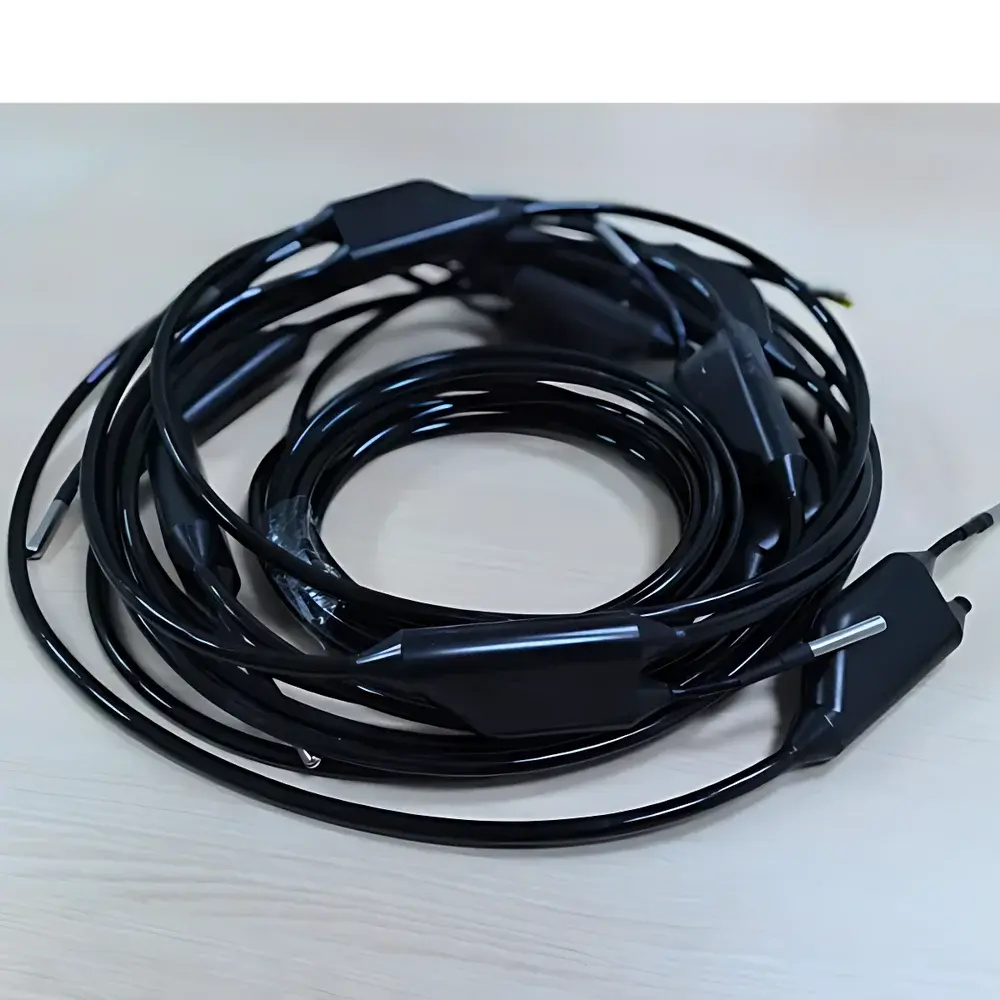
Zming Environmental TSC-10 Temperature Chain Profiling System
| Brand | Zming Environmental Technology Co., Ltd. |
|---|---|
| Origin | Shanghai, China |
| Manufacturer Type | Authorized Distributor |
| Country of Origin | China |
| Model | TSC-10 Temperature Chain Profiling System |
| Pricing | Available Upon Request |
| Number of Sensors | 10 |
| Operating Temperature Range | −55 °C to +80 °C |
| Accuracy | ±0.2 °C (−40 °C to +85 °C, typical), ±0.4 °C (−40 °C to +85 °C, worst-case), ±0.5 °C (−55 °C to −40 °C) |
| Max Pressure Rating | 150 PSI |
| Communication Protocol | RS-485 / MODBUS-RTU |
| Sensor Spacing | Customizable (min. 12 cm) |
| Max Chain Length | 155 m |
| Max Sensor Capacity | 150 nodes |
| Sensor Diameter | 5 cm |
| Supply Voltage | 3.3–24 V DC |
| Current Consumption | 10 mA + (N × 1 mA), where N = number of active sensors |
| Warm-up Time | 10 s |
| Minimum Sampling Interval | 10 s |
| Standard Cable Length Options | 10 m, 20 m, 50 m |
| Optional Sensor Integration | Dissolved Oxygen (DO), Conductivity |
Overview
The Zming Environmental TSC-10 Temperature Chain Profiling System is an engineered solution for high-resolution, depth-resolved thermal monitoring in heterogeneous aquatic and subsurface environments. Based on distributed digital temperature sensing using calibrated DS18B20 or equivalent 1-Wire®/MODBUS-compatible thermistors embedded within a continuous armored cable assembly, the TSC-10 captures vertical temperature gradients with metrological traceability across dynamic field conditions. Its design targets long-term deployment in physically demanding settings—including boreholes, lake and ocean water columns, saturated soils, permafrost zones, and glacial ice—where conventional point-sampling or single-point loggers fail to resolve stratification dynamics. The system operates on passive or low-power active interrogation, enabling unattended operation over months without battery replacement when integrated into solar-powered telemetry platforms. All sensors are factory-calibrated against NIST-traceable references, and individual serial identifiers are permanently encoded to support GLP-compliant data lineage tracking.
Key Features
- Distributed Sensor Architecture: Ten pre-integrated, individually addressable digital temperature sensors spaced along a single robust cable—configurable from 12 cm minimum spacing to accommodate fine-scale thermal boundary layer studies.
- Field-Ruggedized Construction: Armored polyurethane-jacketed cable with tensile reinforcement and UV/ozone-resistant outer sheath; rated for 150 PSI hydrostatic pressure (equivalent to ~100 m water column).
- Low-Power RS-485 Interface: MODBUS-RTU protocol ensures interoperability with SCADA systems, data loggers (e.g., Campbell Scientific CR1000X, Onset HOBO RX3000), and industrial PLCs—no proprietary software required.
- Zero-Calibration Deployment: Factory-trimmed digital sensors eliminate field recalibration; each node reports its unique ID, firmware revision, and installation depth metadata in every data packet.
- Scalable Modular Design: Base TSC-10 supports up to 150 sensor nodes across 155 m; expansion beyond 10 sensors requires only firmware configuration—not hardware modification.
- Integrated Surge Protection: SGB3-grade transient voltage suppression (TVS) on all communication and power lines, compliant with IEC 61000-4-5 Level 3 requirements for outdoor instrumentation.
Sample Compatibility & Compliance
The TSC-10 is validated for direct immersion in freshwater, seawater (up to 35 ppt salinity), saturated clay and sand matrices, and cryogenic frozen ground (down to −55 °C). Its IP68-rated sensor housings and chemical-resistant cable jacket meet ASTM D471 (rubber resistance to liquids) and ISO 1183-1 (density of plastics) specifications. Data acquisition workflows align with EPA Method 100.1 (temperature measurement in ambient water) and ISO 7888:2019 (water quality — determination of electrical conductivity). When deployed with optional DO or conductivity modules, full parameter correlation supports ISO 5814 (dissolved oxygen) and ISO 7888 (conductivity) compliance reporting. Audit trails generated via MODBUS register logging satisfy FDA 21 CFR Part 11 electronic record requirements when paired with validated data acquisition software.
Software & Data Management
Raw MODBUS registers output include timestamped temperature values (°C), sensor IDs, depth offsets (m), supply voltage (V), and internal diagnostics (e.g., CRC pass/fail, bus contention flags). Third-party integration is supported through standard MODBUS TCP gateways or Python-based libraries (pymodbus, minimalmodbus). Zming provides open CSV export templates compatible with QGIS, MATLAB, and R for thermal profile interpolation, contour mapping, and time-series anomaly detection. All firmware updates are delivered via signed binary packages with SHA-256 verification. Internal EEPROM stores 30 days of buffered readings at 10-second intervals—ensuring no data loss during intermittent telemetry outages.
Applications
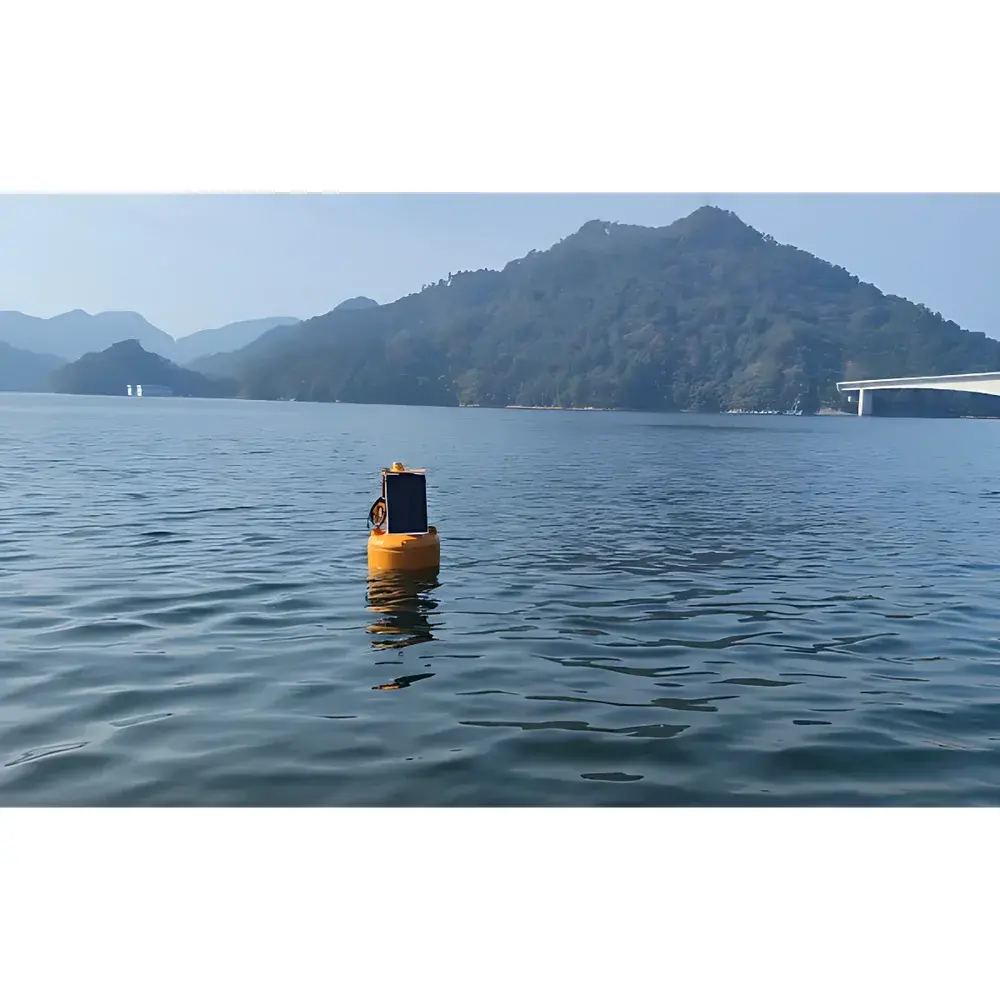
- Limnological thermal stratification monitoring in reservoirs and lakes (e.g., Qiandao Lake buoy network)
- Groundwater–surface water exchange quantification in riparian zones using vertical temperature gradient inversion
- Marine boundary layer profiling for ocean heat content validation against Argo float datasets
- Permafrost degradation assessment via multi-year active-layer thickness tracking
- Geothermal wellbore thermal profiling for enhanced geothermal system (EGS) performance evaluation
- Regulatory compliance monitoring for thermal discharge permits (e.g., EPA NPDES requirements)
FAQ
What is the maximum allowable depth for submersion in seawater?
The TSC-10 is pressure-rated to 150 PSI, supporting deployments to approximately 100 meters in seawater (10.2 m/PSI). For deeper applications, custom pressure-compensated housings are available upon engineering review.
Can the system operate autonomously on battery power for extended periods?
Yes—typical current draw is 20 mA for a 10-sensor chain at 10-second sampling. With a 12 V / 20 Ah LiFePO₄ battery and duty-cycled polling, operational life exceeds 45 days without recharge.
Is calibration documentation provided with each unit?
Each TSC-10 ships with a NIST-traceable calibration certificate listing individual sensor offsets at three reference points (−20 °C, +25 °C, +60 °C), valid for 24 months under normal use conditions.
How is sensor depth accuracy maintained during installation?
Depth offsets are programmable per node via MODBUS register write; mechanical depth markers (laser-etched at 1-m intervals) and optional inclinometer add-ons support post-deployment verification.
Are DO and conductivity sensors co-located with temperature nodes?
Yes—optional dual-parameter probes integrate DO (optical luminescence) and conductivity (four-electrode AC measurement) into the same 5 cm diameter housing, sharing power and communication lines without signal crosstalk.
Related Products







