
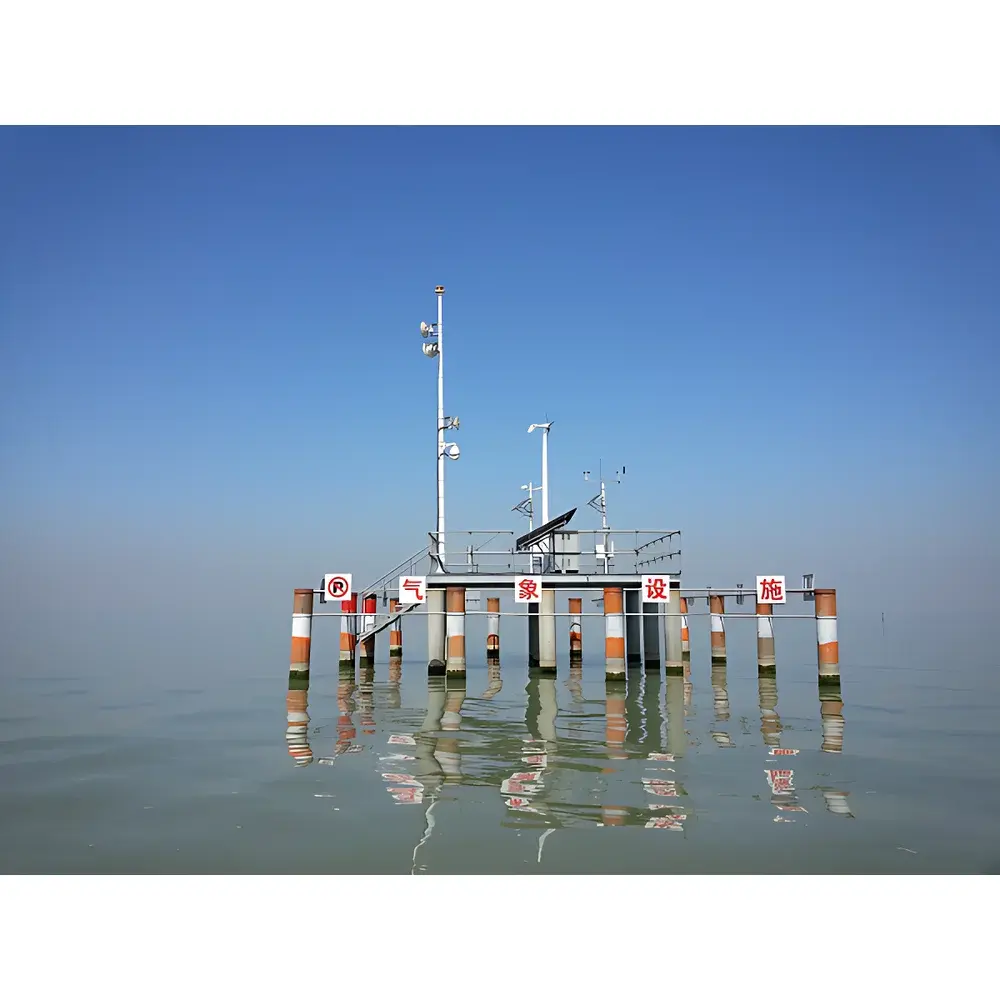
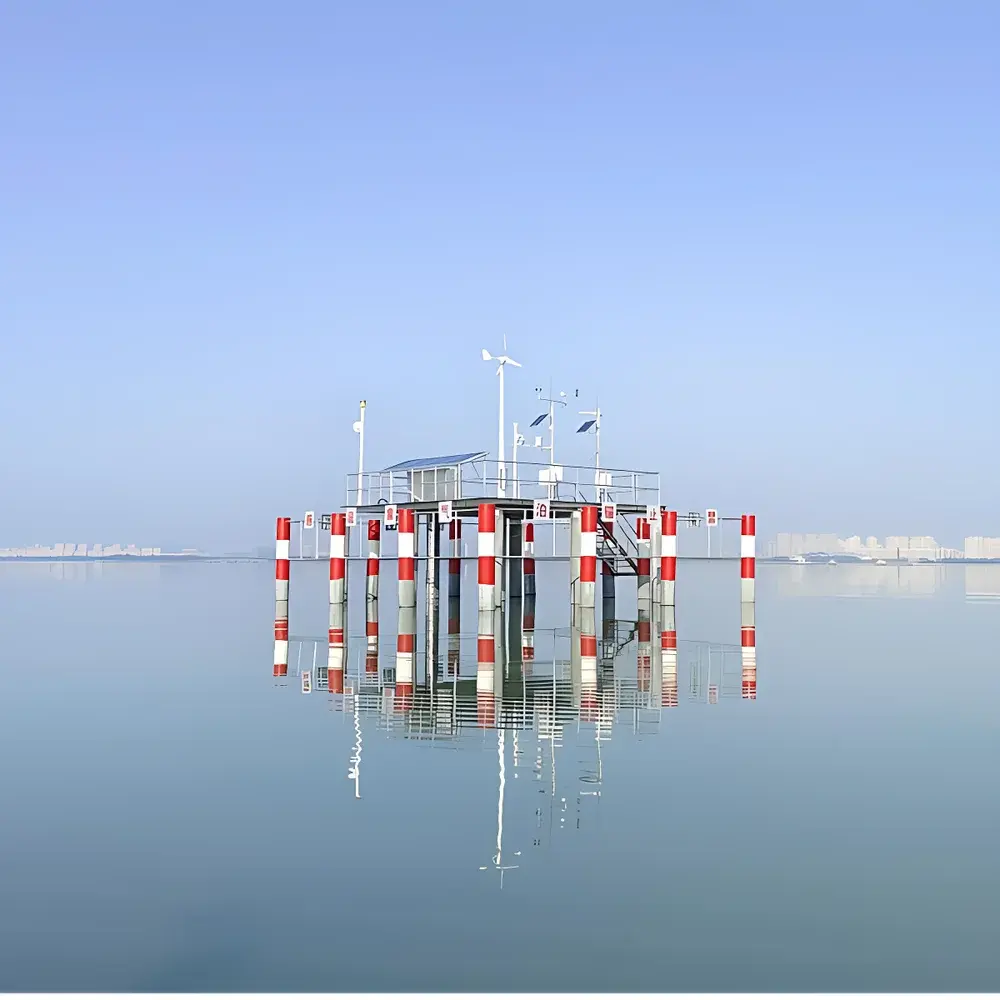
Zming Environmental ZM-OFEMS Fixed Offshore Ecological Monitoring Platform
| Brand | Zming Environmental Technology Co., Ltd. |
|---|---|
| Origin | Jiangsu, China |
| Manufacturer Type | Authorized Distributor |
| Country of Origin | China |
| Model | ZM-OFEMS |
| Pricing | Upon Request |
Overview
The Zming Environmental ZM-OFEMS Fixed Offshore Ecological Monitoring Platform is an engineered offshore infrastructure solution designed for long-term, unattended ecological and water quality surveillance in large-scale aquatic environments—including lakes, reservoirs, estuaries, and coastal zones. Unlike buoy-based or shore-deployed systems, the ZM-OFEMS utilizes a rigid, permanently installed platform anchored directly to the lakebed or seabed with structural stability equivalent to marine-grade fixed piers. Its architecture integrates multi-layered sensing capabilities across physical, chemical, biological, and meteorological domains using calibrated, industrial-grade sensors compliant with ISO 10523 (pH), ISO 5814 (dissolved oxygen), ISO 7888 (conductivity), and ASTM D3693 (turbidity). The system operates on a continuous 24/7 acquisition cycle with synchronized timestamping, enabling high-temporal-resolution trend analysis essential for eutrophication assessment, algal bloom early warning, and climate-driven hydrological modeling.
Key Features
- Structurally robust fixed-platform design rated for wind speeds up to 50 m/s and wave heights exceeding 3.5 m, ensuring operational continuity under severe weather conditions.
- Modular sensor integration framework supporting hot-swappable deployment of third-party certified probes (e.g., YSI EXO, Hach Hydrolab MS5, Turner Designs Cyclops-7) alongside proprietary Zming optical and electrochemical analyzers.
- Redundant power architecture: dual-source supply (solar + grid-tied AC with battery backup) delivering ≥99.5% uptime over annual cycles.
- IP68-rated underwater sensor housings with anti-fouling coatings (copper alloy mesh + ultrasonic cleaning modules) validated per ASTM D3123 for biofouling resistance in eutrophic waters.
- Onboard edge computing unit running embedded Linux OS, executing real-time QA/QC flagging (e.g., spike detection, drift compensation, cross-parameter consistency checks) prior to data transmission.
- Secure LTE-M + satellite (Iridium Short Burst Data) dual-path telemetry with TLS 1.2 encryption and configurable transmission intervals (1 min to 24 h).
Sample Compatibility & Compliance
The ZM-OFEMS is validated for continuous immersion in freshwater, brackish, and marine matrices with salinity ranging from 0–40 ppt. All submerged components meet NEMA 6P and IEC 60529 ingress protection standards. Sensor calibration protocols adhere to ISO/IEC 17025 requirements for environmental testing laboratories. The system supports full audit trails and electronic signatures aligned with FDA 21 CFR Part 11 for regulated monitoring applications. Data outputs conform to WMO GOS metadata standards and are compatible with national water quality databases including China’s National Surface Water Quality Monitoring Network (NSWQMN) and international frameworks such as EU WISE and US EPA STORET.
Software & Data Management
The platform interfaces with Zming’s proprietary EcoView™ Cloud Platform—a web-based, role-based SaaS application built on PostgreSQL and GeoServer backends. It provides GIS-integrated visualization, automated anomaly detection (using seasonal-trend decomposition and machine learning classifiers trained on historical bloom events), and customizable reporting templates aligned with ISO 14001 environmental management documentation. Raw sensor data is archived in HDF5 format with embedded CF-conventions metadata; processed outputs are exportable in CSV, NetCDF, and WaterML 2.0. Full API access enables integration with SCADA systems, digital twin platforms, and regional environmental information systems (EIS) under OGC SensorThings API v1.1 compliance.
Applications
- Long-term trophic state monitoring in drinking water reservoirs and transboundary lakes.
- Regulatory compliance reporting for Class III–V surface water bodies under China’s GB 3838-2002 standards.
- Supporting adaptive management of constructed wetlands and ecological restoration projects via nutrient loading quantification (N/P ratios, DIN:DIP dynamics).
- Calibration and validation reference site for remote sensing algorithms (e.g., Sentinel-3 OLCI, Landsat 9 OLI-2) requiring in-situ ground truthing.
- Climate resilience assessment through correlation of hydrometeorological variables (e.g., wind-driven mixing depth vs. chlorophyll-a vertical stratification).
FAQ
Is the ZM-OFEMS suitable for deployment in tidal estuaries with strong currents?
Yes—its foundation design incorporates drag-reducing pile configurations and dynamic load simulation verified via ANSYS Fluent CFD modeling for flow velocities up to 2.8 m/s.
Can existing third-party sensors be integrated without hardware modification?
All standard analog (4–20 mA, 0–5 V) and digital (RS-485 Modbus RTU, SDI-12) interfaces are natively supported; protocol translation gateways are provided for CAN bus or proprietary serial formats.
How is data integrity ensured during extended network outages?
Local storage capacity supports ≥180 days of raw high-frequency data (1-min resolution); automatic resynchronization occurs upon connection recovery without data loss.
Does the system support GLP-compliant calibration logging?
Yes—calibration events are digitally signed, time-stamped, and stored with operator ID, standard reference values, and uncertainty budgets traceable to NIM (China National Institute of Metrology).
What maintenance frequency is recommended for submerged optical sensors?
Bi-monthly visual inspection and quarterly cleaning/calibration are advised; fouling-resistant optics extend service intervals to six months in low-turbidity environments.
Related Products







