
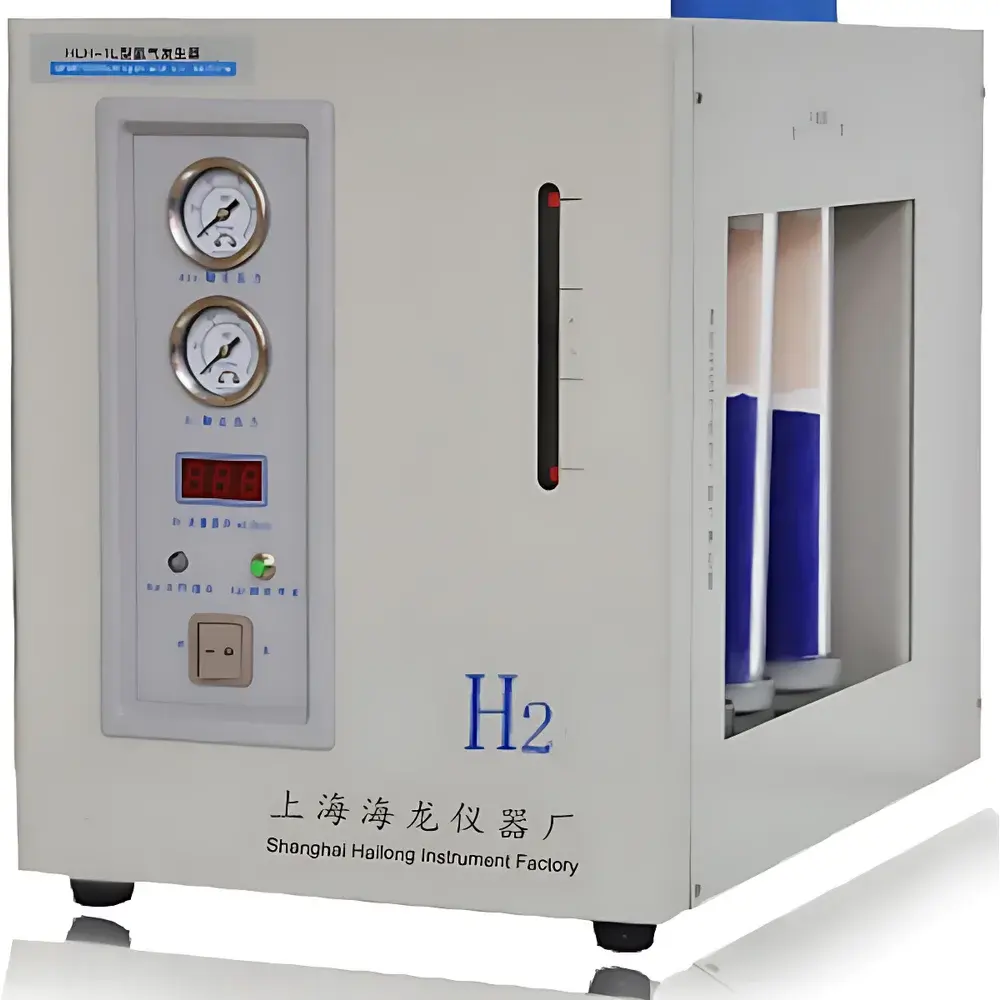
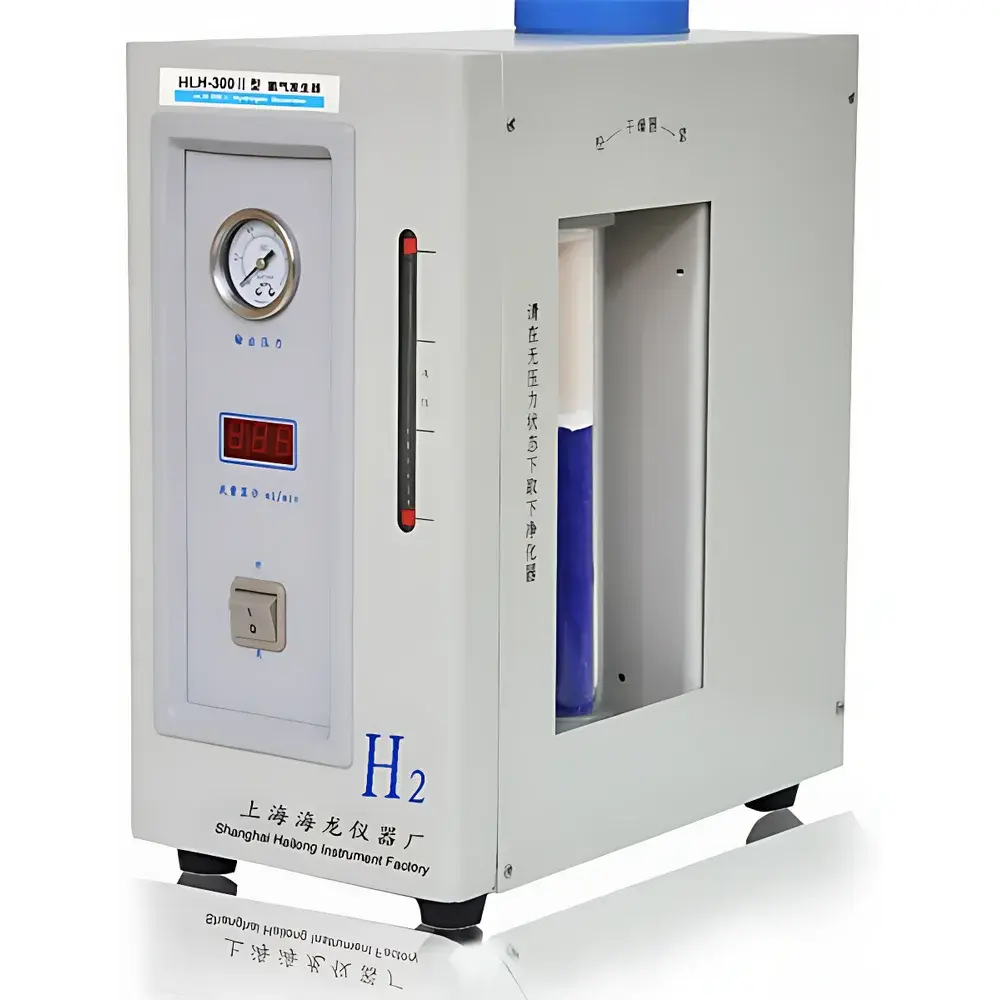
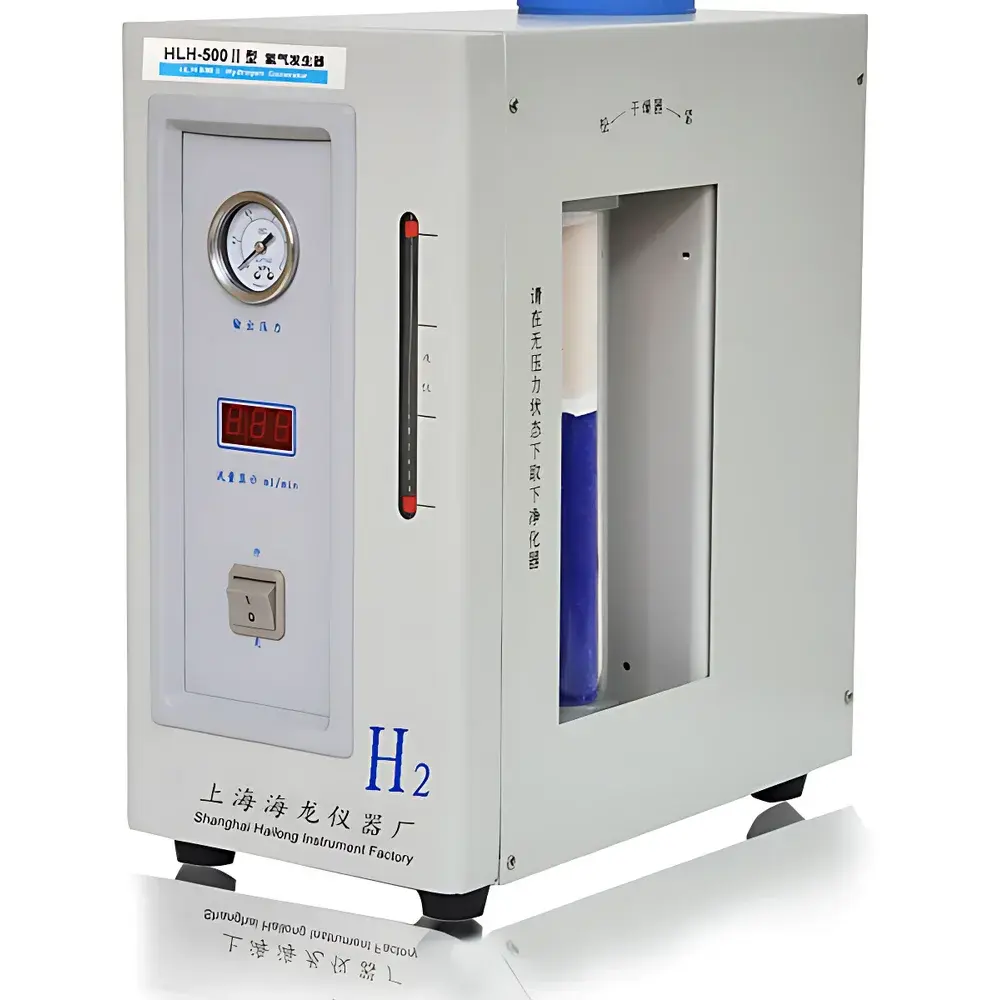
HLH Hydrogen Generator Series (300II, 500II, 700II, 1L)
| Brand | HLH |
|---|---|
| Origin | Shanghai, China |
| Model | 300II / 500II / 700II / 1L |
| Hydrogen Generation Principle | Alkali-electrolysis with single alkaline charge and daily distilled water replenishment |
| Output Flow Rate | 0–300 mL/min / 0–500 mL/min / 0–700 mL/min / 0–1000 mL/min |
| Output Pressure | 0–0.5 MPa |
| Hydrogen Purity | ≥99.999% |
| Power Consumption | 150–200 W (300II/500II/700II), 500 W (1L) |
Overview
The HLH Hydrogen Generator Series (300II, 500II, 700II, and 1L) is a compact, benchtop electrolytic hydrogen generator engineered for continuous, on-demand supply of high-purity hydrogen gas in analytical laboratories. It operates on the principle of alkaline water electrolysis—utilizing a proprietary bucket-type electrolytic cell with imported noble-metal catalysts to decompose deionized or distilled water into hydrogen and oxygen under controlled DC current. Unlike PEM-based systems, this design employs a single initial charge of potassium hydroxide (KOH) electrolyte, eliminating routine chemical replacement; only periodic top-up of distilled water is required for sustained operation. The system delivers ultra-high-purity hydrogen (≥99.999%) suitable for sensitive applications including gas chromatography (GC) carrier gas, flame ionization detection (FID) fuel, and laboratory-scale hydrogenation reactions. Its pressure-regulated output (0–0.5 MPa, factory-set at 0.4 MPa) ensures compatibility with standard GC inlets and pneumatic controllers, while built-in thermal stabilization maintains consistent electrolytic efficiency across ambient temperatures from 10–40°C.
Key Features
- Alkaline electrolysis architecture with long-life, imported noble-metal electrode materials—optimized for high current efficiency and minimal degradation over extended service life.
- Integrated dual-stage gas purification: stainless steel tubing (electropolished and ultrasonically cleaned) coupled with molecular sieve and desiccant cartridges to remove residual moisture, oxygen, and trace alkali aerosols.
- Patented anti-backflow mechanism prevents electrolyte migration into downstream instrumentation—a critical safeguard for GC injectors, valves, and detectors.
- Intelligent flow tracking: real-time adjustment of electrolytic current maintains stable output flow within ±2% deviation across the full range (e.g., 0–300 mL/min), independent of minor pressure fluctuations.
- Overpressure protection circuitry automatically shuts down electrolysis if outlet pressure exceeds 0.55 MPa, complying with IEC 61010-1 safety requirements for laboratory equipment.
- Thermally stabilized electrolytic cell housing maintains uniform operating temperature—reducing thermal stress on membranes and electrodes, thereby extending mean time between maintenance (MTBM) to >12,000 hours.
Sample Compatibility & Compliance
The HLH series is designed for use with distilled or deionized water (conductivity ≤1 µS/cm) and does not require external gas cylinders or compressed gas infrastructure. All wetted components—including electrolytic cell, gas lines, and purification modules—are constructed from 316L stainless steel and fluoropolymer-sealed fittings, ensuring resistance to alkaline corrosion and minimizing metallic leaching. The generators meet CE marking requirements for electromagnetic compatibility (EN 61326-1) and low-voltage directive (EN 61010-1). While not certified to ISO 8573-1 Class 1 for compressed air, hydrogen purity (≥99.999%, verified by onboard thermal conductivity detection and validated via third-party GC-TCD analysis) satisfies ASTM D1946 and ISO 8573-1:2010 Class 2 specifications for gaseous hydrogen used in analytical instrumentation. Units are compatible with GLP-compliant lab environments when integrated with audit-trail-capable data loggers.
Software & Data Management
The HLH series operates as a standalone hardware platform without embedded microprocessor control or digital interfaces (e.g., RS-232, USB, or Ethernet). Operational status is indicated via front-panel LED displays showing power-on state, pressure readiness, and fault conditions (e.g., low-water alarm). For integration into automated laboratories, analog 0–5 V or 4–20 mA pressure/flow feedback signals are available upon request (custom configuration). While no proprietary software is provided, the stable, ripple-free DC power input (220 V ±10%, 50 Hz ±5%) ensures compatibility with uninterruptible power supplies (UPS) and centralized facility monitoring systems. Users performing FDA-regulated analyses may document operational parameters manually or via external data acquisition systems compliant with 21 CFR Part 11 requirements for electronic records.
Applications
- Carrier gas for capillary gas chromatography (GC), particularly in methods requiring high baseline stability and low detector noise (e.g., EPA Method 8260, USP residual solvents).
- Fuel gas for flame ionization detectors (FID), reducing dependency on bottled hydrogen and associated cylinder handling risks.
- Hydrogen source for small-scale catalytic hydrogenation, hydride generation atomic absorption spectroscopy (HG-AAS), and reducing atmospheres in material synthesis.
- Backup or primary hydrogen supply in academic research labs, QC/QA facilities, and pharmaceutical stability testing suites where continuity of gas supply is essential.
- Replacement for high-pressure hydrogen cylinders in confined spaces (e.g., fume hoods, mobile labs), improving spatial efficiency and safety compliance.
FAQ
What type of water must be used?
Only distilled or deionized water with conductivity ≤1 µS/cm is acceptable. Tap water, tap-deionized water, or water containing ions (e.g., Ca²⁺, Mg²⁺) will cause rapid scaling and irreversible cell fouling.
How often does the KOH electrolyte need replacement?
The alkaline electrolyte is designed for single initial charge; no scheduled replacement is required during normal operation. Only distilled water top-up is needed every 3–7 days depending on flow rate and ambient humidity.
Can multiple instruments be supplied from one HLH-1L unit?
Yes—the 1L model supports simultaneous connection to up to three GC systems via a manifolded stainless steel distribution line, provided total demand remains within 1000 mL/min and backpressure does not exceed 0.45 MPa.
Is hydrogen purity verified in real time?
The system incorporates a thermal conductivity sensor for continuous purity estimation. For regulatory validation, users should perform periodic verification using calibrated GC-TCD or residual oxygen analyzers per ISO 8573-5 protocols.
What maintenance intervals are recommended?
Annual inspection of purification cartridges and visual verification of tubing integrity is advised. Electrolytic cell performance should be assessed every 24 months via flow/pressure consistency testing and purity spot-checking.



