
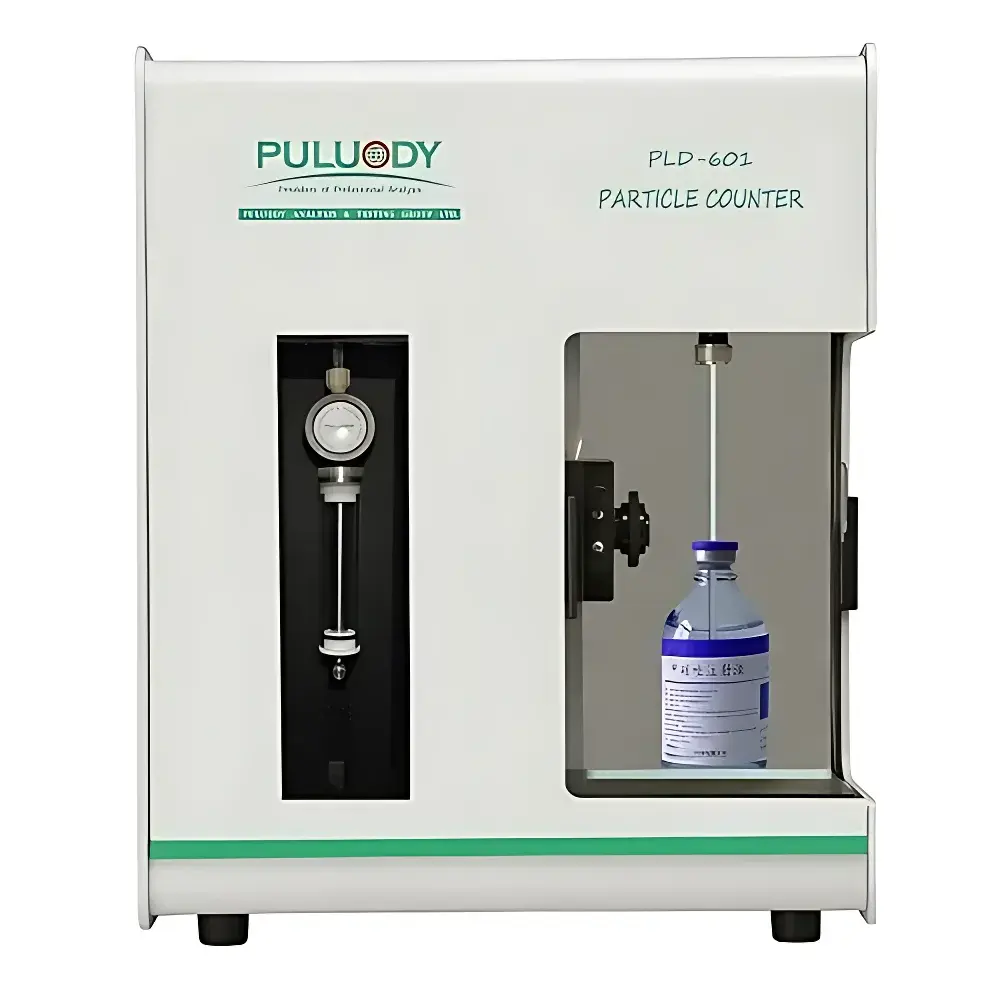
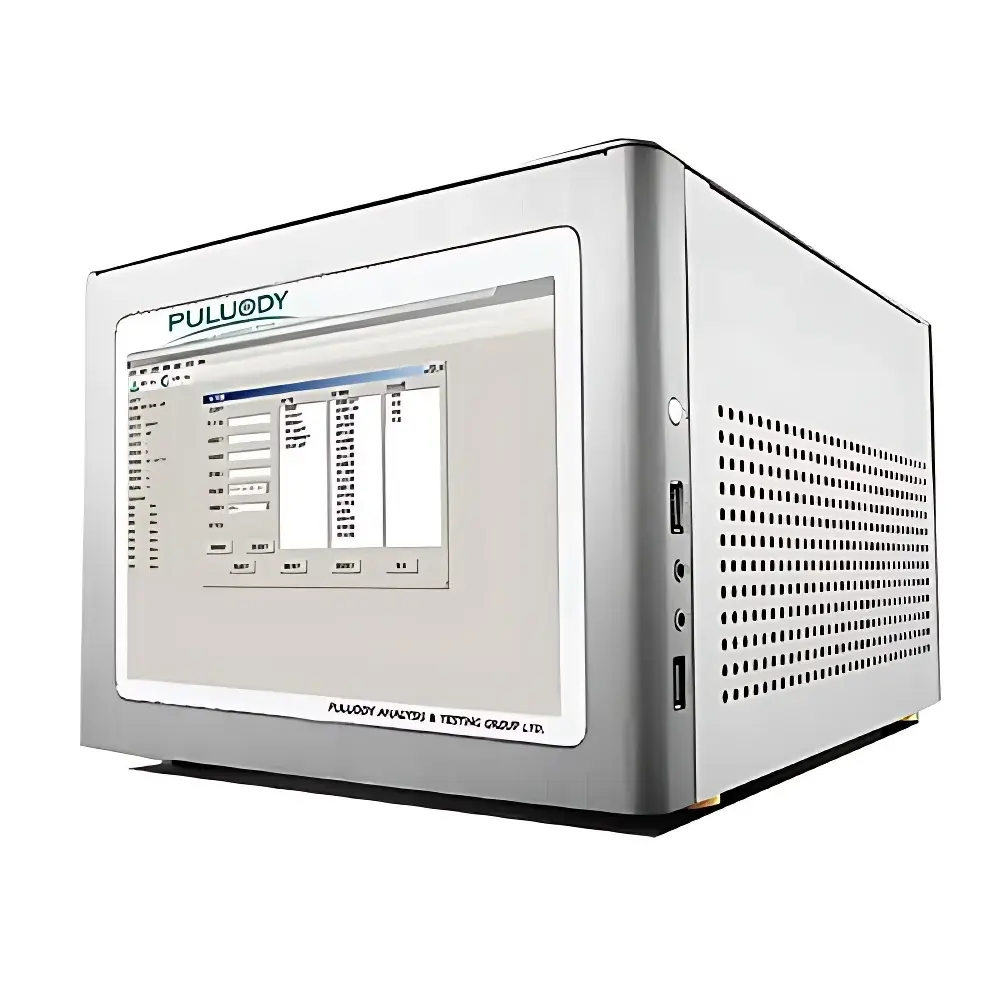
PULUODY PLD-601 Insoluble Particle Analyzer for Pharmaceutical Compliance Testing
| Brand | PULUODY |
|---|---|
| Origin | Shaanxi, China |
| Manufacturer Type | Authorized Distributor |
| Country of Origin | China |
| Model | PLD-601 |
| Price | USD 32,500 (FOB) |
| Detection Principle | Light Obscuration (LO) / Dual-Laser Narrow-Beam Particle Sensing |
| Sensor Generation | 8th-Generation Dual-Laser Optical Sensor |
| Flow Control | Precision Metering Plunger Pump + Ultra-Precise Electromagnetic Flow Regulation |
| Software | V8.9 Regulatory-Compliant Analysis Suite (PC & Touchscreen) |
| Calibration Standards | JJG1061, ISO 21501-4, NIST-Traceable Latex Spheres |
| Regulatory Alignment | ChP 2020 <0903>, USP <788>/<789>/<797>, EP 10.0, BP 2019, JP 17, ISO 21510, GB/T 11446.9-2013, GB 8368 |
| Particle Size Range | 1–500 µm (optional extension: 0.03–3000 µm) |
| Channel Count | 1000 adjustable channels (user-definable from 4 to 128 size bins) |
| Sample Flow Rate | 5–150 mL/min |
| Rinse Flow Rate | 5–500 mL/min |
| Temperature Range (Fluid) | 0–80 °C |
| Accuracy | ±3% typical (per ChP 2020) |
| Resolution | >95% (ChP-calibrated), >90% (ISO 21501-4 calibrated) |
| Coincidence Limit | ≤2.5% at 1000 particles/mL |
| Sampling Precision | <±1% volumetric repeatability |
| Data Integrity | 5-Tier User Permission Architecture, Audit Trail, Electronic Signature, Full 21 CFR Part 11 Compliance, Auto-Backup/Restore, Power-Fail Recovery |
Overview
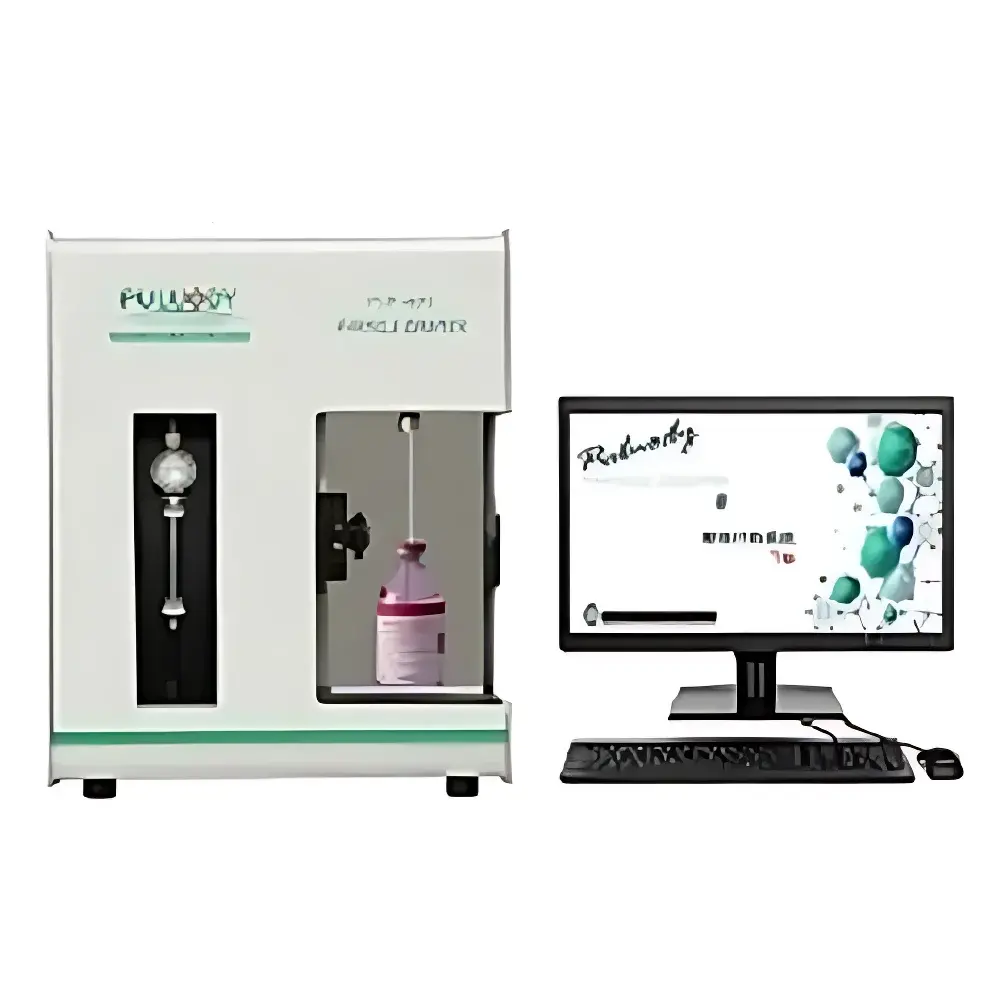
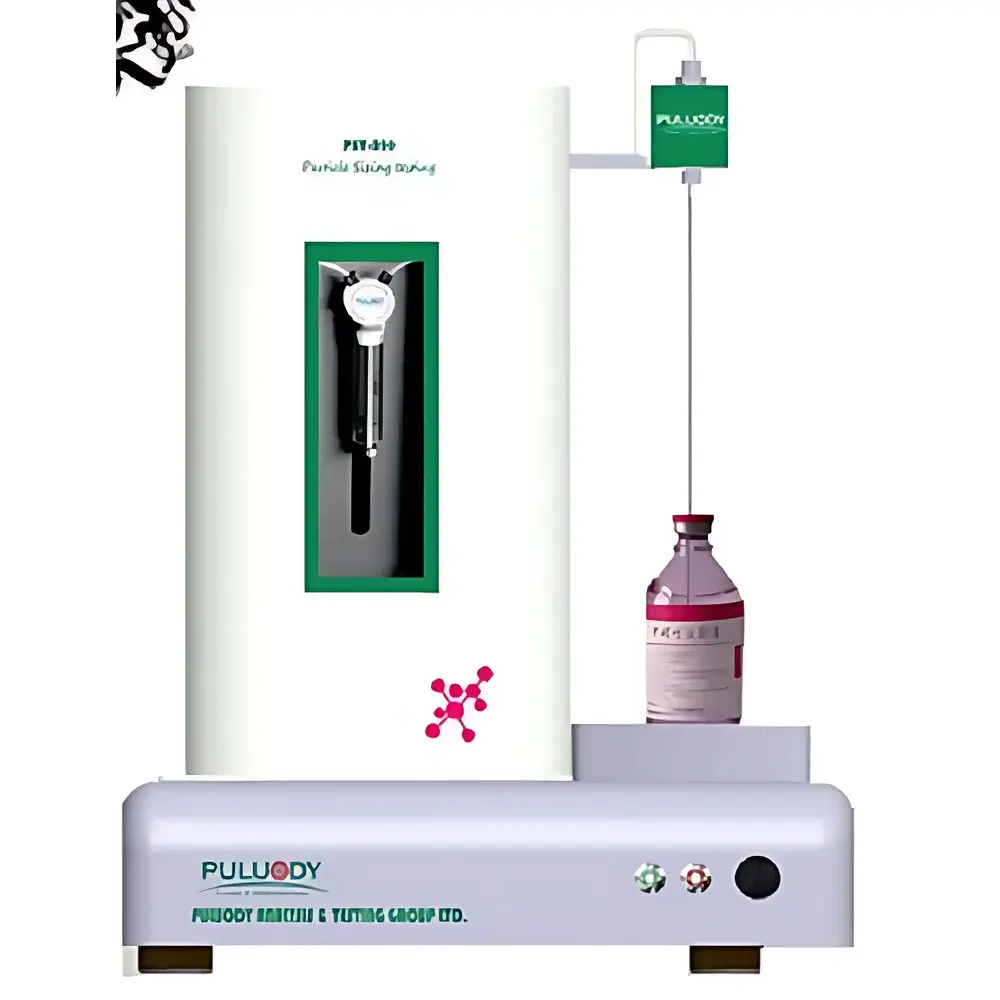
The PULUODY PLD-601 Insoluble Particle Analyzer is a regulatory-grade light obscuration (LO) instrument engineered for precise, repeatable quantification and sizing of insoluble particulate matter in parenteral and ophthalmic pharmaceutical products. It implements an 8th-generation dual-laser narrow-beam optical sensor architecture—designed to minimize scattering noise and maximize signal-to-noise ratio across sub-micron to coarse particle ranges (1–500 µm). The system operates on the principle of particle-induced light blockage: as each particle traverses the focused laser beam within a laminar-flow quartz flow cell, the transient reduction in photodetector output is converted into pulse amplitude, directly correlated to particle cross-sectional area. This analog pulse analysis enables high-fidelity classification across 1000 programmable size channels, supporting both fixed pharmacopoeial thresholds (e.g., ≥10 µm and ≥25 µm per ChP ) and custom binning strategies for process validation or root-cause investigation. Its fluidic architecture integrates a precision metering plunger pump and electromagnetic flow regulator to ensure volumetric accuracy better than ±1%, critical for compliance with USP sampling volume requirements and ISO 21501-4 calibration traceability.
Key Features
- Dual-laser narrow-beam optical sensor with real-time baseline stabilization and automatic gain compensation to maintain sensitivity across wide concentration ranges.
- Regulatory-grade fluid handling: stainless-steel wetted path compatible with aggressive solvents (e.g., ethanol, IPA, acetone); temperature-controlled sample line (0–80 °C) to prevent thermal precipitation artifacts.
- V8.9 analytical software suite with full 21 CFR Part 11 compliance: electronic signatures, immutable audit trail, role-based 5-level access control (Admin, QA, QC Analyst, Reviewer, Viewer), and encrypted local/cloud backup.
- Configurable channel mapping: supports simultaneous reporting against multiple pharmacopoeial standards (e.g., ChP, USP, EP, JP) without reprocessing raw pulse data.
- Integrated rinse protocol with variable flow rate (5–500 mL/min) and programmable dwell time to eliminate carryover between high-load samples (e.g., vaccine suspensions or CMP slurries).
- Touchscreen HMI with optional wireless keyboard/mouse interface; bilingual (English/Chinese) UI designed for multi-regional lab environments without compromising GxP navigation logic.
Sample Compatibility & Compliance
The PLD-601 accommodates a broad spectrum of liquid matrices under controlled conditions: sterile aqueous solutions (injectables, WFI, dialysate), lyophilized reconstitutes, viscous concentrates (e.g., monoclonal antibody formulations), ophthalmic preparations, vaccine adjuvant suspensions, and non-aqueous vehicles (e.g., sesame oil, PEG-based carriers). It meets mechanical and procedural requirements for ChP 2020 , USP and , EP 10.0, BP 2019, JP 17, and WHO International Pharmacopoeia IV. Instrument qualification follows IQ/OQ/PQ protocols aligned with ASTM E2454, ISO/IEC 17025, and EU Annex 11. All calibration certificates are issued by accredited national metrology institutes—including the National Institute of Metrology (NIM) Northwest Center and the Defense Science & Technology Commission Level-1 Particle Measurement Station #116—traceable to ISO 17025:2017 and ISO 21501-4:2018.
Software & Data Management
The V8.9 software platform provides end-to-end data integrity governance. Raw pulse histograms, individual particle event logs, and statistical summaries (mean, SD, CV%, cumulative distribution) are stored in encrypted SQLite databases with SHA-256 hashing. Audit trails record every user action—including parameter changes, report generation, and calibration events—with timestamp, IP address, and operator ID. Electronic signatures comply with ALCOA+ principles: attributable, legible, contemporaneous, original, accurate, and complete. Data export supports CSV, PDF/A-2, XML (ASTM E1461-compliant), and LIMS-ready HL7 ADT messages. Optional integration with LabVantage, Thermo Fisher SampleManager, or Waters Empower via ODBC or REST API ensures seamless alignment with enterprise quality systems.
Applications
- Pharmaceutical QC: Routine batch release testing of injectables, lyophilized powders, and ophthalmic solutions per pharmacopoeial monographs.
- Filtration validation: Quantitative assessment of terminal filter efficiency (e.g., 0.22 µm PVDF membranes) using challenge suspensions and post-filtration particle counting.
- Extractables & leachables screening: Identification of particulate shed from elastomeric closures, glass vials, or tubing during extractable studies.
- Water system monitoring: Continuous or grab-sample analysis of purified water (PW), water for injection (WFI), and ultra-pure water (UPW) per USP and ISO 14644-1 Class 5/7 specifications.
- Semiconductor process control: Monitoring CMP slurry cleanliness, wafer rinse water, and photoresist carrier fluids per SEMI F57 and JIS B 9933.
- Medical device evaluation: Particulate shedding from infusion sets, IV bags, and syringe filters per ISO 8536-4 and GB 8368.
FAQ
Does the PLD-601 support automated calibration verification per USP ?
Yes—the system includes built-in calibration verification routines using NIST-traceable polystyrene latex (PSL) standards (e.g., 10 µm, 25 µm) with pass/fail criteria defined in USP Section 4. Calibration reports include uncertainty budgets per ISO/IEC 17025.
Can it analyze highly viscous or protein-rich samples without clogging?
The flow cell design features a 400 µm aperture and self-cleaning rinse cycles; optional heated sample lines (up to 80 °C) reduce viscosity-related aggregation. For mAbs or ASO formulations, dilution protocols compliant with ChP Annex II are preloaded in software.
Is remote diagnostic support available outside business hours?
PULUODY offers 24/7 remote connectivity via secure TLS-encrypted VNC; firmware updates, log analysis, and parameter optimization are performed by certified field application engineers.
How is data integrity maintained during power interruption?
The system implements hardware-level UPS-triggered graceful shutdown and auto-resume functionality—no pulse data loss occurs, and incomplete analyses restart from last valid checkpoint.
Does it meet GMP audit requirements for electronic records?
Yes—V8.9 satisfies FDA 21 CFR Part 11, EU Annex 11, and PIC/S PI 011-3 through enforced electronic signatures, time-stamped audit trails, and write-once-read-many (WORM) archive mode.






