
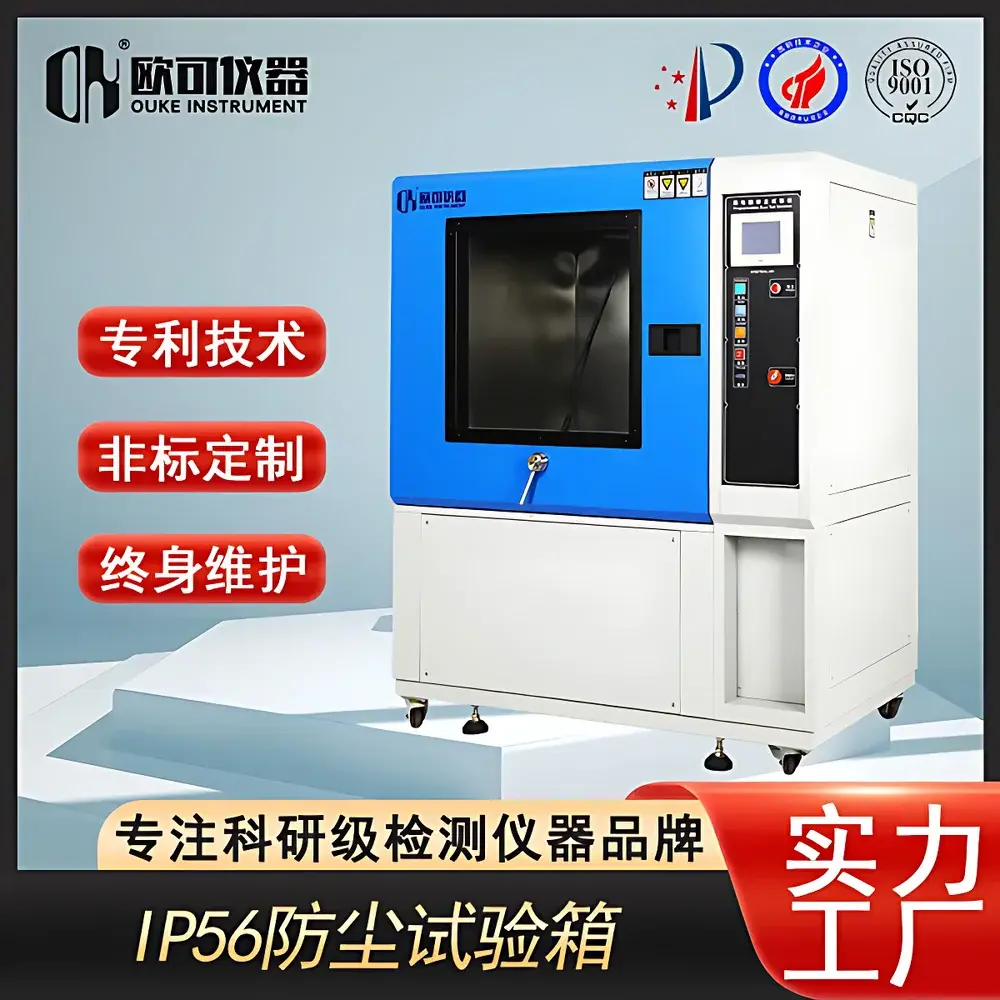
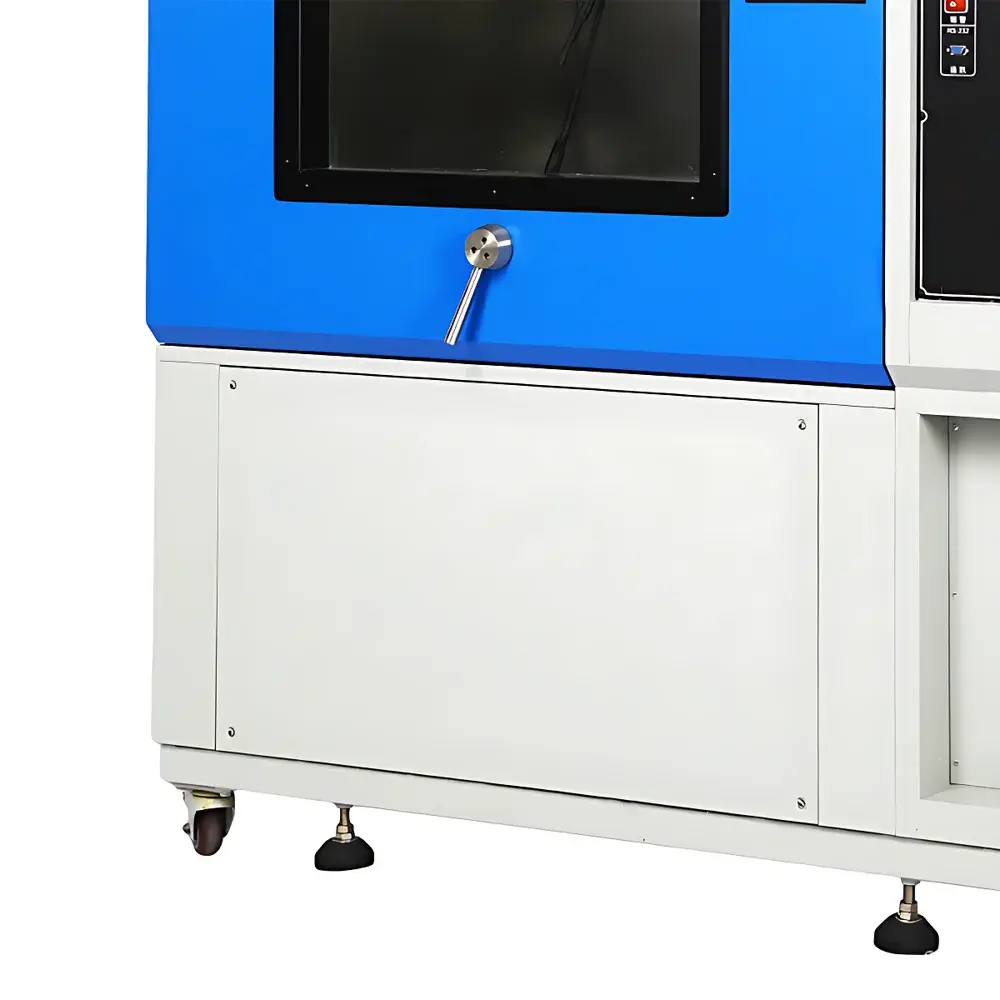
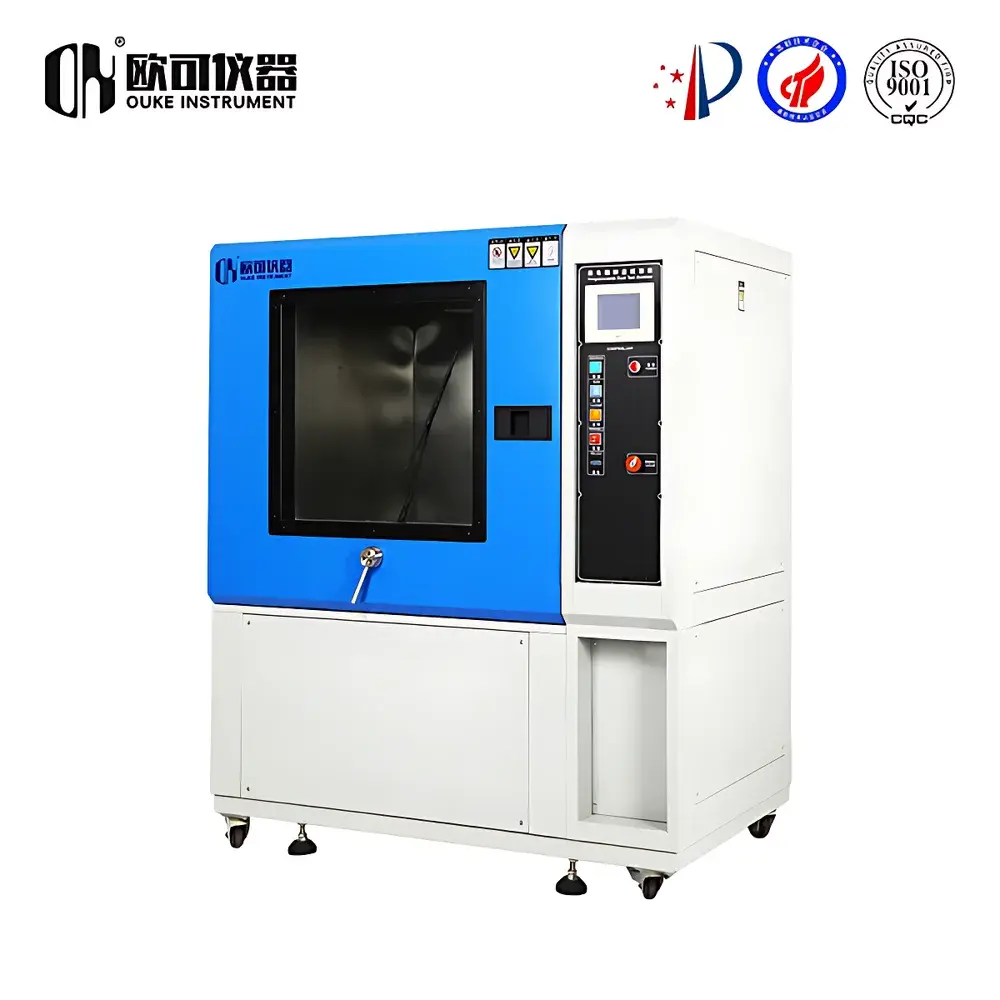
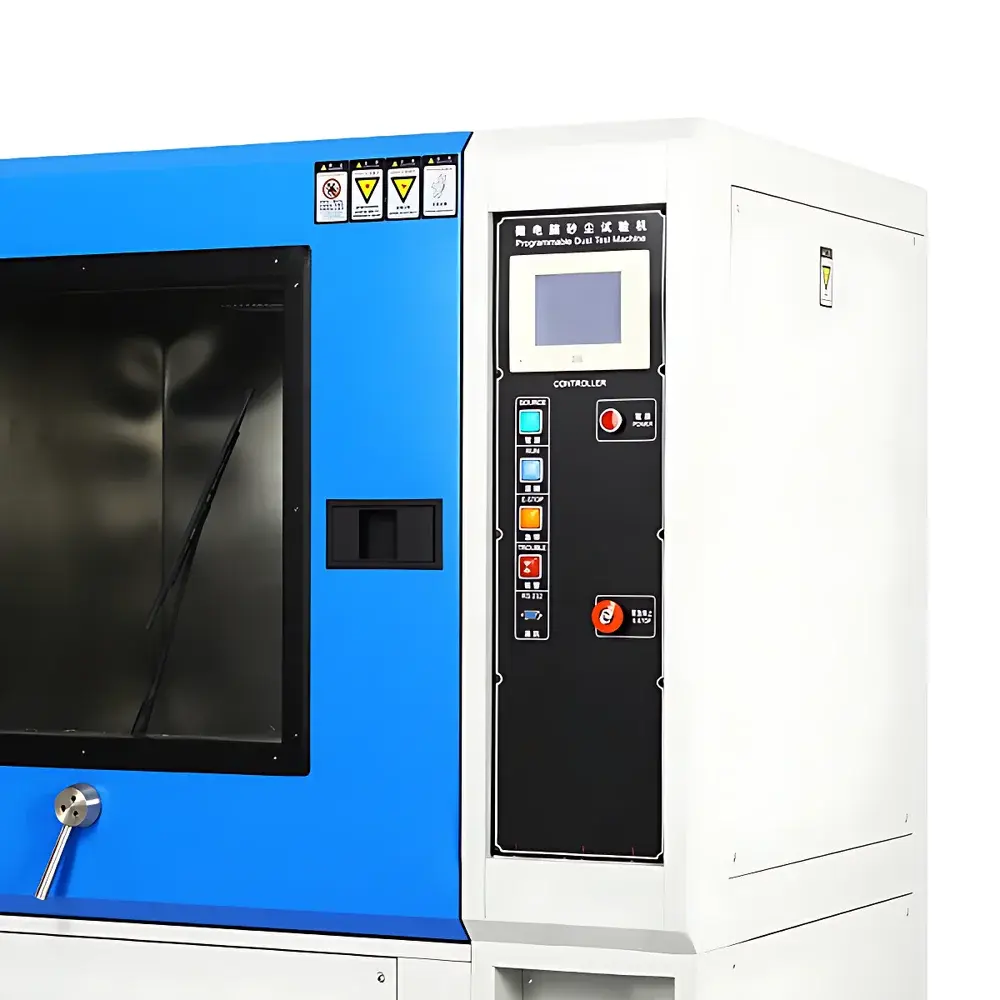
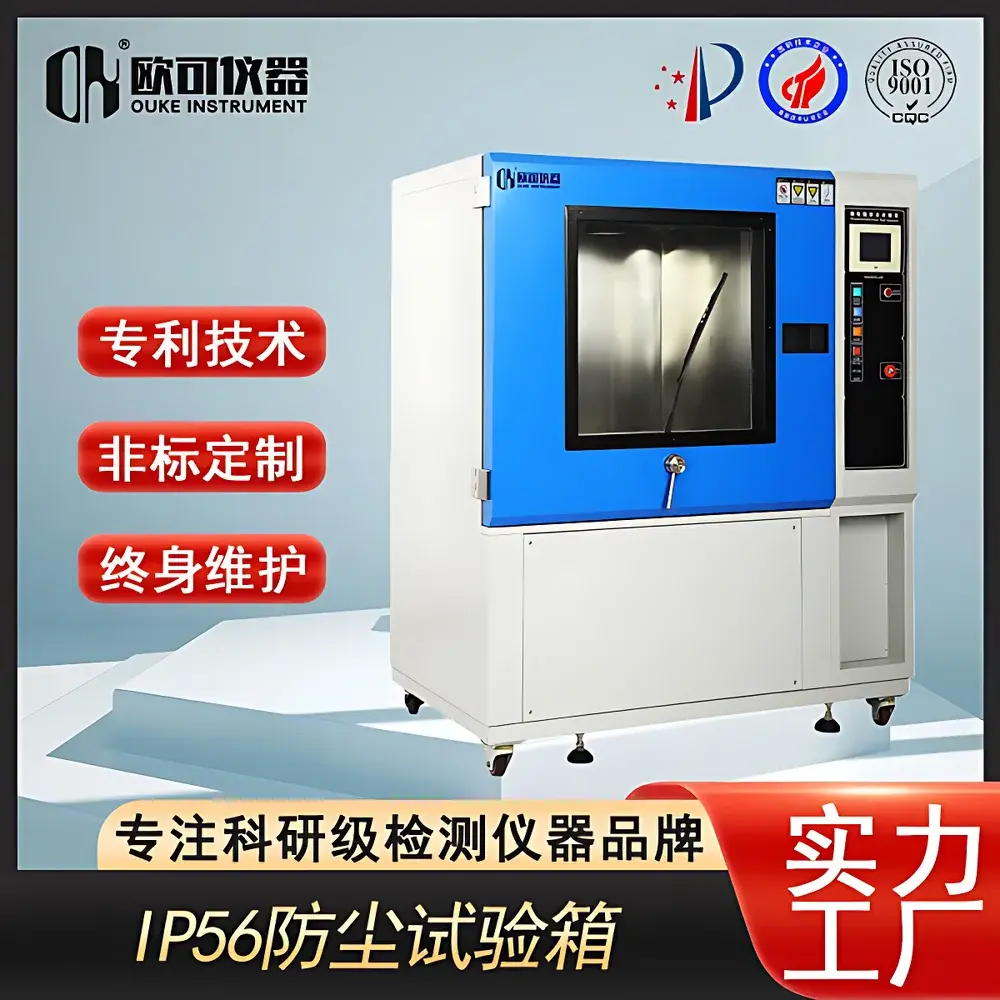
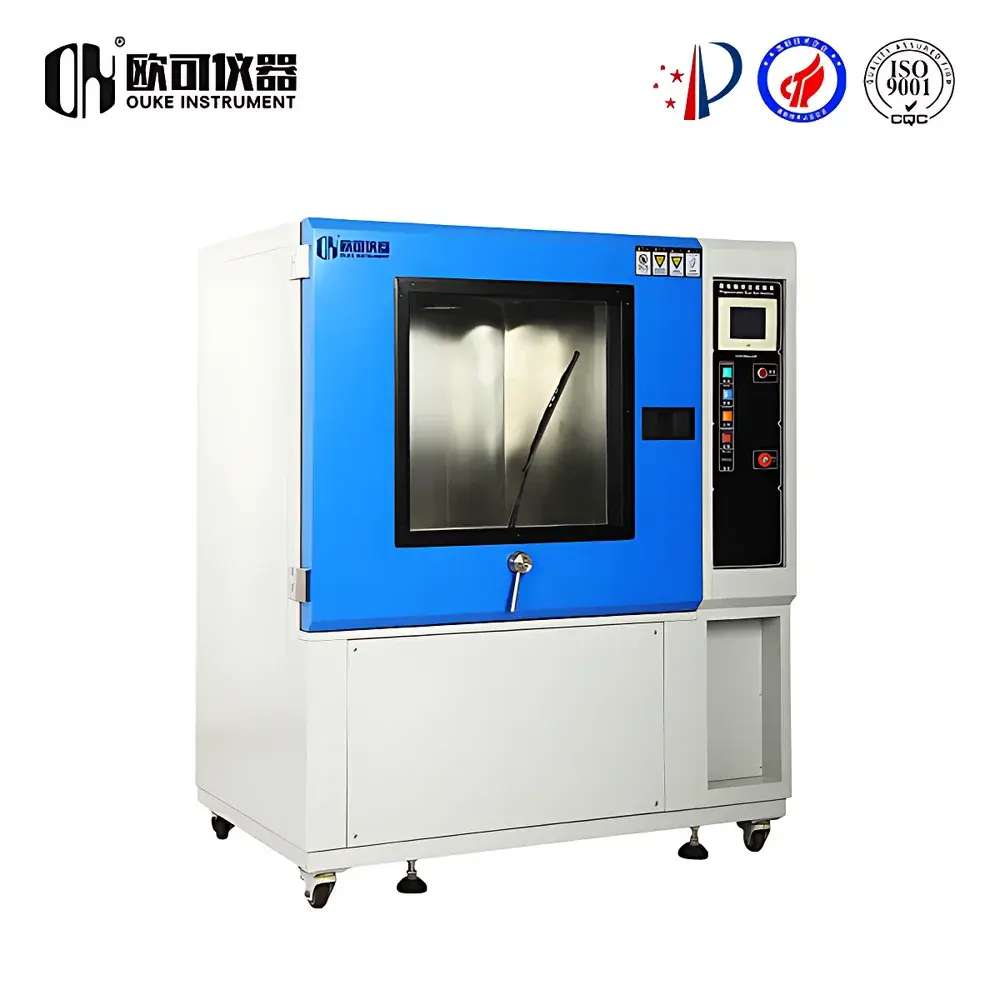
OK-HC-900.02 Large-Scale Walk-In Sand and Dust Test Chamber
| Brand | OK Instruments |
|---|---|
| Origin | Guangdong, China |
| Manufacturer Type | Direct Manufacturer |
| Model | OK-HC-900.02 |
| Silica Content | 97–99% SiO₂ |
| Sand Blowing Concentration | 1.1 g/m³ ± 0.25 g/m³ to 2.2 g/m³ ± 0.5 g/m³ |
| Sand Blowing Velocity | 0–29 m/s |
| Dust Blowing Concentration | 0.1–10.6 g/m³ ± 7 g/m³ |
| Dust Blowing Velocity | 8.9 m/s ± 1.2 m/s |
Overview
The OK-HC-900.02 Large-Scale Walk-In Sand and Dust Test Chamber is an engineered environmental simulation system designed for full-scale, human-accessible testing of equipment under controlled airborne particulate conditions. Unlike conventional benchtop or cabinet-style dust chambers, this system operates as a walk-in environmental test room—typically ranging from 30 to over 100 m³ in internal volume—capable of accommodating complete vehicles, energy storage containers, communication shelters, or rail-mounted control systems. It replicates natural sandstorm, desert dust, and industrial particulate exposure environments per international standards including IEC 60529 (IP5X/IP6X), MIL-STD-810H Method 510.7, and GB/T 2423.37–2006. Its core operational principle relies on precision-controlled turbulent airflow generation, gravimetric dust dispersion, and closed-loop particulate recirculation—enabling repeatable, metrologically traceable exposure profiles across large volumetric domains.
Key Features
- Walk-in architecture with reinforced structural frame, welded stainless steel interior cladding, and double-sealed access doors rated for ±500 Pa differential pressure containment.
- Multi-zone CFD-validated airflow design ensuring ≤±20% spatial uniformity in dust concentration and ≤±1.5 m/s velocity deviation across the test volume.
- Dual-mode particulate delivery: high-velocity sand blowing (0–29 m/s) using centrifugal blower arrays with ceramic-coated impellers; low-velocity dust suspension (8.9 m/s ± 1.2 m/s) via tangential cyclonic dispersers.
- Gravimetrically calibrated silica sand feed system (97–99% SiO₂, particle size distribution D₅₀ ≈ 100–200 µm) with automated mass flow control and real-time concentration feedback via laser scattering sensors.
- Integrated multi-stage filtration: pre-filter (G4), intermediate filter (F7), and final HEPA H14 (≥99.995% @ 0.3 µm) with automatic pressure-drop monitoring and scheduled maintenance alerts.
- Robust environmental integration capability: optional temperature range –20°C to +70°C and humidity control (10–95% RH) via auxiliary HVAC modules—designed with corrosion-resistant heat exchangers and condensate management.
Sample Compatibility & Compliance
The OK-HC-900.02 accommodates samples up to 4.5 m (L) × 2.5 m (W) × 3.0 m (H), supporting full-system validation for electric vehicles, battery energy storage systems (BESS), telecom base station cabinets, aerospace ground support equipment, and rail signaling hardware. All mechanical interfaces—including cable penetrations, sensor ports, and service hatches—are sealed with EPDM gaskets and compression flanges compliant with ISO 10648-2 for particulate containment. The chamber meets structural safety requirements per EN 13857 (safe distances) and incorporates emergency egress lighting, CO₂ monitoring, and interlocked exhaust purge sequencing to satisfy OSHA 1910.146 and local fire codes. Documentation includes factory calibration certificates for airflow sensors (traceable to NIM), particulate concentration transducers (NIST-traceable reference aerosols), and pressure differentials.
Software & Data Management
Control and data acquisition are managed through OK-EnviroSuite™ v4.2—a Windows-based SCADA platform compliant with FDA 21 CFR Part 11 for audit trail, electronic signatures, and role-based access control. Real-time parameters—including wind speed (hot-wire anemometers), dust mass concentration (optical particle counters), chamber pressure, and temperature/humidity (Pt100/HC2A-S)—are logged at 1 Hz resolution with automatic timestamping and metadata tagging (test ID, operator, standard reference). Export formats include CSV, PDF test reports, and XML for LIMS integration. Historical data retention supports GLP/GMP-compliant archiving with SHA-256 hashing and quarterly integrity verification. Remote diagnostics and firmware updates are supported via TLS 1.2-encrypted Ethernet connection.
Applications
- Automotive: IP6K9K-rated sealing validation of EV battery enclosures, motor cooling ducts, and cabin HVAC filters under dynamic sand impact.
- Energy Infrastructure: Long-duration dust ingress testing of 20-ft BESS containers deployed in arid regions, assessing thermal management degradation and contactor contamination.
- Aerospace & Defense: Environmental stress screening of C4ISR shelters, radar pedestal housings, and UAV ground control units per MIL-STD-810H Section 510.7.
- Telecommunications: Reliability assessment of outdoor macro-cell cabinets exposed to Saharan dust transport events, focusing on fan clogging, optical sensor fouling, and thermal runaway initiation.
- Rail Transport: Functional endurance testing of onboard ATP systems and balise readers subjected to Gobi Desert–type suspended particulate loads during high-speed operation.
FAQ
What standards does the OK-HC-900.02 comply with for dust ingress testing?
It supports test execution per IEC 60529 (IP5X/IP6X), MIL-STD-810H Method 510.7, DEF STAN 00-35, and GB/T 2423.37–2006—with configurable test profiles for both steady-state and cyclic exposure protocols.
Can the chamber operate with composite temperature-dust profiles?
Yes—optional integrated HVAC modules enable simultaneous control of temperature (–20°C to +70°C) and relative humidity (10–95% RH) during active dust circulation, subject to thermal load derating and airflow recalibration.
How is dust concentration verified and maintained during extended tests?
Concentration is continuously monitored via dual-channel laser particle counters (0.3–10 µm range), with closed-loop feedback to the volumetric dosing pump and secondary air injection valves to maintain setpoint within ±7 g/m³ tolerance.
Is CFD simulation provided prior to commissioning?
Yes—each system delivery includes a project-specific ANSYS Fluent CFD report detailing velocity vectors, particle trajectory maps, and concentration iso-surfaces across the defined test volume, validated against ASHRAE 113-2020 measurement protocols.
What maintenance intervals are recommended for the filtration system?
Pre-filters require replacement every 200 operational hours; intermediate filters every 800 hours; HEPA H14 filters every 2,000 hours or upon ΔP > 600 Pa—automatically logged and flagged in OK-EnviroSuite™.



