
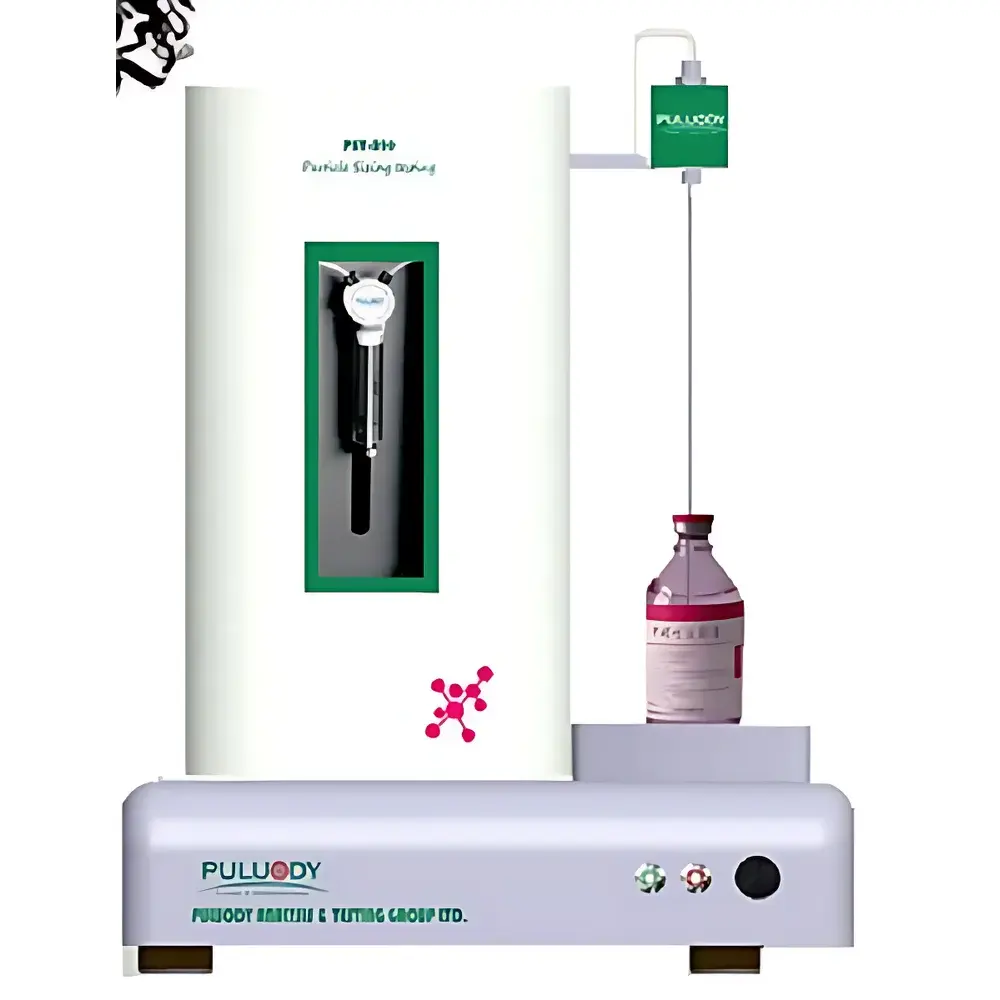
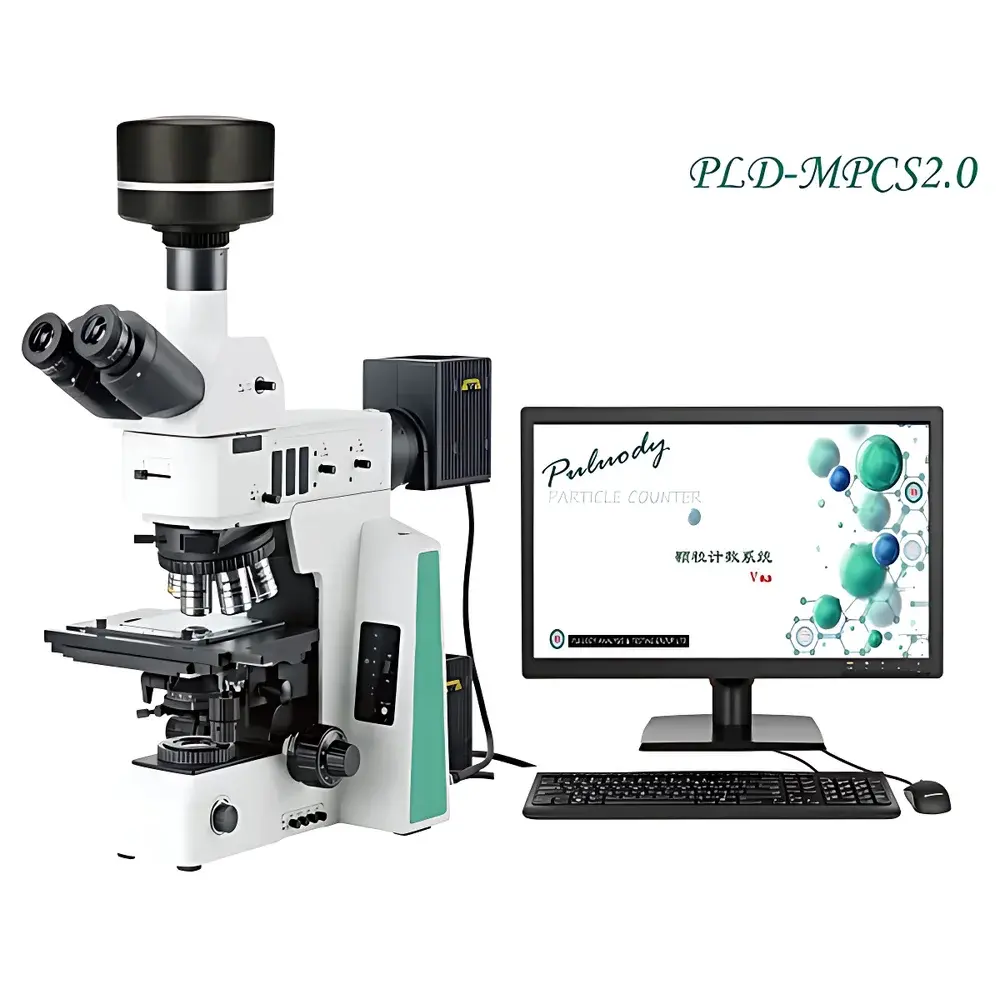
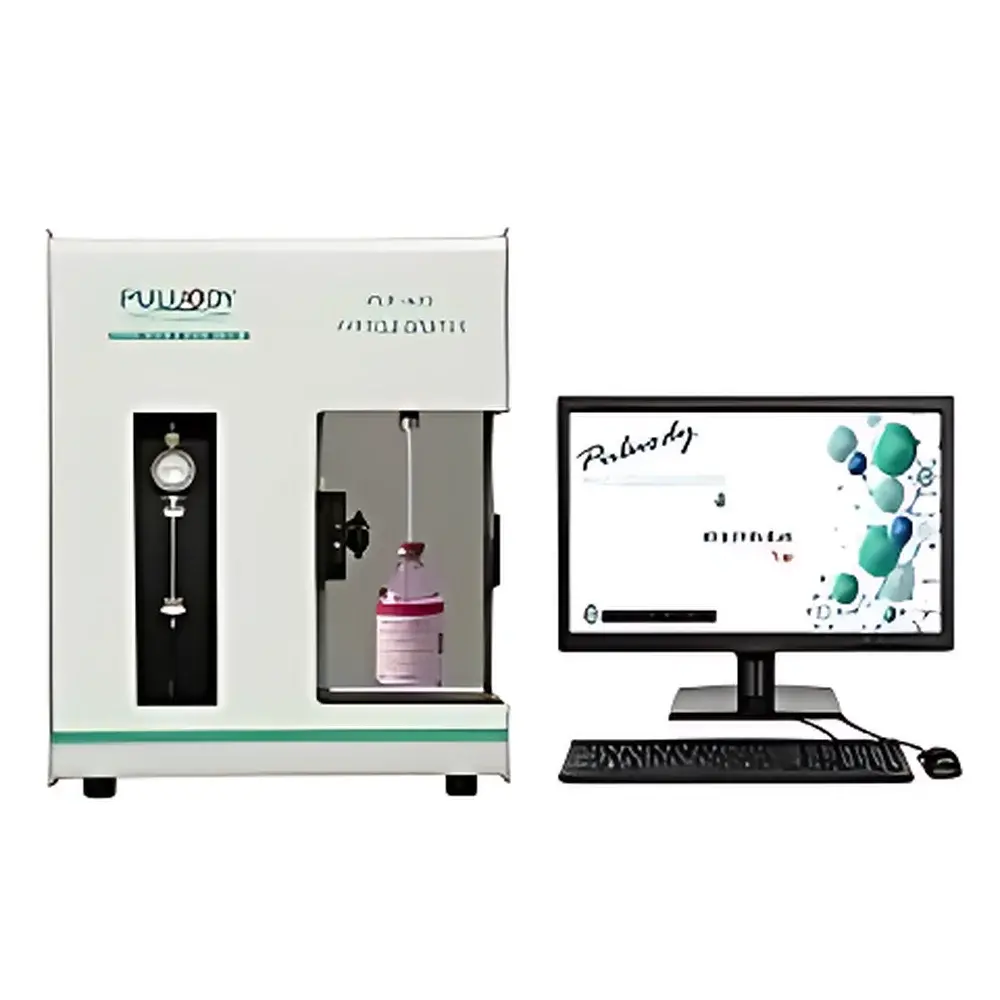
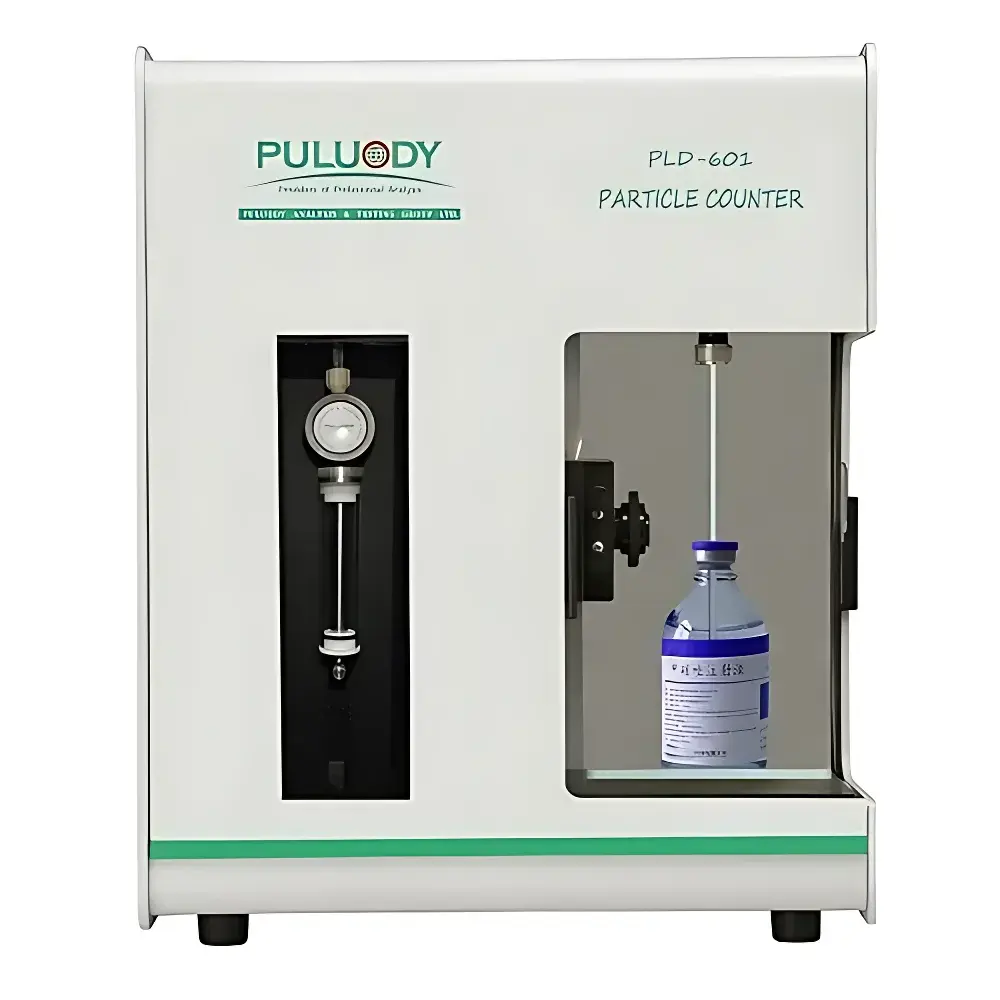
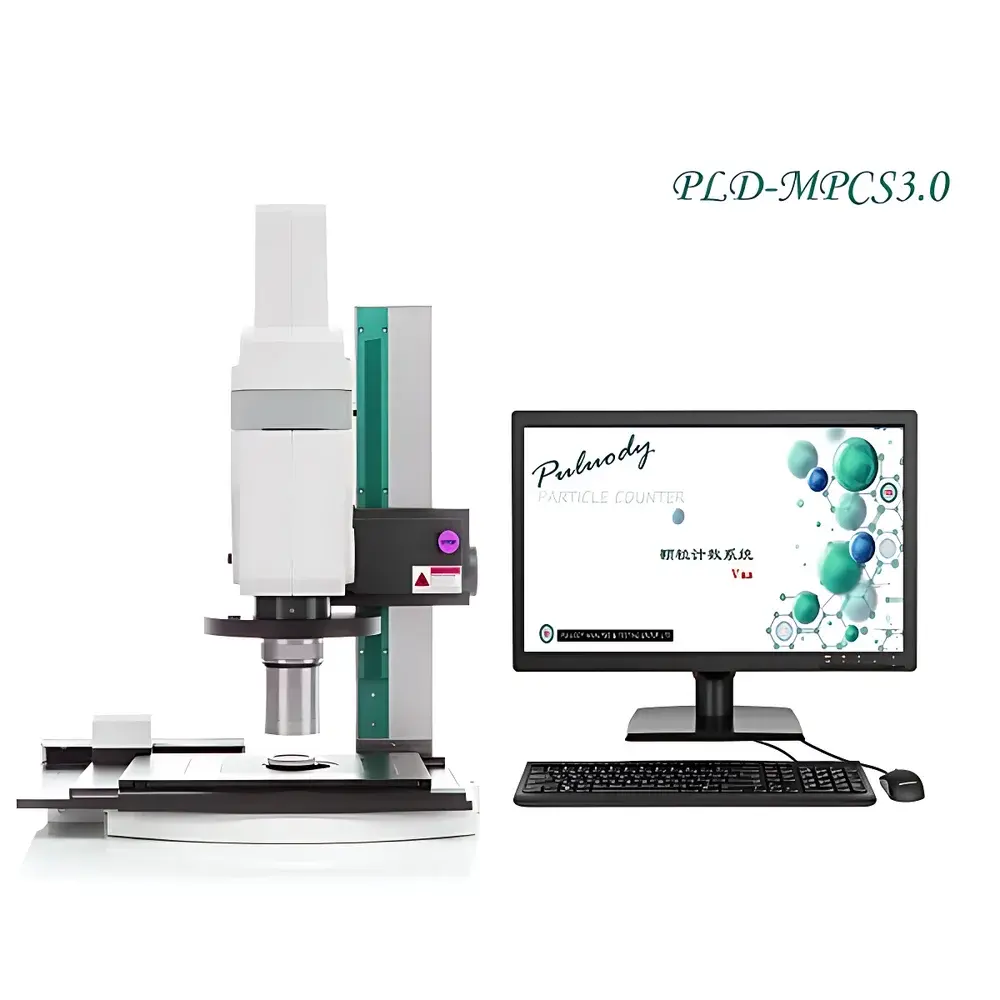
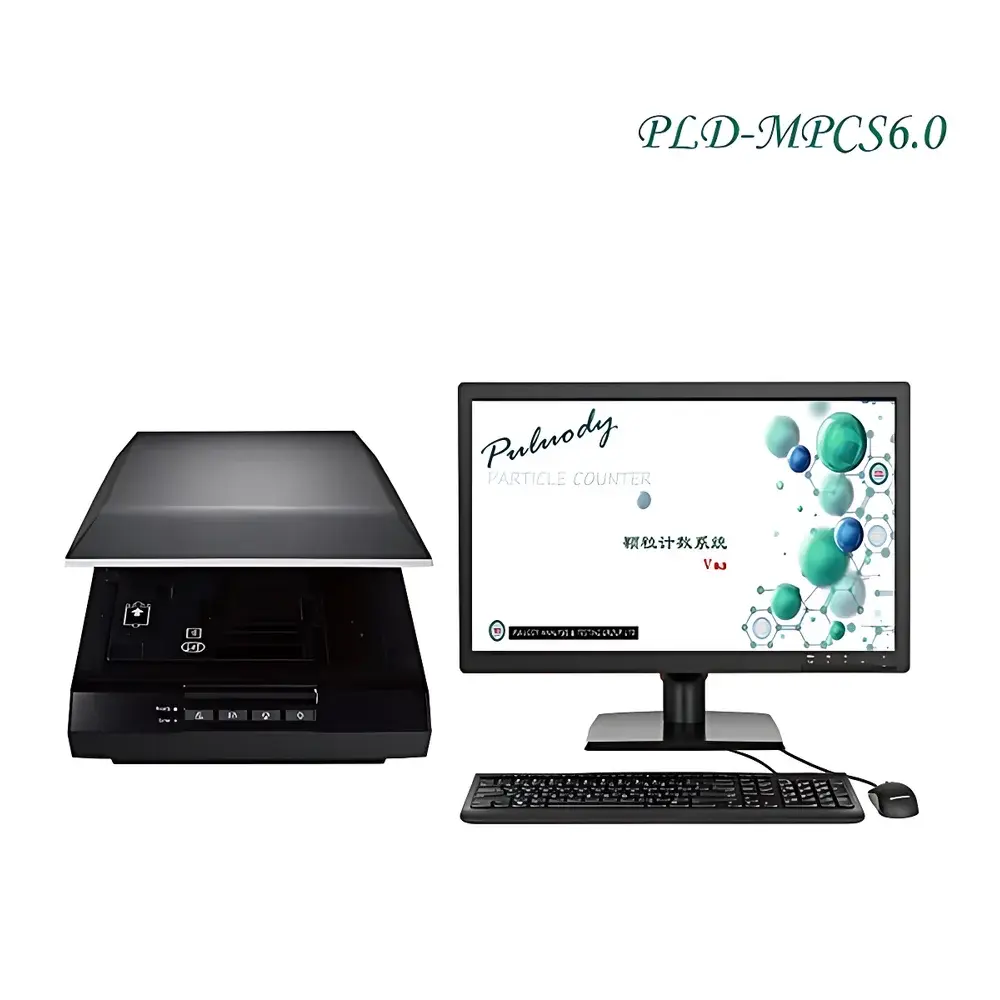
PULUODY PST-890 Insoluble Particle Analyzer for Pharmaceutical Emulsions
| Brand | PULUODY |
|---|---|
| Model | PST-890 |
| Detection Principle | Light Obscuration (LO) with Dual-Laser Narrow-Beam Sensor |
| Particle Size Range | 1–450 µm (optional extended to 0.03–3000 µm) |
| Resolution | >95% (ChP 2015/2020 calibrated), <10% (USP/ISO 21501 calibrated) |
| Channel Count | 1000 adjustable channels (customizable from 4 to 128 size bins) |
| Flow Control | Precision metering piston pump + ultra-precise electromagnetic flow regulation |
| Sampling Accuracy | <±1% |
| Counting Accuracy | ±3% typical |
| Coincidence Limit | ≤2.5% error at 1000 particles/mL |
| Operating Temperature | Fluid 0–80 °C, Ambient –15–50 °C |
| Compliance | USP <788>, <789>, <797> |
Overview
The PULUODY PST-890 Insoluble Particle Analyzer is a regulatory-grade light obscuration (LO) instrument engineered for precise quantification and size distribution analysis of insoluble particulate matter in parenteral pharmaceuticals and high-purity process liquids. Designed specifically for compliance-critical environments—including QC laboratories operating under GMP, GLP, and FDA 21 CFR Part 11 requirements—the PST-890 implements an eighth-generation dual-laser narrow-beam sensor architecture to minimize optical scatter interference and enhance signal-to-noise ratio across sub-micron to coarse particle ranges. Its core measurement principle relies on transient attenuation of collimated laser light as particles pass through the sensing zone, generating pulse-height signals proportional to projected area. This enables direct correlation between pulse amplitude and equivalent spherical diameter (ESD), traceable to NIST-traceable latex standards (e.g., ISO 21501-4) and national metrology institutes including China’s Northwest National Metrology Testing Center and the Defense Science & Technology Commission’s Level-1 Particle Calibration Station No. 116.
Key Features
- Eighth-generation dual-laser narrow-beam optical sensor with real-time background noise compensation and automatic alignment verification.
- Dual-stage precision fluidic control: a volumetric metering piston pump ensures absolute volumetric delivery accuracy (<±1%), while an electromagnetic flow regulator maintains stable laminar flow (5–150 mL/min sampling; 5–500 mL/min cleaning) independent of viscosity or backpressure fluctuations.
- 1000-channel high-resolution histogramming engine—configurable down to 4 discrete size bins—supports simultaneous evaluation against multiple pharmacopoeial thresholds (e.g., ≥10 µm and ≥25 µm per USP , or ≥5 µm and ≥25 µm per ChP 0903).
- V8.9 Analytical Software Suite with full 21 CFR Part 11 compliance: role-based 5-tier user access control, immutable audit trail with timestamped operator ID, electronic signature workflow, automated data backup/restoration, and power-loss recovery without data corruption.
- Touchscreen HMI with bilingual (English/Chinese) interface optimized for ISO/IEC 17025 laboratory workflows; supports custom calibration curves, threshold overlays, and export to CSV, PDF, or LIMS-compatible XML formats.
Sample Compatibility & Compliance
The PST-890 accommodates a broad spectrum of liquid matrices relevant to pharmaceutical development and manufacturing: lipid emulsions (e.g., propofol, soybean oil-based IVFE), sterile aqueous solutions (small-molecule injectables), lyophilized powder reconstitutes, ophthalmic solutions, vaccines (adjuvant-containing suspensions), WFI and purified water, polymer-based container closure systems (e.g., rubber stoppers, plastic vials), and infusion set components. It meets all mandatory testing requirements specified in USP , , and ; European Pharmacopoeia monographs EP 10.0, 9.0, and 8.0; British Pharmacopoeia BP 2019/2018; Japanese Pharmacopoeia JP17; WHO International Pharmacopoeia IntPh IV; and Chinese Pharmacopoeia ChP 2015/2020 Section 0903. Instrument validation follows JJG 1061–2010 (China National Verification Regulation for Liquid Particle Counters) and ISO 21501-4:2018, with optional third-party certification available via accredited metrology providers.
Software & Data Management
The embedded V8.9 software platform provides full lifecycle data governance. All analytical sessions are time-stamped, operator-identified, and cryptographically signed. Audit trails record every parameter change, calibration event, report generation, and user login/logout. Data integrity safeguards include write-once-read-many (WORM) archival mode, configurable auto-backup intervals (local SSD or network drive), and version-controlled method templates. Raw pulse data and processed histograms are stored in vendor-neutral binary format, enabling retrospective re-analysis without loss of resolution. The system supports seamless integration with enterprise LIMS and ELN platforms via ASTM E1384-compliant APIs and HL7 messaging protocols.
Applications
- Quantitative assessment of filter efficiency for terminal sterilizing-grade membranes (e.g., 0.22 µm PVDF) using challenge suspensions and post-filtration particle counting.
- Stability-indicating monitoring of lipid emulsion droplet coalescence and phase separation during accelerated storage studies.
- Raw material qualification of excipients (e.g., polysorbate 80, lecithin) and active pharmaceutical ingredients (APIs) for extraneous particulate burden.
- Validation of cleaning procedures for bioreactors, filling lines, and isolators via rinse-water particle profiling.
- Compliance-driven release testing of final drug products per global pharmacopoeial mandates, including batch-level reporting of cumulative counts above pharmacopeial thresholds.
- Cross-industry extension to semiconductor CMP slurries, electronic-grade ultrapure water (UPW), nanomaterial dispersions, and medical device extractables testing.
FAQ
Does the PST-890 comply with FDA 21 CFR Part 11 requirements for electronic records and signatures?
Yes. The system implements full Part 11 functionality—including audit trail with immutable timestamps, role-based electronic signatures, and secure data backup—with validation documentation available upon request.
Can the instrument be calibrated using ISO 21501-4 traceable standards?
Yes. Calibration is performed using NIST-traceable polystyrene latex spheres (PSL) certified per ISO 21501-4, with optional certificate issuance by CNAS-accredited calibration labs.
What is the minimum detectable particle size, and how is resolution verified?
The base configuration detects particles ≥1 µm; extended-range options support 0.03 µm detection. Resolution is validated per ChP 2020 (≥95%) and USP (≤10% error at overlapping sizes) using bimodal PSL reference materials.
Is method transfer supported between different PST-890 units?
Yes. Method templates—including channel definitions, flow rates, sample volume, and pass/fail criteria—are exportable/importable as encrypted .pmt files, ensuring consistent operation across multi-site deployments.
How does the system handle viscous or non-Newtonian samples such as concentrated emulsions?
The dual-stage flow control architecture compensates for variable viscosity: the piston pump delivers fixed-volume aliquots regardless of resistance, while the electromagnetic regulator dynamically adjusts pressure to maintain target linear velocity in the sensor cell.





