
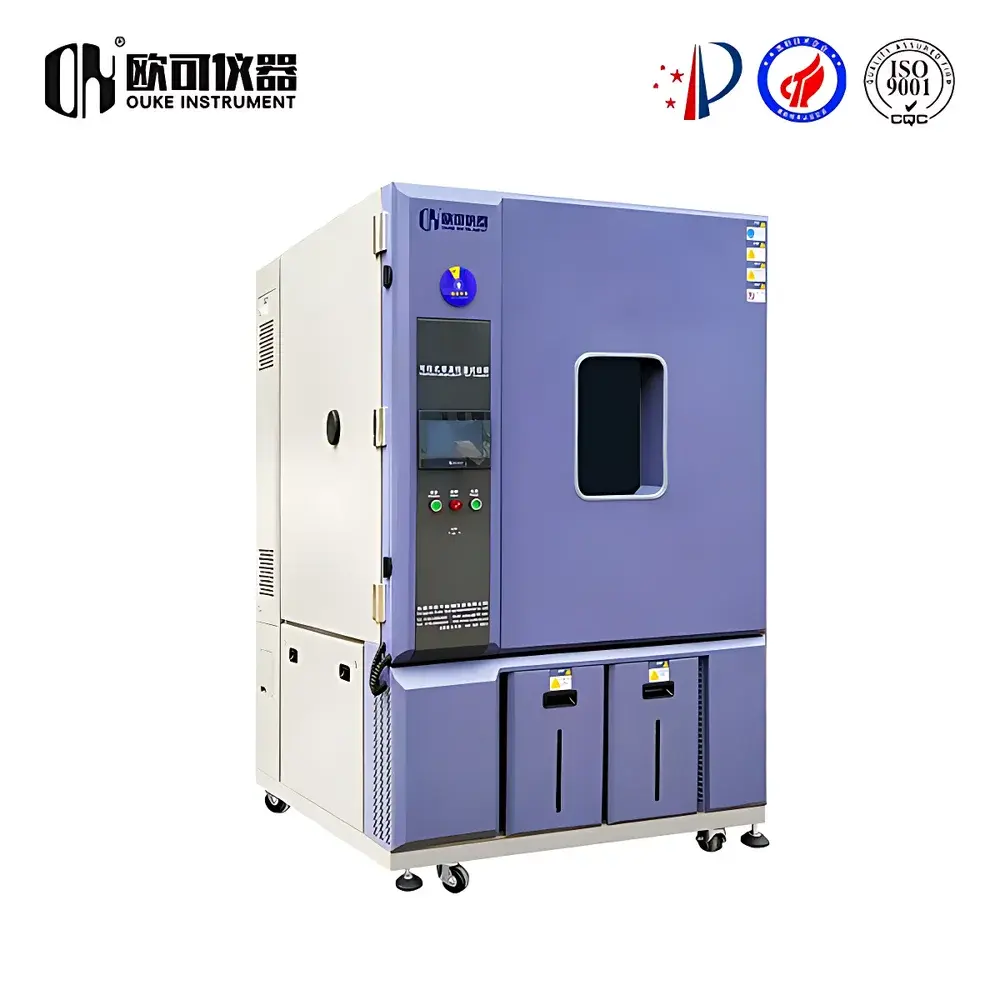
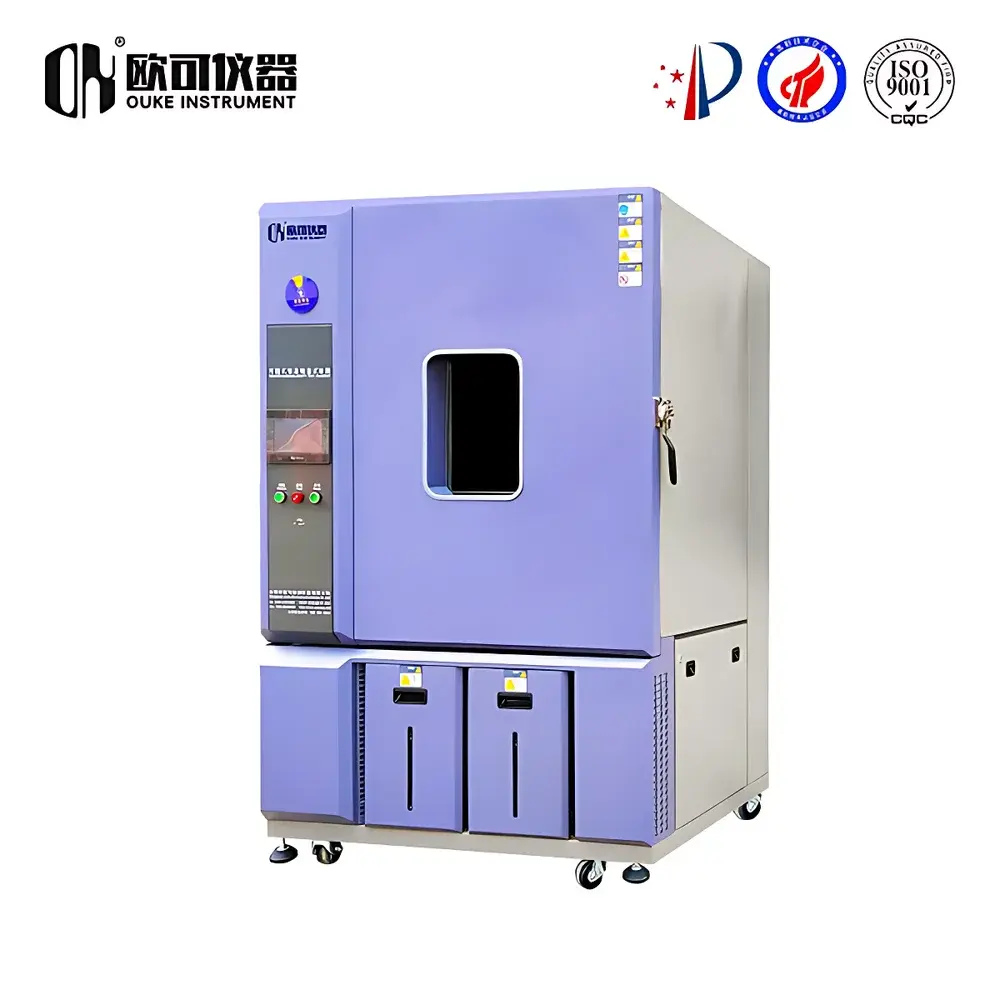
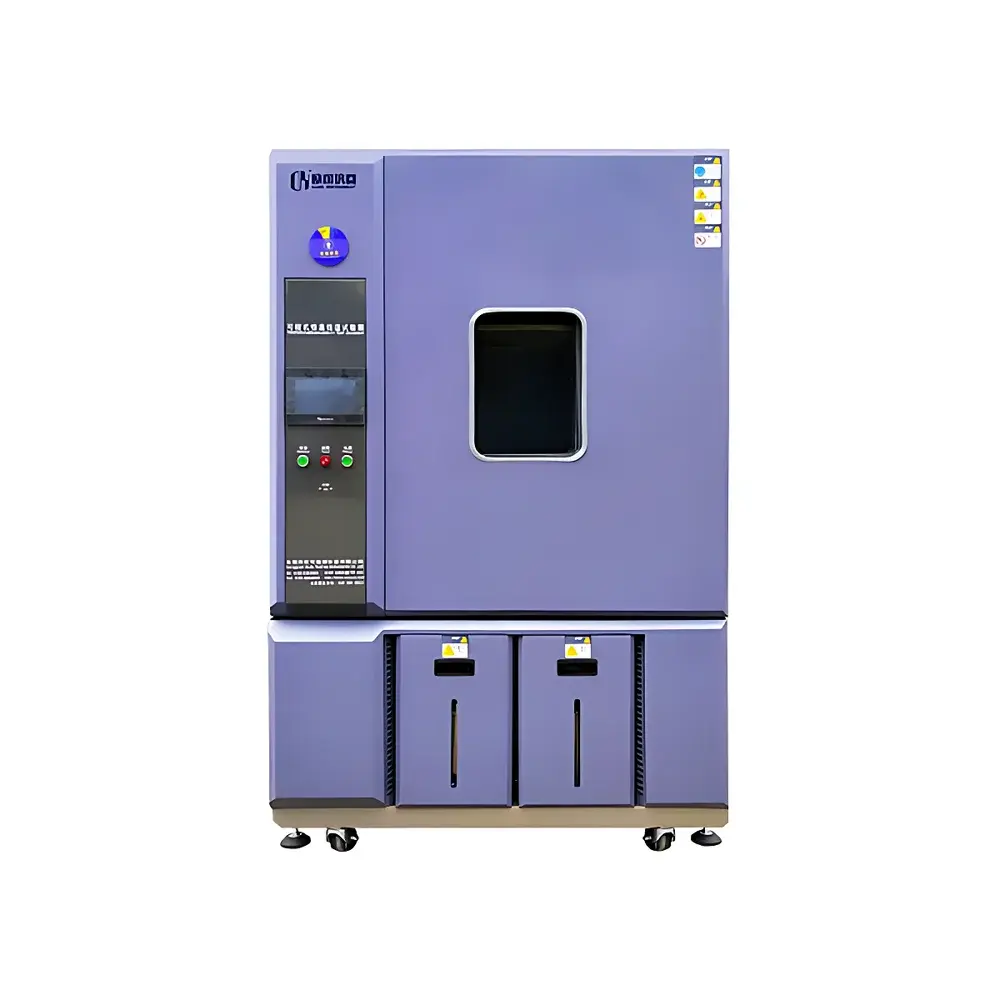
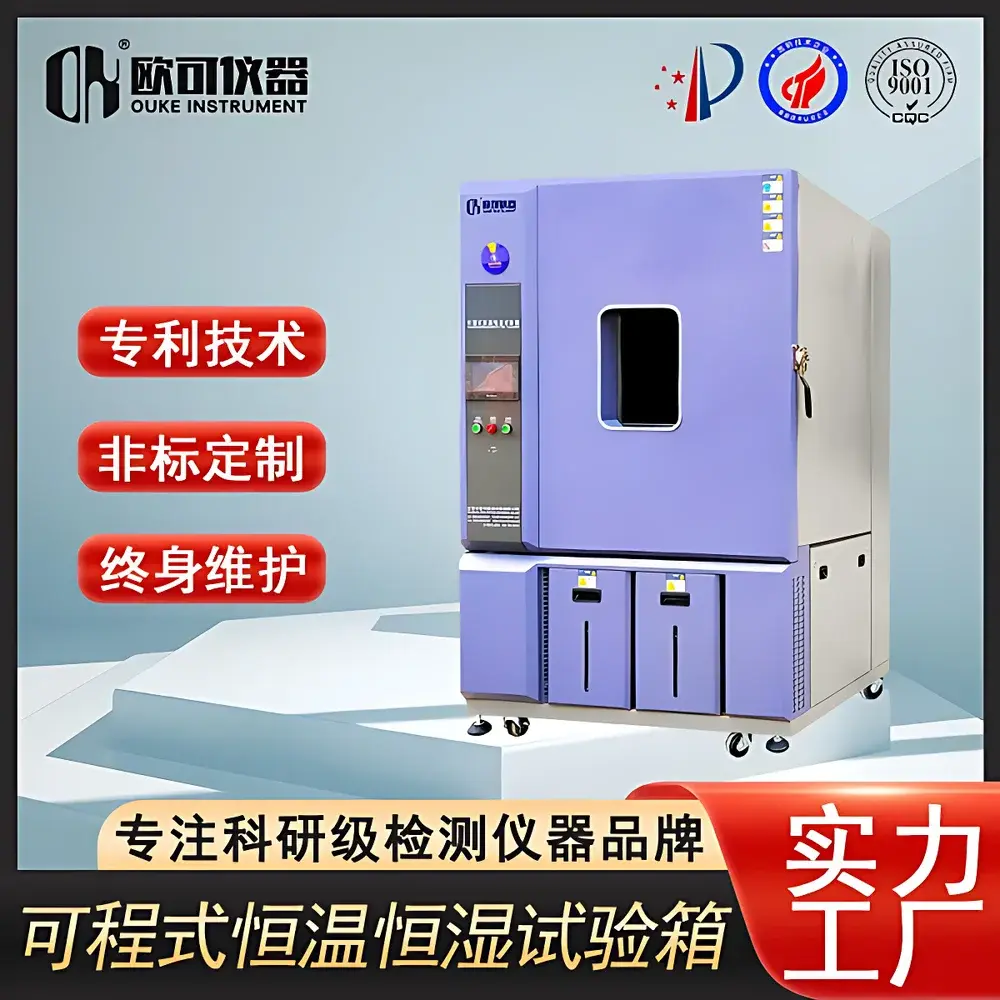
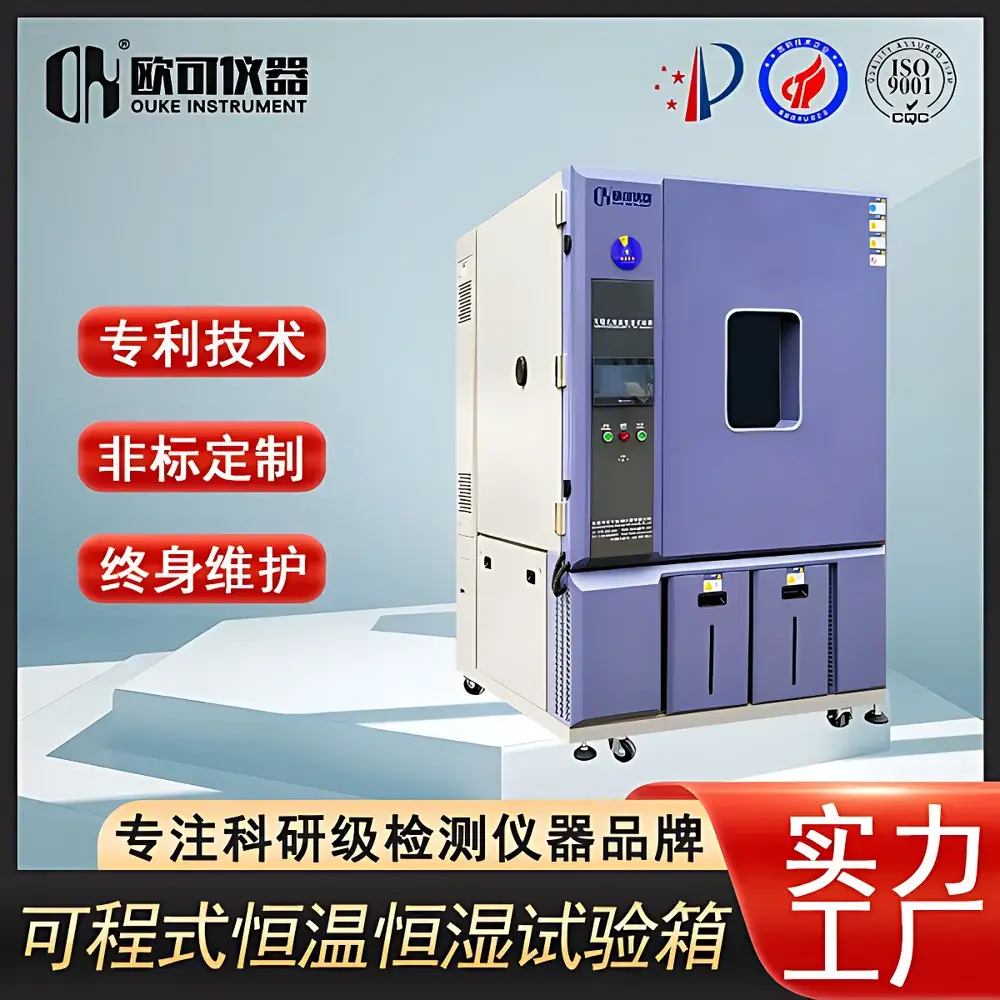
OK-TH-6 Desktop Temperature and Humidity Controlled Environmental Test Chamber
| Brand | OK Instruments |
|---|---|
| Origin | Guangdong, China |
| Manufacturer Type | Direct Manufacturer |
| Product Category | Domestic |
| Model | OK-TH-6 |
| Instrument Type | Benchtop |
| Cooling Method | Air-Cooled |
| Temperature Range | −40 °C to +150 °C |
| Humidity Range | 20–98 % RH |
| Temperature Uniformity | ≤ ±2 °C |
| Temperature Fluctuation | ±1 °C (high-temp), ±2 °C (low-temp) |
| Humidity Uniformity | ≤ ±3 % RH |
| Humidity Fluctuation | ±3 % RH |
| Heating Rate | 1.0–3.0 °C/min |
| Internal Chamber Dimensions (W×D×H) | 600 × 500 × 400 mm |
Overview
The OK-TH-6 Desktop Temperature and Humidity Controlled Environmental Test Chamber is an engineered precision system designed for accelerated reliability validation of consumer electronics—particularly smartphones—under rigorously defined thermal and hygroscopic stress conditions. Based on the fundamental principles of controlled environmental exposure, the chamber maintains stable, programmable gradients of temperature and relative humidity to replicate real-world climatic extremes encountered during storage, transportation, and operational use. Its architecture adheres to the physical basis of heat transfer (convection-driven air circulation), psychrometric control (via refrigeration-compressor cooling and steam/humidifier-based vapor saturation), and closed-loop PID regulation for dynamic parameter tracking. The OK-TH-6 serves as a foundational tool in product qualification workflows aligned with IEC 60068-2, GB/T 2423, JESD22-A101 (steady-state bias life), and JESD22-A104 (temperature cycling), supporting both pre-production design verification and post-manufacturing quality assurance.
Key Features
- Benchtop footprint with internal stainless steel (SUS304) construction—corrosion-resistant, non-outgassing, and compliant with cleanroom-grade material requirements for electronic device testing.
- Double-glazed, anti-fog observation window enabling real-time visual monitoring without compromising chamber integrity or thermal stability.
- Dedicated sealed cable ports with silicone gaskets on lateral walls—facilitating safe, leak-free integration of power, data, and sensor lines during powered-on or functional test modes.
- Multi-stage programmable controller supporting nested cycles, ramp-rate definition (1.0–3.0 °C/min), dwell time, and humidity slope control—essential for simulating diurnal/seasonal transitions per JESD22-A104.
- Comprehensive safety architecture including over-temperature cutoff, refrigerant pressure monitoring, condensate level detection, fan overheat protection, and ground-fault circuit interruption—critical when testing lithium-ion battery-equipped devices.
- Uniform airflow distribution via tangential blower and optimized baffle design ensures spatial temperature uniformity ≤ ±2 °C and humidity uniformity ≤ ±3 % RH across the full working volume (600 × 500 × 400 mm).
Sample Compatibility & Compliance
The OK-TH-6 accommodates single-unit or small-batch smartphone samples—tested in bare-metal, assembled, or protective-case configurations—while maintaining strict separation from chamber walls (≥50 mm clearance) to ensure laminar air exchange and avoid localized thermal shadowing. It supports both passive (powered-off) and active (powered-on, software-monitored) test protocols, with external interface compatibility for automated functional logging. All operational parameters comply with ISO/IEC 17025 traceability frameworks when paired with NIST-traceable calibration certificates. The chamber meets structural and safety prerequisites for executing tests referenced in Apple’s A-TLV, Samsung’s RAS-STD, and Xiaomi’s EM-REL standards—including high-risk 85 °C/85 % RH bias testing under continuous voltage application. Its design facilitates GLP-aligned audit trails when integrated with external data acquisition systems.
Software & Data Management
The embedded controller provides local program editing, real-time curve display, and event-triggered alarm logging. For regulatory compliance—especially in GMP-adjacent R&D environments—the OK-TH-6 supports optional RS485/Modbus or Ethernet TCP/IP output to third-party SCADA or LIMS platforms. This enables time-stamped, user-attributed recording of all setpoints, actual values, alarms, and runtime events—fully satisfying FDA 21 CFR Part 11 requirements for electronic records and signatures when deployed with validated software layers. Raw temperature/humidity logs are exportable in CSV format for statistical process control (SPC) analysis, failure mode correlation, and root-cause investigation of field return anomalies.
Applications
- High-temperature/high-humidity storage simulation (e.g., 70 °C/90 % RH, 96 h) to assess PCB corrosion resistance, adhesive bond integrity, and battery electrolyte stability.
- Cold storage validation at −40 °C to evaluate LCD response latency, polymer housing brittleness, and connector contact resistance.
- Powered operational testing at 55 °C/90 % RH to quantify thermal throttling behavior, touchscreen drift, RF performance degradation, and firmware crash frequency.
- Temperature-humidity cycling (e.g., −10 °C ↔ 65 °C / 20 % ↔ 90 % RH, 20 cycles) for intermetallic compound fatigue analysis at solder joints and coefficient-of-thermal-expansion (CTE) mismatch evaluation between glass, ceramic, and FR-4 substrates.
- 85 °C/85 % RH biased life testing to accelerate electrochemical migration (ECM) and dendritic growth on densely routed HDI PCBs—directly informing IPC-9701A qualification thresholds.
FAQ
Can the OK-TH-6 be used for UL 94 flammability preconditioning?
Yes—its precise low-humidity control (20 % RH minimum) and stable 23 °C hold capability meet ASTM D635 and IEC 60695-11-10 preconditioning requirements prior to vertical/horizontal burn testing.
Is the chamber suitable for testing devices with active thermal management (e.g., vapor chambers)?
Yes—its forced-air convection system delivers consistent surface heat transfer coefficients (h ≈ 12–18 W/m²·K), enabling repeatable boundary condition imposition for devices with internal active cooling.
Does the OK-TH-6 support dew point control or only relative humidity setpoints?
It operates exclusively on RH setpoints; however, dew point can be derived in real time using built-in temperature and humidity sensors with NIST-traceable calibration.
What maintenance intervals are recommended for long-term metrological stability?
Quarterly sensor verification against reference hygrometers and annual compressor oil/filter replacement are advised per ISO 16730-2 guidelines for environmental test equipment.
Can third-party test reports generated using this chamber be accepted by notified bodies?
Yes—provided the unit undergoes initial IQ/OQ/PQ validation, maintains documented calibration history, and operates within its specified uncertainty budget per ISO/IEC 17025 clause 5.10.



