
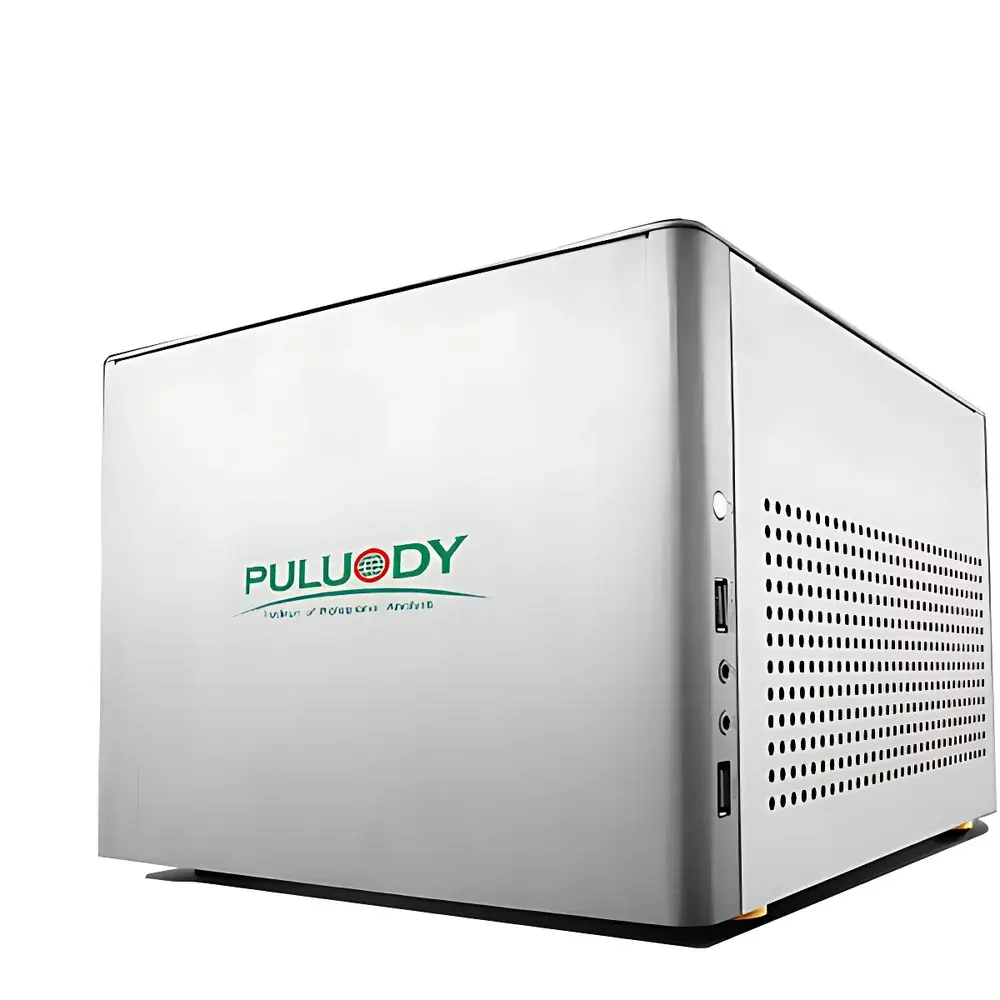

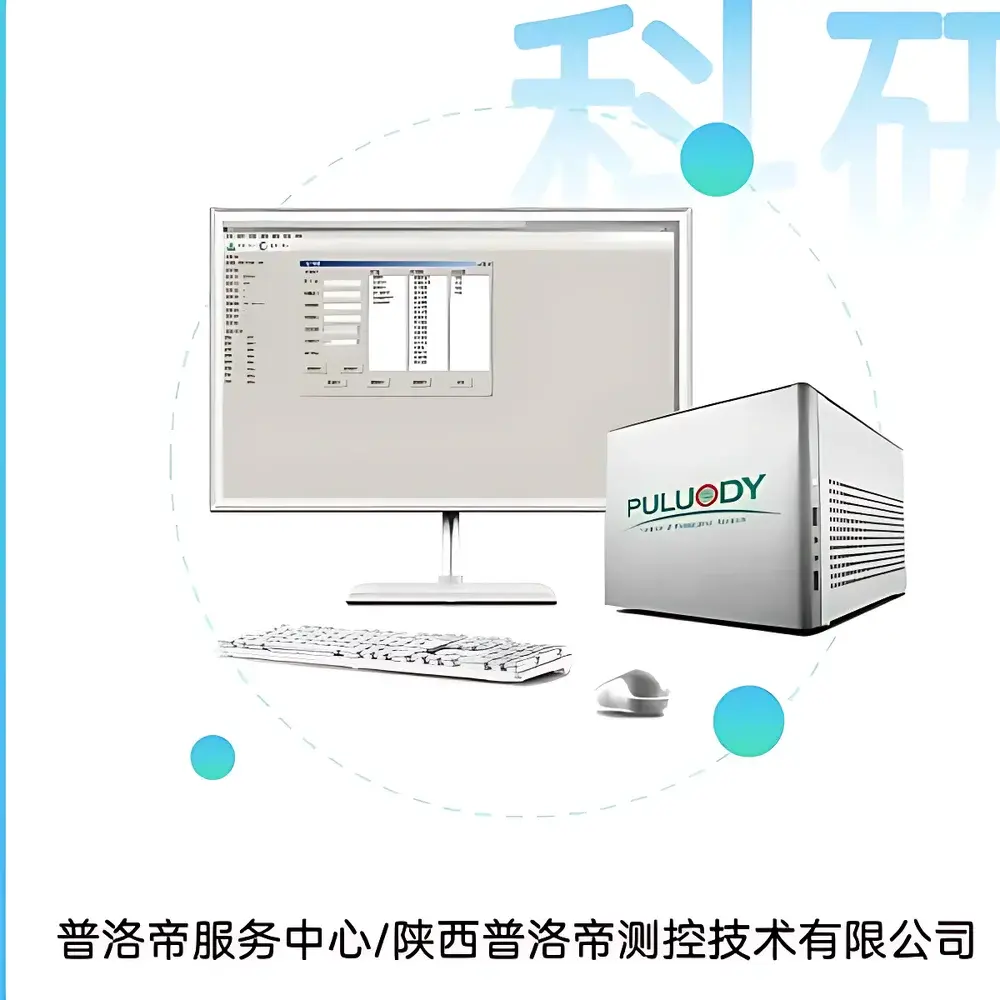
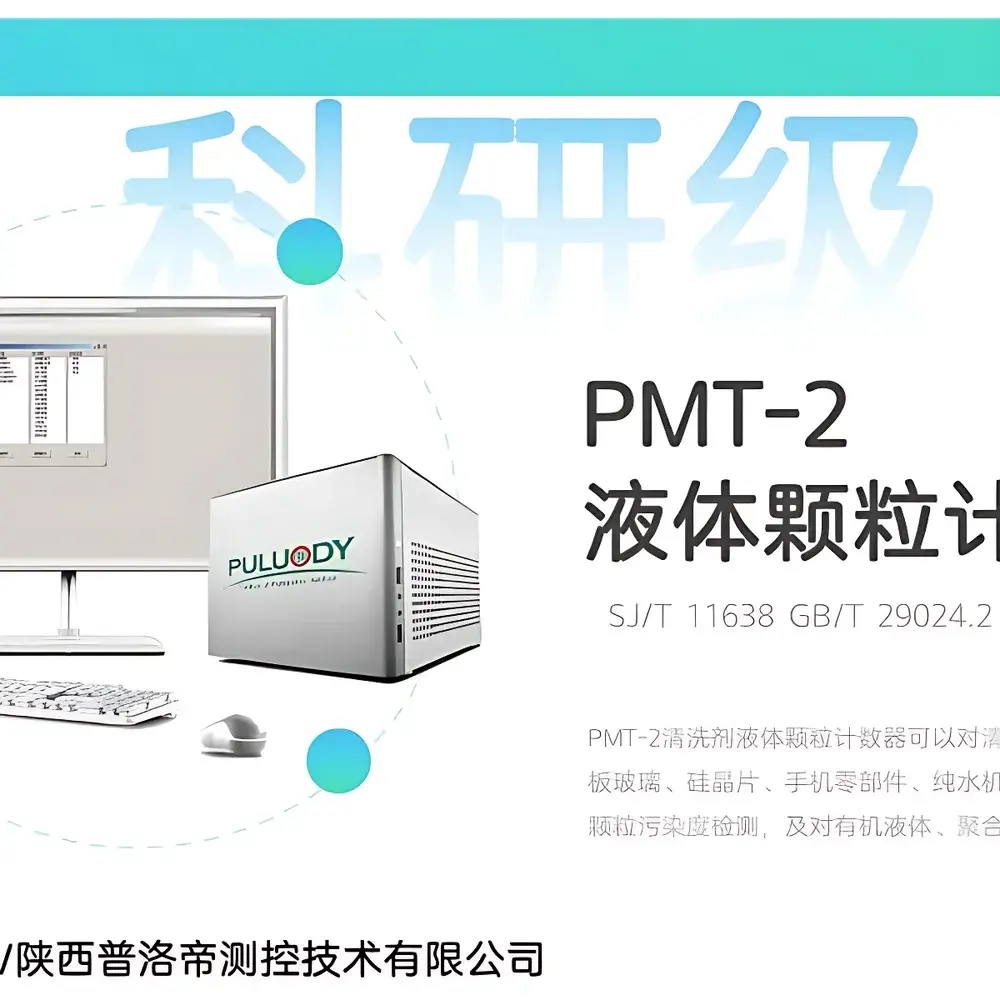
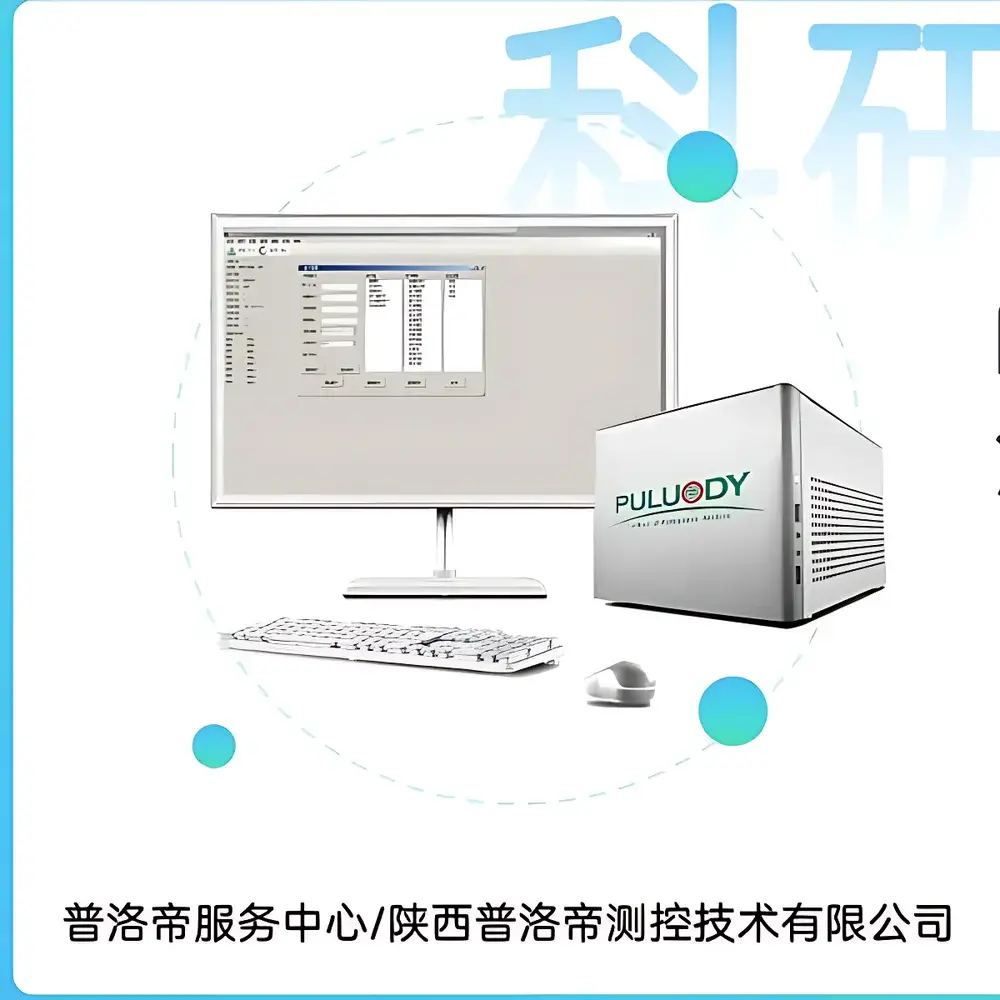
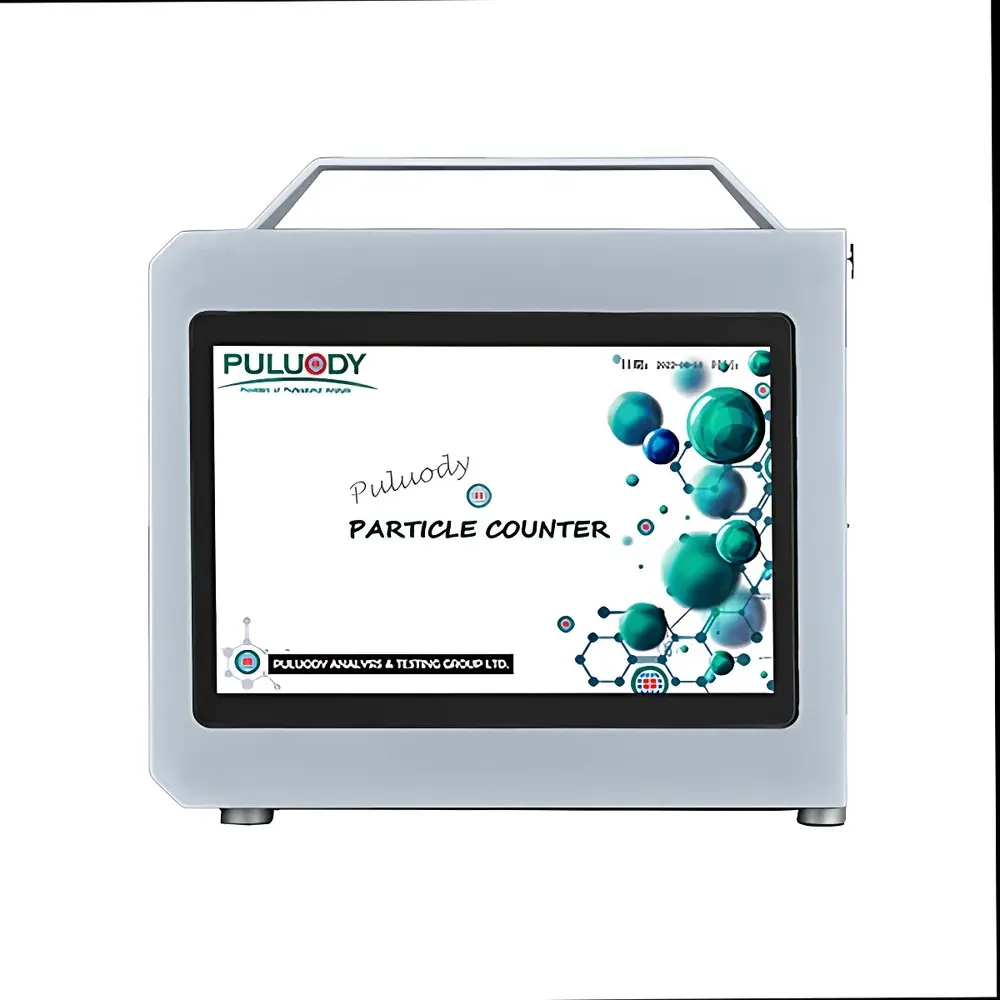
PULUODY PMT-2GC High-Purity Reagent Liquid Particle Counter
| Brand | PULUODY |
|---|---|
| Origin | Shaanxi, China |
| Manufacturer Type | Authorized Distributor |
| Country of Origin | China |
| Model | PMT-2GC |
| Instrument Type | Optical Particle Counter |
| Detection Principle | Dual-Laser Narrow-Beam Light Scattering |
| Sensor Generation | 8th-Generation Dual-Laser Sensor |
| Calibration Standards | JJG 1061, ISO 21501-4, Polystyrene Latex (PSL) Reference Spheres |
| Measuring Range | 0.1–1.0 µm & 0.5–5.0 µm (standard) |
| Sampling Accuracy | < ±1% |
| Counting Accuracy | < ±3% (typical) |
| Coincidence Limit | ≤2.5% error at 1000 particles/mL |
| Output Interface | 4–20 mA analog output with configurable alarm relay |
| Data Reporting | Particles per mL and ISO 4406 / NAS 1638 contamination codes |
| Power Input | 100–265 VAC, 50–60 Hz |
| Control Interface | Color LCD touchscreen + optional wireless keyboard/mouse |
| Software | PULUODY V8.3 Integrated Analysis & Calibration Suite (PC & embedded) |
Overview
The PULUODY PMT-2GC High-Purity Reagent Liquid Particle Counter is an optical particle counter engineered for ultra-sensitive, trace-level particulate contamination monitoring in critical process liquids. It operates on the principle of dual-laser narrow-beam light scattering—where two spatially separated, collimated laser sources illuminate a precisely defined flow path within a sapphire flow cell. This 8th-generation sensor architecture enables simultaneous detection of sub-micron and micron-range particles with minimized signal interference, enhanced signal-to-noise ratio, and improved discrimination of coincident events. Designed specifically for high-purity environments, the PMT-2GC meets stringent requirements for semiconductor wet processing, pharmaceutical water systems, microelectronics cleaning validation, and advanced material synthesis. Its measurement capability spans from 0.1 µm(c) to 100 µm, supporting both standardized thresholds (e.g., 0.5 µm and 5.0 µm per ISO 21501-4) and user-defined sizing bins aligned with application-specific cleanliness protocols.
Key Features
- Dual-laser narrow-beam optical detection system with independent wavelength alignment and real-time background noise compensation
- Precision metering piston pump combined with ultra-stable electromagnetic flow control (<±1% volumetric accuracy)
- Modular design enabling seamless integration into online bypass loops or offline benchtop configurations
- Embedded V8.3 firmware with dual-mode operation: standalone touchscreen interface and PC-hosted analytical environment
- Configurable analog 4–20 mA output with programmable alarm thresholds and relay-triggered shutdown signals
- Sapphire flow cell construction ensuring chemical inertness and long-term optical stability in aggressive solvents (e.g., SC1, SC2, HF blends, IPA, acetone)
- Compliance-ready data handling: audit trail logging, user access levels, electronic signature support, and export formats compatible with LIMS and MES systems
Sample Compatibility & Compliance
The PMT-2GC is validated for use with deionized water, ultrapure water (UPW), hydrogen peroxide solutions, ammonium hydroxide, hydrochloric acid, sulfuric acid, organic solvents (including NMP, DMSO, and ethyl lactate), polymer precursor solutions, and colloidal suspensions. It conforms to calibration traceability requirements outlined in JJG 1061–2010 (China National Metrology Verification Regulation) and ISO 21501–4:2018 (Determination of particle size distribution — Single particle light interaction methods). For regulated environments—including ISO Class 1–5 cleanrooms, FDA-regulated pharmaceutical water systems, and semiconductor fab process tools—the instrument supports GLP/GMP-aligned workflows via secure user authentication, change-controlled software updates, and 21 CFR Part 11-compliant electronic records when deployed with optional validation packages.
Software & Data Management
PULUODY V8.3 software provides full metrological separation between analysis and calibration modules—preventing cross-contamination of reference data during routine testing. The platform supports multi-channel histogram generation, time-series trending, statistical process control (SPC) charting, and automated report generation per ISO 4406:2017 and NAS 1638 standards. Raw scatter pulse data is retained with timestamp, flow rate, temperature, and operator ID metadata. Export options include CSV, PDF, XML, and direct SQL database push. Remote diagnostics and firmware updates are supported over Ethernet or Wi-Fi, with TLS 1.2 encryption for secure data transmission. Audit logs record all configuration changes, calibration events, and user actions with immutable timestamps.
Applications
- In-line monitoring of UPW distribution loops in semiconductor front-end fabs
- Offline verification of filter integrity and cleaning efficacy for photomask rinsing baths
- Contamination assessment of CMP slurries and etchant recirculation streams
- Quality control of injectable drug vehicle solutions and parenteral-grade water for injection (WFI)
- Validation of nano-filtration membrane performance in biopharmaceutical buffer preparation
- Particulate load tracking in display manufacturing rinse tanks and OLED encapsulation solvents
- Research-grade quantification of nanoparticle dispersion stability in conductive inks and quantum dot formulations
FAQ
What calibration standards are supported?
The PMT-2GC accepts polystyrene latex (PSL) reference spheres certified to ISO 21501-4, as well as NIST-traceable silica and glass microspheres. Calibration can be performed per JJG 1061 or internal SOPs with documented uncertainty budgets.
Can the instrument measure particles below 0.1 µm?
While the standard optical configuration achieves reliable detection down to 0.1 µm(c) under optimized conditions (high refractive index contrast, low background noise), sub-100 nm quantification requires optional Mie scattering modeling add-ons and matrix-matched calibration—not inherent to base configuration.
Is the flow cell compatible with hydrofluoric acid (HF)?
Yes—the sapphire flow cell and PTFE/PFA fluidic path components are chemically resistant to concentrations up to 5% HF at ambient temperatures; extended exposure above 40°C requires custom wetted material verification.
Does the system support 21 CFR Part 11 compliance out-of-the-box?
The hardware and firmware provide foundational controls (audit trails, role-based access, electronic signatures); however, full Part 11 validation requires site-specific IQ/OQ/PQ documentation, which PULUODY’s authorized service partners deliver upon request.
How is sample carryover mitigated during sequential measurements?
The system implements programmable post-measurement purge cycles using inert gas or compatible rinse solvent, with flow-path volume calculation and dwell-time optimization to ensure <0.01% residual carryover between samples.



