
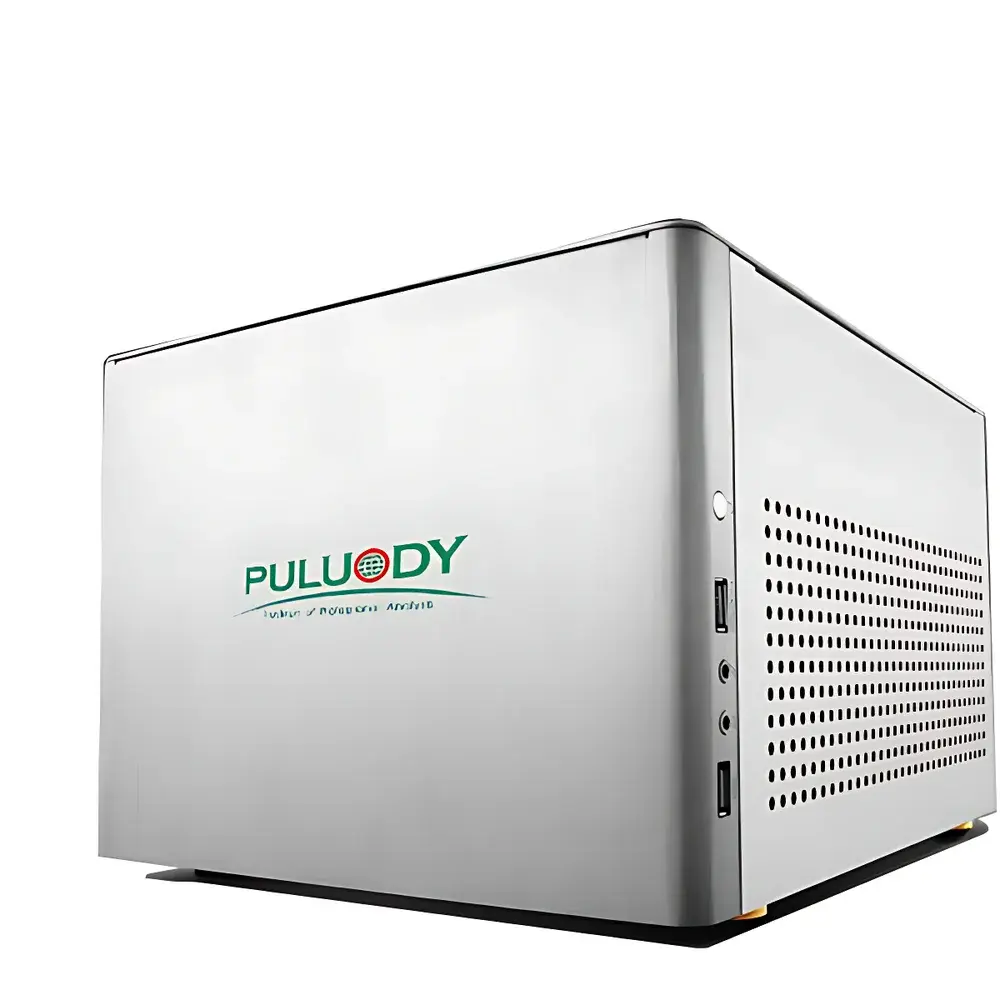
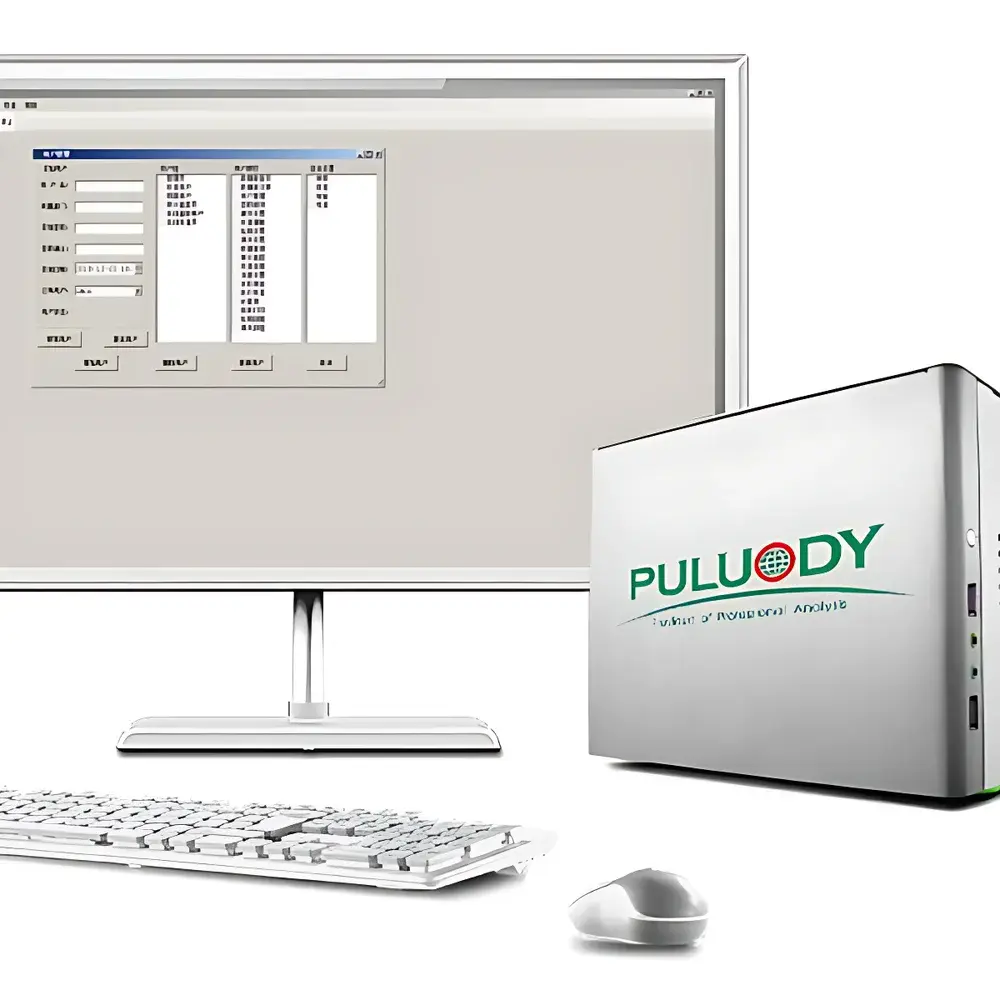
PULUODY PMT-2DC Dual-Laser Nanoparticle Counter for Battery Electrolyte Liquids
| Brand | PULUODY |
|---|---|
| Model | PMT-2DC |
| Detection Principle | Dual-laser narrow-beam light scattering |
| Detection Range | 0.5–20.0 µm (standard), customizable 1–100 µm or 4–70 µm(c), down to 0.1 µm(c) |
| Sample Flow Control | Precision piston pump + electromagnetic flow regulation |
| Accuracy | ±3% typical |
| Sampling Precision | <±1% |
| Coincidence Limit | ≤2.5% error at 1000 particles/mL |
| Calibration Standards | JJG 1061, ISO 21501-4, NIST-traceable latex spheres |
| Output | 4–20 mA analog signal,超标 alarm (customizable) |
| Data Interface | iPad-compatible acquisition system |
| Software | V8.3 Integrated Analysis & Calibration Software (PC version) |
| Compliance | Designed for ISO 14644-1 cleanroom monitoring, USP <788> / <789>, ASTM F3231, and GLP/GMP-relevant audit trails |
| Power Input | 100–265 VAC, 50–60 Hz |
| Display | Color LCD touchscreen + optional wireless keyboard/mouse |
Overview
The PULUODY PMT-2DC Dual-Laser Nanoparticle Counter is a purpose-engineered instrument for quantitative particulate contamination analysis in battery electrolyte formulations and other high-purity liquid chemistries. It operates on the principle of dual-laser narrow-beam light scattering—where two spatially separated laser sources illuminate the sample stream simultaneously, enabling cross-validated particle detection with enhanced signal-to-noise ratio and minimized optical interference from refractive index variations. This architecture significantly improves counting fidelity for sub-micron particles in low-conductivity, low-viscosity media such as lithium-ion battery electrolytes (e.g., LiPF₆ in carbonate solvents), anode/cathode slurries (pre-filtration), and functional additives. Unlike single-beam systems, the PMT-2DC’s dual-sensor design mitigates false positives from bubble artifacts or transient flow turbulence, making it suitable for both offline QC verification and integration into closed-loop manufacturing lines where real-time particulate trend analysis directly informs filtration efficiency, mixing homogeneity, and final fill integrity.
Key Features
- Dual-laser narrow-beam optical detection platform (8th-generation sensor architecture) optimized for low-refractive-index organic electrolytes and polymer solutions
- High-stability volumetric sampling via precision metering piston pump coupled with electromagnetic flow feedback control (±1% volumetric repeatability)
- Configurable detection thresholds: standard 0.5–20.0 µm; extended ranges include 1–100 µm or 4–70 µm(c); ultra-high-resolution mode supports 0.1 µm(c) threshold detection
- V8.3 integrated software suite with physically segregated calibration and analysis modules—ensuring metrological traceability without operational interference
- Real-time analog output (4–20 mA) with programmable alarm thresholds for automated process interlock integration
- Touchscreen HMI with optional wireless keyboard/mouse support for flexible lab or cleanroom deployment
- Compliant with ISO 21501-4 for light-scattering particle counters and calibrated per JJG 1061 national metrological verification procedures
Sample Compatibility & Compliance
The PMT-2DC is validated for use with non-aqueous battery electrolytes (e.g., EC/DMC/LiPF₆ blends), aqueous cleaning agents, semiconductor process chemicals (SC-1, SC-2), ultrapure water (UPW), photoresist solvents, and polymeric binder dispersions. Its fluidic path employs chemically inert wetted materials (e.g., fused silica capillaries, PFA tubing, ceramic valves) compatible with aggressive solvents and low-surface-tension formulations. Regulatory alignment includes support for USP and particulate matter testing in injectables and ophthalmics—making it applicable to pharmaceutical-grade battery separator coatings—and adherence to ASTM F3231 for nanoparticle characterization in advanced energy materials. All firmware and software modules maintain full audit trail capability per FDA 21 CFR Part 11 requirements when configured with user authentication and electronic signature protocols.
Software & Data Management
The V8.3 software platform provides dual-mode operation: standalone calibration management (traceable to NIST-certified latex standards) and independent analytical reporting. Raw scatter pulse data is stored in binary format with timestamped metadata, including flow rate, temperature, pressure, and operator ID. Reporting outputs conform to ISO 4406:2022 (fluid cleanliness codes) and NAS 1638, while custom templates support internal SOP-defined contamination grading (e.g., “Class A” for catholyte ≤50 particles/mL >0.5 µm). Data export options include CSV, PDF, and XML formats compatible with LIMS integration. iPad-based remote acquisition enables decentralized monitoring across multiple production cells without requiring local PC infrastructure.
Applications
- Real-time monitoring of electrolyte filtration efficiency during filling line operations
- Offline QC verification of slurry homogeneity prior to electrode coating
- Contamination trending in solvent recovery loops and recycling streams
- Validation of nano/micro-filtration membrane integrity in electrolyte purification systems
- Particulate release testing of cell housing materials and gasket compounds
- Support for DOE-driven formulation optimization by correlating particle counts with cycle-life degradation metrics
FAQ
What calibration standards are supported?
The PMT-2DC accepts calibration using ISO 21501-4 compliant polystyrene latex (PSL) spheres, JJG 1061–verified reference materials, or customer-specific certified standards traceable to national metrology institutes.
Can the instrument be integrated into a PLC-controlled manufacturing line?
Yes—the 4–20 mA analog output, digital alarm relay, and Modbus TCP option enable direct interfacing with industrial automation systems for closed-loop feedback control.
Is the fluidic path compatible with anhydrous, oxygen-sensitive electrolytes?
The system supports inert gas purging (N₂ or Ar) and can be configured with sealed sample introduction modules to maintain moisture/oxygen levels below 1 ppm during analysis.
Does the software meet regulatory requirements for electronic records?
When deployed with role-based access control, time-stamped audit logs, and electronic signatures, the V8.3 platform satisfies FDA 21 CFR Part 11 and EU Annex 11 expectations for computerized systems in GMP environments.
What is the minimum detectable particle concentration?
At 0.5 µm, the lower limit of quantitation (LOQ) is 10 particles/mL with ≤10% relative standard deviation under controlled laminar flow conditions.




