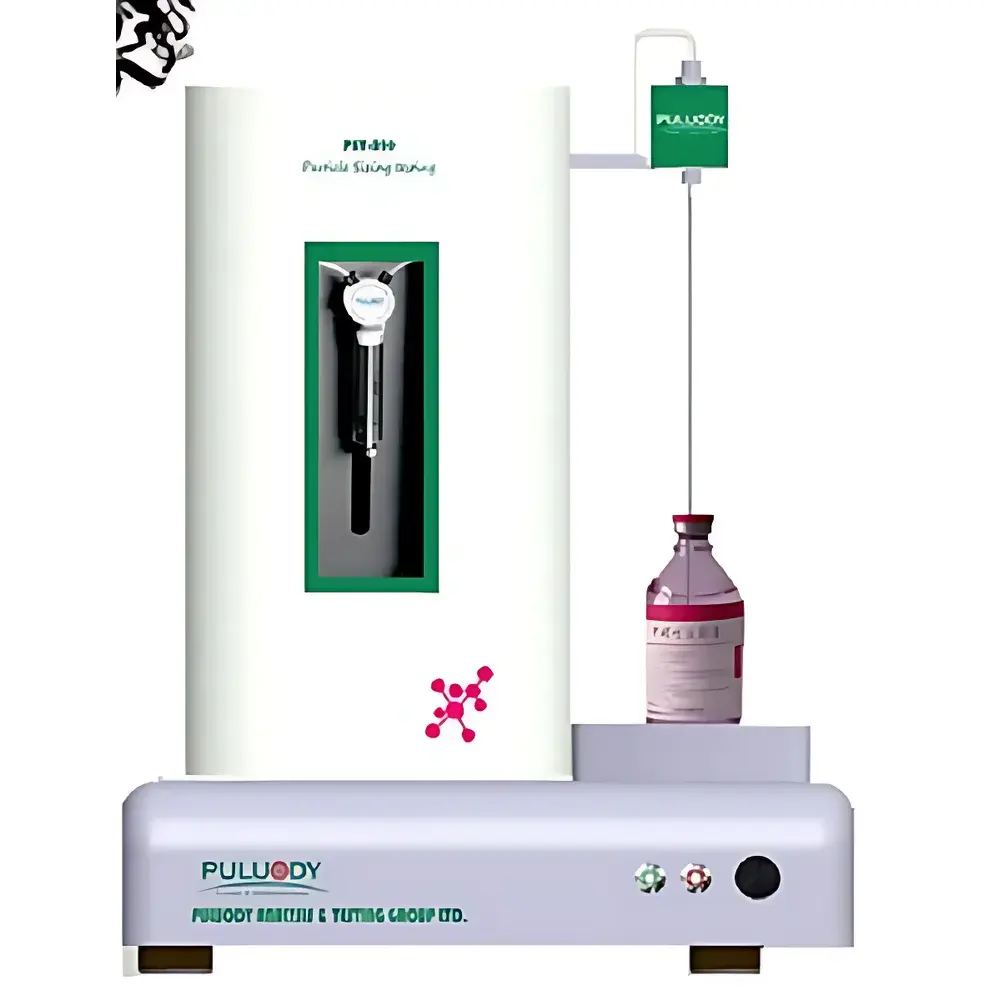
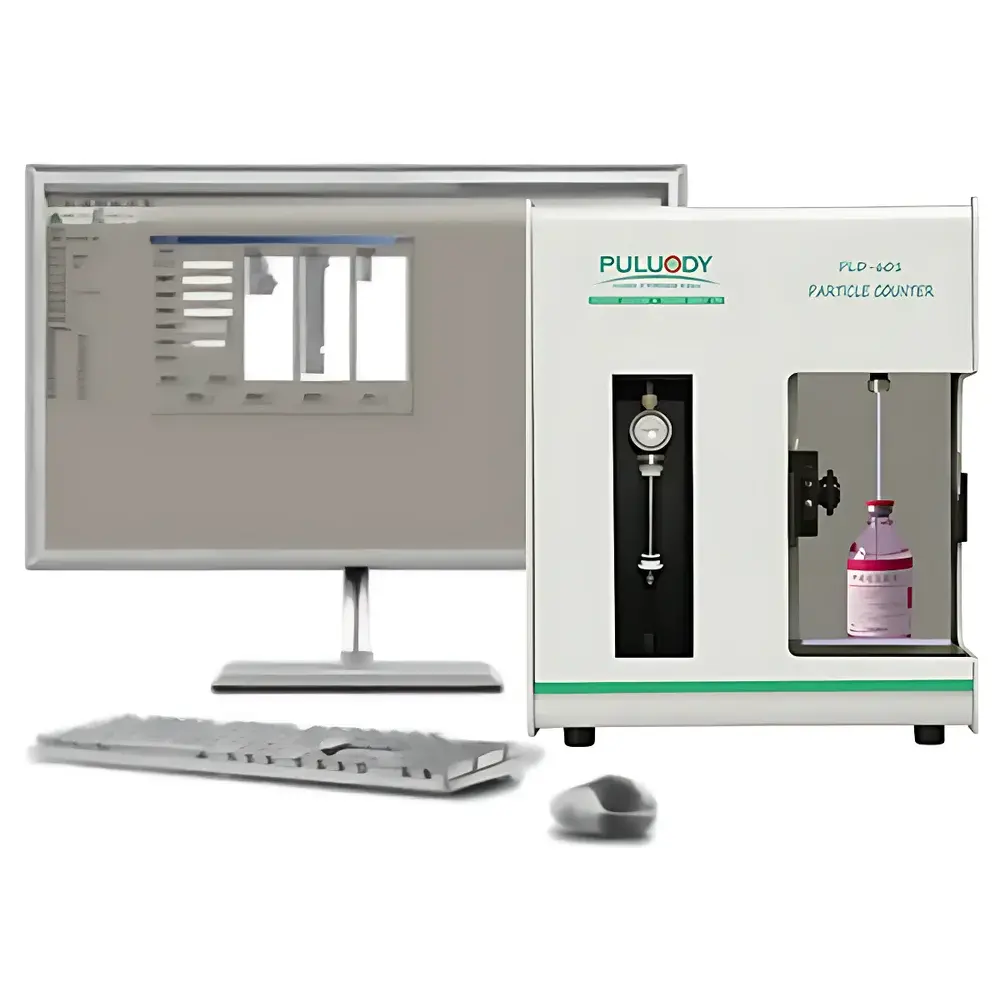
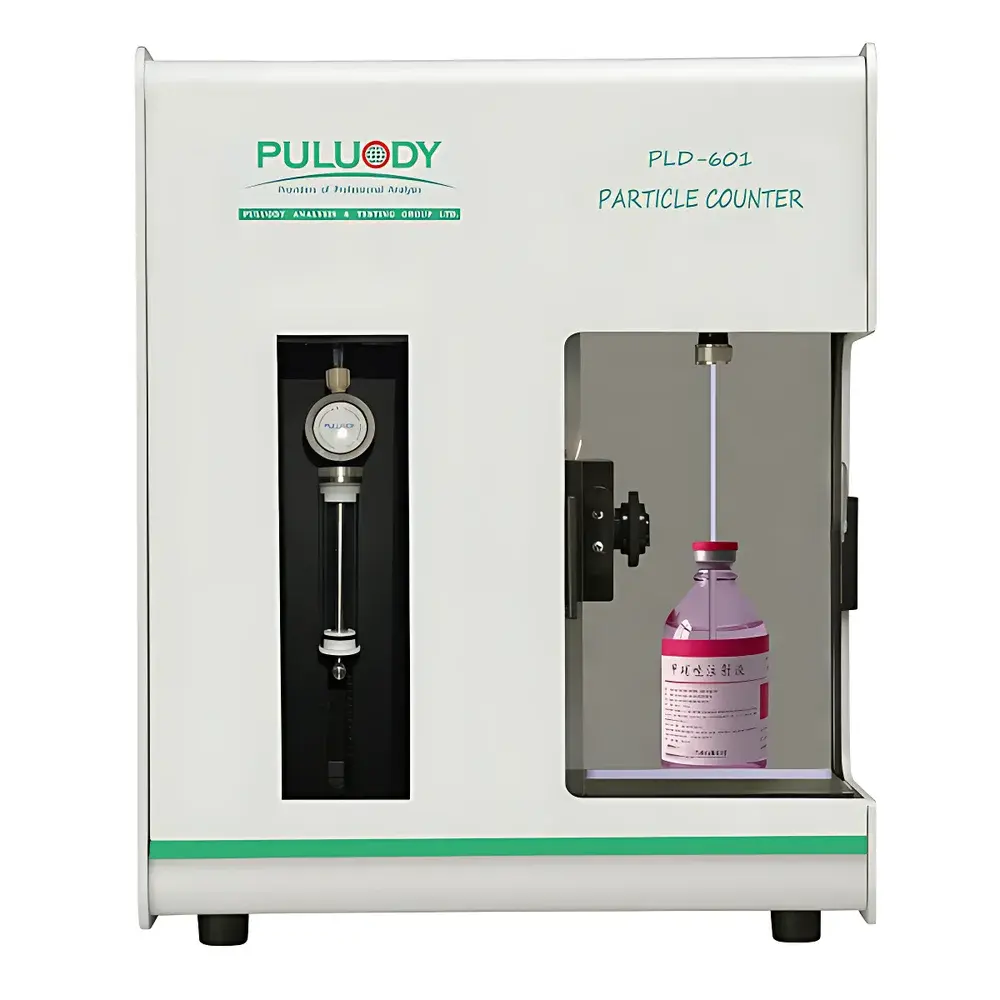
PULUODY PLD-6001 Insoluble Particle Detector for Pharmaceutical Compliance Testing
| Brand | PULUODY |
|---|---|
| Model | PLD-6001 |
| Origin | Shaanxi, China |
| Sensor Technology | 8th-Generation Dual-Laser Narrow-Beam Light Obscuration |
| Detection Range | 1–500 µm (optional 0.03–3000 µm) |
| Resolution | >95% (ChP 2015/2020 calibrated) |
| Channel Count | 1000 adjustable channels (user-definable from 4 to 128 size bins) |
| Flow Control | Precision metering piston pump + ultra-precise electromagnetic flow regulation |
| Sampling Accuracy | <±1% |
| Measurement Accuracy | <±3% (typical) |
| Coincidence Limit | ≤2.5% at 1000 particles/mL |
| Sample Temperature Range | 0–80 °C |
| Environmental Operating Range | −15–50 °C |
| Compliance | ChP 2020 Appendix 0903, USP <788>, <789>, <797>, EP 10.0, BP 2019, JP 17, ISO 21501-4, ISO 21510, GB/T 11446.9–2013, GB 8368, YBB 00272004–2015 |
| Software | V8.9 Particle Analysis Suite (PC & embedded touchscreen), 21 CFR Part 11 compliant with audit trail, electronic signature, role-based 5-level access control, data backup/recovery, and power-fail protection |
| Calibration Standards | JJG 1061, NIST-traceable latex spheres, ISO 21501-4 |
Overview
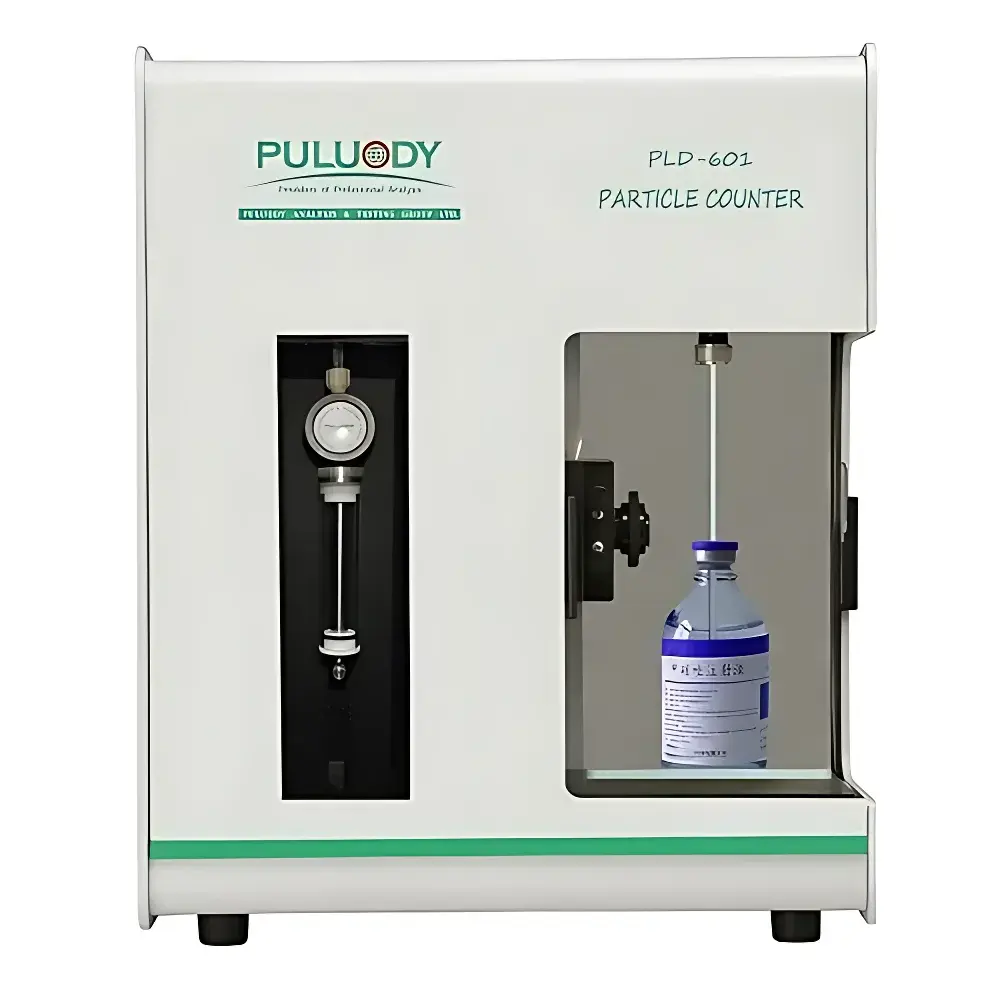
The PULUODY PLD-6001 Insoluble Particle Detector is a regulatory-grade light obscuration (LO) instrument engineered for quantitative analysis of insoluble particulate matter in parenteral and ophthalmic pharmaceutical products. It operates on the principle of single-particle optical sensing (SPOS), where suspended particles passing through a precisely collimated dual-laser beam induce transient reductions in transmitted light intensity—proportional to particle cross-sectional area. This enables direct, real-time enumeration and sizing of individual particles across a 1000-channel resolution spectrum, from 1 µm to 500 µm (with extended-range configurations supporting 0.03–3000 µm). Designed explicitly to meet the stringent requirements of pharmacopoeial methods—including Chinese Pharmacopoeia (ChP) 2020 Appendix 0903, USP , , and EP 10.0—the PLD-6001 delivers traceable, reproducible data essential for quality control, filter validation, extractables/leachables assessment, and container-closure system evaluation.
Key Features
- 8th-generation dual-laser narrow-beam sensor architecture optimized for high signal-to-noise ratio and minimal optical scatter interference, enabling robust detection in viscous or optically dense matrices.
- Dual-stage precision fluidic control: a calibrated metering piston pump ensures volumetric sampling accuracy <±1%, while an independent electromagnetic flow regulator maintains stable, pulse-free laminar flow across the sensing zone (5–150 mL/min).
- 1000-channel particle size distribution (PSD) analysis with user-definable binning—supporting simultaneous compliance reporting against multiple standards (e.g., ChP 0903, USP , ISO 4406, NAS 1638) without reprocessing raw data.
- V8.9 Particle Analysis Software Suite with full 21 CFR Part 11 compliance: electronic signatures, immutable audit trails, role-based five-tier permission management, automatic data backup, and power-interruption recovery.
- Integrated temperature-controlled sample path (0–80 °C) and ambient operation range (−15–50 °C) for compatibility with cold-chain formulations, heat-stable biologics, and high-purity water systems.
- Calibration traceability to national metrology institutes: certified by the National Defense Science & Technology Commission First-Class Particle Metrology Station (No. 116) and Northwest Measurement & Testing Center of China National Institute of Metrology.
Sample Compatibility & Compliance
The PLD-6001 accommodates a broad spectrum of liquid pharmaceuticals and process fluids under GMP/GLP conditions. Validated applications include aqueous injectables (solution, lyophilized powder, concentrated solution), intravenous active pharmaceutical ingredients (APIs), ophthalmic solutions (e.g., sterile eye drops), vaccines, Water for Injection (WFI), Purified Water (PW), and pharmaceutical packaging components (e.g., stoppers, IV bags, tubing per YBB 00272004–2015). It supports terminal filter challenge testing—quantifying particle removal efficiency (PRE) and breakthrough profiles per ISO 21501-4 Annex C. The system complies with global regulatory frameworks: ChP 2020, USP //, EP 10.0, BP 2019, JP 17, WHO International Pharmacopoeia IV, and ISO 21510 for medical device particulate testing. All software-generated reports embed metadata required for FDA, EMA, and PMDA inspections—including timestamped operator actions, calibration logs, and raw pulse data archives.
Software & Data Management
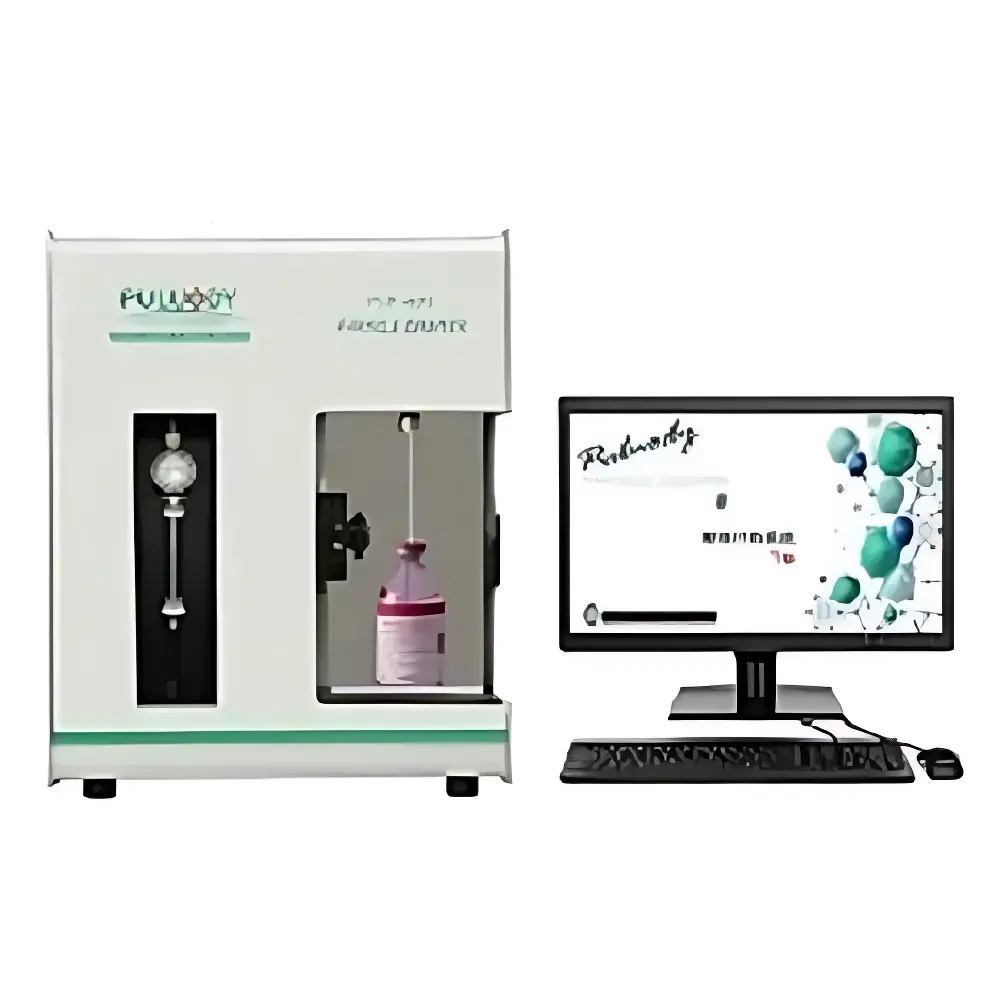
The embedded V8.9 software provides synchronized touchscreen and PC-based operation with bilingual (English/Chinese) interface options. It implements ALCOA+ data integrity principles: attributable, legible, contemporaneous, original, accurate, complete, consistent, enduring, and available. Audit trails record all user interactions—including method edits, result approvals, calibration events, and data exports—with cryptographic hashing to prevent tampering. Electronic signatures conform to 21 CFR Part 11 Subpart B requirements. Raw pulse data (intensity vs. time) are stored in vendor-neutral HDF5 format, enabling third-party reanalysis. Batch export supports CSV, PDF, and XML for LIMS integration. Optional IQ/OQ/PQ documentation packages align with ASTM E2500 and EU Annex 11 validation guidance.
Applications
Beyond pharmacopoeial compliance, the PLD-6001 serves critical roles across regulated manufacturing and R&D environments. In biopharmaceutical development, it characterizes subvisible particle formation during formulation stress studies (e.g., freeze-thaw, agitation, filtration). In semiconductor manufacturing, it quantifies CMP slurry contamination and wafer rinse water cleanliness per SEMI F63. In electronics-grade water systems, it verifies compliance with ASTM D5127 and IEST-STD-CC1246D. For medical device manufacturers, it validates particulate shedding from catheters, syringes, and infusion sets per ISO 8536-4 and GB 8368. Additional use cases include nanomaterial dispersion stability assessment (inkjet inks, quantum dots), lubricant degradation monitoring, and cosmetic emulsion integrity verification.
FAQ
Does the PLD-6001 support automated calibration verification per USP ?
Yes—calibration verification is performed using NIST-traceable polystyrene latex standards (e.g., 10 µm ±5%) with automated pass/fail reporting against USP acceptance criteria.
Can the instrument be integrated into a central LIMS or MES platform?
Yes—via secure RESTful API or OPC UA protocol; raw data and summary reports export in CSV, PDF, and XML formats with configurable metadata fields.
What is the minimum detectable particle concentration for accurate counting?
The system achieves statistically valid counts at concentrations ≥100 particles/mL (per ISO 21501-4); below this, statistical uncertainty increases due to Poisson distribution effects.
Is hardware validation support included with purchase?
Yes—PULUODY provides IQ/OQ documentation templates, on-site installation qualification, and optional third-party PQ services accredited to ISO/IEC 17025.
How is sensor fouling mitigated during high-particulate-load testing?
The dual-flow design isolates the optical path from bulk sample flow; automated rinse cycles (5–500 mL/min) using ultrapure water or compatible solvents minimize residue accumulation between runs.