
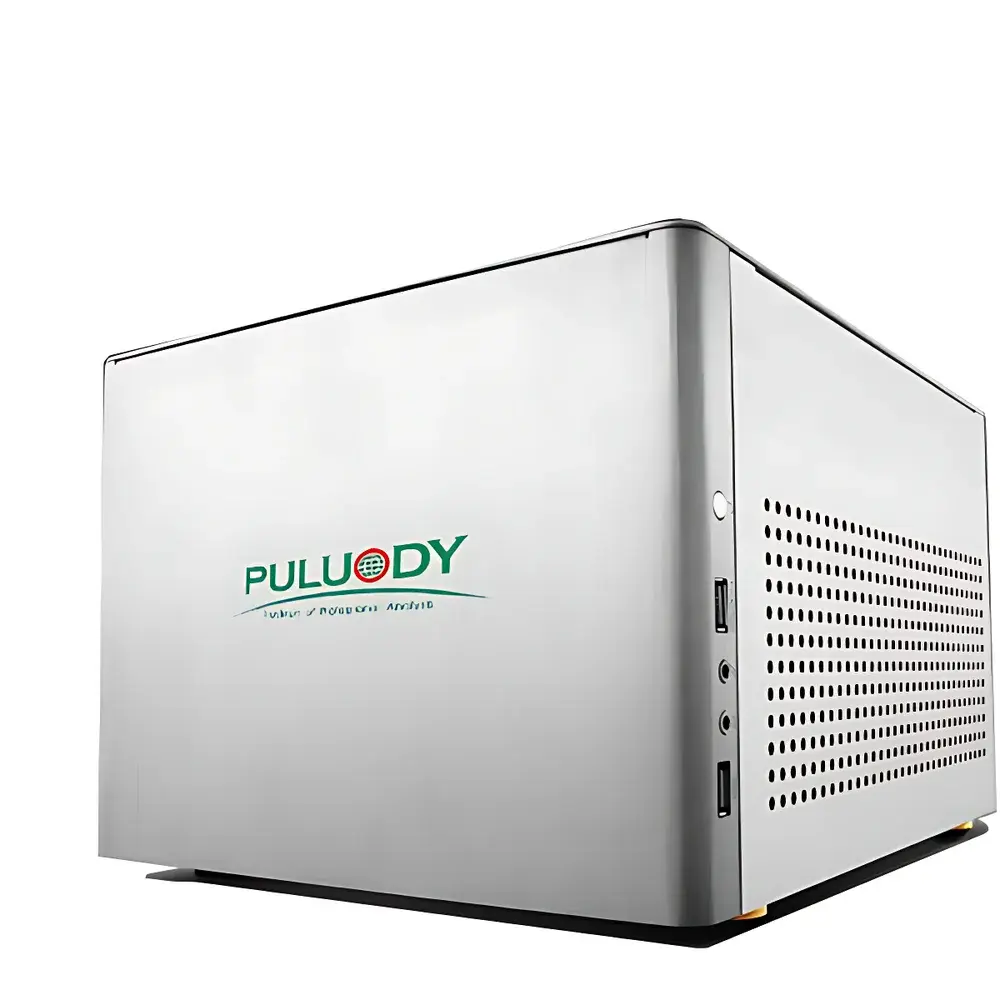
PULUODY PMT-2-14 Wet Electronic Chemicals Liquid Particle Counter
| Brand | PULUODY |
|---|---|
| Origin | Shaanxi, China |
| Manufacturer Type | Authorized Distributor |
| Regional Classification | Domestic (China) |
| Model | PMT-2-14 |
| Instrument Type | Optical Liquid Particle Counter |
| Detection Principle | Dual-Laser Narrow-Beam Light Scattering |
| Sensor Generation | 8th-Generation Dual-Laser Optical Sensor |
| Flow Control | Precision Plunger Pump + High-Accuracy Electromagnetic Flow Regulation |
| Calibration Standards | JJG 1061, ISO 21501-2, Polystyrene Latex (PSL) Reference Spheres |
| Measurement Range | 0.1–0.5 µm, 0.2–2.0 µm |
| Customizable Ranges | 1–100 µm or 4–70 µm (c), down to 0.1 µm (c) |
| Sampling Accuracy | < ±1% |
| Counting Accuracy | ±5% typical |
| Coincidence Limit | ≤5% error at 10,000 particles/mL |
| Output Interface | 4–20 mA analog output |
| Alarm Function | Configurable particle concentration threshold alert |
| Reporting Modes | Particles per mL & ISO 4406 / NAS 1638 contamination code |
| Power Input | 100–265 VAC, 50–60 Hz |
| Software Platform | PULUODY V8.3 Integrated Analysis & Calibration Software (PC + Embedded Touch UI) |
| Operating Interface | Color LCD touchscreen + optional wireless keyboard/mouse |
Overview
The PULUODY PMT-2-14 Wet Electronic Chemicals Liquid Particle Counter is an engineered optical particle counter designed specifically for ultra-high-purity liquid monitoring in semiconductor fabrication, flat-panel display manufacturing, and advanced electronics wet process chemistry. It employs dual-laser narrow-beam light scattering detection—a principle grounded in Mie scattering theory—to resolve sub-micron particulate contaminants in low-conductivity, low-turbidity media such as ultrapure water (UPW), photoresist solvents, wafer cleaning agents, etchants, and spin-coating polymers. Unlike generic particle counters optimized for pharmaceutical or hydraulic fluid applications, the PMT-2-14 integrates flow-path materials compliant with SEMI F57 standards (e.g., electropolished 316L stainless steel, PFA fluidic pathways) and accommodates refractive index matching for organic solvents and aqueous electrolytes. Its architecture supports both inline process integration and offline laboratory verification, enabling real-time trend analysis of particle generation sources—be it filter degradation, pump cavitation, tank leaching, or valve shedding—within Class 1–10 cleanroom environments.
Key Features
- Dual-laser narrow-beam optical sensor (8th-generation design) delivering enhanced signal-to-noise ratio for reliable detection of particles ≥0.1 µm in high-resistivity liquids (≥18.2 MΩ·cm UPW, DMSO, PGMEA, IPA).
- Independent flow control system combining a precision plunger pump (volumetric displacement accuracy <±1%) and closed-loop electromagnetic flow regulation to maintain laminar, pulse-free sample delivery across variable viscosity ranges (0.3–5 cP).
- Modular calibration architecture: analytical measurement and metrological calibration functions are physically and software-isolated per ISO/IEC 17025 traceability requirements—eliminating cross-talk between routine testing and reference standard validation.
- Configurable detection thresholds with user-defined size bins (e.g., 0.1 µm(c), 4–70 µm(c)) aligned with SEMI C37, ASTM F3237, and IEC 60422 specifications for electronic chemical purity grading.
- Embedded V8.3 firmware with dual-mode operation: real-time streaming mode for continuous 24/7 process surveillance and batch capture mode for GLP-compliant offline sample analysis with full audit trail logging.
Sample Compatibility & Compliance
The PMT-2-14 is validated for use with non-aqueous and aqueous electronic chemicals including but not limited to sulfuric acid-based SC1/SC2 solutions, ammonium hydroxide-hydrogen peroxide mixtures (APM), hydrofluoric acid dilutions, deionized water (DIW), ultrapure water (UPW), photoresist developers, and CMP slurries. All wetted components meet SEMI F57 material compatibility guidelines and are certified free of extractables per USP . The instrument complies with ISO 21501-2:2019 for light-scattering particle counters and supports calibration traceability to NIST-traceable PSL reference standards. For regulated environments, firmware includes configurable electronic signatures, 21 CFR Part 11–compliant audit trails, and role-based access control—enabling deployment under GMP, ISO 9001, and IATF 16949 quality management systems.
Software & Data Management
PULUODY V8.3 software provides synchronized acquisition, visualization, and reporting across embedded touchscreen and Windows PC platforms. Data export formats include CSV, PDF, and XML with embedded metadata (timestamp, operator ID, calibration status, environmental conditions). The software implements automated pass/fail evaluation against user-defined limits per ISO 4406:2017 or custom contamination codes. Raw scatter pulse data is retained for post-acquisition re-binning and retrospective size distribution reconstruction. All calibration events—including zero-check, background subtraction, and gain adjustment—are logged with digital signatures and time-stamped entries meeting GLP audit requirements. Remote diagnostics and firmware updates are supported via secure TLS 1.2 encrypted connection.
Applications
- In-line monitoring of UPW distribution loops for semiconductor front-end fabs, detecting microfilter breakthrough and ion exchange resin fines.
- Offline verification of chemical purity prior to point-of-use dispensing in photolithography and etch tool supply lines.
- Contamination source identification during cleaning process qualification (e.g., RCA clean, piranha etch) using time-resolved particle burst analysis.
- Validation of nano-filtration membrane integrity in recirculating chemical delivery systems for OLED and microLED manufacturing.
- QC release testing of electronic-grade solvents per SEMI C109 and JIS K 0123 standards.
FAQ
What calibration standards are supported?
The PMT-2-14 supports calibration using NIST-traceable polystyrene latex (PSL) spheres per ISO 21501-2, as well as national metrology institute-certified reference materials compliant with JJG 1061.
Can the instrument operate continuously in an inline configuration?
Yes—it features IP65-rated housing, 4–20 mA analog output with programmable alarm thresholds, and pressure-rated fluidic connections compatible with ASME B16.5 Class 150 piping systems.
Is the software compliant with FDA 21 CFR Part 11?
V8.3 includes electronic signature enforcement, audit trail generation with immutable timestamps, and role-based user permissions—fully supporting Part 11 compliance when deployed on validated IT infrastructure.
How is coincidence error managed at high particle concentrations?
The system applies real-time coincidence correction algorithms validated up to 10,000 particles/mL, with residual error maintained within ±5% per ISO 21501-2 Annex C.
Does the sensor require periodic alignment or optical recalibration?
No—the dual-laser optical path is factory-aligned and sealed; only annual verification using reference standards is required per ISO/IEC 17025 maintenance protocols.



