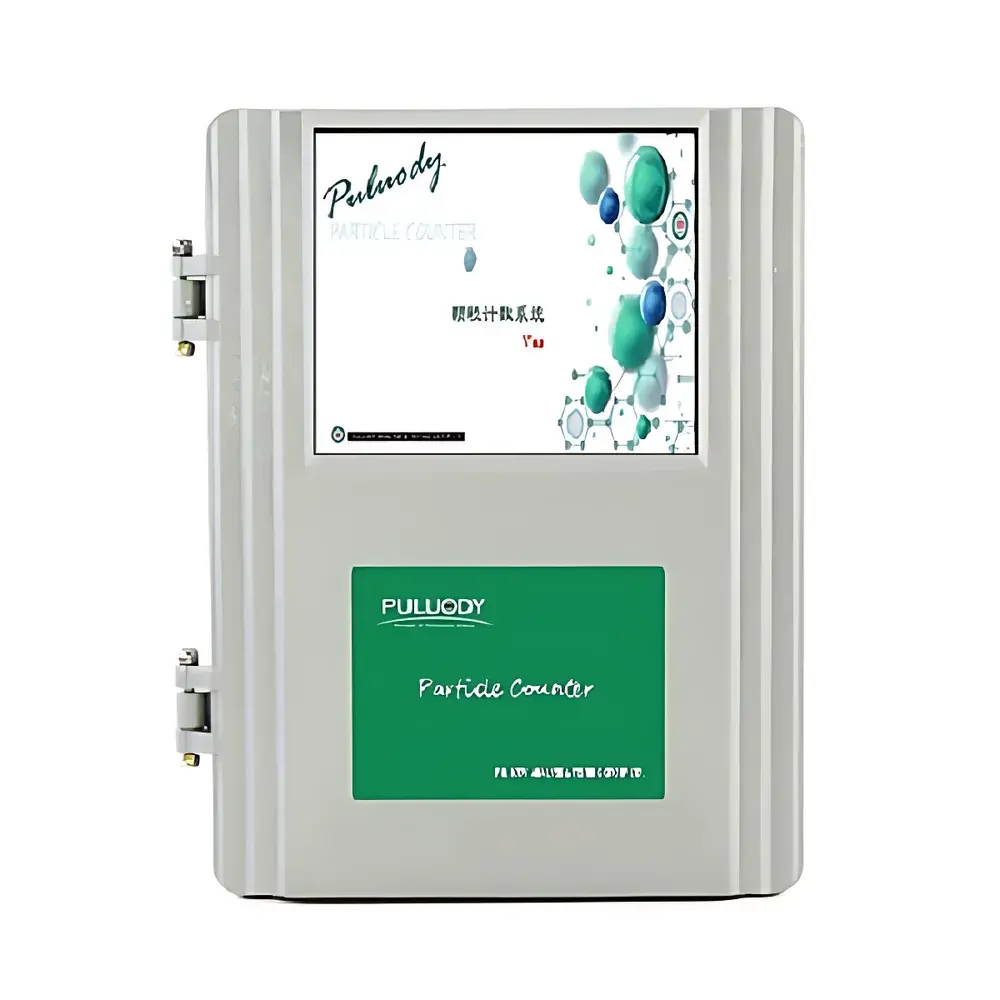
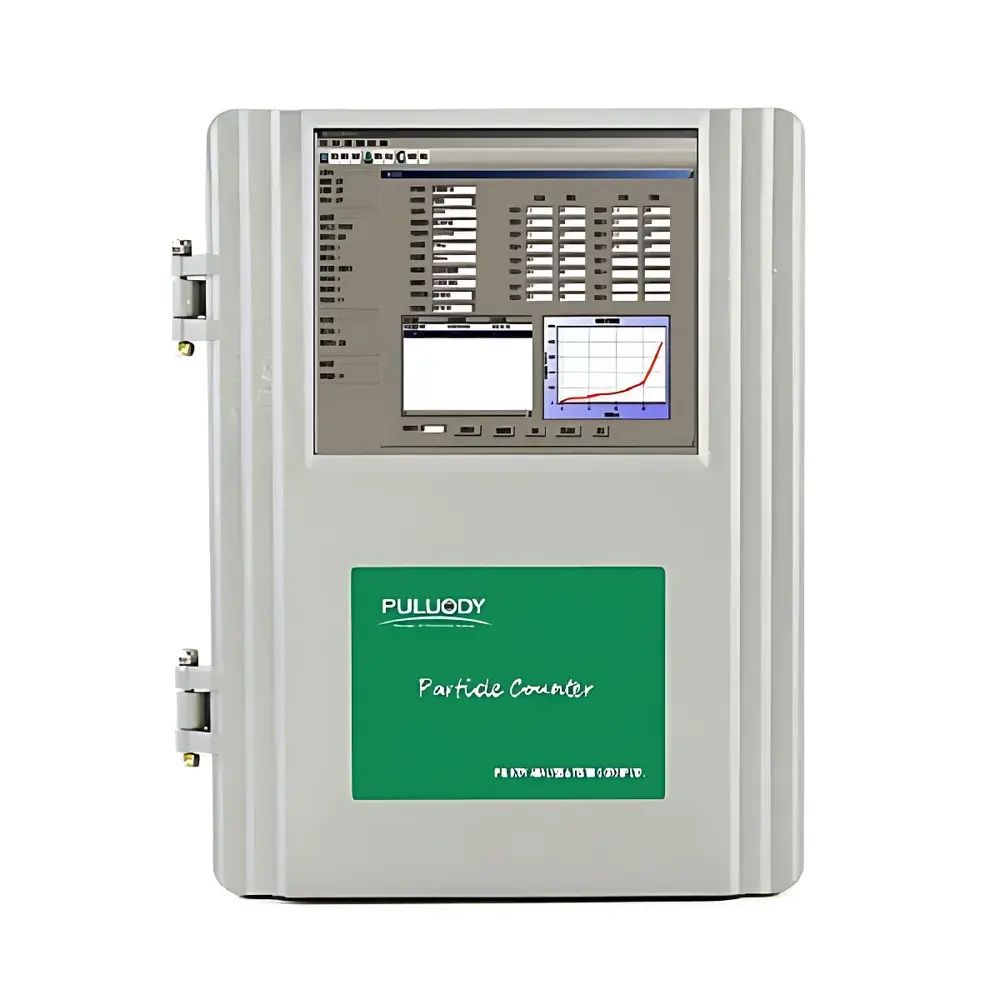
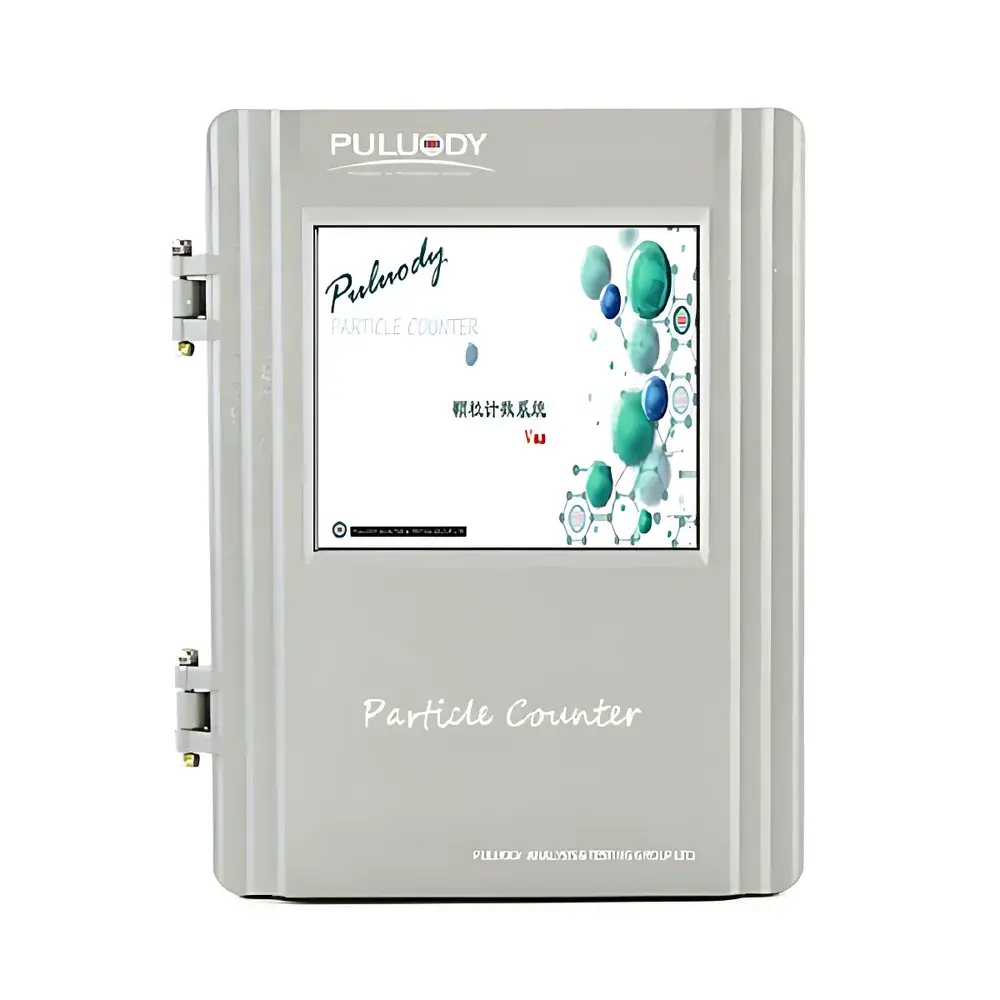
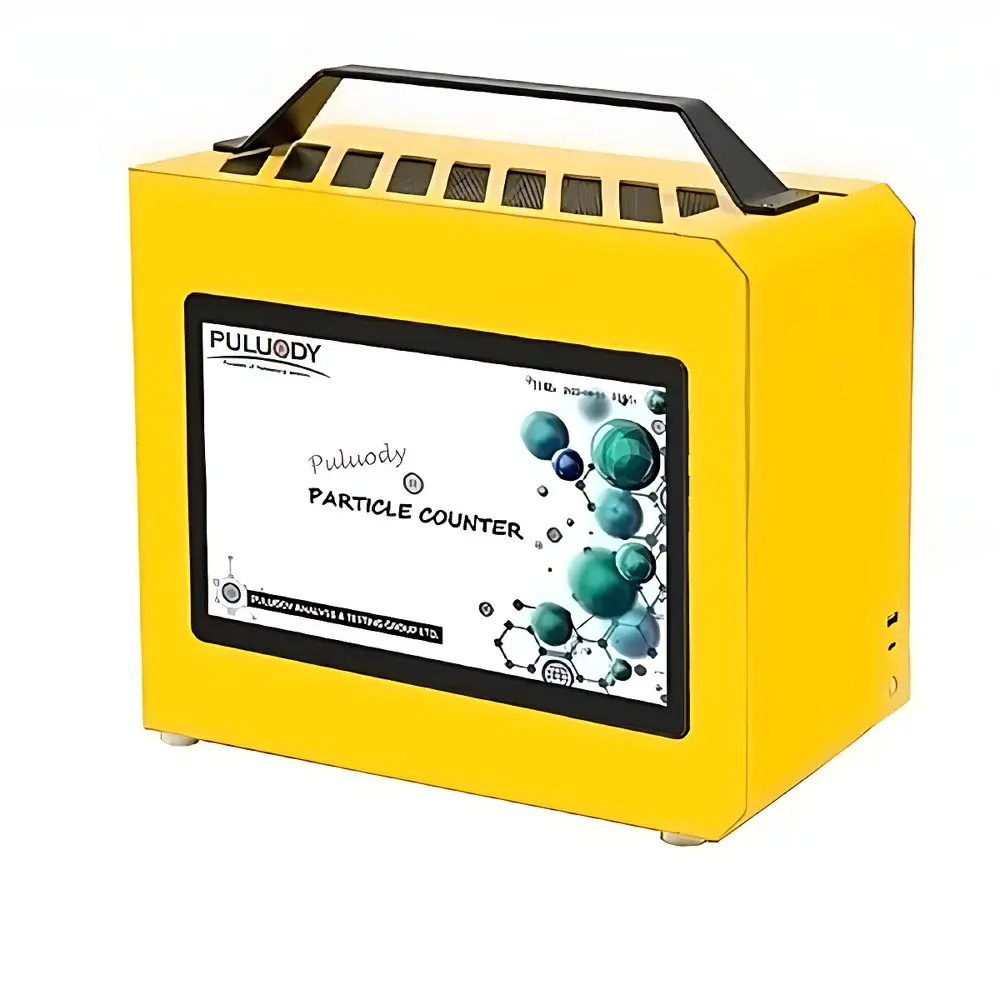
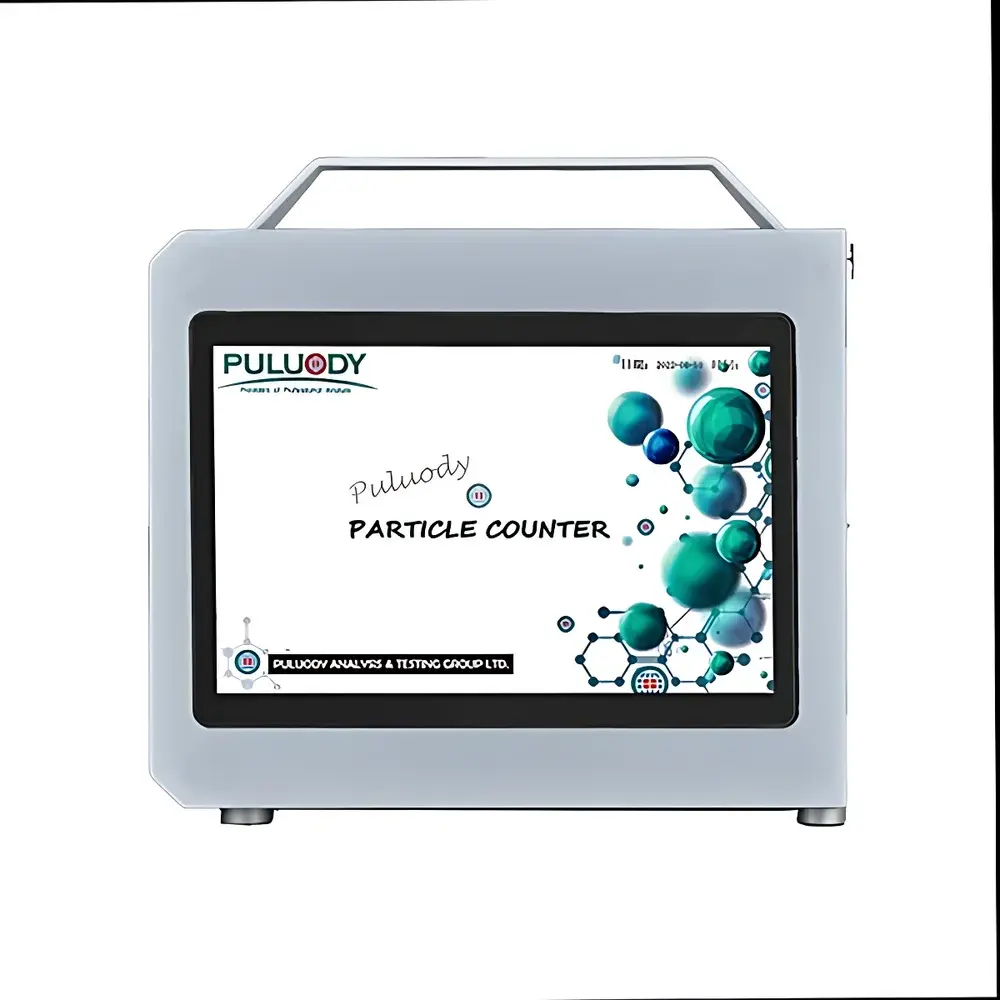
PULUODY OPC-2300D Online Liquid Particle Counter
| Brand | PULUODY |
|---|---|
| Origin | Shaanxi, China |
| Model | OPC-2300D |
| Detection Principle | Light Obscuration (LO) with Dual-Laser Narrow-Beam Technology |
| Sensor Options | A (2–100 µm), B (1–150 µm), C (1–450 µm), H (0.1–1.0 µm), I (0.2–2.0 µm), J (0.5–50.0 µm), K (2–750 µm / 2–800 µm / 5–1000 µm), L (40–1000 µm / 10–2000 µm), N (50–1000 µm), M (100–2000 µm) |
| Sizing Range (Configurable) | 1–100 µm, 2–125 µm, 2–250 µm, 5–500 µm |
| Channel Resolution | Up to 1000 user-selectable channels (e.g., 8/16/32 bins) |
| Resolution | 0.1 µm |
| Counting Accuracy | < ±3% typical |
| Coincidence Error | ≤5% at 999,999 particles/mL |
| Maximum Detectable Concentration | 9,999,999 particles/mL |
| Sampling Interval | 5 s – 9 h |
| Calibration Standards | NIST-traceable latex spheres, AC fine test dust, or MTD |
| Operating Pressure | 0–0.6 MPa (standard) |
| Flow Rate | 6–500 mL/min |
| Fluid Temperature Range | −10 °C to +80 °C |
| Interface Options | Customizable compression fittings or flanged connections |
| Output Signals | RS-232 serial, 4–20 mA analog, optional Ethernet/Modbus TCP |
| Display | Integrated LCD with membrane keypad |
| Enclosure Rating | IP65 (standard), optional IP67 for harsh environments |
Overview
The PULUODY OPC-2300D Online Liquid Particle Counter is an industrial-grade, real-time particle monitoring system engineered for continuous, unattended operation in critical water process streams. It employs seventh-generation dual-laser narrow-beam light obscuration (LO) technology—originally developed and validated by PULUODY Analytical Testing Group (UK)—to deliver high-fidelity particle count and size distribution data directly within the fluid path. Unlike offline laboratory analyzers, the OPC-2300D integrates seamlessly into process lines via inline or side-stream sampling configurations, enabling true dynamic contamination tracking without manual intervention. Its core architecture adheres to ISO 21501-4, ISO 4402, and USP foundational principles for liquid particle counting, while supporting configurable compliance with ASTM D6978 (for pharmaceutical water), ISO 11171 (calibration), and EN 13720 (drinking water quality). Designed for deployment in municipal drinking water treatment plants, wastewater reclamation facilities, beverage production lines, sterile process rinsing systems, and membrane filtration validation stations, the OPC-2300D functions as a deterministic diagnostic node—not just a sensor, but a quantifiable component of process control logic.
Key Features
- True online operation with continuous sampling and real-time reporting—no sample withdrawal, dilution, or offline preparation required.
- Dual-laser optical detection head with temperature-stabilized photodiodes and adaptive signal filtering to minimize noise under variable flow and turbidity conditions.
- Modular sensor configuration: Select from 10 calibrated optical channels (H through M), each optimized for specific size ranges—from submicron colloids (0.1 µm) to coarse particulates (>2000 µm).
- High-resolution sizing capability with 0.1 µm bin resolution and up to 1000 programmable channels; supports user-defined binning schemes aligned with ISO 4406, NAS 1638, or custom regulatory thresholds.
- Robust mechanical design rated IP65 standard; optional stainless-steel wetted parts (316L), high-pressure variants (up to 31.5 MPa), and extended temperature tolerance (−10 °C to +80 °C).
- Multi-protocol digital output: RS-232 for legacy SCADA integration, 4–20 mA analog for PLC analog input cards, and optional Modbus TCP/Ethernet for Industry 4.0-ready data ingestion.
- On-device LCD interface with intuitive membrane keypad—enables local configuration, alarm threshold setting, and immediate trend visualization without external software.
Sample Compatibility & Compliance
The OPC-2300D is validated for use with low-viscosity aqueous media including potable water, ultrapure water (UPW), filtered process water, beverage base solutions, and clean-in-place (CIP) rinse effluents. It is not intended for opaque suspensions, high-viscosity fluids (>10 cP), or chemically aggressive solvents unless specified with compatible wetted materials. Regulatory alignment includes support for FDA 21 CFR Part 11-compliant audit trails when paired with PULUODY’s certified Data Management Suite (sold separately), GLP/GMP traceability via electronic calibration logs, and full documentation of sensor drift compensation routines. The system meets electromagnetic compatibility (EMC) requirements per IEC 61326-1 and carries CE marking for industrial instrumentation in the European Economic Area.
Software & Data Management
The OPC-2300D operates with embedded firmware that stores time-stamped particle count histograms, cumulative distributions, and alarm events onboard for up to 30 days (configurable). For enterprise-level deployment, it integrates with PULUODY ParticleView™ v5.2—a Windows-based platform supporting automated report generation (PDF/CSV), multi-sensor fleet monitoring, statistical process control (SPC) charting (X-bar R, CUSUM), and deviation alerting via email/SNMP traps. All calibration records—including NIST-traceable latex sphere verification, AC dust validation, and MTD correlation—are digitally signed and archived with tamper-evident timestamps. Optional cloud gateway modules enable secure TLS 1.2 transmission to AWS IoT Core or Microsoft Azure IoT Hub for predictive maintenance analytics.
Applications
- Real-time integrity testing of microfiltration and ultrafiltration membranes—detecting breakthrough events before microbial or particulate contamination compromises downstream quality.
- Quantitative assessment of filter efficiency across multiple pore ratings (e.g., 0.2 µm, 0.45 µm, 1.0 µm) using differential upstream/downstream counting protocols.
- Monitoring sedimentation basin performance and clarifier effluent quality in municipal water treatment.
- Validation of final rinse water purity in pharmaceutical vial washing machines and bioreactor cleaning cycles.
- Trend-based wear debris analysis in closed-loop cooling water systems serving power generation or semiconductor fab tools.
- Compliance-driven reporting for ISO 14644-1 cleanroom water supply lines and USP purified water specifications.
FAQ
Can the OPC-2300D be used for non-aqueous liquids?
No—it is specifically designed and calibrated for aqueous systems. Use in organic solvents, oils, or glycol-based fluids requires factory revalidation and sensor recalibration.
Does it support automatic zero-check or background subtraction?
Yes—the firmware executes periodic baseline correction during idle flow intervals, compensating for optical window fouling and ambient light drift.
How is calibration traceability maintained?
Each unit ships with a certificate of conformance referencing NIST SRM 1963 or ISO 21501-4 compliant calibration spheres; field recalibration uses certified reference materials traceable to national metrology institutes.
Is hazardous area certification available?
ATEX Zone 2 and IECEx certification are available as factory-configured options upon request, subject to enclosure and electrical interface modifications.
What is the minimum detectable particle concentration?
The lower limit of quantitation (LoQ) is 10 particles/mL for the 2–100 µm channel under optimal flow and cleanliness conditions, verified per ISO 21501-4 Annex B.