
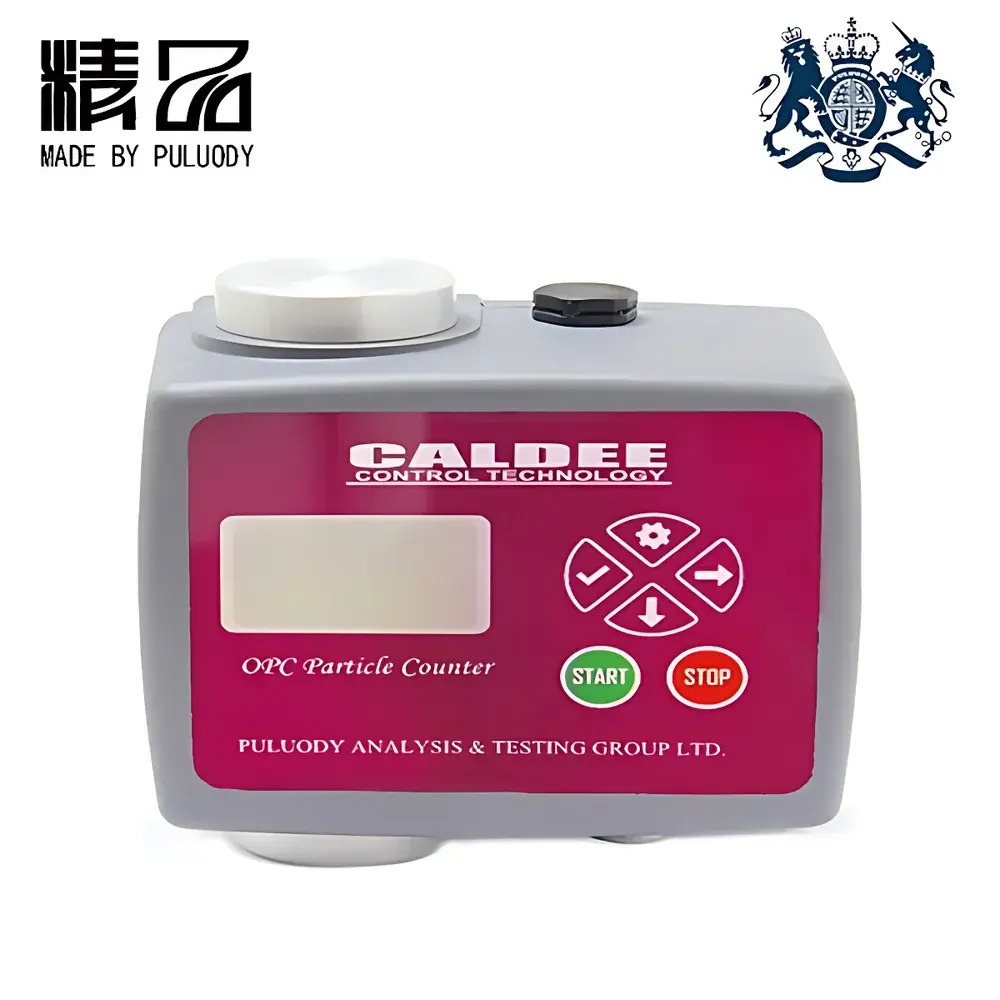
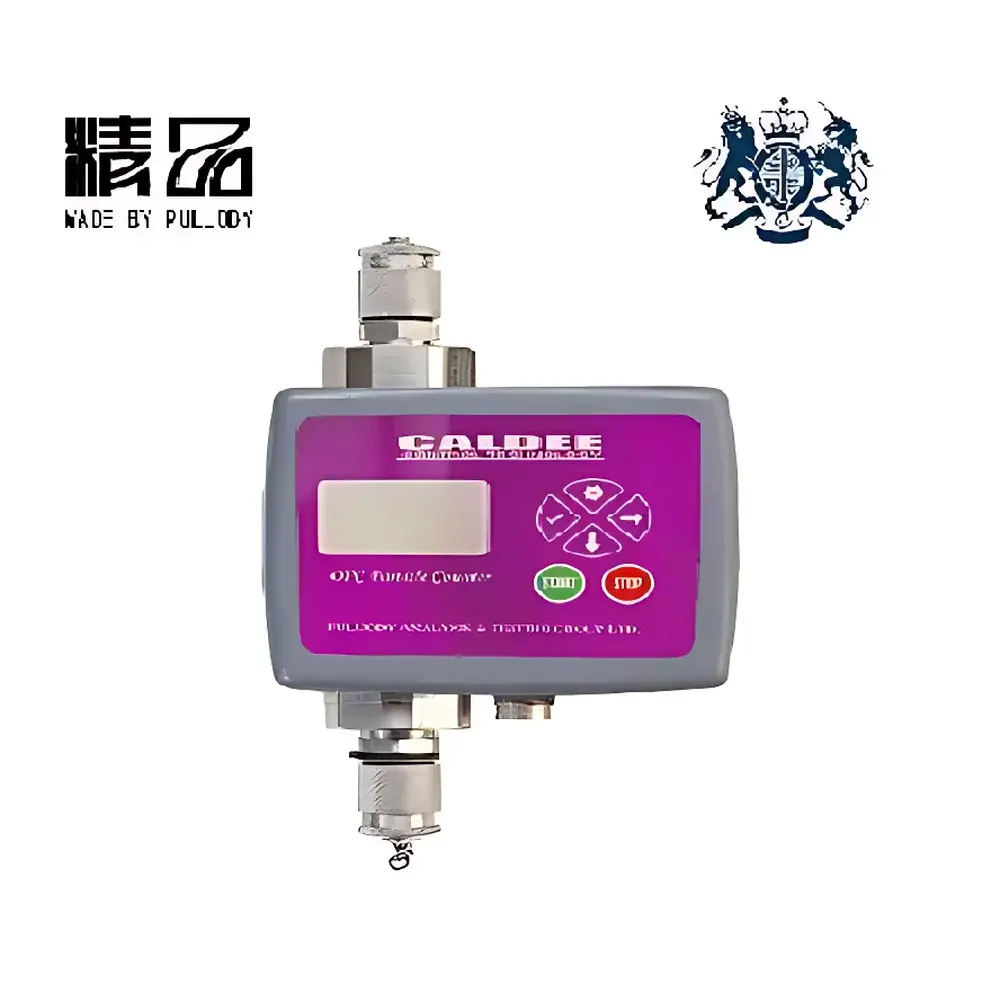
PULUODY OPC-3 Online Oil Particle Counter
| Brand | PULUODY |
|---|---|
| Origin | Shaanxi, China |
| Manufacturer Type | Authorized Distributor |
| Product Category | Domestic |
| Model | OPC-3 |
| Instrument Type | Optical Particle Counter |
| Detection Principle | Dual-Laser Narrow-Beam Light Scattering |
| Measurement Range | 1–150 µm |
| Channels | 8 |
| Standards Compliance | ISO 4406, NAS 1638, SAE AS4059, ISO 11171, MIL-STD-1246C, GJB 420B, GB/T 14039, GOST 17216 |
| Pressure Rating | 0–1.0 MPa (standard), up to 31.5 MPa (with pressure reducer) |
| Flow Rate | 15–500 mL/min |
| Fluid Temperature Range | −10 °C to +80 °C |
| Viscosity Limit | ≤500 cSt |
| Output Interfaces | RS232, RS485, 4–20 mA, 0–5 V (customizable) |
| Power Supply | 9–30 VDC |
| Reporting | Particles per mL + ISO/NAS/GJB contamination grade |
Overview
The PULUODY OPC-3 Online Oil Particle Counter is an industrial-grade, real-time optical particle counter engineered for continuous in-line monitoring of particulate contamination in hydraulic fluids, lubricants, turbine oils, and other mineral- or synthetic-based operational oils. Based on the seventh-generation dual-laser narrow-beam light scattering detection principle, the OPC-3 delivers high reproducibility and long-term stability in harsh plant environments. Unlike offline laboratory analyzers, this instrument integrates directly into pressurized fluid circuits—enabling uninterrupted sampling at flow rates from 15 to 500 mL/min and system pressures up to 31.5 MPa (with integrated pressure reduction module). Its core architecture follows ISO 11171:2010 calibration traceability requirements and supports full compliance with international fluid cleanliness standards including ISO 4406:2021, NAS 1638 Class Code, SAE AS4059F, and GJB 420B. Designed for integration into DCS, SCADA, and PLC control systems, the OPC-3 provides deterministic, quantitative data essential for predictive maintenance, root-cause failure analysis, and asset integrity management across aerospace, marine, energy, and heavy machinery sectors.
Key Features
- Seventh-generation dual-laser narrow-beam optical sensing technology for enhanced signal-to-noise ratio and reduced coincidence error
- Eight user-configurable particle size channels (1–150 µm), enabling granulometric profiling aligned with ISO 4406 and NAS 1638 grading schemes
- Integrated pressure regulation module supporting operation at up to 31.5 MPa—validated per ISO 4406 Annex B for high-pressure hydraulic systems
- Wide fluid temperature tolerance (−10 °C to +80 °C) and viscosity range (up to 500 cSt), suitable for turbine oil, HFDU, and fire-resistant fluids
- Dual-output capability: digital (RS232/RS485 Modbus RTU) and analog (4–20 mA / 0–5 V), with programmable alarm thresholds for real-time exceedance notification
- Robust IP65-rated aluminum housing with corrosion-resistant surface treatment, rated for continuous operation in industrial enclosures and offshore platforms
- Onboard firmware supports embedded standard conversion—no external PC required for basic reporting of particles/mL and corresponding contamination grades
Sample Compatibility & Compliance
The OPC-3 is validated for use with mineral oils, PAOs, polyglycols, phosphate esters (e.g., Fyrquel), and water-glycol fluids meeting ISO 6743-4 specifications. It complies with key metrological and regulatory frameworks governing fluid condition monitoring: ISO 4406:2021 (fluid cleanliness classification), ISO 11171:2010 (calibration standard for liquid-borne particle counters), and ASTM D6786 (standard practice for calibrating automatic particle counters). For regulated industries, the device supports audit-ready data logging—including time-stamped particle counts, flow rate verification, and sensor health diagnostics—aligned with GLP and GMP documentation expectations. While not FDA 21 CFR Part 11–certified out-of-the-box, its data export protocols (CSV, Modbus register mapping) enable seamless integration into validated LIMS or MES platforms where electronic record integrity is enforced.
Software & Data Management
The OPC-3 operates in standalone mode with embedded firmware capable of real-time grade calculation and analog output scaling. Optional PULUODY ParticleView™ desktop software (Windows-based) provides advanced functionality: historical trend analysis, multi-parameter overlay (e.g., particle count vs. temperature or pressure), automated report generation per ISO 4406 or NAS 1638, and customizable alarm logic (e.g., sustained >10% increase in ≥6 µm particles over 24 h). All raw count data are timestamped and stored locally (SD card optional) with configurable retention intervals. Export formats include CSV, PDF, and XML—structured to align with enterprise CMMS and SAP PM modules. Calibration history, sensor drift logs, and maintenance events are recorded with immutable timestamps to support ISO/IEC 17025 internal audit requirements.
Applications
- Real-time contamination monitoring of servo-valve hydraulic circuits in aerospace ground support equipment and flight control test rigs
- Condition-based maintenance of gearboxes and main drive systems in wind turbines and marine propulsion units
- Filter performance validation in offline kidney-loop filtration systems and mobile refueling units
- Wear debris trending during accelerated life testing of hydraulic pumps, motors, and actuators per SAE ARP4205
- Baseline cleanliness verification of new oil batches prior to commissioning in nuclear power plant auxiliary systems
- Continuous monitoring of drilling fluid conditioning loops on offshore rigs, complying with API RP 13C and ISO 13357
FAQ
Does the OPC-3 require periodic recalibration? How is traceability maintained?
Yes—the OPC-3 must undergo annual calibration using NIST-traceable ISO MTD reference materials (e.g., ISO Medium Test Dust, ISO Ultrafine Test Dust). PULUODY China Service Center provides certified calibration certificates compliant with ISO/IEC 17025; field verification kits (including zero-count check fluid and channel verification suspensions) are available for daily operator checks.
Can the OPC-3 be installed upstream or downstream of a filter?
It is recommended for post-filter installation to assess filter efficiency and detect breakthrough events. For pre-filter measurement (to quantify ingression), a bypass configuration with flow balancing is required to avoid pressure-induced sensor saturation.
Is the instrument compatible with explosive atmospheres (ATEX/IECEx)?
The standard OPC-3 is not intrinsically safe. For Zone 1/21 applications, PULUODY offers a customized version with ATEX-certified barrier-isolated analog outputs and explosion-proof enclosure (II 2G Ex db IIB T4 Gb), subject to project-specific hazard assessment.
What is the minimum detectable particle size under high-viscosity conditions?
At viscosities >220 cSt, the lower detection limit shifts to ~3 µm due to Brownian motion suppression and reduced particle transit velocity through the sensing zone—consistent with ISO 11171 guidance on viscosity-dependent resolution limits.
How does the dual-laser design improve measurement reliability versus single-laser systems?
Dual orthogonal laser beams reduce false counts from air bubbles and refractive index mismatches while enabling coincidence correction algorithms that maintain accuracy at concentrations exceeding 10,000 particles/mL—critical for high-flow turbine lube oil monitoring.



