
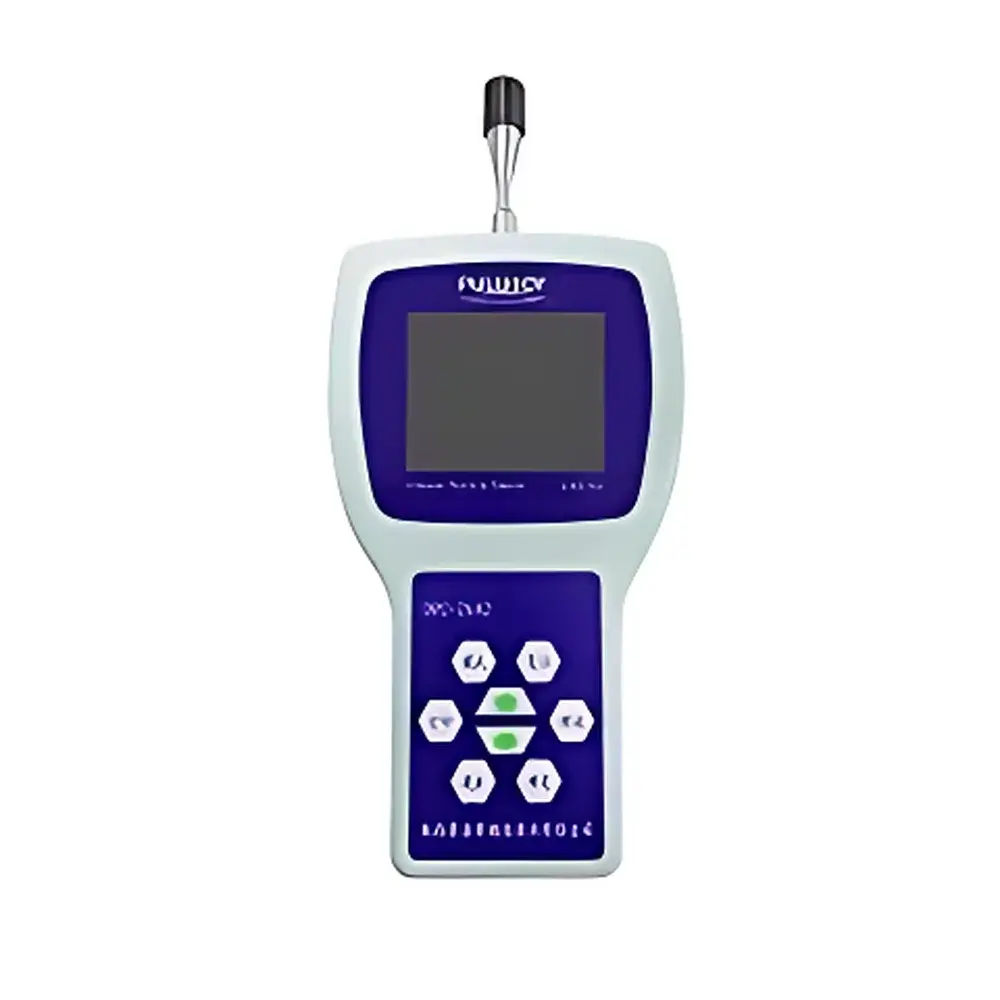
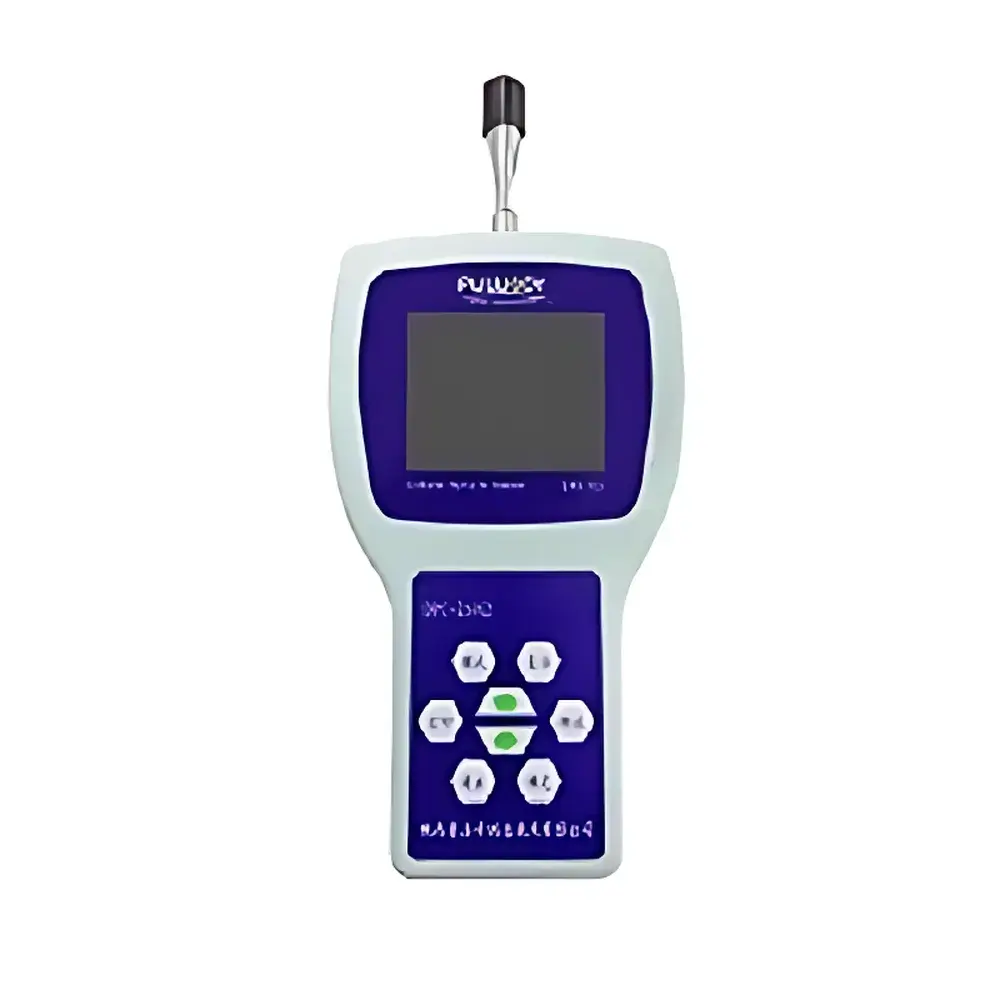
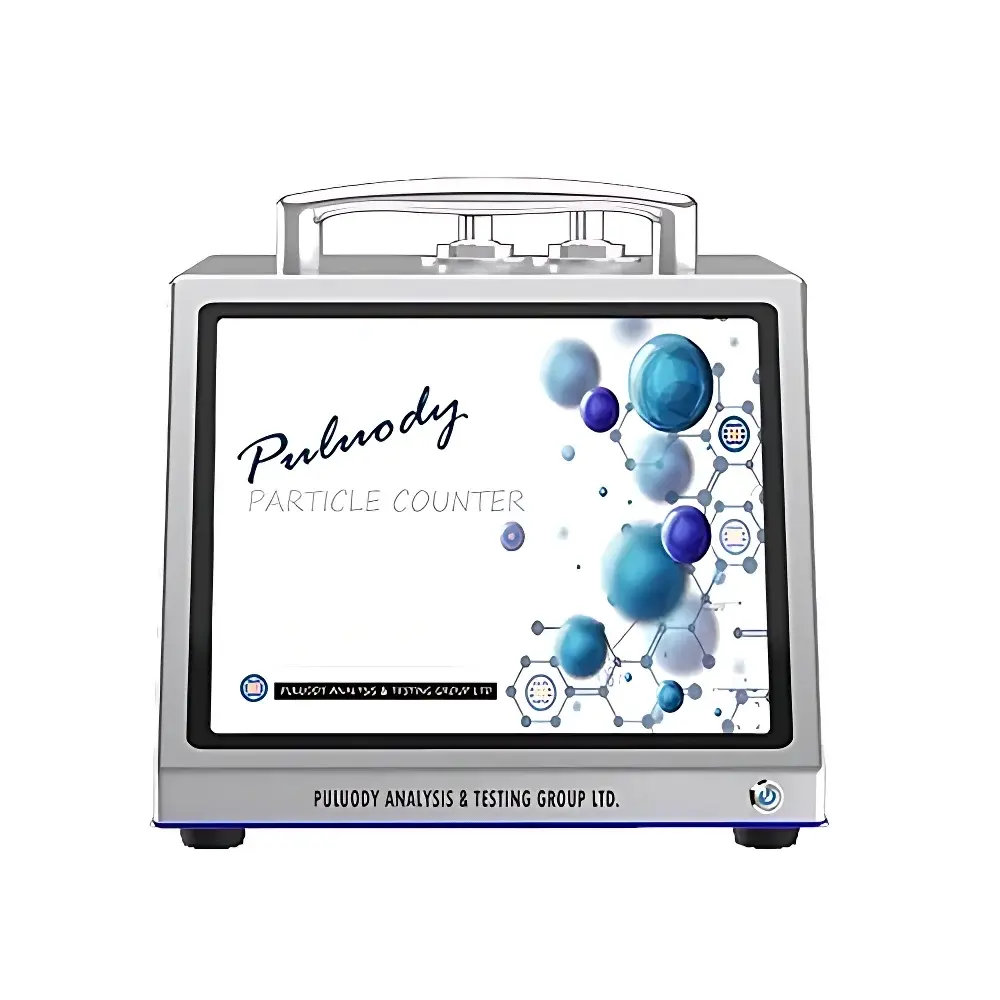
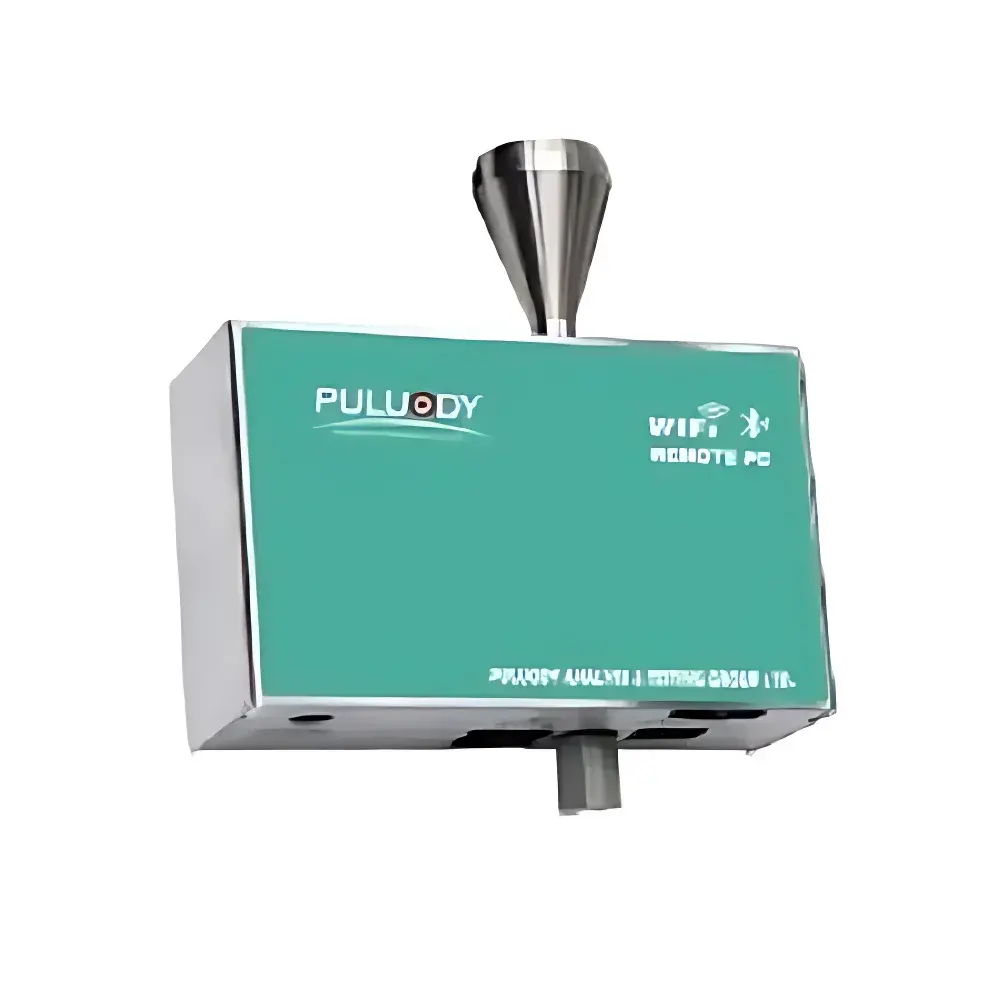
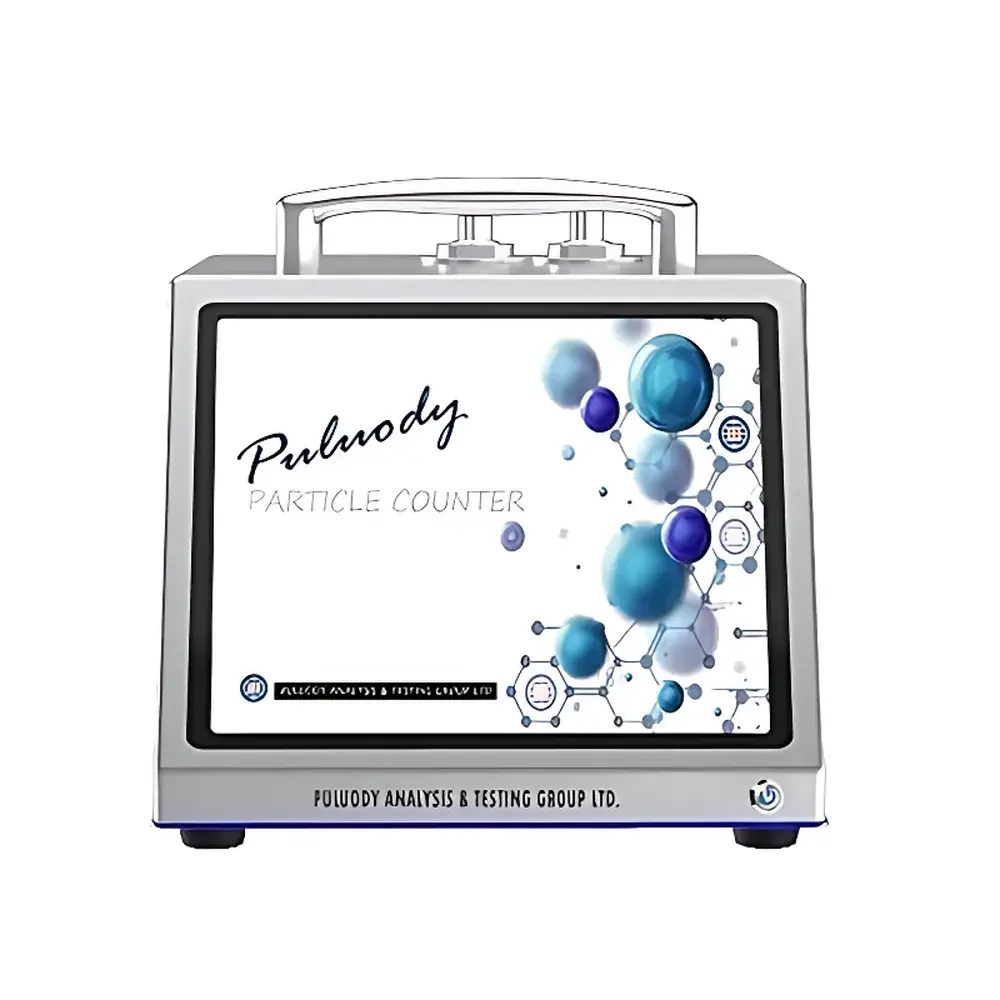
PULUODY DPC-2602 Handheld Airborne Particle Counter for Cleanroom Monitoring
| Brand | PULUODY |
|---|---|
| Origin | Shaanxi, China |
| Manufacturer Type | Authorized Distributor |
| Country of Origin | China |
| Model | DPC-2602 |
| Price Range | USD 140 – 39,500 (FOB) |
| Sensor Technology | 7th-Generation Dual-Laser Narrow-Beam Optical Detection |
| Particle Size Channels | Configurable Sets Including 0.3/0.5/1.0/2.5/5.0/10.0 µm |
| Counting Accuracy | <5% coincidence error at 2×10⁶ particles/ft³ |
| Flow Rate | 2.83 L/min (0.1 cfm) |
| Sampling Time | Programmable (default 60 s) |
| Operating Temperature | 5–45 °C |
| Relative Humidity Limit | ≤90% RH (non-condensing) |
| Battery | Rechargeable 4100 mAh Li-polymer |
| Display | 3.45″ industrial-grade full-view color LCD |
| Data Storage | 10,000 measurement records |
| Compliance | ISO 14644-1:2015, GB/T 16292–1996, EU GMP Annex 1 (2022), USP <788> |
| Optional Modules | Integrated temperature/humidity sensor (–40 to 120 °C / 0–100% RH), CO/HCHO electrochemical gas sensors |
Overview
The PULUODY DPC-2602 is a handheld airborne particle counter engineered for real-time, quantitative monitoring of particulate contamination in controlled environments. It operates on the principle of light scattering photometry using dual-laser narrow-beam optical detection—specifically the proprietary 7th-generation sensor architecture developed by PULUODY Group (UK). This technology enables high-sensitivity discrimination of discrete particle size fractions across multiple calibrated channels, supporting compliance-driven applications in pharmaceutical manufacturing, microelectronics fabrication, biotechnology cleanrooms, and HVAC system validation. Unlike fixed-channel benchtop counters, the DPC-2602 offers configurable size binning (e.g., 0.3/0.5/1.0/2.5/5.0/10.0 µm), allowing users to align measurement granularity with ISO 14644-1 classification requirements or internal SOPs. Its 2.83 L/min (0.1 cfm) volumetric flow rate meets international standard sampling protocols for Class 5–8 cleanrooms, while its <5% coincidence error at 2×10⁶ particles/ft³ ensures metrological integrity during high-concentration challenges such as filter leak testing or process upset monitoring.
Key Features
- Modular optical detection system with dual-laser excitation and optimized scatter collection geometry for enhanced signal-to-noise ratio and reduced false counts
- Field-configurable particle size channel selection—supports four predefined binning schemes to match regulatory or operational needs
- Integrated environmental sensing: optional high-accuracy temperature (–40 to 120 °C) and relative humidity (0–100% RH) modules with dew point calculation
- Expandable multi-gas capability: up to three simultaneous electrochemical sensors for CO, formaldehyde (HCHO), or other target analytes (sensor-specific calibration required)
- Dual-mode operation: particle count (per cubic meter or cubic foot), mass concentration estimation (PM₂.₅/PM₁₀), and filtration efficiency evaluation via upstream/downstream differential counting
- Robust embedded data management: 10,000 timestamped records stored internally with UTC synchronization; exportable via USB or RS232 to LIMS or QA databases
- Industrial-grade 3.45″ color LCD with anti-glare coating and wide viewing angle—designed for glove-compatible operation in gowning rooms and biosafety cabinets
- Comprehensive electrical protection: overvoltage, overcharge, short-circuit, ESD-hardened circuitry, and magnetic field immunity per IEC 61326-1
Sample Compatibility & Compliance
The DPC-2602 is validated for use with ambient air, compressed gases (via optional pressure-regulated inlet), and recirculated HVAC streams. It does not require sample dilution or preconditioning under standard operating conditions. Its counting performance conforms to ISO 21501-4:2018 (Calibration and verification of airborne particle counters), and reported data satisfies audit requirements under ISO 14644-1:2015, EU GMP Annex 1 (2022), and FDA guidance for sterile drug manufacturing. The instrument supports GLP/GMP traceability through user-accessible audit logs, electronic signatures (when paired with compliant software), and third-party calibration certificates issued by CNAS-accredited laboratories. All firmware and calibration constants are digitally signed and tamper-evident per 21 CFR Part 11 principles.
Software & Data Management
Data acquisition and reporting are managed via PULUODY’s PC-based CleanRoom Manager™ v4.2 software (Windows 10/11 compatible), which provides automated report generation in PDF/CSV formats compliant with ISO 14644-2:2015 Annex A. The software enables trend analysis, statistical process control (SPC) charting, and deviation flagging based on user-defined action/alert limits. Raw data files include full metadata: operator ID, location tag, sampling duration, flow verification status, battery level, and sensor health diagnostics. Firmware updates are delivered via secure HTTPS with SHA-256 hash verification. No cloud connectivity is enabled by default; all data remains on-premise unless explicitly configured.
Applications
- ISO Class 5–8 cleanroom certification and routine monitoring per ISO 14644-2
- In-process environmental qualification of laminar flow hoods, biosafety cabinets, and isolators
- Filter integrity testing (e.g., HEPA/ULPA leak scanning using aerosol challenge methods)
- Pharmaceutical facility commissioning, qualification (IQ/OQ/PQ), and change control documentation
- Microelectronics wafer fab contamination mapping and tool exhaust verification
- Hospital operating room and ICU air quality surveillance aligned with HTM 03-01
- Food and beverage packaging line environmental monitoring per BRCGS and SQF standards
- Automotive paint booth particulate clearance validation prior to coating cycles
FAQ
Does the DPC-2602 meet ISO 14644-1:2015 requirements for cleanroom classification?
Yes—the instrument’s optical design, flow accuracy, and counting efficiency have been verified against ISO 21501-4:2018, and its reporting format fully supports ISO 14644-1 statistical sampling plans.
Can it be used for both PM₂.₅ and PM₁₀ mass concentration estimation?
Yes—using built-in Mie scattering algorithms and user-selectable density assumptions, it calculates equivalent mass concentrations from number-based size distributions.
Is third-party calibration available for regulatory audits?
Yes—CNAS-accredited calibration services are provided globally, including traceable certificates with uncertainty budgets and lifetime recalibration support.
What is the expected service life of the laser sensor?
The dual-laser module is rated for >200,000 measurements under normal operating conditions, with automatic self-diagnostic routines to monitor alignment and output stability.
Does it support 21 CFR Part 11-compliant electronic records?
When used with CleanRoom Manager™ v4.2 and configured with role-based access control, audit trails, and digital signature workflows, it fulfills core Part 11 requirements for electronic data integrity.




