
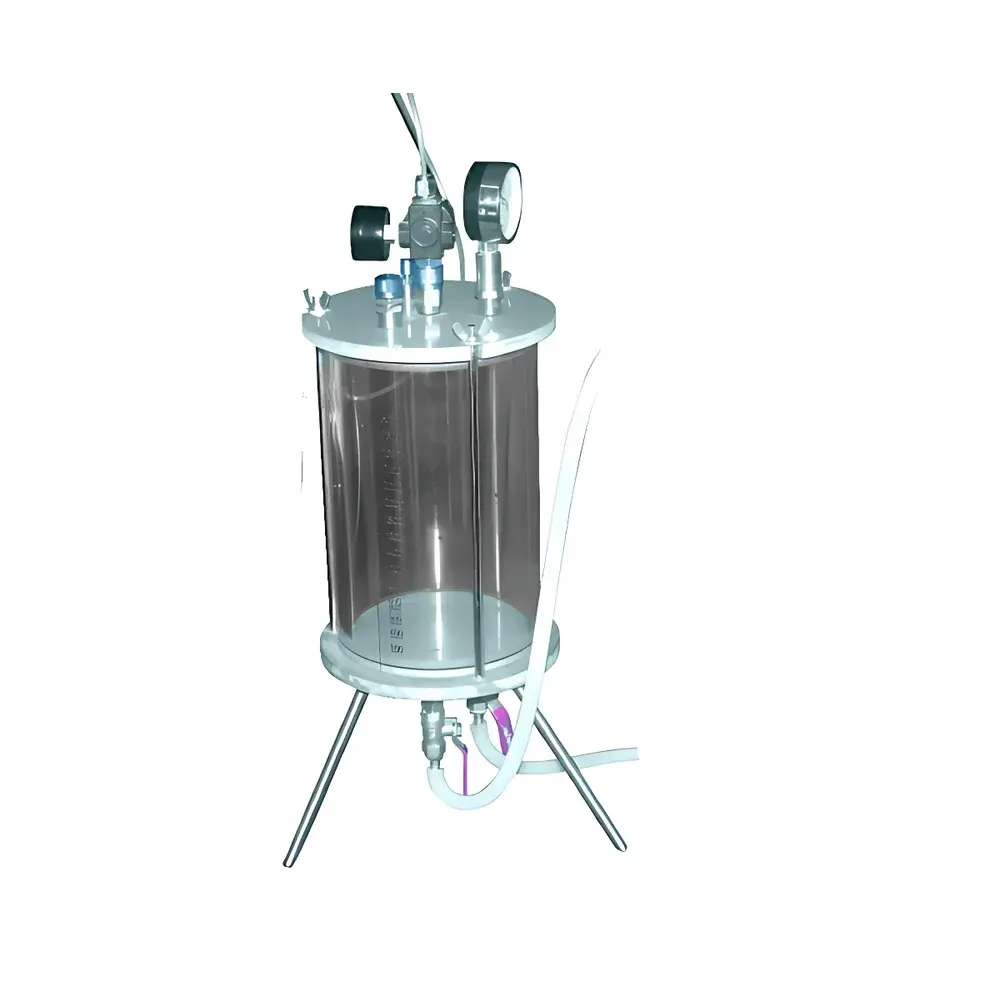
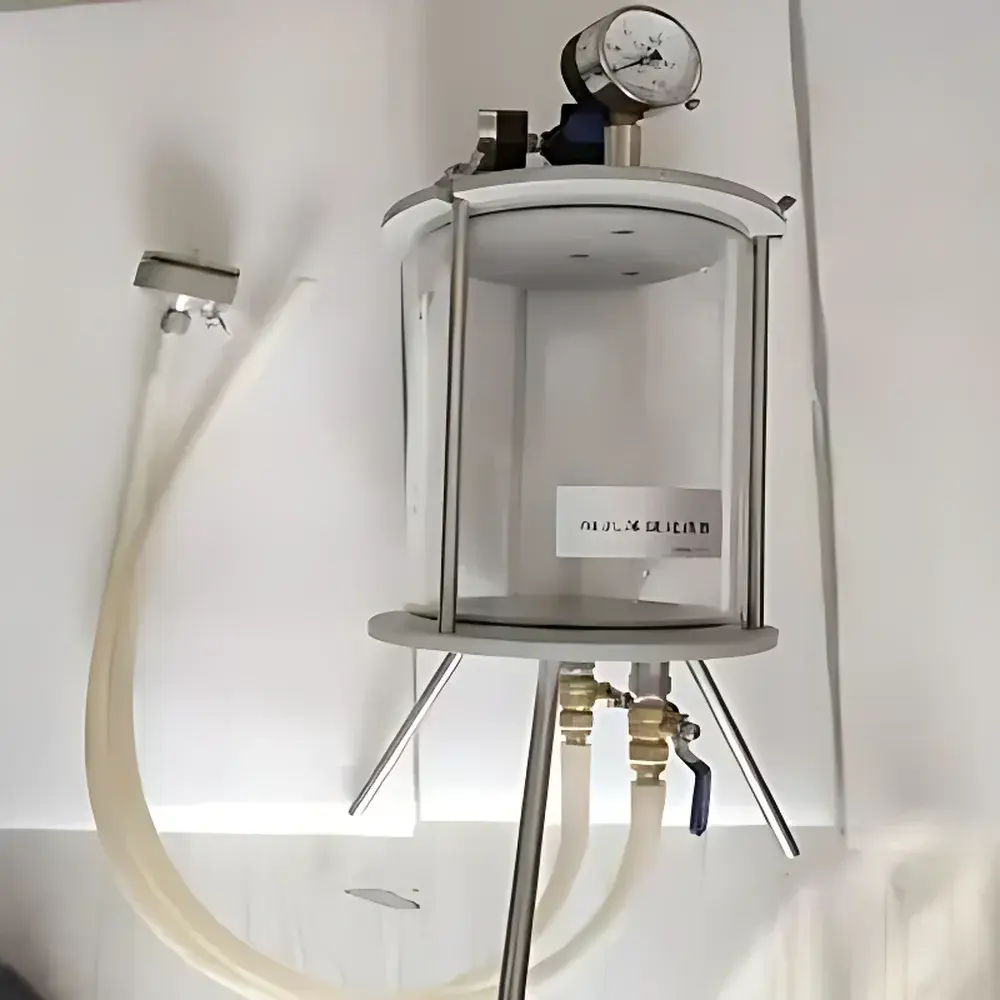
PULUODY PSD-351B Microfiltration Experimental Apparatus for Suspended Solids Determination by Gravimetric Method
| Brand | PULUODY |
|---|---|
| Origin | Shaanxi, China |
| Manufacturer Type | Authorized Distributor |
| Country of Origin | China |
| Model | PSD-351B |
| Gas Source | Nitrogen (optional) |
| Filtration Membrane Diameter | φ43 mm |
| Sample Volume Capacity | 3500 mL |
| Dimensions (W×D×H) | ≤500×500×800 mm |
| Compliance Standards | SY/T 5329–2012, GB 11901–1989, GB/T 606, GB/T 11133, GB 7600 |
Overview
The PULUODY PSD-351B Microfiltration Experimental Apparatus is a precision-engineered gravimetric system designed for the quantitative determination of suspended solids (SS) in aqueous samples according to internationally recognized standard methodologies. It operates on the principle of pressure-driven microfiltration through a defined-area polymeric membrane (φ43 mm), followed by gravimetric analysis of the retained residue after controlled drying and weighing. This method aligns with the fundamental requirements of ISO 11923 (Water quality — Determination of suspended solids — Gravimetric method), as well as the national standards GB 11901–1989 and SY/T 5329–2012, which specify procedural rigor for environmental monitoring, wastewater treatment validation, and oilfield water injection quality control. The apparatus integrates pneumatic pressure regulation (using externally supplied or optionally integrated nitrogen gas), temperature-compensated timing, and corrosion-resistant fluidic architecture—enabling reproducible filtration under standardized differential pressure conditions. Its modular design supports traceable, operator-independent execution of SS protocols required in GLP-compliant laboratories and regulated industrial QA/QC environments.
Key Features
- Modular stainless steel and optical-grade acrylic construction ensures long-term chemical resistance to aggressive matrices including saline formation waters, acidic/alkaline effluents, and solvent-containing process streams.
- Dual-pressure control system with calibrated pressure gauge, bleed valve, inlet/outlet isolation valves, and adjustable regulator enables precise maintenance of filtration driving force—critical for inter-laboratory comparability per SY/T 5329–2012.
- Integrated electronic temperature sensor and digital stopwatch provide real-time ambient thermal monitoring for mass correction during desiccation and gravimetric calculation per GB 11901–1989 Annex A.
- Dedicated 3500 mL sample reservoir with overflow-safe geometry accommodates high-volume field-collected specimens without pre-dilution, minimizing handling error.
- Membrane holder assembly incorporates degassing functionality to eliminate air entrapment beneath the filter surface—ensuring uniform flow distribution and eliminating measurement bias from channeling or incomplete capture.
- Clear acrylic housing allows full visual verification of filtration progress, bubble release, and filtrate clarity—supporting immediate anomaly detection and audit-ready operational transparency.
Sample Compatibility & Compliance
The PSD-351B is validated for use across diverse aqueous matrices: surface water, groundwater, municipal sewage, industrial wastewater (including electroplating, petrochemical, and pharmaceutical process streams), and enhanced oil recovery (EOR) injection water. It complies with the sampling and filtration parameters specified in GB 11901–1989 (equivalent to ISO 11923), SY/T 5329–2012 (for clastic reservoir water quality), and ASTM D5907 (Standard Test Methods for Total Suspended Solids in Water). All wetted components meet USP Class VI biocompatibility criteria for non-leaching performance. The system supports integration into FDA 21 CFR Part 11–compliant workflows when paired with certified analytical balances and LIMS-linked documentation protocols.
Software & Data Management
While the PSD-351B is a hardware-only gravimetric platform (no embedded microprocessor), its operational sequence is fully compatible with laboratory data management systems. Standardized test records—including initial/final membrane mass, sample volume, filtration time, ambient temperature, applied pressure, and calculated SS concentration (mg/L)—are structured to populate electronic lab notebooks (ELN) or LIMS templates compliant with ISO/IEC 17025:2017 clause 7.5.2. Optional PULUODY-certified calibration kits (e.g., NIST-traceable reference filters and certified blank membranes) support documented metrological traceability. Audit trails for balance calibration, environmental chamber validation, and technician training records are recommended for GMP/GLP alignment.
Applications
- Regulatory compliance testing for municipal wastewater discharge permits (e.g., EPA NPDES requirements).
- Quality assurance of produced water reinjection in upstream oil & gas operations per API RP 45 and ISO 10438.
- Pharmaceutical water system monitoring (PW, WFI) per USP and EU Annex 1, where particulate load correlates with biofilm risk.
- Environmental impact assessment of mining runoff and landfill leachate.
- Validation of membrane filtration efficiency in pilot-scale water treatment studies.
- Research-grade suspended solids profiling in limnological and marine sediment transport modeling.
FAQ
What filtration membranes are compatible with the PSD-351B?
Standard φ43 mm polyethersulfone (PES), mixed cellulose ester (MCE), or polycarbonate track-etched (PCTE) membranes with nominal pore sizes of 0.45 µm or 0.22 µm are supported. Membrane selection must conform to the target analyte size range and matrix compatibility per GB 11901–1989 Section 5.2.
Is nitrogen gas mandatory for operation?
Nitrogen is recommended to prevent oxidation of sensitive samples and ensure inert filtration; however, compressed air (oil-free, particle-filtered) may be used if sample stability permits—subject to documented risk assessment per ISO/IEC 17025 clause 7.2.2.
Can the PSD-351B be used for non-aqueous suspensions?
No. The apparatus is engineered exclusively for aqueous-phase suspended solids analysis per its referenced standards. Organic solvents may compromise membrane integrity and acrylic housing compatibility.
How is filtration pressure calibrated and verified?
Pressure calibration requires annual verification using a NIST-traceable deadweight tester or certified digital pressure calibrator (±0.5% FS accuracy), documented per ISO/IEC 17025 clause 6.5.2.
Does the system include a drying oven or analytical balance?
No. These are external accessories required per GB 11901–1989 Section 7.1 and must meet Class I or II metrological specifications (e.g., readability ≤0.1 mg, draft shield, temperature-controlled environment).







