
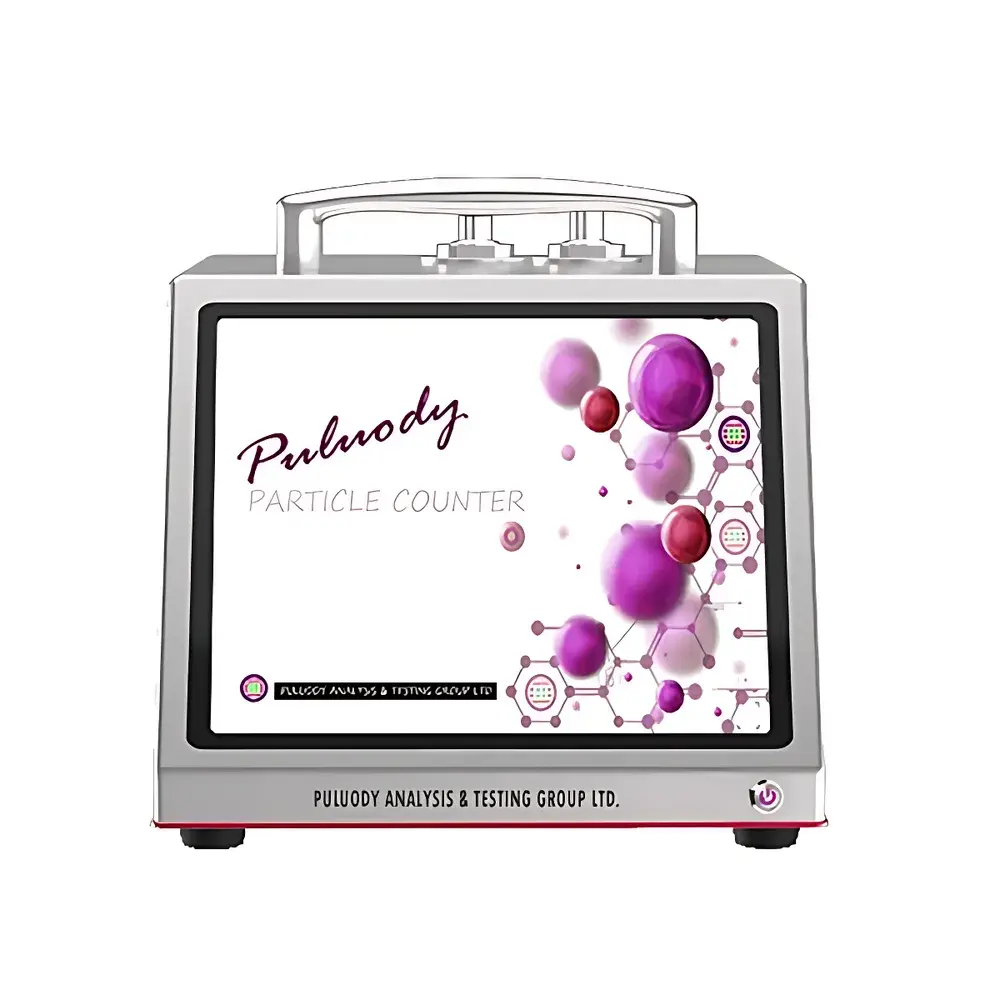
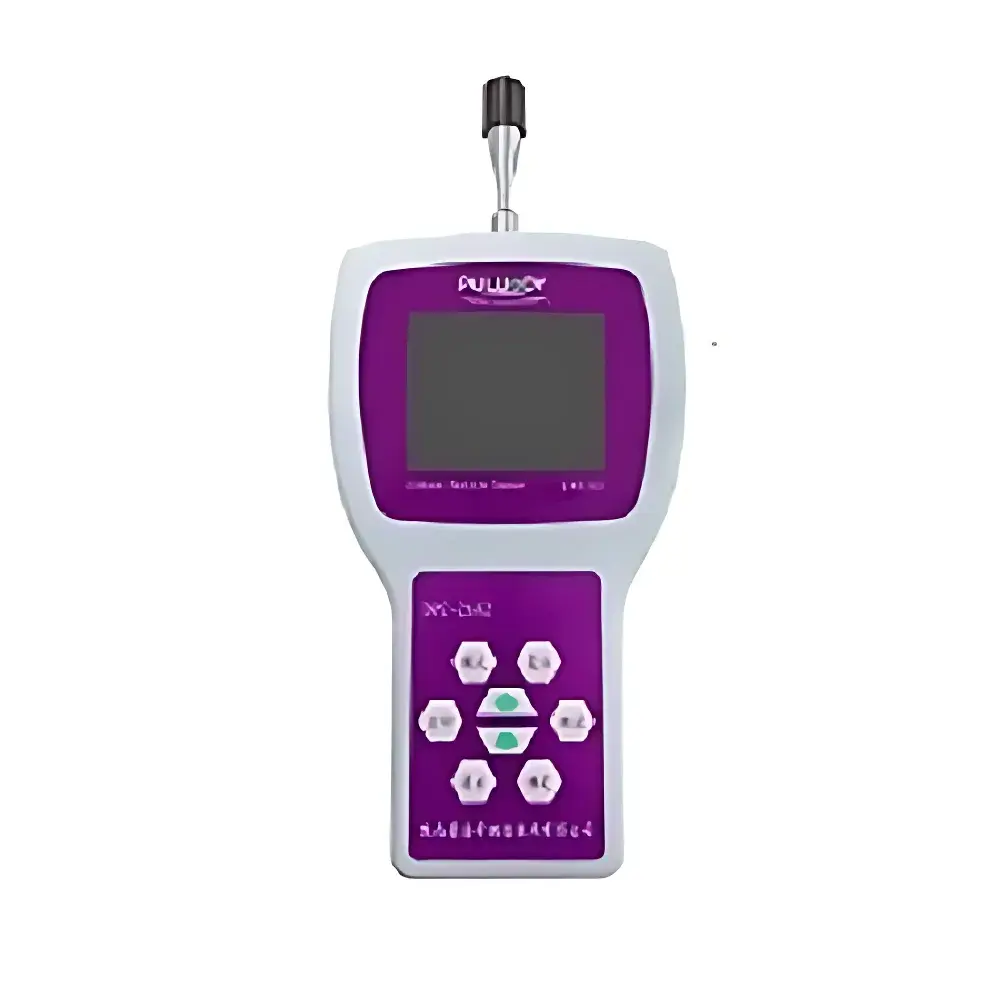
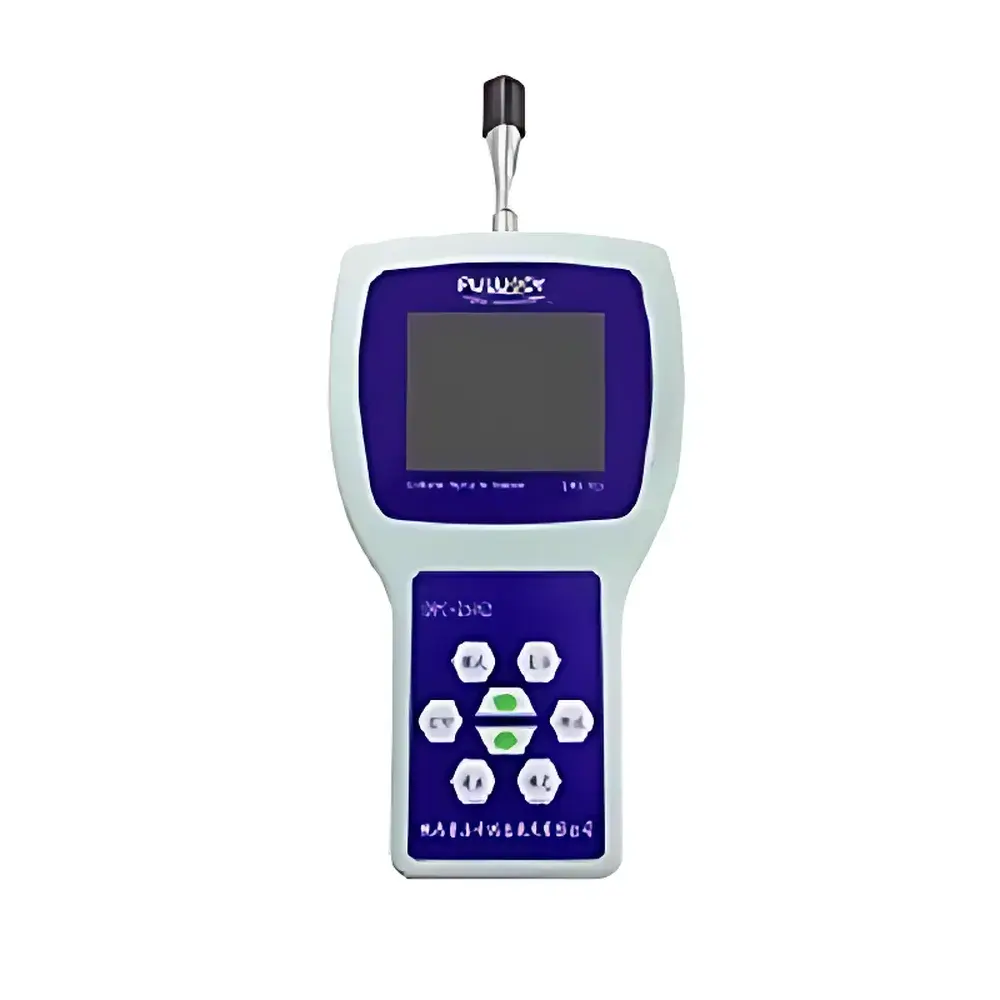
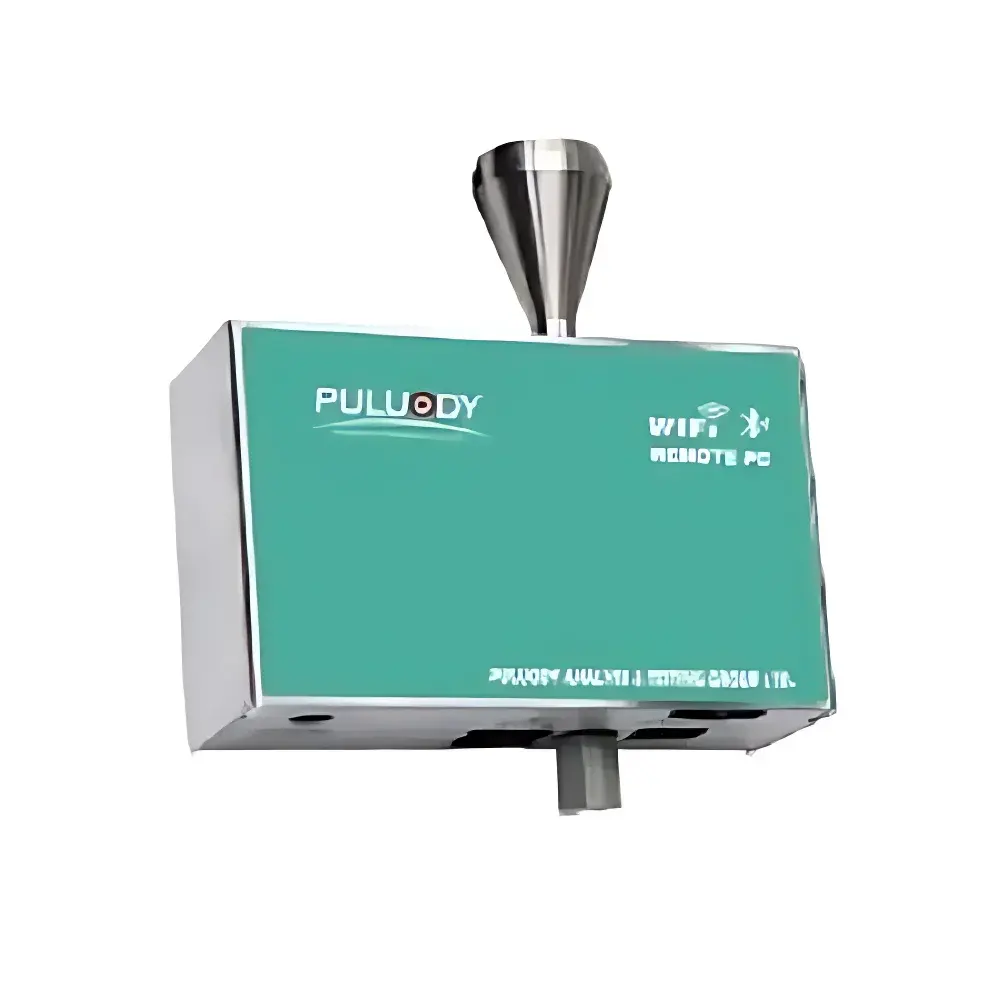
PULUODY DPC-2611 Portable Laser Particle Counter
| Brand | PULUODY |
|---|---|
| Model | DPC-2611 |
| Instrument Type | Optical Airborne Particle Counter |
| Detection Principle | Light Scattering (Mie Theory) |
| Particle Size Range | 0.10–25.0 µm (configurable channels) |
| Channel Count | 20 user-selectable size bins |
| Counting Accuracy | ≤±30% (per ISO 21501-4) |
| Concentration Accuracy | ≤±30% |
| Repeatability | ≤±10% FS |
| Coincidence Error | <5% at 2×10⁶ particles/ft³ |
| Flow Rate Options | 2.83 L/min, 28.3 L/min, 50 L/min, or 100 L/min |
| Sampling Time | 60 s default |
| Environmental Sensors | Integrated temperature (−40 to +120 °C), relative humidity (0–100% RH), dew point |
| Gas Detection Capability | Up to 3 optional electrochemical or NDIR gas sensors (e.g., CO, HCHO) |
| Compliance | ISO 21501-4, ISO 14644-1, GB/T 16292, GB/T 6167, JJF 1190, JIS B9921, CE, 21 CFR Part 11 (audit trail, electronic signatures, role-based access) |
| Display | 10.0-inch industrial-grade TFT LCD with full-view angle |
| Data Storage | ≥10,000 test records (expandable via USB/SD) |
| Output Interfaces | RS232, RS485, LAN, USB |
| Alarm Modes | Configurable particle count/mass thresholds |
| Power | AC 100–240 V, 50/60 Hz |
| Operating Environment | 5–45 °C, ≤90% RH (non-condensing) |
| Safety Protections | Overvoltage, overcharge, short-circuit, ESD-hardened, EMI-shielded enclosure |
Overview
The PULUODY DPC-2611 Portable Laser Particle Counter is an ISO 21501-4–compliant optical airborne particle counter engineered for high-fidelity environmental monitoring in regulated and non-regulated settings. It employs dual-laser narrow-beam scattering detection—PULUODY’s seventh-generation sensor architecture—to quantify suspended particulate matter in air streams via Mie light-scattering principles. Unlike fixed-channel legacy instruments, the DPC-2611 supports six preconfigured particle sizing matrices (A–F), enabling flexible calibration alignment with application-specific standards including ISO 14644-1 (cleanroom classification), USP , and EU GMP Annex 1. Its modular flow path accommodates selectable sampling rates (2.83 L/min for standard cleanroom mapping; up to 100 L/min for HVAC duct profiling), ensuring traceable volumetric concentration reporting in particles per liter (PC/L) or mass concentration (µg/m³) under validated conditions.
Key Features
- Seventh-generation dual-laser narrow-beam optical sensor with >200,000-cycle operational lifetime and calibrated sensitivity across 0.10–25.0 µm
- 20 programmable particle size channels, supporting six standardized binning configurations (A–F) compliant with ISO 21501-4 and GB/T 6167
- Integrated environmental sensing: precision temperature (±0.5 °C), RH (±2% RH), and dew point calculation—all traceable to NIST-certified references
- Expandable multi-gas capability: supports up to three hot-swap electrochemical or NDIR sensors (CO, HCHO, VOCs, O₃) without hardware modification
- Tri-mode measurement engine: particle number concentration (PC/L), mass concentration (µg/m³), and filtration efficiency (%)—each with independent alarm thresholds and reporting logic
- 10.0-inch industrial TFT display with glove-compatible touch interface, localized English/Chinese menus, and real-time graphical trend overlay
- Comprehensive safety architecture: IEC 61000-4-2 Level 4 ESD protection, magnetic field immunity per IEC 61000-4-8, and reinforced overvoltage/short-circuit circuitry
Sample Compatibility & Compliance
The DPC-2611 is validated for continuous or spot sampling of ambient air, compressed gases (oil-free, ≤0.1 µm filter grade), and laminar airflow environments—including ISO Class 1–9 (ISO 14644-1) and Federal Standard 209E Class 100–300,000 cleanrooms. It meets regulatory requirements for pharmaceutical manufacturing (FDA 21 CFR Part 11, EU Annex 1), medical device production (ISO 13485), and microelectronics fabrication (SEMI S2). All particle counting data are generated under ISO 21501-4–defined optical alignment and coincidence correction protocols. Calibration traceability is maintained through third-party accredited laboratories per JJF 1190 and GB/T 6167.7, with documented uncertainty budgets available for audit review. The instrument’s firmware implements ALCOA+ data integrity principles: attributable, legible, contemporaneous, original, accurate—with immutable audit trails, role-based user permissions, and electronic signature support.
Software & Data Management
Data acquisition, analysis, and export are managed via embedded firmware with optional PC-based PULUODY ParticleView™ Suite (v5.2+). Raw counts, environmental parameters, and gas concentrations are timestamped with UTC synchronization and stored in encrypted binary format. Each record includes metadata: operator ID, location tag, sampling duration, flow rate, sensor status flags, and calibration certificate ID. Export options include CSV (for LIMS integration), PDF reports (with configurable headers, logos, and compliance footers), and XML (ASTM E2500-compliant). The system supports scheduled auto-backup to network shares or USB drives, and enables remote diagnostics via secure SSH or TLS-enabled web interface. Audit logs capture all configuration changes, user logins, data deletions, and report generation events—retained for ≥36 months per GxP retention policies.
Applications
- Cleanroom qualification and routine monitoring (ISO 14644-2 surveillance)
- HVAC system validation and filter leak testing (DOP/PAO scanning support)
- Pharmaceutical aseptic processing environments (fill-finish suites, isolators, RABS)
- Medical device packaging line environmental control (Class 7/8 ISO zones)
- Microelectronics wafer fab contamination control (particle excursions on reticles, wafers)
- Biotechnology clean utilities (compressed air, nitrogen, process gases per ISO 8573-1)
- Automotive paint booth aerosol management (overspray, solvent mist)
- Food and beverage processing hygiene verification (dry blending, packaging rooms)
- Research laboratories requiring traceable airborne particulate baselines (nanomaterial handling, inhalation toxicology)
FAQ
Is the DPC-2611 suitable for ISO 14644-1 Class 1 (ISO 3) cleanroom certification?
Yes—the instrument achieves ≤±30% counting accuracy at 0.1 µm with appropriate flow rate selection (28.3 L/min minimum) and is certified per ISO 21501-4 Annex B for sub-0.3 µm detection.
Can particle count data be imported into LabWare LIMS or Thermo Fisher SampleManager?
Yes—CSV exports include ISO-compliant column headers and metadata fields compatible with ASTM E1469 and ANSI/AAMI ST91 ingestion protocols.
Does the device support 21 CFR Part 11-compliant electronic signatures?
Yes—role-based login, biometric-ready authentication module (optional), and digital signature workflows with PKI certificate binding are fully implemented in firmware v3.4.2+.
What is the recalibration interval recommendation under GMP conditions?
Annual calibration against NIST-traceable reference aerosols (e.g., PSL, DEHS) is required; PULUODY provides accredited third-party service with full uncertainty reporting per ISO/IEC 17025.
How is data integrity ensured during power loss or unexpected shutdown?
All writes use journaling file system with atomic commit; unsaved buffers are retained in non-volatile SRAM and recovered on reboot with checksum validation.



