

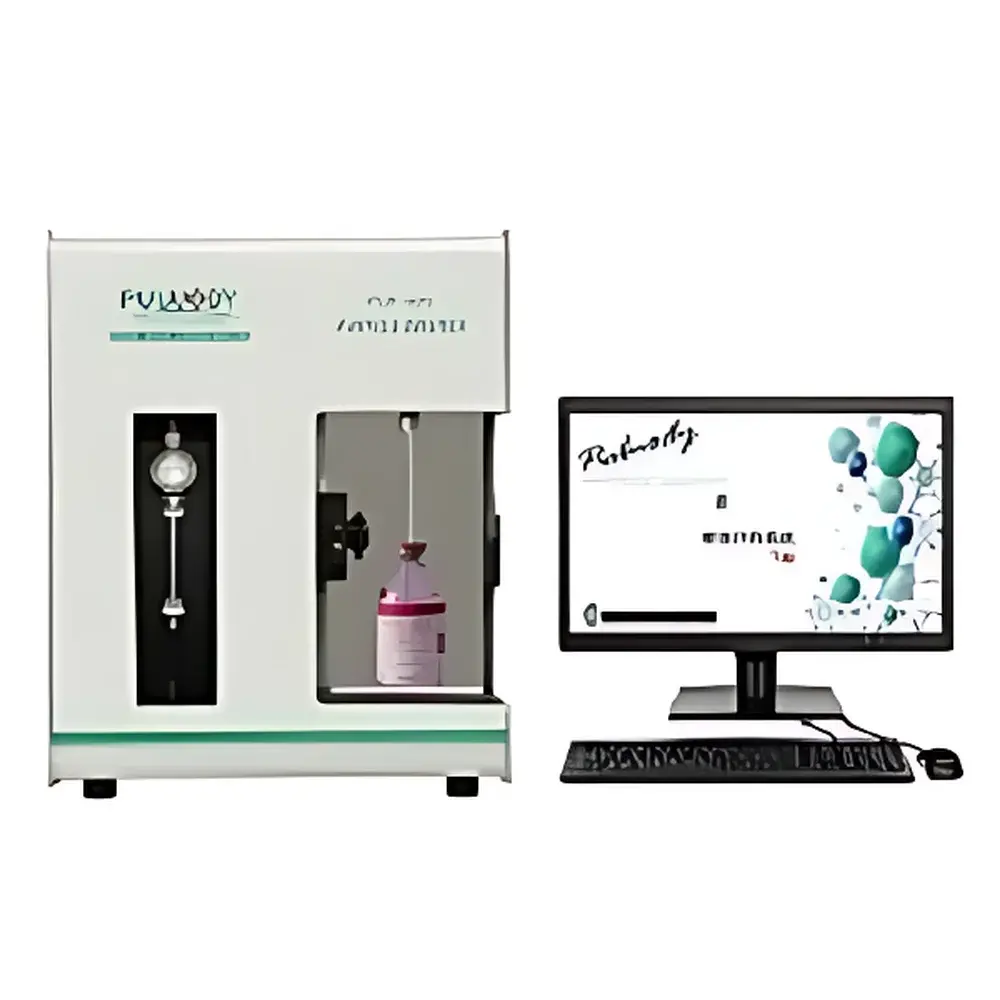
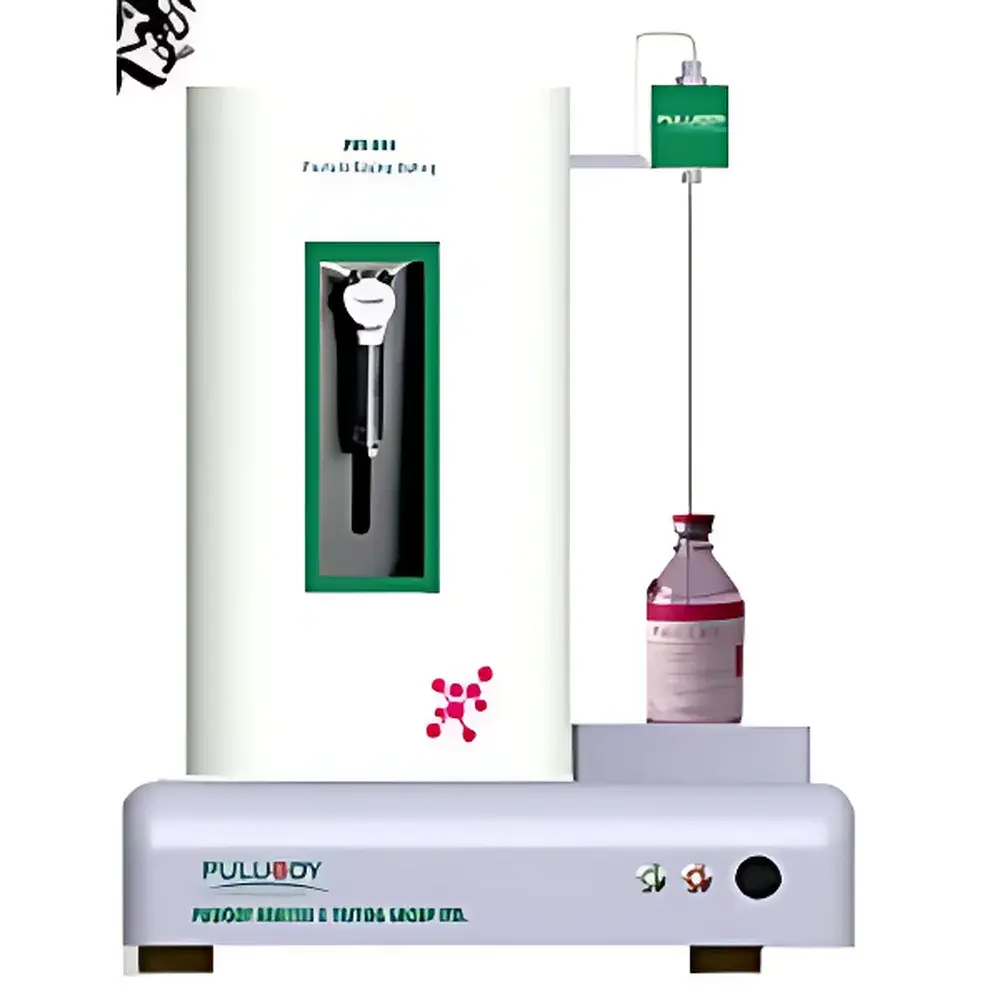
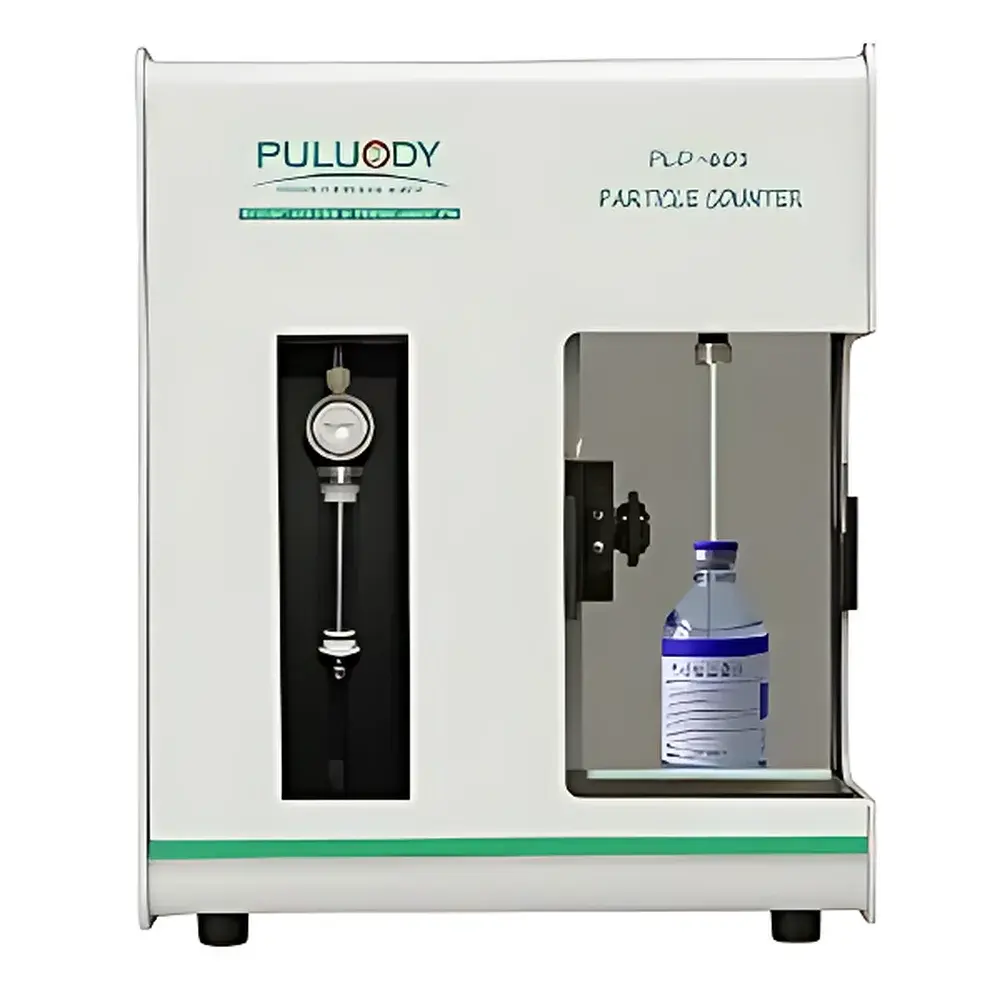
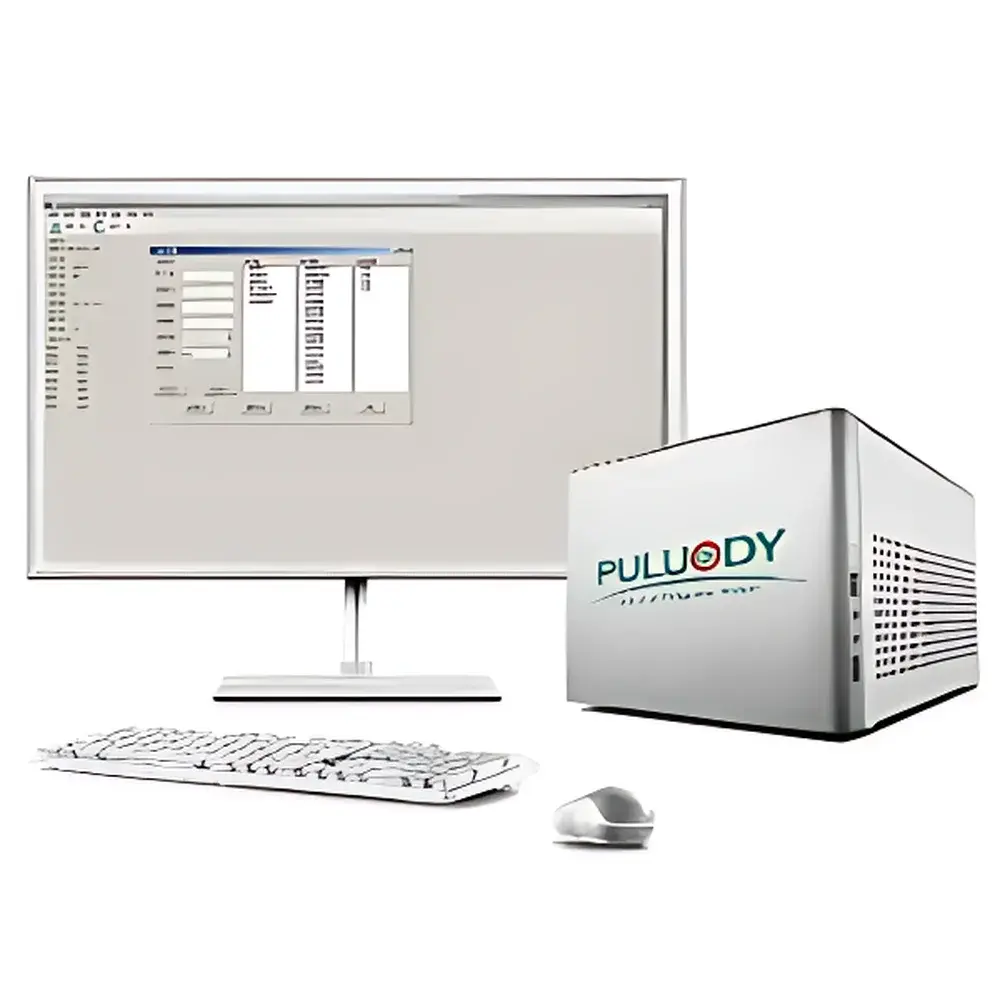
PULUODY PMT-2 Cleanroom Wipe Liquid Particle Counter
| Brand | PULUODY |
|---|---|
| Origin | Shaanxi, China |
| Manufacturer Type | Authorized Distributor |
| Regional Classification | Domestic (China) |
| Model | PMT-2 |
| Instrument Type | Optical Liquid Particle Counter |
| Detection Principle | Dual-Laser Narrow-Beam Light Scattering |
| Measuring Range | 0.03–3000 µm (sensor-configurable) |
| Calibration Standards | JJG 1061, ISO 21501, Polystyrene Latex (PSL) Spheres |
| Compliance | SJ/T 11480–2014, FZ/T 64056–2015, IEST-RP-CC004.3 |
| Sampling System | Precision Metering Piston Pump + Electromagnetic Flow Control |
| Accuracy | <±3% typical |
| Volume Accuracy | <±1% |
| Coincidence Limit | ≤2.5% at 1000 particles/mL |
| Output | 4–20 mA analog signal with customizable over-limit alarm |
| Data Interface | iPad-compatible wireless acquisition |
| Software | V8.3 Integrated Analysis & Calibration Separation Architecture |
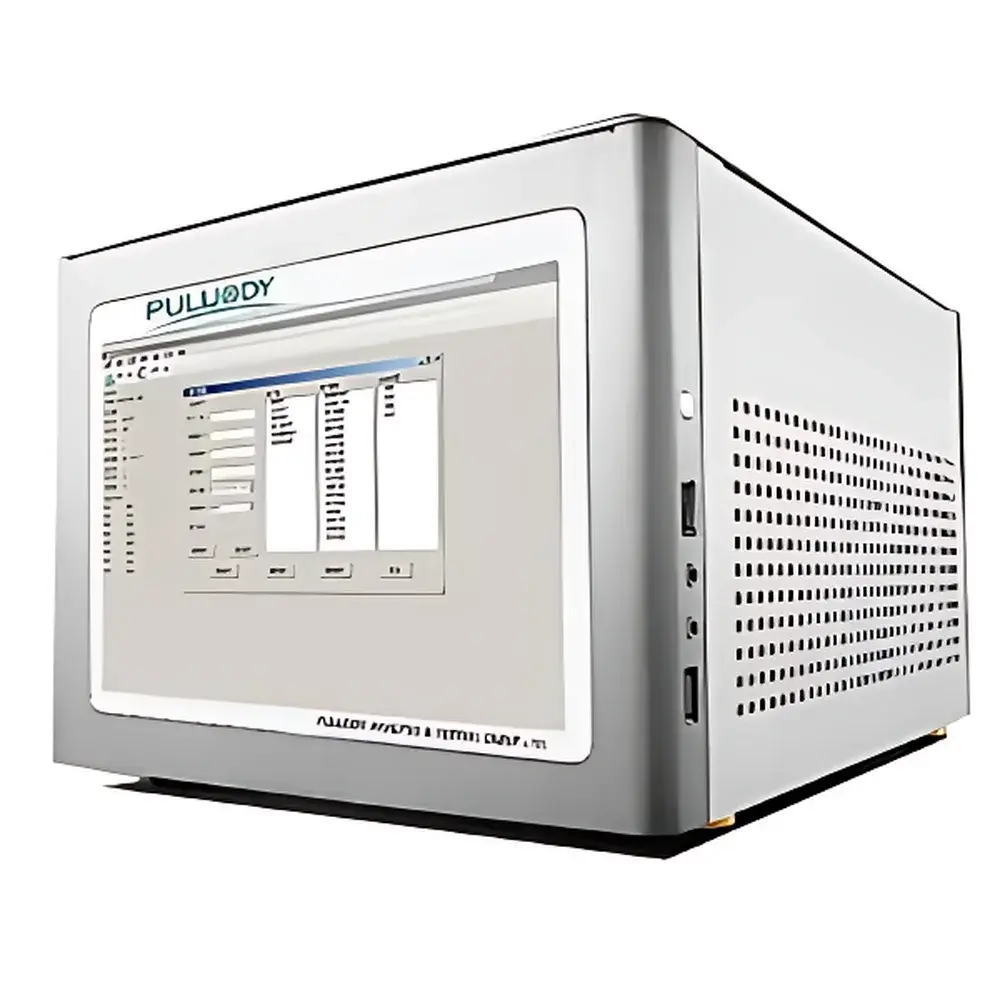
| Display | Color LCD touchscreen + optional wireless keyboard/mouse |
| Power Input | 100–265 VAC, 50–60 Hz |
| Reporting | Particles per mL and ISO 4406 / NAS 1638 contamination codes |
Overview
The PULUODY PMT-2 Cleanroom Wipe Liquid Particle Counter is an optical liquid particle counter engineered for high-sensitivity, trace-level particulate contamination analysis in ultra-clean process environments. It operates on the principle of dual-laser narrow-beam light scattering—utilizing two spatially separated, collimated laser sources to enhance signal-to-noise ratio and minimize optical interference from refractive index variations or bubble artifacts. This eighth-generation sensor architecture enables robust detection of sub-100 nm particles in low-conductivity, low-viscosity, and chemically aggressive liquids—including ultrapure water (UPW), semiconductor process chemicals, cleaning agents, and polymer solutions—without requiring dilution or filtration. Designed specifically for evaluating wet-state shedding behavior of cleanroom consumables (e.g., wipes, swabs, nonwovens), the PMT-2 supports both offline laboratory verification and online integration into critical fluid loops, delivering real-time, continuous particle concentration data essential for ISO Class 3–5 cleanroom validation, semiconductor front-end process control, and medical device manufacturing compliance.
Key Features
- Dual-laser narrow-beam optical detection system with independent wavelength alignment and beam path stabilization—optimized for high reproducibility across 0.03–3000 µm dynamic range
- Precision metering piston pump coupled with electromagnetic flow regulation ensures volumetric accuracy better than ±1%, critical for quantitative shedding assessment per ASTM F3297 and IEST-RP-CC004.3
- Modular sensor configuration: selectable detection thresholds including user-defined channels (e.g., 1–100 µm, 4–70 µm(c), or 0.1 µm(c)) to align with application-specific cleanliness specifications
- Calibration separation architecture: V8.3 software isolates analytical measurement routines from calibration verification modules—supporting audit-ready traceability under FDA 21 CFR Part 11 and GLP/GMP requirements
- Integrated analog output (4–20 mA) with programmable alarm thresholds for direct PLC interface in continuous monitoring systems
- Touchscreen HMI with optional wireless keyboard/mouse support enables flexible deployment in glovebox, laminar flow hood, or production line environments
Sample Compatibility & Compliance
The PMT-2 is validated for use with aqueous and organic solvents, low-surface-tension cleaning formulations, silicone-free isopropyl alcohol (IPA) blends, deionized water, and polymer-based coating solutions. It meets the metrological requirements of SJ/T 11480–2014 (for cleanroom wipe testing), FZ/T 64056–2015 (nonwoven fabric particulate shedding), and IEST-RP-CC004.3 (cleanroom material evaluation). Its detection performance is traceable to national standards via JJG 1061 calibration protocols and certified PSL reference materials compliant with ISO 21501-4. The instrument supports reporting in ISO 4406:2021 and NAS 1638 contamination codes—enabling direct comparison with semiconductor equipment qualification limits (e.g., SEMI F63, F75) and pharmaceutical water system acceptance criteria (USP , ).
Software & Data Management
The V8.3 integrated software platform provides dual-mode operation: standalone PC-based analysis and iPad-enabled field acquisition. All measurement sessions include embedded digital audit trails—recording operator ID, timestamp, calibration status, environmental metadata (temperature, pressure if externally linked), and raw pulse-height histograms. Data export conforms to ASTM E2911-compliant CSV/Excel formats and supports direct import into LIMS systems. Calibration management includes automated drift compensation logs, multi-point verification workflows, and certificate generation aligned with ISO/IEC 17025 documentation requirements. Remote firmware updates and secure role-based access control (RBAC) are available for enterprise deployments.
Applications
- Quantitative wet-state shedding assessment of cleanroom wipes, foam swabs, polyester nonwovens, and antistatic lint-free cloths per IEST-RP-CC004.3
- In-line monitoring of UPW distribution loops in semiconductor fabs—detecting >0.1 µm particles upstream of point-of-use filters
- Validation of cleaning efficacy for photomask handling tools, wafer carriers, and display glass substrates
- Particulate load profiling of CMP slurries, photoresist developers, and etch inhibitors
- Contamination diagnostics in biopharmaceutical buffer preparation systems and final fill environments
- Microfiltration and nanofiltration membrane integrity testing using challenge particle suspensions
FAQ
What particle size ranges can the PMT-2 detect?
The standard configuration covers 0.03–3000 µm; however, users may specify custom channel configurations—including 0.1 µm(c), 1–100 µm, or 4–70 µm(c)—to match industry-specific cleanliness thresholds.
Is the instrument suitable for online integration into a chemical delivery system?
Yes. With its 4–20 mA analog output, programmable alarm logic, and compatibility with industrial-grade sample manifolds, the PMT-2 supports continuous in-process monitoring in semiconductor wet benches and pharmaceutical fluid networks.
How does the dual-laser design improve measurement reliability compared to single-laser counters?
Dual-laser geometry reduces false counts from transient optical noise (e.g., microbubbles, refractive fluctuations) by requiring coincident scatter signals across two independent beams—enhancing specificity for true solid particulates.
Does the software support regulatory compliance for quality-controlled environments?
Yes. V8.3 implements electronic signatures, audit trail logging, calibration lockout, and report watermarking—fully supporting FDA 21 CFR Part 11, EU Annex 11, and ISO 13485 documentation requirements.
Can the PMT-2 be used for non-aqueous solvents such as acetone or NMP?
It is compatible with low-viscosity organic solvents when paired with chemically resistant fluidic components (e.g., PFA tubing, sapphire flow cell); solvent compatibility must be verified case-by-case per material safety data.



