
PULUODY PMT-2-S Copper Sulfate Liquid Particle Counter
| Brand | PULUODY |
|---|---|
| Origin | Shaanxi, China |
| Manufacturer Type | Authorized Distributor |
| Product Origin | Domestic (China) |
| Model | PMT-2-S |
| Price | USD 53,000 (FOB) |
| Dispersion Method | Wet Dispersion |
| Instrument Type | Laboratory Laser-Based Particle Counter |
| Measurement Range | 1–450 µm |
| Repeatability | ≤5% RSD |
| Measurement Time | ≤60 s |
Overview
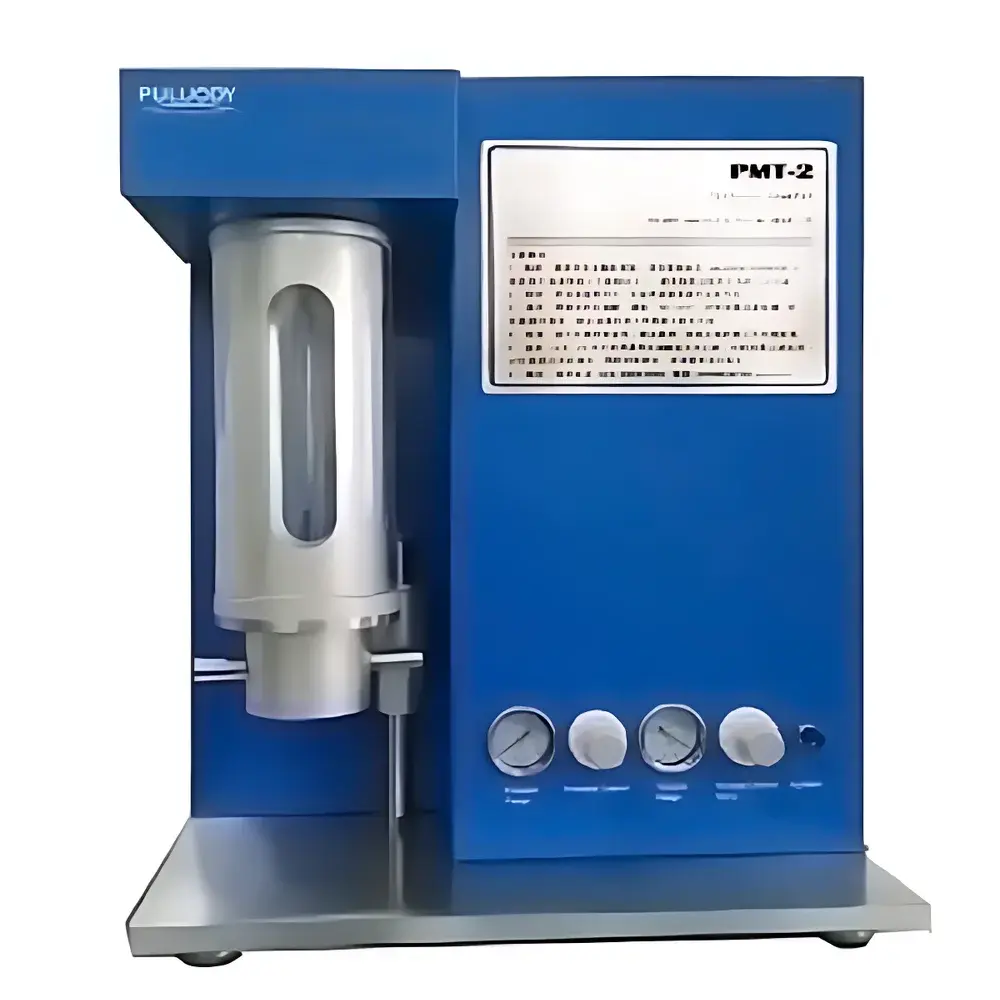
The PULUODY PMT-2-S Copper Sulfate Liquid Particle Counter is a high-precision, laboratory-grade optical particle counter engineered for quantitative analysis of insoluble particulate contamination in low-conductivity, low-viscosity aqueous solutions—including copper sulfate electrolytes used in electroplating, semiconductor wet processing, and advanced battery manufacturing. It operates on the principle of light extinction (single-particle optical sensing), enhanced by eighth-generation dual-laser narrow-beam detection technology. Unlike conventional laser diffraction analyzers optimized for size distribution profiling, the PMT-2-S is specifically calibrated for absolute particle count per unit volume (particles/mL), with trace-level sensitivity down to 1 µm in aggressive ionic media. Its design addresses critical challenges in microcontamination control: refractive index matching limitations in high-salt solutions, sensor fouling resistance, and real-time compliance with pharmacopeial and industrial cleanliness standards.
Key Features
- Eighth-generation dual-laser narrow-beam optical sensor with independent wavelength channels for improved signal-to-noise ratio and reduced coincidence error at high particle concentrations.
- Integrated precision metering pump system with electromagnetic flow control and volumetric accuracy better than ±1%, ensuring repeatable sample intake across varying fluid densities and viscosities.
- Dual-mode operation: supports both offline batch analysis (via syringe or bottle sampling) and online continuous monitoring (with optional flow cell and 4–20 mA analog output interface).
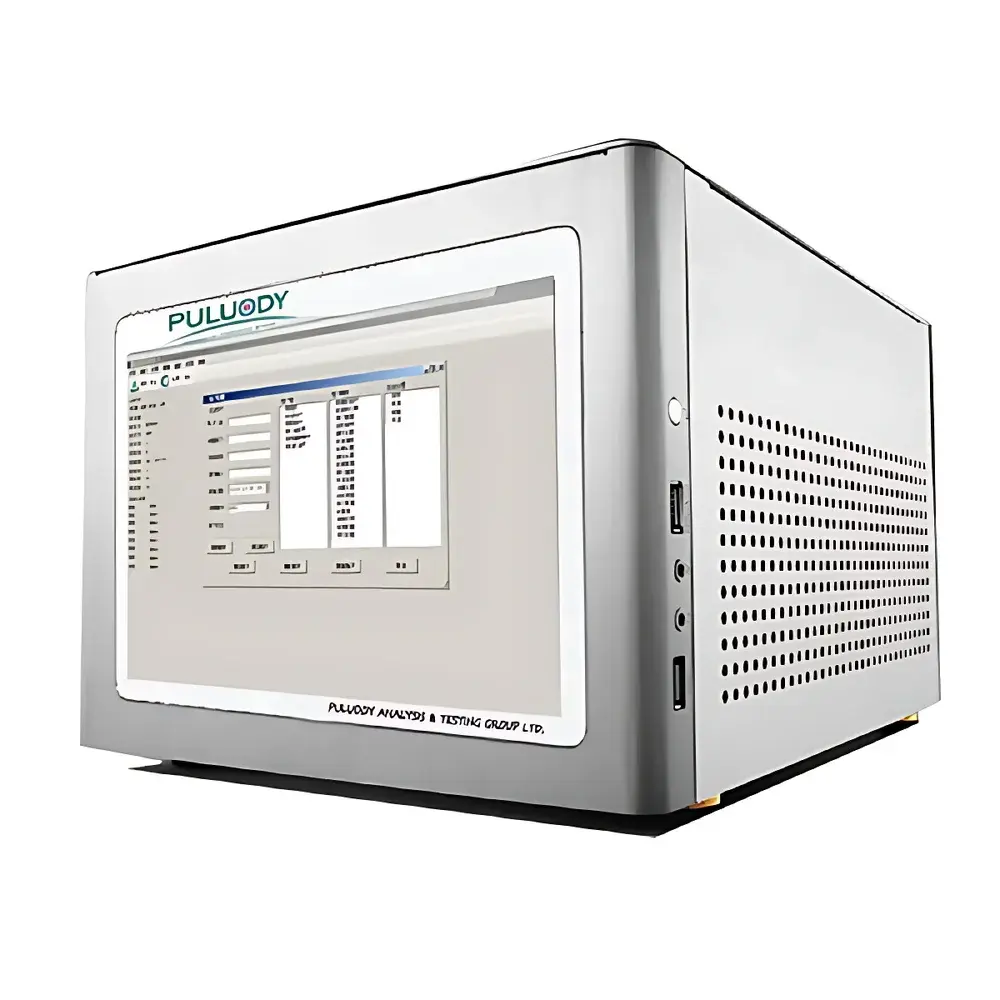
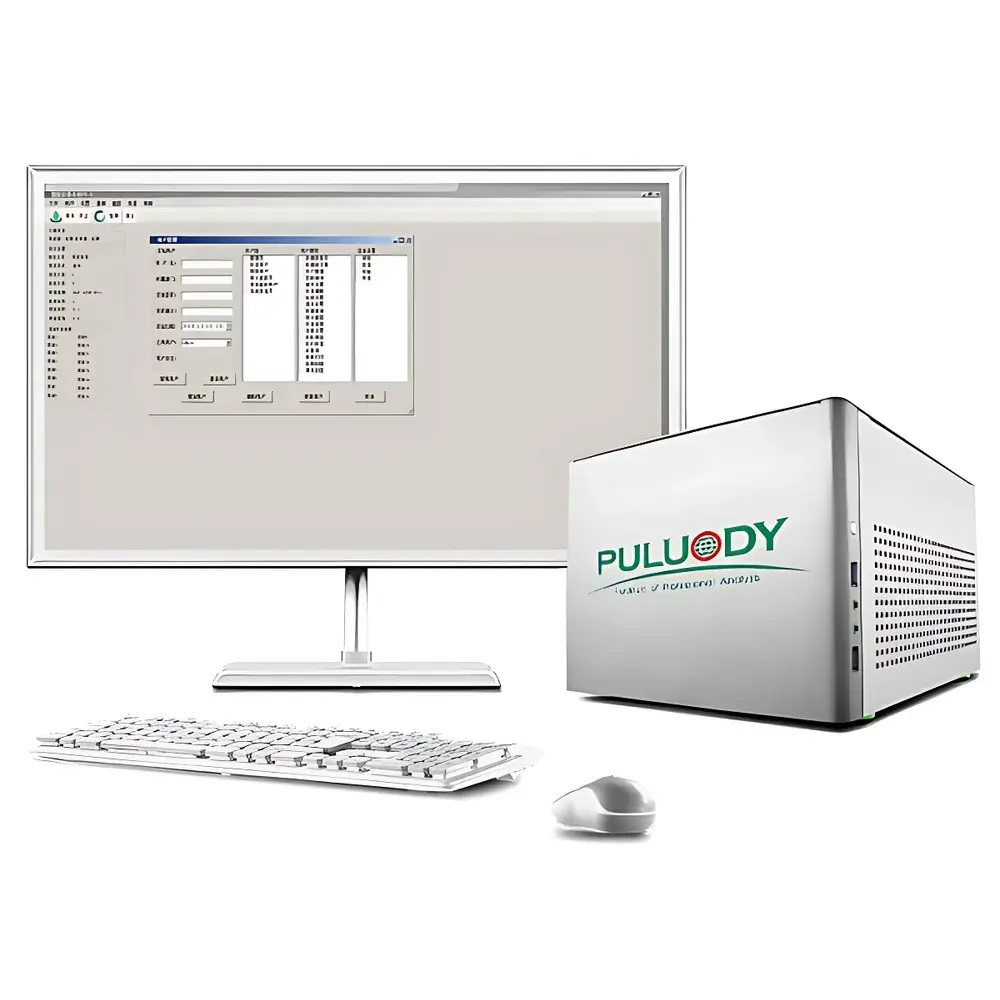
- Touchscreen HMI with color LCD display and optional wireless keyboard/mouse support for flexible lab integration and glove-compatible operation.
- Modular calibration architecture: analytical testing and metrological calibration functions are logically separated to eliminate software-induced bias during regulatory audits.
- Configurable detection thresholds: standard 1–450 µm range; optional extended ranges (e.g., 0.03–3000 µm) or user-defined windows (e.g., 4–70 µm(c), 1–100 µm) aligned with ISO 8573-4, USP , and EP 2.9.19 protocols.
Sample Compatibility & Compliance
The PMT-2-S is validated for use with aggressive aqueous electrolytes—including copper sulfate (CuSO₄), nickel sulfate, sulfuric acid baths, deionized water (≥18.2 MΩ·cm), and ultrapure rinse solutions common in semiconductor front-end fabrication. It meets the physical and optical requirements for particle counting in Class 100 (ISO 5) cleanroom environments. Regulatory alignment includes: Chinese Pharmacopoeia 2015/2020 Edition (ChP ), United States Pharmacopeia and , European Pharmacopoeia 2.9.19, British Pharmacopoeia Appendix XVII, and GB 8368–2018 (sterile medical devices). Calibration traceability follows JJG 1061–2010 (National Metrological Verification Regulation for Liquid Particle Counters) or ISO 21501-4:2018 (calibration using NIST-traceable latex standards).
Software & Data Management
The instrument runs PULUODY V8.3 Particle Analysis Software (PC and integrated touchscreen editions), supporting GMP-compliant data integrity workflows. Features include: audit trail with user-level access control, electronic signature capability, automatic report generation (PDF/CSV), and time-stamped raw count logs. The software complies with FDA 21 CFR Part 11 requirements for electronic records and signatures when deployed in regulated QC/QA environments. IP-based data acquisition enables remote monitoring and integration into LIMS or MES platforms via TCP/IP or Modbus RTU. All measurement sessions retain full metadata: date/time, operator ID, calibration status, environmental temperature, and flow rate verification logs.
Applications
- Electroplating bath monitoring: real-time tracking of particulate shedding from anodes or tank walls in CuSO₄-H₂SO₄ electrolytes.
- Semiconductor wafer cleaning validation: quantification of residual particles post-scumming, RCA-1, or DI-water rinse steps.
- Pharmaceutical excipient quality control: detection of undissolved microcrystals or filter shed particles in parenteral-grade copper-containing formulations.
- Photovoltaic and battery R&D: assessment of slurry stability and filtration efficiency in CuSO₄-based electrolyte recycling streams.
- Flat-panel display manufacturing: verification of particle-free condition in etchant and developer solutions for TFT-LCD and OLED production lines.
- Research laboratories: fundamental studies of nucleation kinetics, aggregation behavior, and filtration breakthrough in nanoscale metal salt systems.
FAQ
Does the PMT-2-S require solvent-specific calibration for copper sulfate solutions?
Yes — while factory-calibrated using polystyrene latex standards in water, users must perform system suitability testing with matrix-matched reference samples (e.g., filtered CuSO₄ solution spiked with certified reference particles) prior to routine analysis.
Can it detect metallic particles suspended in high-conductivity electrolytes?
It detects all non-transparent, light-obscuring particles ≥1 µm regardless of composition; however, conductivity >5 mS/cm may require optional grounding kits and flow cell material upgrades (e.g., PEEK-lined tubing) to prevent electrochemical interference.
Is the 4–20 mA output suitable for integration into PLC-controlled cleanroom HVAC systems?
Yes — the analog output is isolated and configurable for alarm triggers (e.g., >500 particles/mL above 5 µm), enabling direct linkage to facility monitoring dashboards and automated shutdown protocols.
How does the instrument handle particle coincidence at high concentration levels?
Coincidence error is compensated algorithmically up to 1000 particles/mL (≤2.5% error); beyond this, dilution or reduced flow rate is recommended per ISO 21501-4 guidelines.
What documentation is provided for regulatory submissions?
Each unit ships with Factory Acceptance Test (FAT) report, IQ/OQ protocol templates, calibration certificate (traceable to CNAS-accredited labs), and full software validation package compliant with Annex 11 and ALCOA+ principles.



