

PULUODY PMT-2DC Lithium Battery Electrode Slurry Liquid Particle Counter
| Brand | PULUODY |
|---|---|
| Origin | Shaanxi, China |
| Manufacturer Type | Authorized Distributor |
| Product Category | Domestic |
| Model | PMT-2DC |
| Instrument Type | Optical Particle Counter |
| Detection Principle | Dual-Laser Narrow-Beam Light Scattering |
| Detection Range | 1–450 µm |
| Customizable Sub-Ranges | 1–100 µm or 4–70 µm(c), down to 0.1 µm(c) |
| Sampling Method | Precision Metering Piston Pump |
| Flow Control | Dual-Stage Electromagnetic + Piston Pump Regulation |
| Accuracy | ±3% typical |
| Sampling Precision | <±1% |
| Coincidence Limit | 1000 particles/mL (2.5% coincidence error) |
| Calibration Standards | JJG 1061, ISO 21501-4, Polystyrene Latex (PSL) Spheres |
| Output Interface | 4–20 mA analog output with configurable alarm thresholds |
| Data Reporting | Particles per mL and ISO 4406 / NAS 1638 contamination等级 |
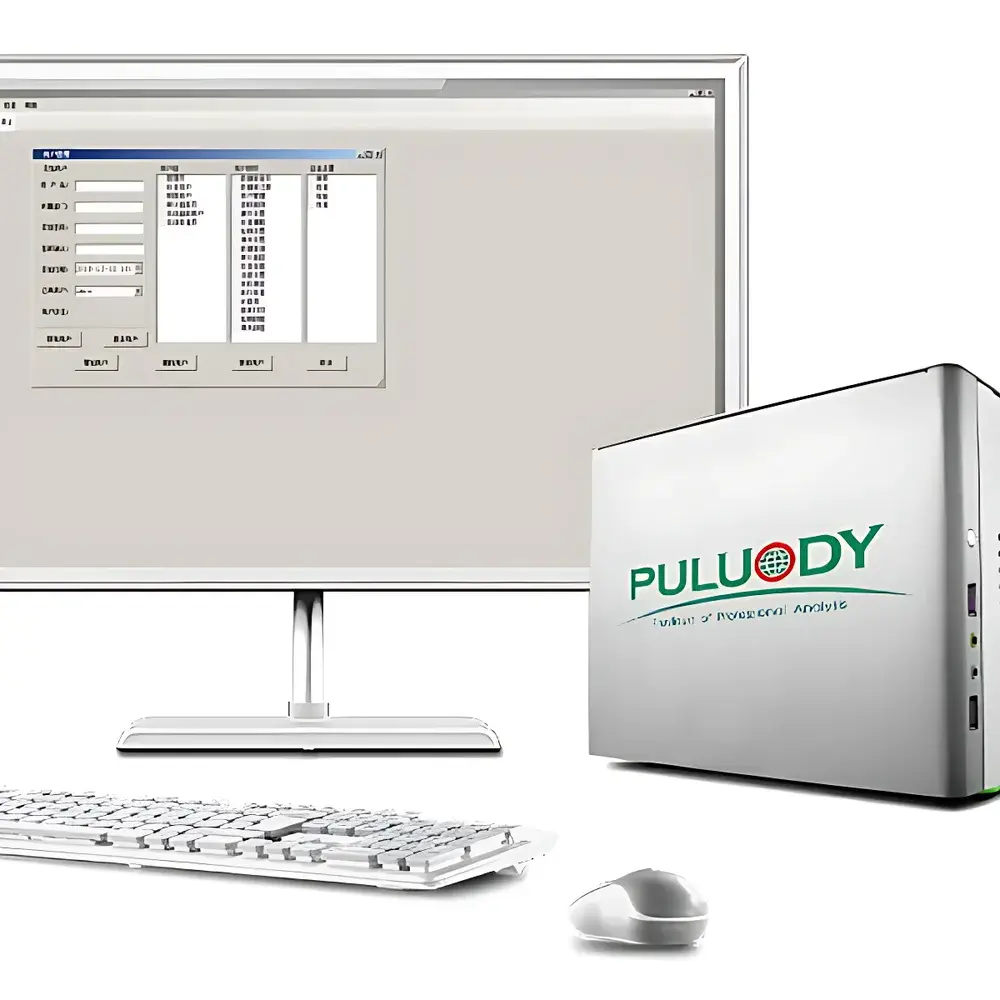
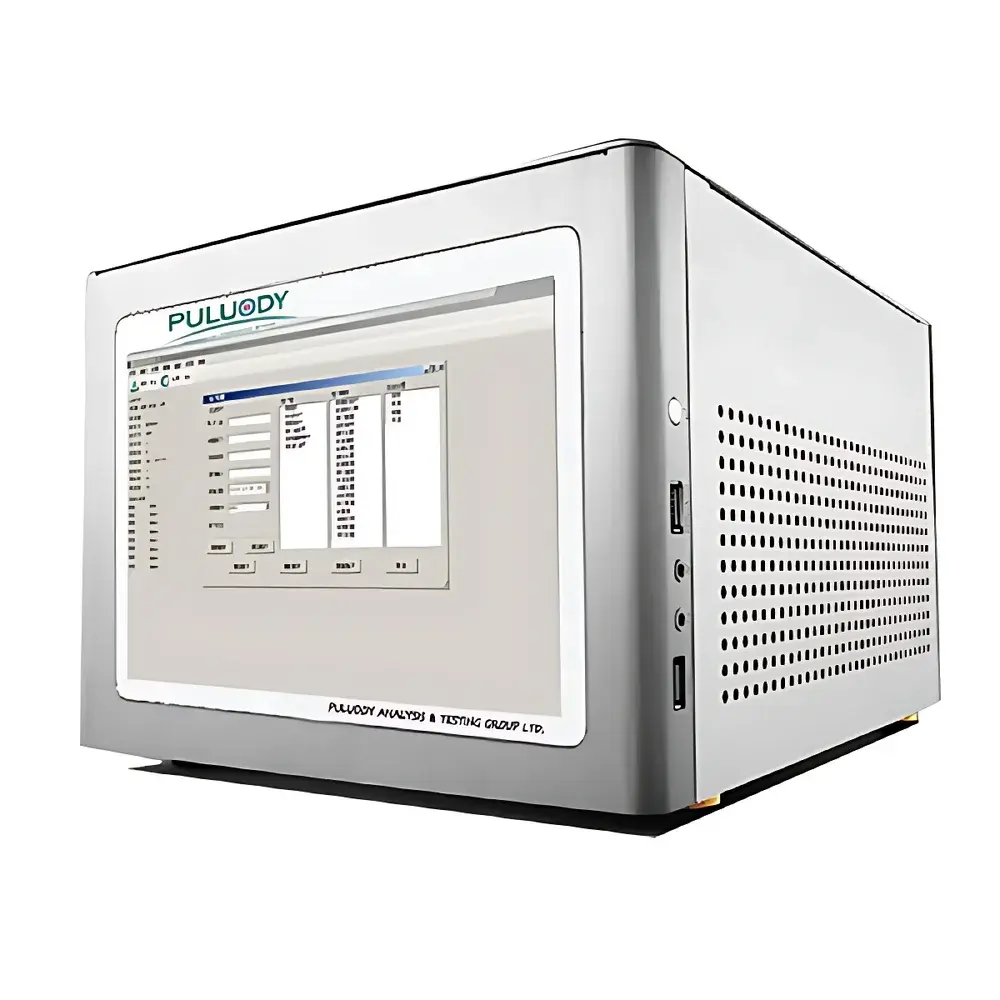
| Operating Interface | Color LCD touchscreen + optional wireless keyboard/mouse |
| Software | PULUODY V8.3 Integrated Analysis & Calibration Software (PC & iPad-compatible) |
| Compliance Support | GLP/GMP audit trail logging, FDA 21 CFR Part 11-ready configuration (optional) |
Overview
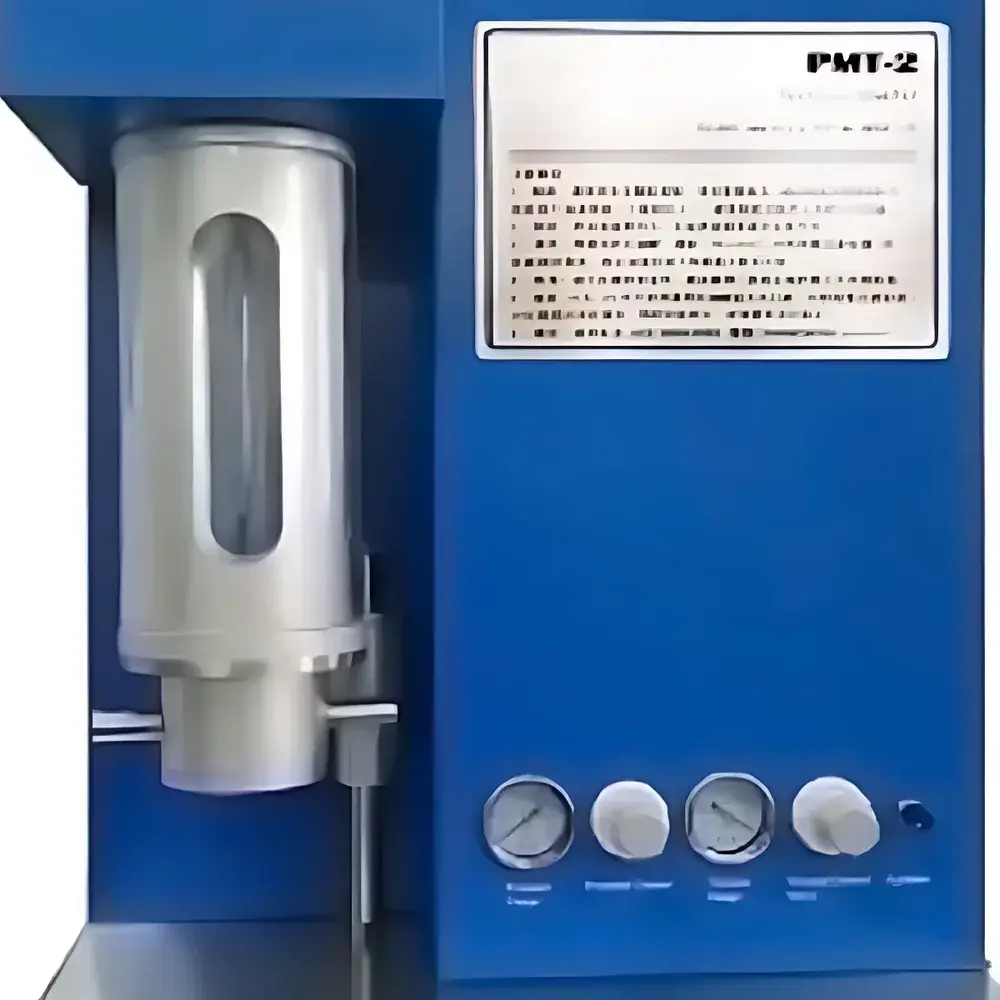
The PULUODY PMT-2DC Lithium Battery Electrode Slurry Liquid Particle Counter is a high-precision optical particle counter engineered for the stringent contamination control requirements of lithium-ion battery manufacturing—particularly in electrode slurry formulation, solvent recovery loops, and post-mixing filtration validation. It employs dual-laser narrow-beam light scattering technology (8th-generation sensor architecture developed by PULUODY Analytical Testing Group, UK), enabling simultaneous detection across two independent optical paths to minimize signal dropout and enhance statistical confidence in low-concentration, high-viscosity slurries. Unlike conventional single-beam instruments, the PMT-2DC’s dual-sensor design mitigates Mie scattering artifacts at particle edges and improves sizing resolution in polydisperse systems common in NMP-based cathode slurries and aqueous anode dispersions. Its flow path is optimized for non-settling, shear-sensitive suspensions, incorporating low-turbulence laminar flow geometry and inert wetted materials (316L SS + sapphire windows) compatible with aggressive solvents including N-Methyl-2-pyrrolidone (NMP), DMF, and water-based binders.
Key Features
- Dual-laser narrow-beam optical detection system with real-time background subtraction and pulse-height discrimination for improved signal-to-noise ratio in turbid media
- Integrated dual-stage flow control: precision metering piston pump (±1% volumetric repeatability) coupled with electromagnetic flow stabilization for consistent shearing and deagglomeration suppression
- Configurable detection thresholds: user-defined size bins from 0.1 µm(c) up to 450 µm, with dedicated modes for ISO 4406:2017 (c) counts and NAS 1638 Class reporting
- On-line capable architecture with 4–20 mA analog output, digital alarm relays, and Ethernet/IP connectivity for integration into SCADA and MES platforms
- V8.3 software suite supporting dual operational modes: standalone offline analysis (portable sampling with syringe or bottle interface) and continuous online monitoring (pressurized loop or bypass line integration)
- Compliance-ready data management: time-stamped event logs, electronic signatures, audit trail export (CSV/SQL), and optional 21 CFR Part 11 compliance package with role-based access control
Sample Compatibility & Compliance
The PMT-2DC is validated for use with non-aqueous electrolyte precursors, PVDF/NMP slurries, aqueous CMC/SBR dispersions, ceramic separator coatings, and post-filtration rinse solutions. Its fluidic path accommodates viscosities up to 500 cP and suspended solids loading ≤15 wt%, with no requirement for dilution or centrifugation. Regulatory alignment includes traceability to national metrology standards (JJG 1061–2010), international calibration protocols (ISO 21501-4:2018 for light-scattering particle counters), and industry-specific cleanliness benchmarks (e.g., IEC 62621 Annex D for battery electrolyte purity). All firmware and software revisions are version-controlled and documented per ISO/IEC 17025:2017 clause 7.7 on measurement traceability.
Software & Data Management
PULUODY V8.3 software separates calibration verification workflows from routine analysis tasks—ensuring metrological integrity without operational disruption. The platform supports multi-instrument fleet management, automated report generation (PDF/Excel), trend analysis with statistical process control (SPC) charts (X-bar/R, CUSUM), and direct export to LIMS via ASTM E1384-compliant XML schema. iPad-native interface enables field deployment for cleanroom audits or mobile QC checks, while PC desktop mode delivers full spectral analysis, histogram overlay comparison, and batch-level statistical summaries. Raw pulse data is retained for retrospective reprocessing, satisfying GLP documentation requirements for method validation and deviation investigations.
Applications
- Real-time monitoring of cathode/anode slurry homogeneity pre-coating to detect agglomerate formation or binder degradation
- In-process verification of 0.22 µm and 0.45 µm membrane filter integrity in solvent recycling circuits
- Contamination mapping of cleanroom tooling fluids (e.g., wafer cleaning baths, lithography developers)
- Quantitative validation of ultrasonic dispersion efficiency during slurry milling optimization
- Release testing of final slurry batches against internal cleanliness specifications (e.g., ≤50 particles/mL >5 µm)
- Root-cause analysis of coating defects (e.g., pinholes, fisheyes) correlated with particulate load profiles
FAQ
Can the PMT-2DC measure particles in high-viscosity electrode slurries without dilution?
Yes—the instrument’s positive-displacement piston pump and low-shear flow cell enable direct analysis of undiluted slurries up to 500 cP, preserving native particle dispersion state.
Does it support compliance with automotive battery quality standards such as ISO 26262 or UL 2580?
While not a safety-critical component itself, the PMT-2DC provides objective contamination data required for PPAP submissions and APQP Stage 3 process validation under those frameworks.
How is calibration traceability maintained across multiple instruments in a production facility?
Each unit ships with a NIST-traceable calibration certificate; V8.3 software enforces mandatory calibration log entry before data acquisition, with versioned calibration files locked to instrument serial numbers.
Is remote diagnostics and firmware update supported?
Yes—via secure TLS-encrypted web interface; all updates undergo cryptographic signature verification and require operator approval prior to installation.
What maintenance intervals are recommended for continuous 24/7 operation?
Optical window cleaning every 200 hours; pump seal replacement every 6,000 operating hours; annual full metrological verification recommended per ISO/IEC 17025.



