
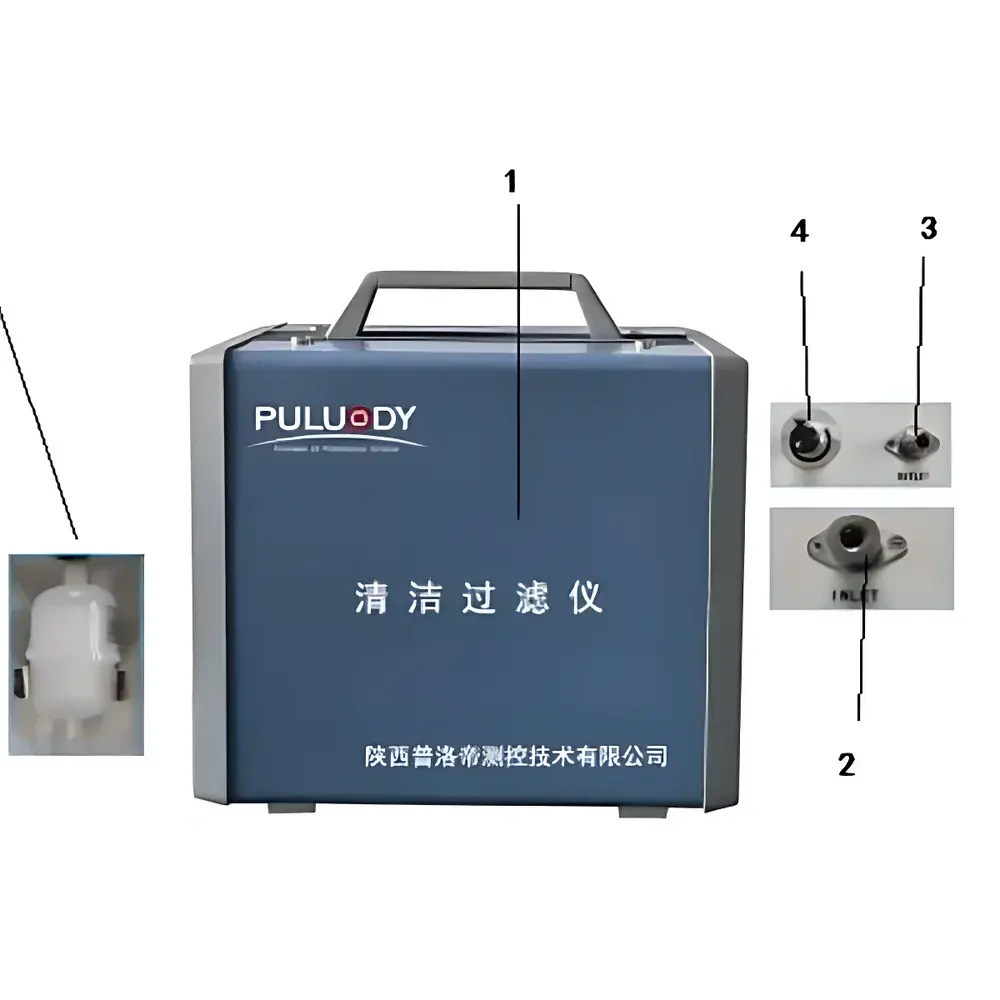
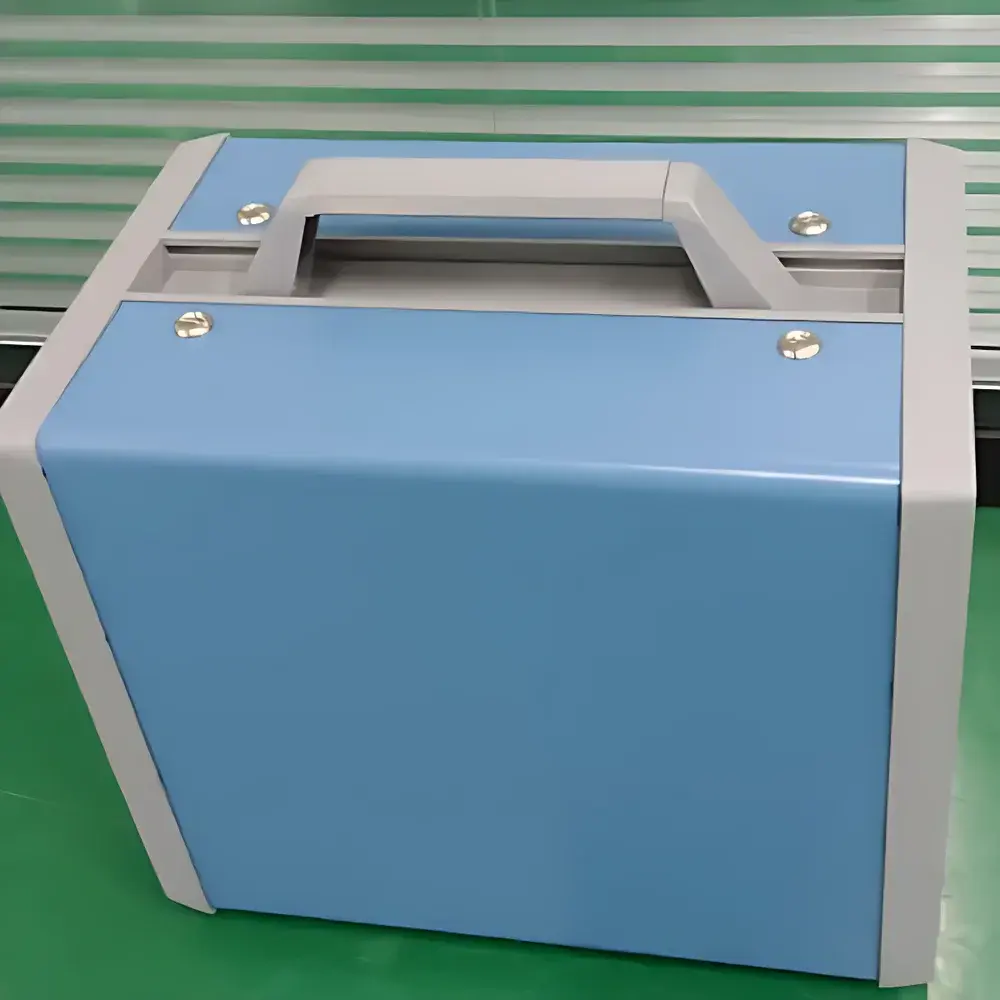
PULUODY CLDEE-CCACS2.0 Cleanliness Control & Filtration System
| Brand | PULUODY |
|---|---|
| Origin | Shaanxi, China |
| Manufacturer Type | Authorized Distributor |
| Product Category | Domestic Instrument |
| Model | CLDEE-CCACS2.0 |
| Price | USD 5,180 (FOB) |
Overview
The PULUODY CLDEE-CCACS2.0 Cleanliness Control & Filtration System is an integrated, automated liquid particle contamination management platform engineered for high-precision monitoring and control of insoluble particulate matter in ultra-pure process fluids. Built upon dual-core optical detection principles—light blockage (obscuration) and single-particle light scattering—the system delivers trace-level particle quantification across a dynamic size range from 0.05 µm to 10 µm. It is purpose-built for semiconductor manufacturing, electronic chemical R&D, photovoltaic wafer processing, and advanced battery electrolyte qualification, where sub-micron particle excursions directly impact yield, defect density, and device reliability. The system operates as a closed-loop circulation unit: fluid is drawn from the sample reservoir, passed through configurable filtration stages (pre-filter, fine filter, final filter), continuously monitored in real time via an eighth-generation dual-laser narrow-beam sensor, and recirculated until target cleanliness levels—defined per ISO 14644-9, SJ/T 11638, GB/T 11446.9, or custom client specifications—are achieved and verified.
Key Features
- Eighth-generation dual-laser optical sensor with narrow-beam geometry, delivering enhanced signal-to-noise ratio and long-term stability under continuous operation.
- Configurable particle sizing channels: up to 1000 user-defined bins; standard configurations support 4, 8, 16, 32, 64, or 128 discrete size ranges within 0.05–10 µm.
- Wide flow rate range: 5 mL/min to 1500 mL/min, with volumetric accuracy better than ±1% across the operational envelope.
- Full automation suite: integrated industrial PC or ruggedized military-grade HMI controls all modules—filtration sequencing, flow regulation, real-time counting, alarm triggering, calibration execution, and report generation.
- Multi-standard compliance engine: built-in calibration protocols aligned with CN-PSL, ISO 21501-2:2007, NIST-traceable reference materials (GBW series), and JIS B9925:2010 verification methodology.
- Modular architecture: independent cleaning station, detection station, and control cabinet enable field reconfiguration for varying fluid chemistries (aqueous, organic solvents, low-viscosity electrolytes) and cleanliness targets.
Sample Compatibility & Compliance
The CLDEE-CCACS2.0 accommodates liquids with kinematic viscosity up to 500 cSt under pressurized sampling and 99 cSt in offline mode, with operational fluid temperature spanning 0 °C to 80 °C. It is validated for ultrapure water (UPW), photoresist solvents, etchants, CMP slurries, lithium-ion battery electrolytes, and high-purity acids/bases. Regulatory alignment includes GB/T 11446.1–2013 (electronic grade water), SJ/T 11638–2016 (electronic chemicals), ISO 21501-2:2007 (liquid-borne particle counters), ISO 14644-9:2012 (surface cleanliness by particle concentration), and JIS K0554:1995. All hardware and software workflows support audit-ready documentation required under GLP and GMP environments, including full electronic records, user access logs, and calibration history traceability.
Software & Data Management
The CCACS2.0 Analysis & Control Software Suite is a native Windows-based application featuring modular GUI navigation: Initial Filtration, Precision Filtration, Final Verification, Cleaning Cycle Management, Real-Time Counting Dashboard, Threshold-Based Alarm Engine, Multi-Point Calibration Workflow, and NIST/GBW Reference Validation Tools. Reports are exportable in CSV, PDF, and XML formats, compliant with FDA 21 CFR Part 11 requirements for electronic signatures and audit trails. Communication interfaces include RS232, RS485 (MODBUS RTU), USB 2.0, and 10/100BASE-T Ethernet. Analog output (4–20 mA) enables direct integration into plant DCS or SCADA systems. Optional API access supports integration with PULUODY’s broader Oil Monitoring & Particle Analysis Platform for centralized fleet-wide data aggregation.
Applications
- Qualification and routine monitoring of electronic-grade water (UPW) in fab tool supply lines.
- In-process cleanliness verification of photoresist dispense systems and developer rinse baths.
- Batch release testing of electronic chemicals (e.g., HF, TMAH, BOE) per SEMI C37 guidelines.
- Pre- and post-filtration validation of 10 nm and sub-5 nm node lithography fluid delivery systems.
- Research-scale evaluation of novel filtration media performance under accelerated flow conditions.
- Contamination forensics in battery electrolyte production, particularly for LiPF6-based formulations requiring <100 particles/mL @ ≥0.5 µm.
FAQ
What particle size ranges does the CLDEE-CCACS2.0 support?
The system detects particles from 0.05 µm to 10 µm, with resolution configurable across 1000 user-defined channels. Standard reporting uses industry-aligned thresholds (e.g., 0.1, 0.2, 0.3, 0.5, 0.7, 0.8, 1, 2, 3, 5, and 10 µm).
Is the system compatible with aggressive solvents such as NMP or DMSO?
Yes—wetted components are constructed from chemically resistant materials including PTFE, PFA, and 316L stainless steel. Custom wetted path configurations are available upon request.
How is calibration traceability maintained?
Calibration utilizes GBW-certified PSL reference standards traceable to NIST and ISO 21501-2. Annual recalibration services are supported by Xi’an Zhongte Metrology & Testing Institute (CNAS-accredited).
Can the system operate unattended for extended cycles?
Yes—fully autonomous operation is enabled via programmable cleaning sequences, automatic endpoint detection, and email/SNMP alerting on threshold breaches or system faults.
Does the software meet regulatory requirements for pharmaceutical or medical device manufacturing?
While primarily deployed in electronics and advanced materials, the CCACS2.0 software architecture supports 21 CFR Part 11 compliance when deployed with appropriate IT infrastructure, role-based access controls, and electronic signature validation workflows.



