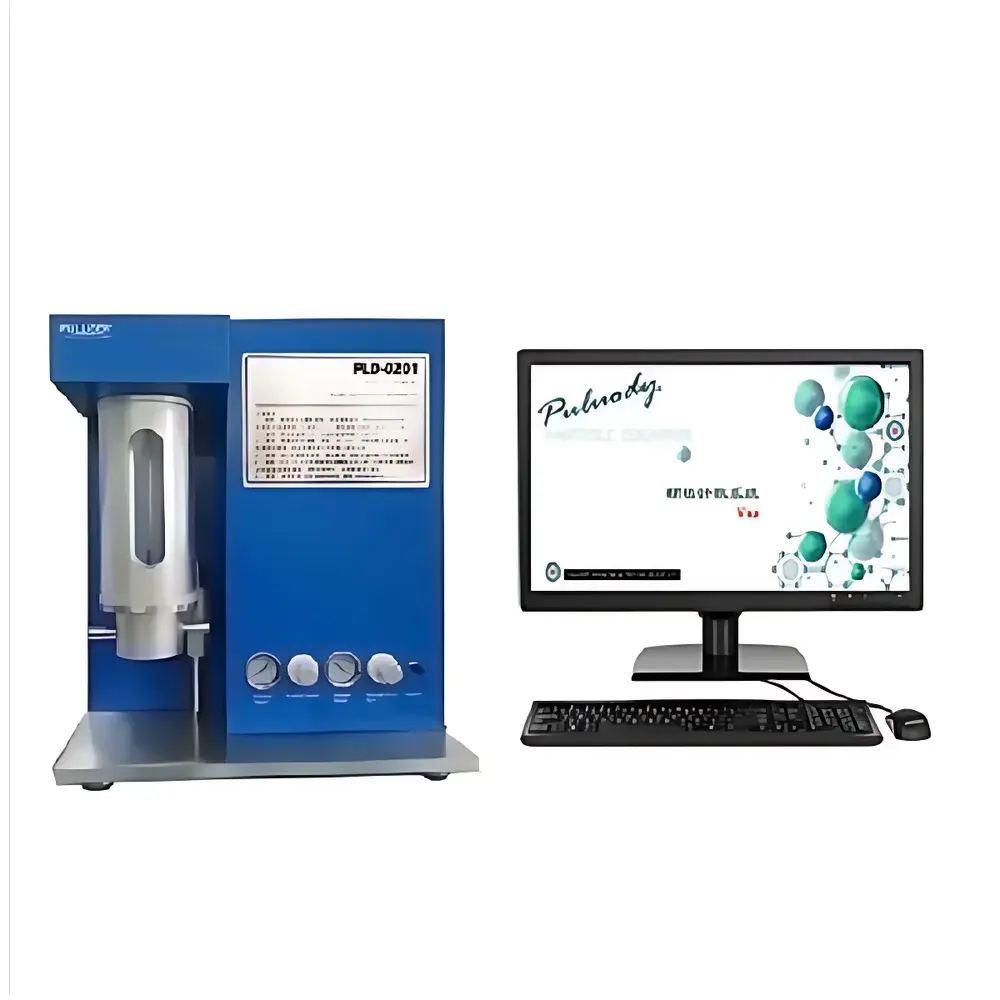
PULUODY PMT-2 Chemical Liquid Nanoparticle Counter for Photoresist & Semiconductor Process Liquids
| Brand | PULUODY |
|---|---|
| Model | PMT-2 |
| Detection Principle | Dual-Laser Narrow-Beam Light Scattering |
| Measurement Range | 0.03–3000 µm (configurable sensor modules) |
| Calibration Standards | ISO 21501-4, USP <788>, EP 2.9.19, ChP 2015/2020, GB 8368 |
| Flow Control | Precision Piston Pump + Electromagnetic Flow Regulation |
| Accuracy | ±3% typical |
| Counting Resolution | Customizable channels (e.g., 1–100 µm, 4–70 µm(c), 0.1 µm(c)) |
| Coincidence Limit | ≤2.5% error at 1000 particles/mL |
| Sampling Precision | <±1% |
| Output | 4–20 mA analog signal |
| Alarm | Configurable particle concentration threshold alert |
| Data Interface | iPad-compatible wireless acquisition |
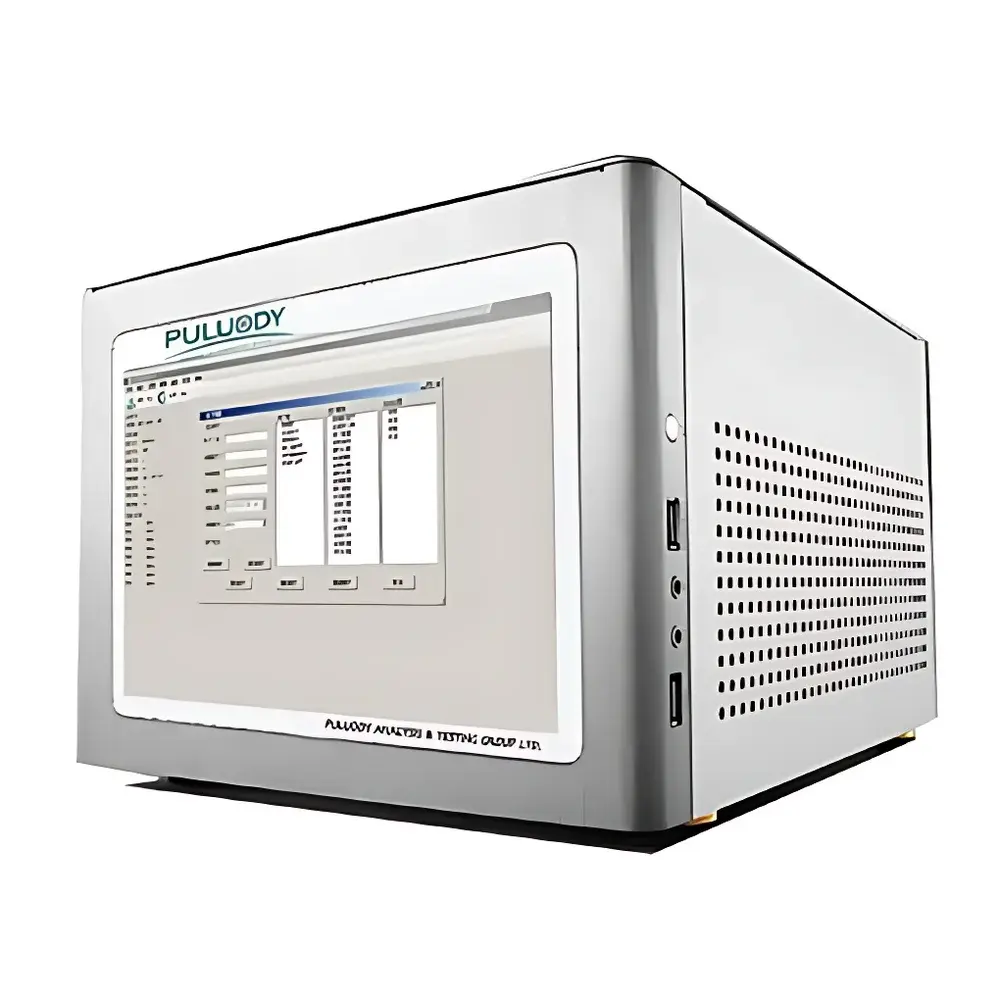
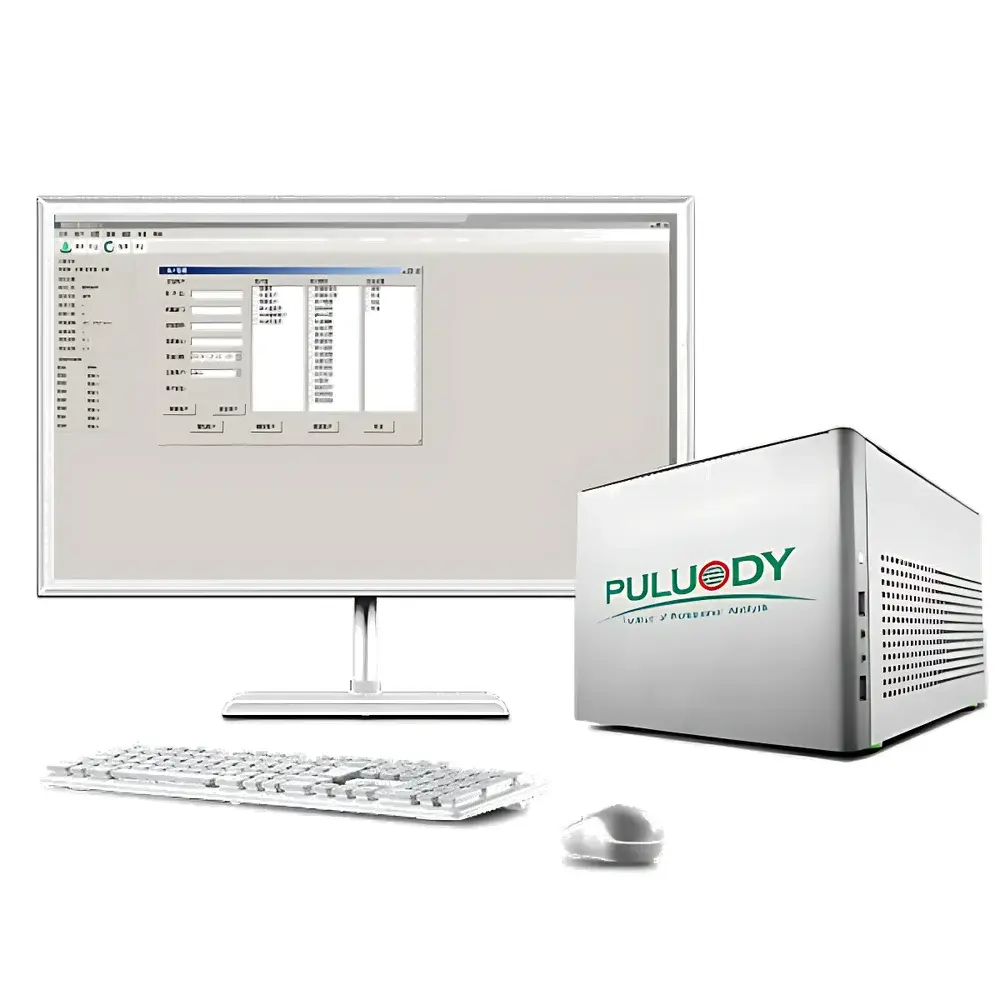
| Software | PULUODY V8.3 Integrated Analysis & Calibration Suite (PC & touchscreen) |
| Compliance | Supports 21 CFR Part 11 audit trail (optional configuration), GLP/GMP traceability mode |
| Power Input | 100–265 VAC, 50–60 Hz |
| Application Mode | Online continuous monitoring & offline portable/fixed sampling |
Overview
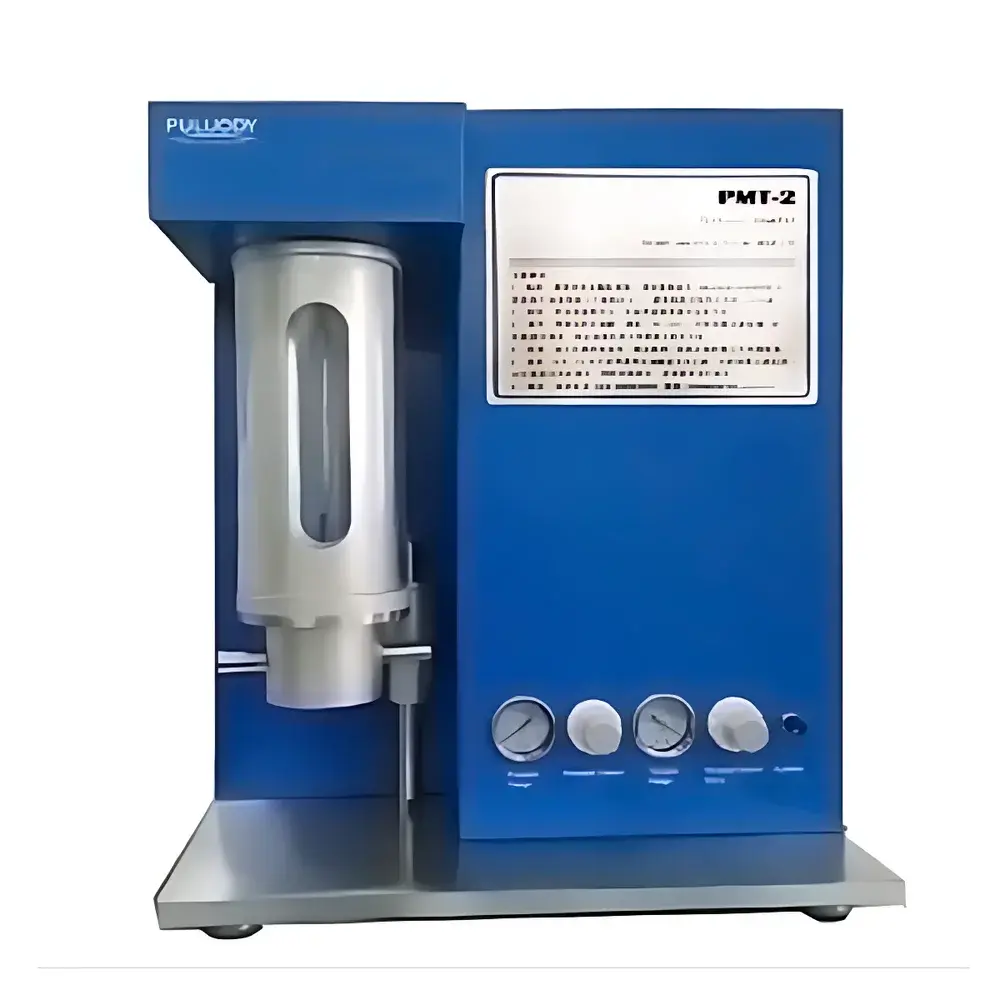
The PULUODY PMT-2 Chemical Liquid Nanoparticle Counter is a purpose-built optical particle counter engineered for ultra-trace particulate contamination analysis in high-purity process liquids used across semiconductor fabrication, photolithography, and advanced electronics manufacturing. It employs eighth-generation dual-laser narrow-beam light scattering detection—a technology refined through decades of collaboration between PULUODY Analytical Testing Group (UK) and microcontamination control laboratories worldwide. Unlike conventional single-wavelength systems, the PMT-2 utilizes two spatially separated laser sources operating at distinct wavelengths to suppress Mie scattering artifacts and improve sizing fidelity for sub-100 nm particles in low-refractive-index media such as photoresist solvents, copper sulfate plating baths, and ultrapure water (UPW). Its architecture supports both online integration into chemical delivery systems (CDS) and offline QC verification, delivering real-time, NIST-traceable particle concentration data (particles/mL) and ISO 14644-1 / NAS 1638–compatible cleanliness grading.
Key Features
- Dual-laser narrow-beam optical sensing with adaptive background noise suppression for stable baseline performance in volatile organic solvents and aqueous electrolytes
- High-fidelity flow control system combining a calibrated piston pump and electromagnetic flow regulator—ensuring <±1% volumetric accuracy across variable viscosity ranges (0.5–20 cP)
- Modular sensor head design enabling field-selectable size thresholds: standard 0.03–3000 µm range; optional narrow-band configurations (e.g., 0.1 µm(c), 4–70 µm(c)) for lithographic resist or CMP slurry validation
- V8.3 integrated software platform with independent calibration and measurement modules—eliminating cross-talk between instrument qualification and routine sample analysis
- Touchscreen HMI with wireless keyboard/mouse support and iPad-based remote data acquisition for cleanroom-safe operation
- Configurable 4–20 mA analog output with programmable alarm thresholds for integration into SCADA and MES platforms
- Compliance-ready firmware supporting electronic signatures, audit trails, and user access levels per FDA 21 CFR Part 11 (when deployed with validated IT infrastructure)
Sample Compatibility & Compliance
The PMT-2 is validated for use with chemically aggressive and low-conductivity process fluids including but not limited to: photoresist developers (TMAH-based), spin-coating solvents (PGMEA, ethyl lactate), electroplating electrolytes (acid copper sulfate, nickel sulfamate), CMP slurries, UPW (≥18.2 MΩ·cm), and etchant mixtures (HF/NH4F, HNO3/CH3COOH). It meets ISO 21501-4 requirements for liquid-borne particle counters and satisfies pharmacopeial standards including USP , EP 2.9.19, ChP 2015/2020, and GB 8368 for insoluble particle testing in injectables and medical devices. For semiconductor applications, it aligns with SEMI F63 guidelines for liquid particle monitor validation and supports traceability to JJG 1061 national metrological verification procedures via certified latex reference standards.
Software & Data Management
PULUODY V8.3 software provides dual-mode operation: Calibration Mode enforces strict separation between sensor verification (using ISO 21501-4–traceable polystyrene latex standards) and routine analysis mode—preventing calibration drift from influencing production data. All measurement sessions generate time-stamped, digitally signed reports containing raw count histograms, cumulative distributions, and ISO 4406 or NAS 1638 cleanliness codes. The system logs operator actions, parameter changes, and environmental metadata (temperature, pressure if interfaced) to support GLP/GMP audits. Export formats include CSV, PDF, and XML for LIMS integration. Optional 21 CFR Part 11 compliance package includes role-based authentication, electronic signatures, and immutable audit trail storage.
Applications
- Real-time monitoring of photoresist dispense lines to detect nozzle clogging precursors and solvent degradation byproducts
- In-line verification of UPW polishing filters and point-of-use sub-10 nm filtration efficiency
- Offline QC of CMP slurry stability and agglomerate formation during shelf-life studies
- Contamination mapping in wet benches—identifying particle generation sources during wafer rinsing or etching cycles
- Validation of cleaning efficacy for silicon wafers, glass substrates, and MEMS components using post-rinse liquid extracts
- Supporting IATF 16949 and ISO 9001 quality documentation through automated report generation and version-controlled calibration records
FAQ
What particle size ranges can the PMT-2 resolve in photoresist solvents?
The standard configuration detects particles from 0.03 µm to 3000 µm; for photoresist applications, users commonly select the 0.1 µm(c) or 1–100 µm channel set to optimize signal-to-noise ratio in low-scatter media.
Is the PMT-2 compatible with aggressive etchants like hydrofluoric acid solutions?
Yes—the fluidic path uses chemically inert materials (perfluoroalkoxy-lined stainless steel, sapphire flow cell, Kalrez seals) rated for continuous exposure to HF, HNO3, and piranha solutions when configured with optional corrosion-resistant wetted parts.
Can the system be integrated into a factory-wide MES without custom development?
It provides native Modbus TCP and OPC UA connectivity alongside the 4–20 mA analog interface, enabling plug-and-play integration with most industrial automation platforms.
How is calibration traceability maintained across multiple shifts?
Each calibration event is digitally signed and archived with reference standard lot numbers, environmental conditions, and technician credentials—fully auditable per ISO/IEC 17025 requirements.
Does the PMT-2 support automatic dilution for highly concentrated samples?
Dilution functionality is available via optional integrated precision dilutor module (PULUODY DD-1), maintaining volumetric accuracy within ±0.8% across 1:10 to 1:1000 dilution ratios.