
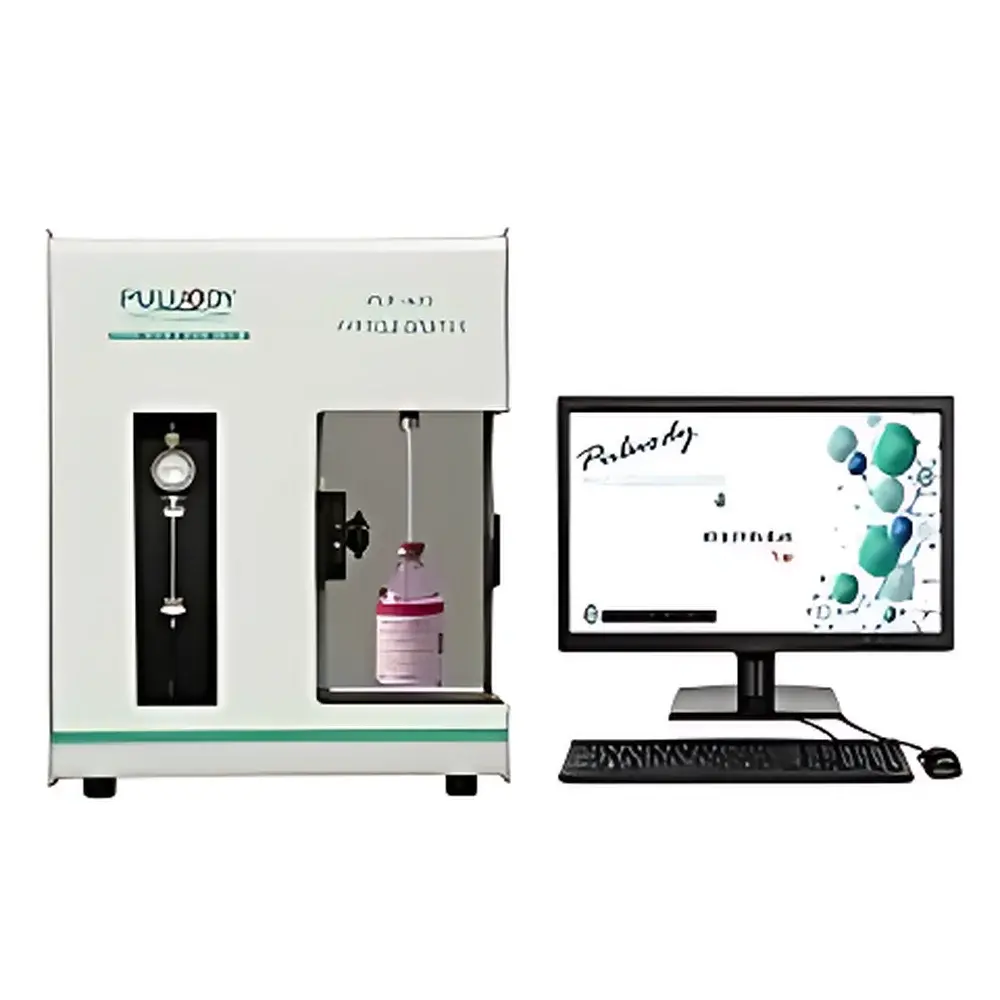
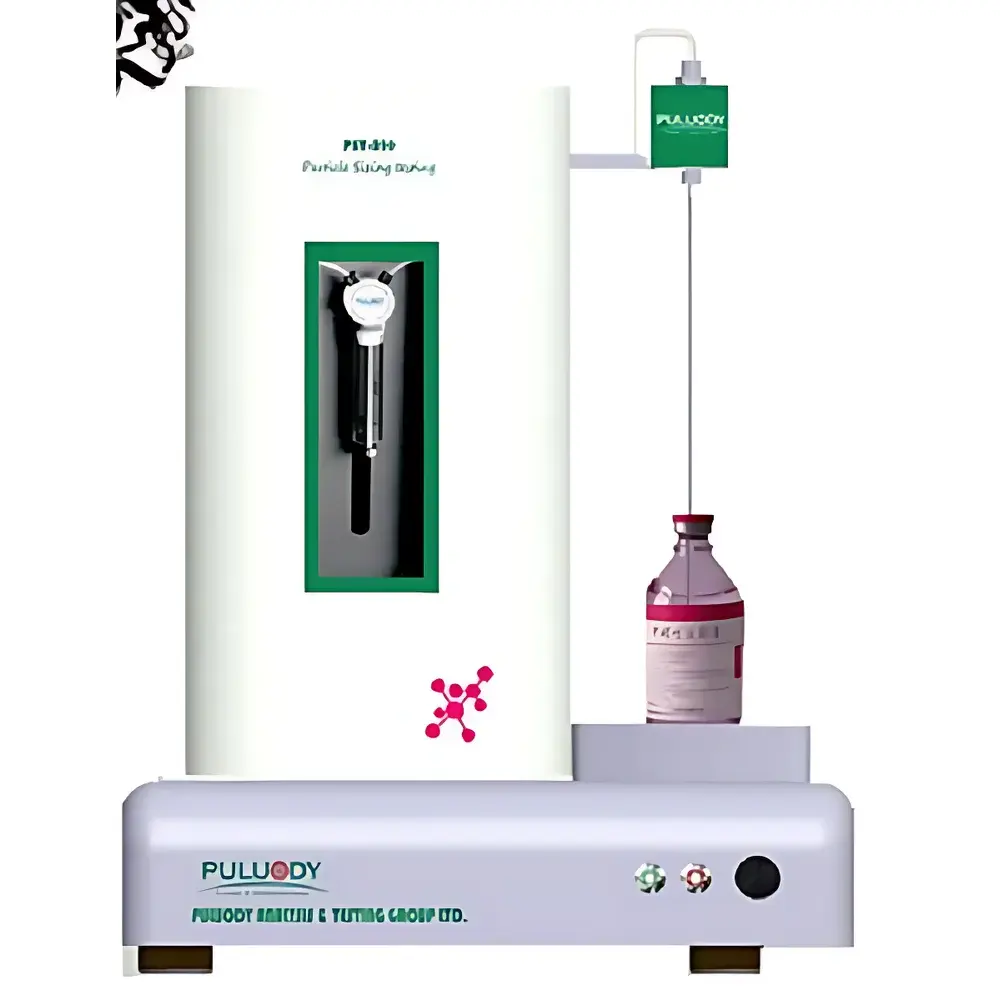
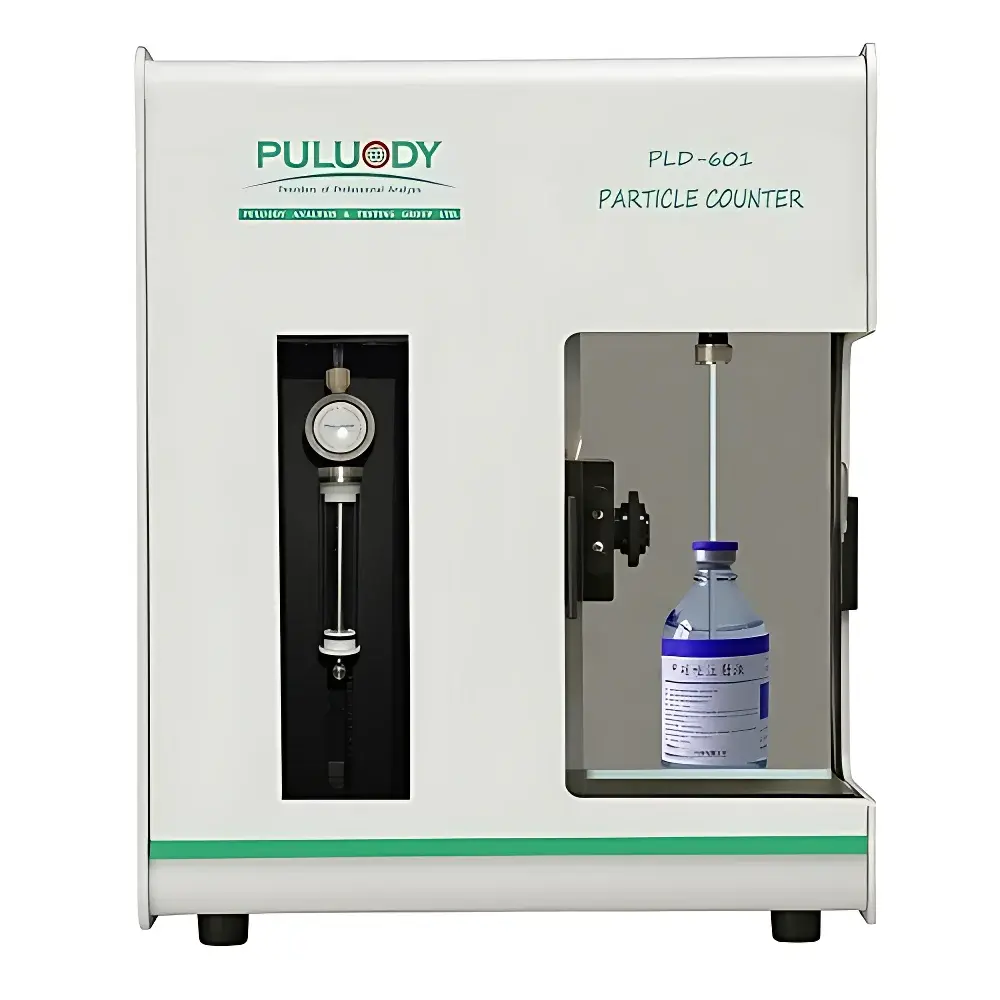
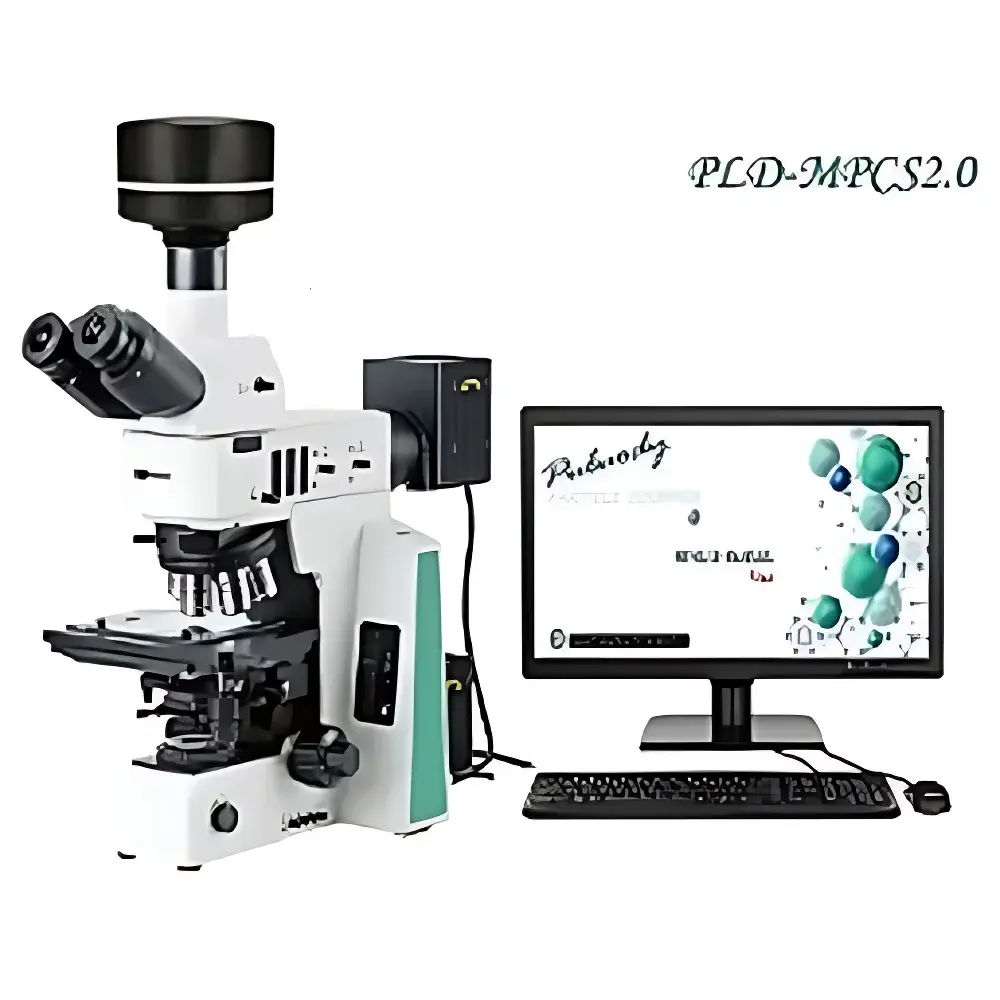
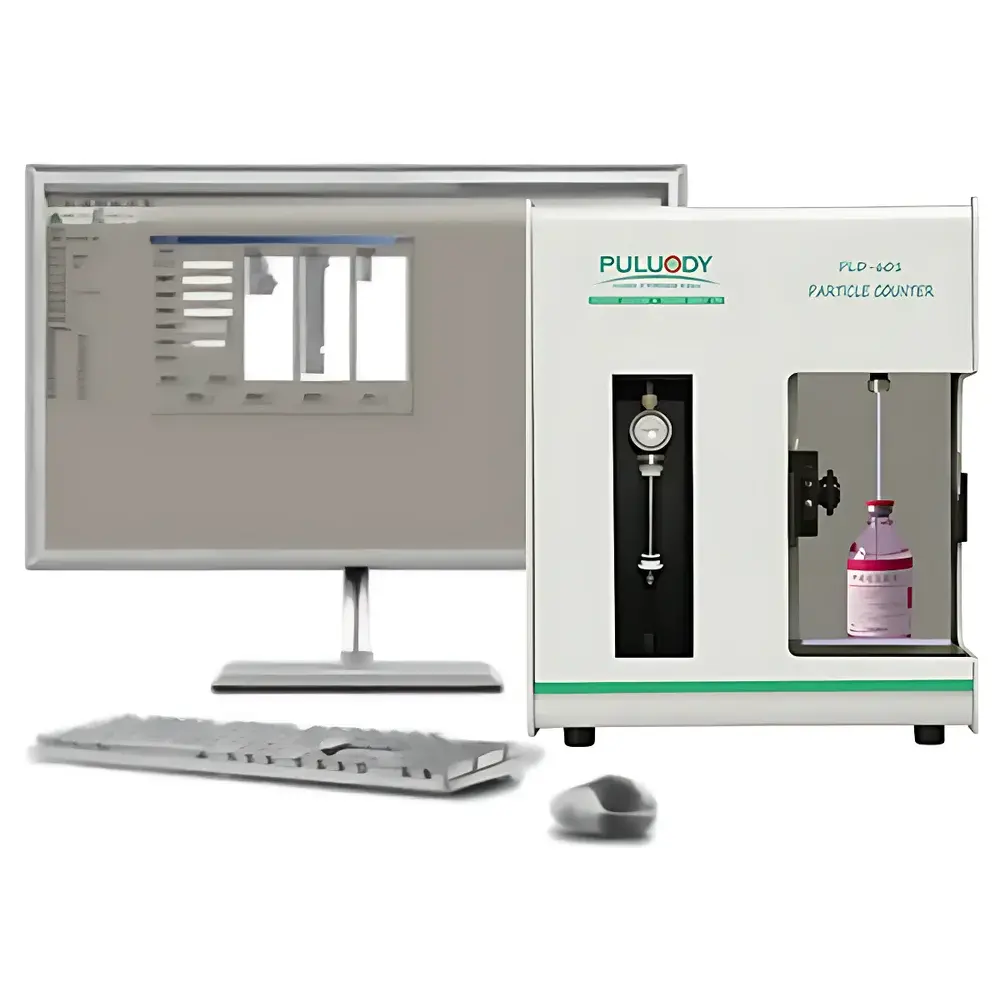
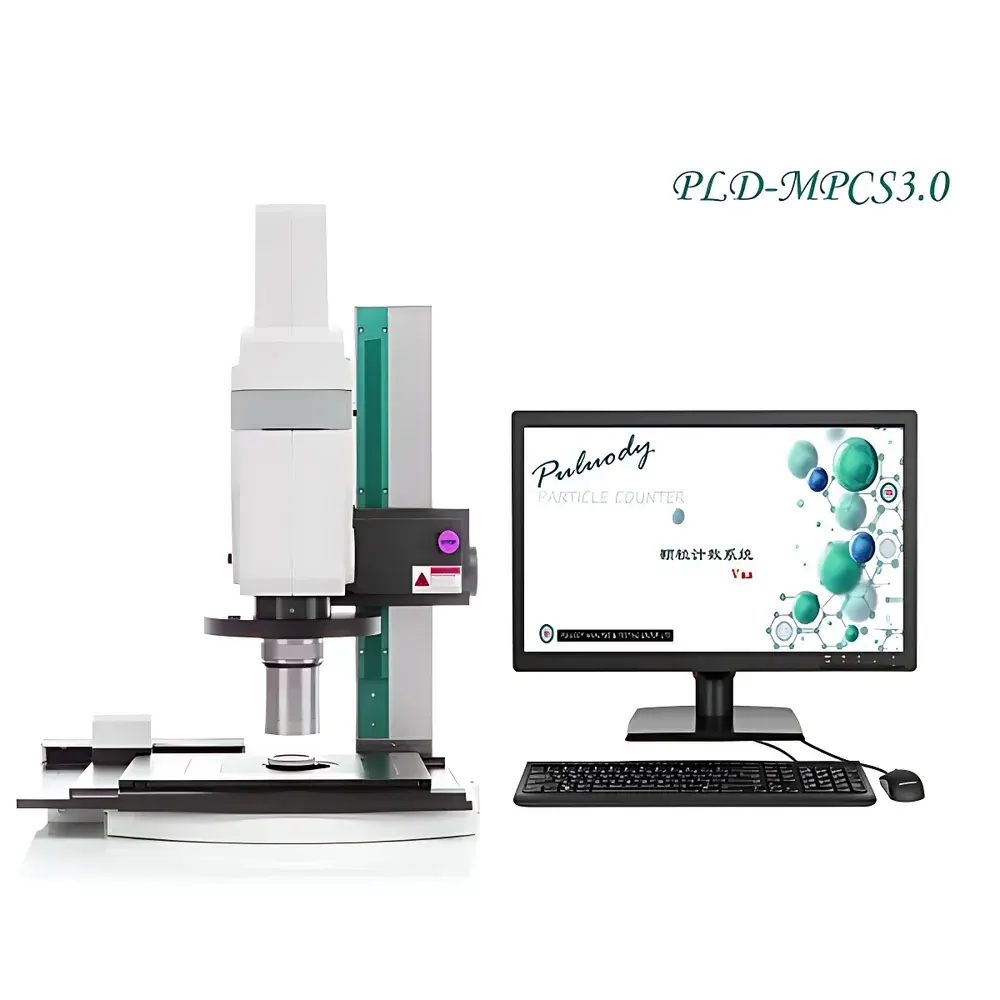
PULUODY PLD-601 Pharmaceutical Insoluble Particle Analyzer
| Brand | PULUODY |
|---|---|
| Origin | Shaanxi, China |
| Manufacturer Type | Authorized Distributor |
| Product Origin | Domestic (China) |
| Model | PLD-601 |
| Price | USD 34,500 (FOB Shanghai, ex-factory) |
| Detection Principle | Light Obscuration (LO) / Single-Particle Optical Sizing (SPOS) |
| Sensor Generation | 8th-Generation Dual-Laser Narrow-Beam Particle Sensor |
| Flow Control | Precision Metering Plunger Pump + Ultra-Precise Electromagnetic Flow Control System |
| Software Compliance | FDA 21 CFR Part 11, ALCOA+ Data Integrity, Audit Trail, Electronic Signature, 5-Level User Permission Management |
| Calibration Standards | ISO 21501-4, JJG 1061, NIST-Traceable Latex Standards |
| Detection Range | 1–500 µm (optional 0.03–3000 µm) |
| Channel Count | 1000 High-Resolution Channels (0.01 µm resolution increment) |
| Sample Flow Rate | 5–150 mL/min |
| Rinse Flow Rate | 5–500 mL/min |
| Temperature Range | Fluid 0–80 °C |
| Accuracy | ±3% typical (per ChP 2020 & USP <788>) |
| Repeatability | ≤2.5% coincidence error at 1000 particles/mL |
| Resolution | >95% (ChP-calibrated) |
| Regulatory Alignment | ChP 2020 <0903>, USP <788>, <789>, <797>, EP 10.0, BP 2019, JP 17, WHO IntPh IV, YBB00272004-2015, GB/T 11446.9-2013, ISO 21510, ISO 4406, NAS 1638, ASTM D6786 |
Overview
The PULUODY PLD-601 Pharmaceutical Insoluble Particle Analyzer is a benchtop light obscuration (LO)-based instrument engineered for quantitative, high-resolution detection and sizing of insoluble particulate matter in parenteral and ophthalmic pharmaceutical products. It operates on the principle of single-particle optical sensing—where individual particles suspended in a liquid medium pass through a focused laser beam, generating transient light extinction signals proportional to their cross-sectional area. These analog pulses are digitized and classified into user-defined size channels with sub-micron resolution, enabling compliance-driven particle counting per pharmacopoeial monographs. Designed specifically for quality control laboratories operating under GMP, GLP, and FDA-regulated environments, the PLD-601 meets the stringent performance criteria outlined in Chinese Pharmacopoeia (ChP) 2020 Edition , United States Pharmacopeia (USP) , , and , European Pharmacopoeia (EP) 10.0, and ISO 21501-4 for calibration and verification. Its dual-laser narrow-beam sensor architecture minimizes signal noise and enhances sensitivity across the full 1–500 µm detection range, supporting both routine batch release testing and root-cause investigation of particulate contamination sources—including packaging components, filtration systems, and manufacturing equipment.
Key Features
- 8th-generation dual-laser narrow-beam particle sensor delivering stable signal-to-noise ratio and enhanced detection fidelity for low-concentration samples.
- Dual-mode flow control system: precision metering plunger pump ensures volumetric accuracy (<±1%), while ultra-precise electromagnetic flow regulation maintains laminar, pulse-free sample delivery across variable flow rates (5–150 mL/min).
- 1000-channel high-resolution analysis engine with 0.01 µm incremental binning—enabling full spectral reconstruction and retrospective channel redefinition without retesting.
- FDA 21 CFR Part 11-compliant software (V8.9 PC & embedded touchscreen edition) featuring electronic signatures, time-stamped audit trails, role-based 5-level permissions, and automated data backup/recovery with checksum validation.
- Integrated temperature monitoring (0–80 °C fluid path) and environmental compensation algorithms to ensure measurement stability across operational conditions.
- Modular calibration support for NIST-traceable polystyrene latex standards (PSL), ISO 21501-4 reference materials, or JJG 1061-certified verification protocols.
Sample Compatibility & Compliance
The PLD-601 is validated for direct analysis of pharmacopeia-specified sample types including sterile aqueous solutions (e.g., injectables, ophthalmic drops), lyophilized powders (after reconstitution), concentrated injectables, vaccine suspensions, water for injection (WFI), purified water, and pharmaceutical-grade excipients. It also supports evaluation of medical device-related particulates—such as those eluted from IV bags, tubing, syringes, stoppers, and terminal filters—per YBB00272004-2015 and GB 8368. Instrument qualification includes IQ/OQ documentation templates aligned with Annex 15 and EU GMP guidelines. All firmware and software versions undergo periodic verification against current regulatory expectations, including ALCOA+ principles (Attributable, Legible, Contemporaneous, Original, Accurate) and data integrity requirements for audit readiness.
Software & Data Management
The V8.9 analytical software suite provides full lifecycle data governance—from method setup and instrument control to statistical reporting and electronic archiving. Users can define custom particle size thresholds, generate comparative histograms across batches, and export raw pulse data in CSV or HDF5 format for third-party statistical modeling. The system enforces data immutability via cryptographic hashing and stores all audit events—including parameter changes, user logins, and report generation—in an encrypted, tamper-evident log file. Electronic signature workflows comply with ICH GCP and 21 CFR Part 11 Subpart B requirements, supporting both biometric and token-based authentication. Data backups are automatically scheduled and stored on configurable network drives or local SSDs, with version rollback capability and integrity validation upon restoration.
Applications
- Pharmaceutical QC labs: Routine testing of injectables, vaccines, and ophthalmic preparations per ChP , USP , and EP 2.9.19.
- Filter validation: Quantitative assessment of filter retention efficiency and breakthrough particle profiles for 0.22 µm and 0.45 µm sterilizing-grade membranes.
- Extractables & leachables studies: Identification and quantification of particulates shed from primary packaging (e.g., rubber stoppers, glass vials, polymer containers).
- Water system monitoring: Continuous or periodic assessment of WFI, Purified Water, and Ultra-Pure Water per USP and ISO 14644-1 Class 5–8 cleanroom specifications.
- Medical device evaluation: Particulate shedding analysis of infusion sets, catheters, and surgical implants per ISO 10993-12.
- Process troubleshooting: Correlation of particle counts with manufacturing steps (e.g., mixing, filling, sterilization) to identify contamination vectors.
FAQ
Does the PLD-601 meet FDA 21 CFR Part 11 requirements for electronic records and signatures?
Yes—the V8.9 software implements full Part 11 functionality, including role-based access control, electronic signatures with identity verification, immutable audit trails, and secure data archiving with checksum validation.
Can the instrument be calibrated using ISO 21501-4 reference standards?
Yes—calibration is supported using ISO 21501-4 compliant polystyrene latex (PSL) spheres, with optional traceability to NIST SRM 1963 or equivalent national metrology institutes.
Is method transfer possible between PLD-601 units in different laboratories?
Yes—method portability is ensured through standardized firmware revision control, identical sensor response characterization, and shared V8.9 software configuration files with embedded calibration metadata.
What maintenance is required for long-term operational reliability?
Routine maintenance includes quarterly optical alignment verification, annual flow rate recalibration, and biannual sensor cleaning using certified solvents—procedures documented in the included GMP-aligned Maintenance Logbook.
How does the PLD-601 handle coincident particle events at high concentrations?
The system employs real-time coincidence correction algorithms validated per ChP 2020 , with ≤2.5% error tolerance confirmed at 1000 particles/mL using NIST-traceable challenge suspensions.



