
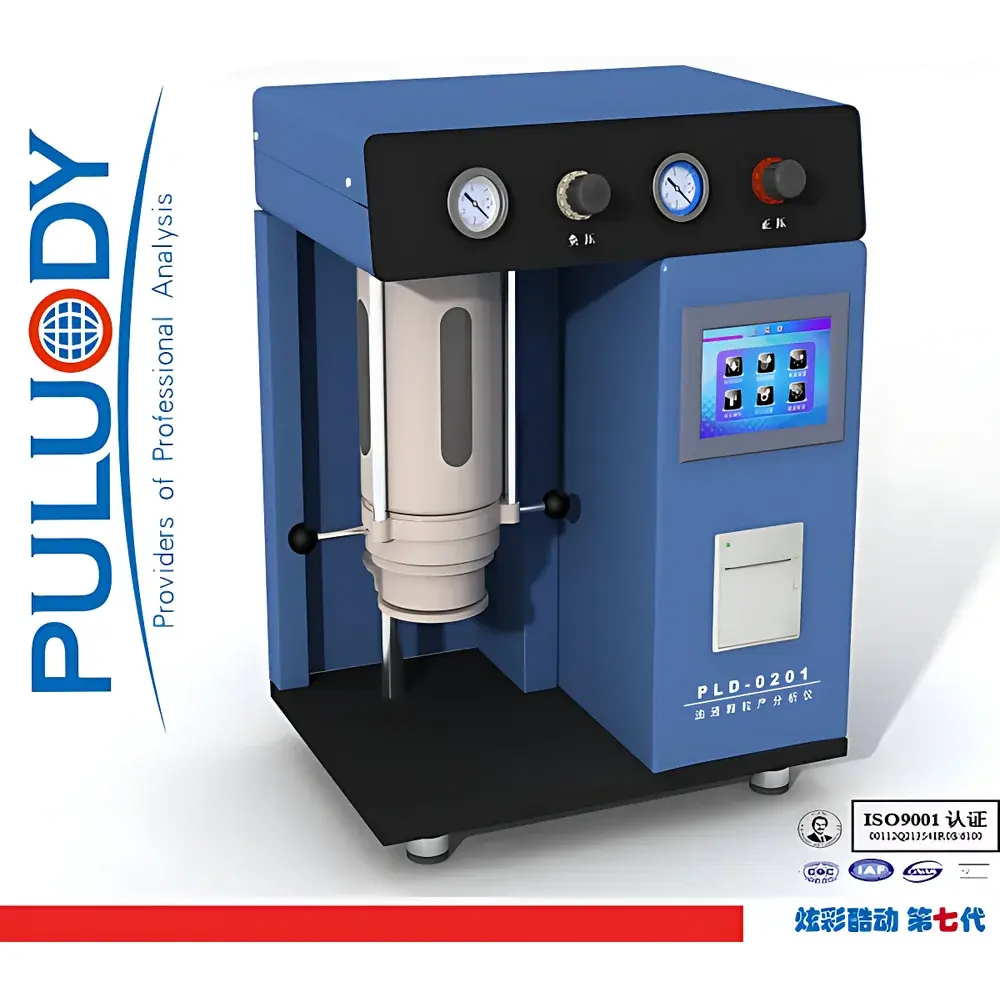
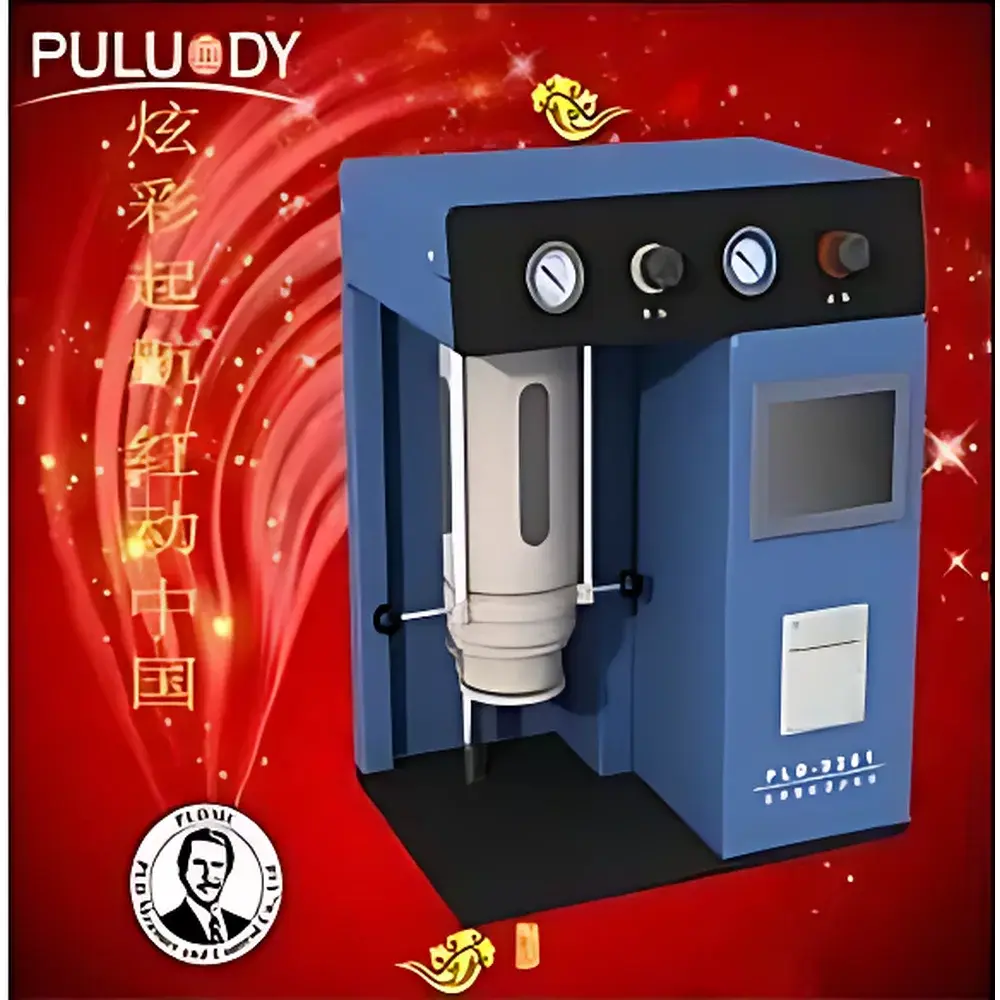
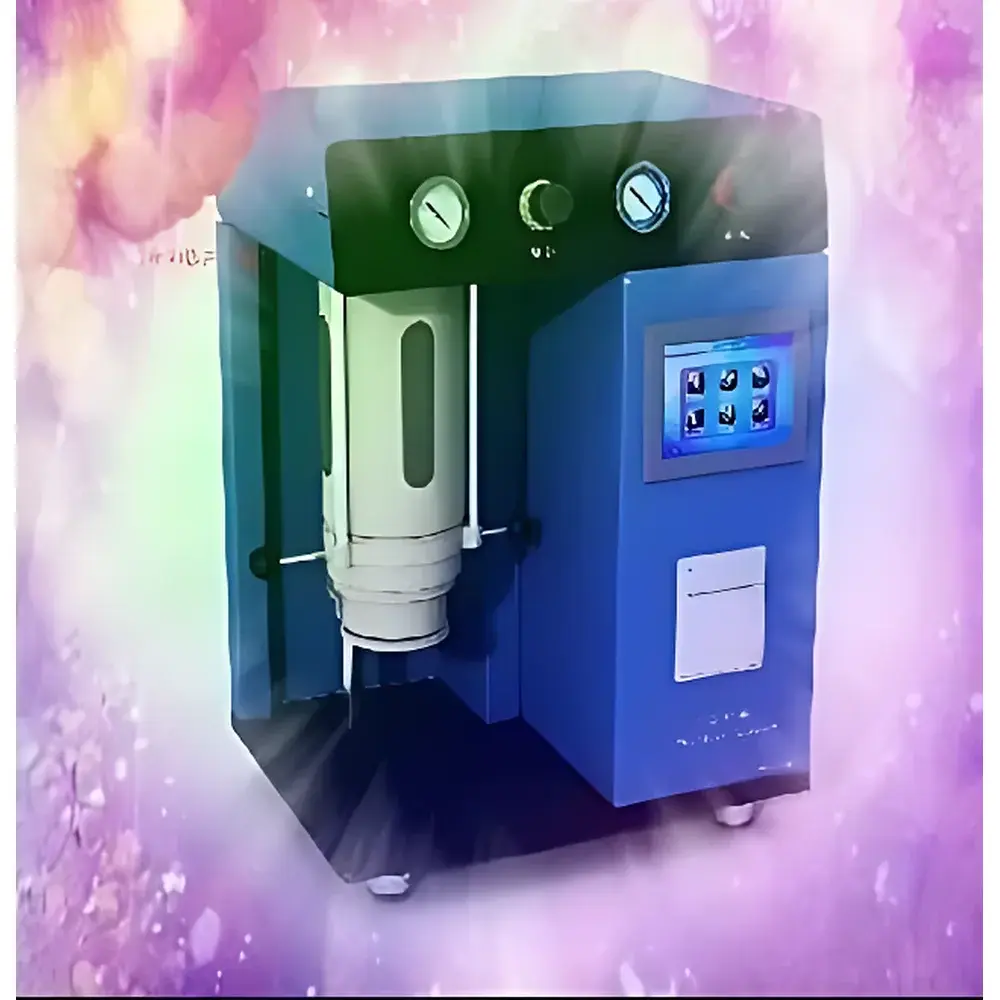
PULUODY PLD-0201-16-1 Optical Particle Counter for Power Plant Oil Contamination Monitoring
| Brand | PULUODY |
|---|---|
| Origin | Shaanxi, China |
| Manufacturer Type | Authorized Distributor |
| Regional Category | Domestic (China) |
| Model | PLD-0201-16-1 |
| Instrument Type | Optical Particle Counter |
| Detection Principle | Light Obscuration (7th-Generation Dual-Laser Narrow-Beam Sensor) |
| Calibration Standards | GB/T 18854–2002 (ISO 11171:1999, JJG 066–95) |
| Reporting Standards | ISO 4406, NAS 1638, GB/T 14039, DL/T 1096, ISO 4402 |
| Measurement Range | 1–450 µm (configurable sub-ranges: 2–100 µm, 1–150 µm, 2–200 µm) |
| Channel Count | 1000 size bins |
| Repeatability | <5% CV (at ≥1000 counts per sample) |
| Sample Flow Rate | 10–60 mL/min (online), 20–150 mL/min (flush) |
| Viscosity Range | Offline: 0–99 mm²/s |
| Online | 0–500 mm²/s |
| Operating Pressure | 0–0.6 MPa (standard), up to 31.5 MPa (with integrated pressure regulator) |
| Fluid Temperature | 0–80 °C |
| Ambient Temperature | −15–50 °C |
| Output Interfaces | RS232, 4–20 mA analog, customizable alarm relay |
| Data Storage | 3000 records (100 full test reports) |
| Display | Color LCD touchscreen |
| Power Input | 100–265 VAC, 50–60 Hz |
| Compliance | Fully compatible with ISO/IEC 17025-aligned calibration workflows |
Overview
The PULUODY PLD-0201-16-1 Optical Particle Counter is an industrial-grade, dual-mode (online and offline) contamination monitoring instrument engineered for continuous, real-time assessment of particulate contamination in turbine oils, hydraulic fluids, transformer insulating oils, and other critical lubricants used throughout thermal power generation systems. It operates on the light obscuration (LO) principle—specifically the 7th-generation dual-laser narrow-beam detection architecture developed by PULUODY in collaboration with UK-based optical metrology partners. This method quantifies particles by measuring transient reductions in laser beam intensity as individual particles pass through a precisely defined sensing zone, enabling high-resolution counting and sizing without reliance on scattering or sedimentation dynamics. The system complies with internationally recognized fluid cleanliness standards including ISO 4406:2017 (reporting ≥4 µm[c] and ≥6 µm[c]), NAS 1638 Class 00–12, and DL/T 1096–2008 for power industry applications. Its design prioritizes operational robustness under variable temperature, pressure, and electromagnetic conditions typical of turbine halls, control rooms, and mobile maintenance labs.
Key Features
- 7th-generation dual-laser narrow-beam optical sensor with enhanced signal-to-noise ratio and reduced coincidence error at high particle concentrations
- Configurable detection range spanning 1–450 µm, with 1000 programmable size channels and user-defined 16-bin reporting windows
- Integrated precision metering pump ensuring consistent volumetric sampling flow (10–60 mL/min) and repeatable flush cycles (20–150 mL/min)
- Wide viscosity tolerance: supports online measurement of oils up to 500 mm²/s (at 40 °C) and offline analysis up to 99 mm²/s
- High-pressure capability: rated for continuous operation up to 0.6 MPa; optional integrated pressure regulator extends operational range to 31.5 MPa
- Industrial-grade enclosure rated IP65, designed for ambient temperatures from −15 °C to +50 °C and fluid temperatures up to 80 °C
- Real-time analog (4–20 mA) and digital (RS232) outputs compliant with DCS, PLC, and SCADA integration requirements
- On-device color LCD touchscreen interface with intuitive navigation, ISO/NAS-coded result display, and configurable alarm thresholds
Sample Compatibility & Compliance
The PLD-0201-16-1 is validated for use with mineral-based, synthetic, and phosphate-ester turbine oils; anti-wear hydraulic fluids (HL, HM, HV); insulating oils (mineral and silicone-based); and gear oils meeting ISO VG 32–680 specifications. It meets mechanical and electrical safety requirements per GB/T 14039–2002 (equivalent to ISO 4406), GB/T 18854–2002 (identical to ISO 11171:1999 for calibration), and JJG 066–95 (Chinese national verification regulation for particle counters). Calibration traceability is maintained through documented alignment with the China Aviation Industry Particle Measurement Station—a CNAS-accredited reference laboratory operating under ISO/IEC 17025. The instrument supports multi-standard reporting within a single test sequence and allows embedded configuration of customer-specific pass/fail limits aligned with internal asset health protocols or OEM maintenance guidelines.
Software & Data Management
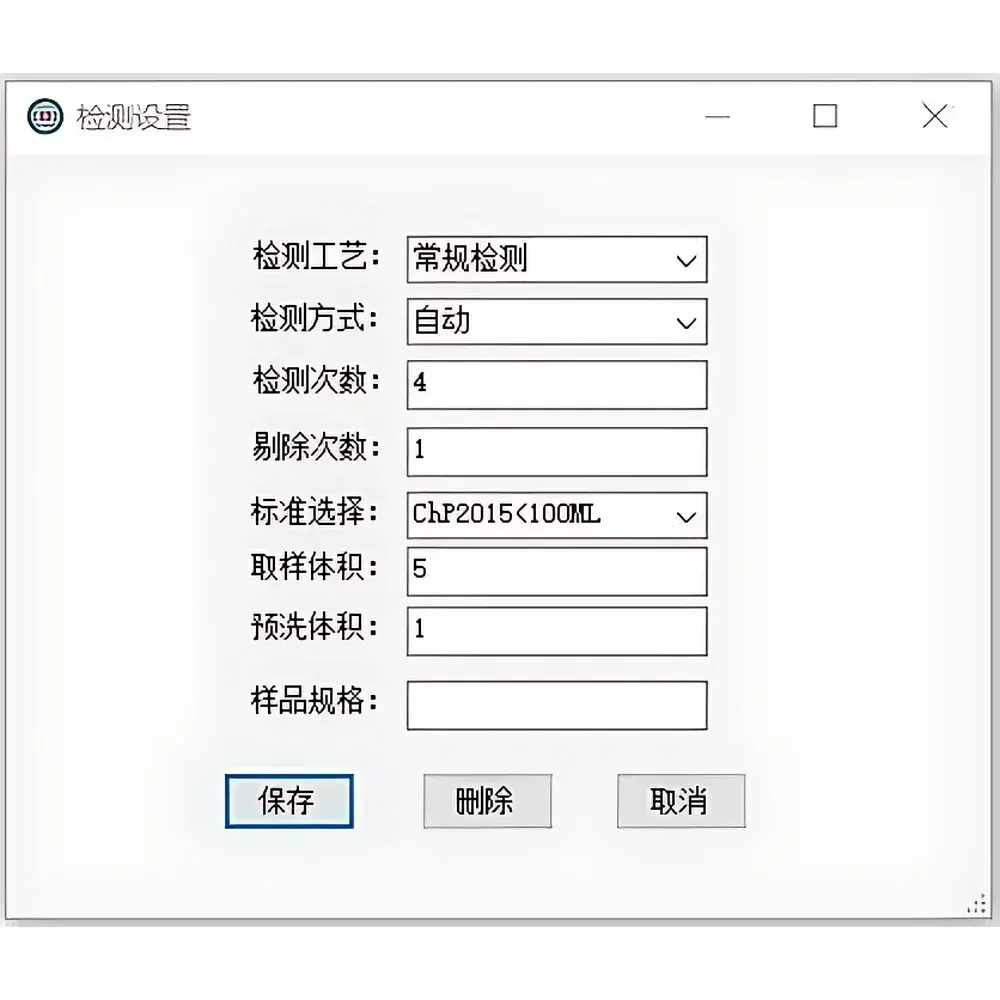
The system runs P6.4 Analysis & Test Software (integrated edition), providing standardized workflows for data acquisition, statistical trending, histogram generation, and compliance reporting. Software modules support automated generation of ISO 4406 and NAS 1638 classification codes, cumulative/differential distribution plots, and time-series wear trend analysis. All raw count data, metadata (timestamp, operator ID, sample ID, environmental conditions), and calibration logs are stored locally in non-volatile memory (3000-record capacity) and exportable via USB or RS232 to LIMS or CMMS platforms. Optional software upgrades enable 21 CFR Part 11-compliant electronic signatures, audit trail logging, and role-based access control—facilitating deployment in environments governed by GLP or GMP regulatory frameworks.
Applications
- Continuous online monitoring of steam turbine lube oil systems during operation, enabling predictive maintenance based on real-time contamination trends
- Periodic offline verification of oil cleanliness post-filtration, before commissioning, or after maintenance interventions
- Integration into mobile oil analysis laboratories for field-based condition monitoring across multiple generating units
- Supporting root-cause analysis of bearing wear, servo-valve stiction, or filter bypass events through quantitative particle morphology correlation
- Validation of filtration efficiency in offline purification skids and portable filter carts
- Compliance testing for turbine oil delivery acceptance per DL/T 1096–2008 and ISO 8573-4 for compressed air–lubricant systems
FAQ
What calibration standards does the PLD-0201-16-1 support?
It is fully compatible with GB/T 18854–2002 (ISO 11171:1999), ISO 4402:1991, JJG 066–95, and supports user-defined calibration curves for alternative reference materials.
Can the instrument operate continuously under high-pressure turbine oil lines?
Yes—standard configuration handles up to 0.6 MPa; with optional pressure-regulated inlet assembly, it sustains reliable operation at pressures up to 31.5 MPa.
Is offline testing possible without permanent installation?
Yes—the system supports modular offline operation when paired with the optional portable sampling chamber, enabling lab-grade analysis in field service or quality control settings.
How is data integrity ensured for regulatory reporting?
Raw count data, calibration history, and operator actions are timestamped and stored with immutable metadata; optional software modules provide 21 CFR Part 11 audit trails and electronic signature support.
Does the device meet electromagnetic compatibility requirements for power plant environments?
It conforms to GB/T 17626 series (IEC 61000-4) for ESD, surge, and radiated immunity, validated for deployment adjacent to VFDs, switchgear, and turbine control cabinets.



