
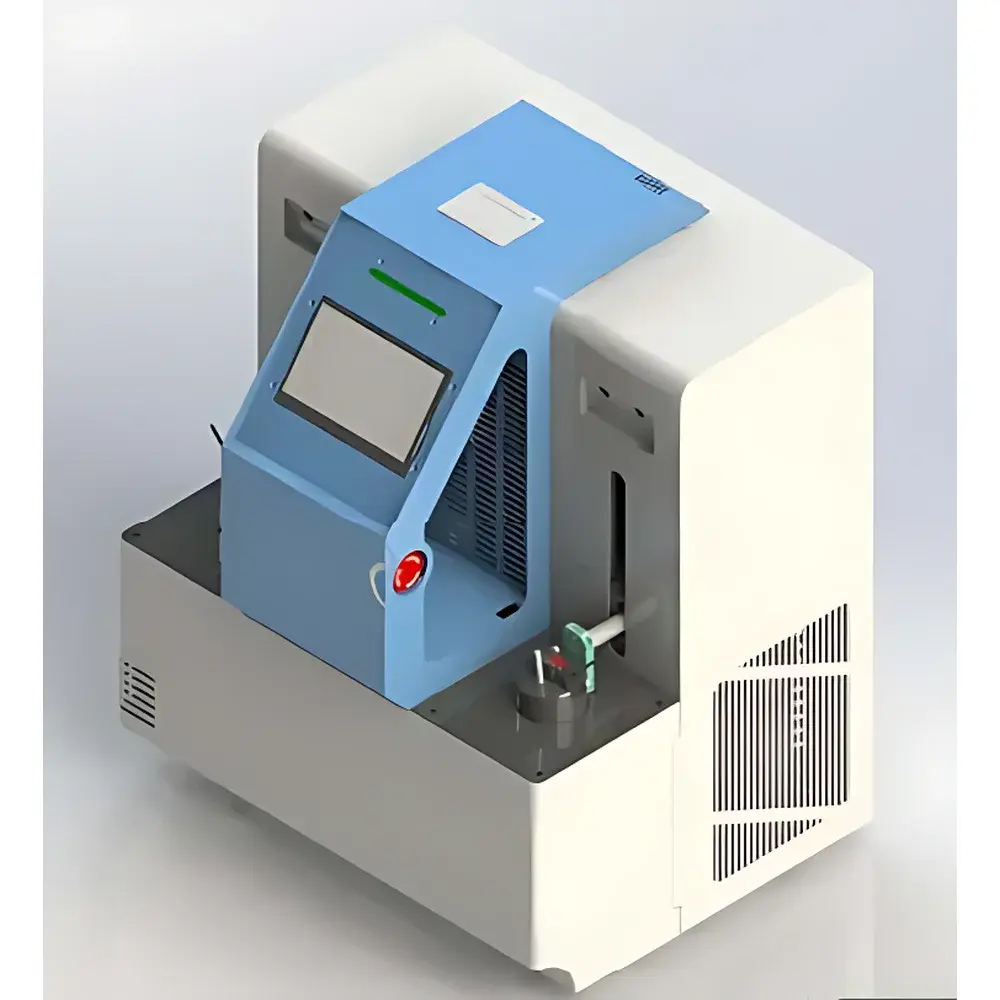
PULUODY PLD-3535E-2 Fully Automated Pour Point, Cloud Point and Cold Filter Plugging Point (CFPP) Tester for Petroleum Products
| Brand | PULUODY |
|---|---|
| Origin | Shaanxi, China |
| Model | PLD-3535E-2 |
| Input Voltage | AC 200 V ±10%, 50 Hz |
| Power Consumption | 2000 W |
| Temperature Control Range | +50 °C to –70 °C |
| Temperature Control Accuracy | ±0.1 °C |
| Detection Method | Optical Liquid Surface Detection |
| Test Bath Configuration | Dual independent 2-hole cold baths |
| Tube Tilt Angles | 45° and 90° (motorized mechanical actuation) |
| Temperature Step Interval | 2 °C, 3 °C or user-defined |
| Display | 7″ capacitive touch LCD panel |
| Printer | Built-in thermal printer |
| Ambient Operating Conditions | 5–35 °C, <85% RH (non-condensing) |
Overview
The PULUODY PLD-3535E-2 is a fully automated, dual-bath benchtop instrument engineered for the precise determination of pour point (PP), cloud point (CP), and cold filter plugging point (CFPP) of petroleum-based liquids—including diesel fuels, residual fuel oils, lubricant base stocks, and blended distillates. It operates in strict compliance with ASTM D5950-14 (Standard Test Method for Pour Point of Petroleum Products – Automatic Tilt Method), ASTM D2500 (Cloud Point), ASTM D6371 (CFPP), and GB/T 3535 (Chinese national standard for pour point). The system employs a micro-scale cascade refrigeration unit—eliminating the need for external cooling water—and integrates high-stability optical detection to identify phase transition endpoints via real-time liquid surface displacement monitoring. Its dual independent test baths allow parallel execution of two standardized tests under identical thermal conditions, enhancing laboratory throughput while preserving inter-test integrity. The instrument’s closed-loop temperature control architecture achieves ±0.1 °C stability across the full operational range of +50 °C to –70 °C, enabling reproducible low-temperature characterization required for fuel specification compliance and refinery process optimization.
Key Features
- Dual independent cold baths with motorized 45°/90° tube tilting—enabling simultaneous, non-interfering PP and CP determinations per ASTM D5950 and D2500.
- Optical endpoint detection using photodiode-based liquid meniscus tracking—minimizing subjectivity and eliminating manual observation errors.
- Micro-cascade compression refrigeration system with forced-air heat dissipation—ensuring rapid cooldown, long-term thermal stability, and zero dependency on chilled water infrastructure.
- Embedded microprocessor control with preloaded ASTM/GB-compliant test protocols—supporting user-defined step intervals (2 °C, 3 °C, or custom) and automatic pass/fail evaluation against specification limits.
- 7-inch capacitive touchscreen interface with intuitive workflow navigation, real-time temperature curve visualization, and on-device result storage.
- Integrated thermal printer delivering traceable, timestamped reports compliant with GLP documentation requirements—including test ID, operator code, ambient conditions, and raw endpoint data.
Sample Compatibility & Compliance
The PLD-3535E-2 accommodates standard ASTM D5950/D2500 sample tubes (16 mm OD × 125 mm L) and CFPP-specific filtration assemblies per ISO 3015 and ASTM D6371. It is validated for use with middle distillates (EN 590, ASTM D975), marine fuels (ISO 8217), lubricant base oils (ASTM D2270), and bio-diesel blends (B5–B20). All firmware logic and reporting outputs adhere to ISO/IEC 17025:2017 calibration traceability principles. Instrument software supports audit trail generation and user-access controls aligned with FDA 21 CFR Part 11 Annex 11 expectations for electronic records in regulated environments. CE marking is pending; electrical safety conforms to IEC 61010-1:2010.
Software & Data Management
Firmware v3.2 includes embedded test method libraries with editable parameters (e.g., hold time per step, tilt duration, endpoint sensitivity thresholds). Raw thermographic data and optical signal waveforms are stored locally in CSV format and exportable via USB port. Optional PC connectivity (RS-232 or USB-to-serial) enables integration with LIMS platforms through ASCII protocol. All report outputs include mandatory metadata: instrument ID, calibration date, operator ID, environmental logs (ambient T/RH), and digital signatures where enabled. Audit trails record all parameter modifications, test initiations, and result approvals—retained for ≥36 months unless manually purged under defined retention policies.
Applications
- Refinery QC labs verifying diesel fuel conformance to EN 14214 (cold flow properties) and ASTM D975 (diesel fuel oils).
- Marine fuel testing per ISO 8217 Annex A (pour point ≤ –6 °C for DMA grade) and cold soak performance validation.
- Lubricant formulation R&D assessing wax crystallization onset and additive efficacy in paraffinic base stocks.
- Third-party certification bodies performing accredited PP/CP testing for API RP 14E and ISO 8502-2 compliance audits.
- Government petroleum inspection agencies conducting statutory verification of winter-grade fuel specifications.
FAQ
What standards does the PLD-3535E-2 support out-of-the-box?
ASTM D5950-14 (pour point), ASTM D2500 (cloud point), ASTM D6371 (CFPP), and GB/T 3535—preconfigured with default ramp rates, tilt sequences, and acceptance criteria.
Can the instrument perform pour point and cloud point tests simultaneously?
Yes—its dual independent cold baths allow concurrent execution of two different test methods or duplicate runs under identical thermal profiles.
Is external cooling water required?
No—the integrated micro-cascade compressor uses forced-air heat rejection; no plumbing, chillers, or water treatment systems are needed.
How is measurement repeatability ensured across operators?
By eliminating visual interpretation: optical detection provides objective endpoint identification, and firmware enforces standardized hold times, tilt angles, and temperature steps per method.
Does the system support electronic record archiving for regulatory audits?
Yes—audit-trail-enabled firmware logs all user actions, result approvals, and parameter changes; exported CSV files contain full metrological metadata for traceability.




