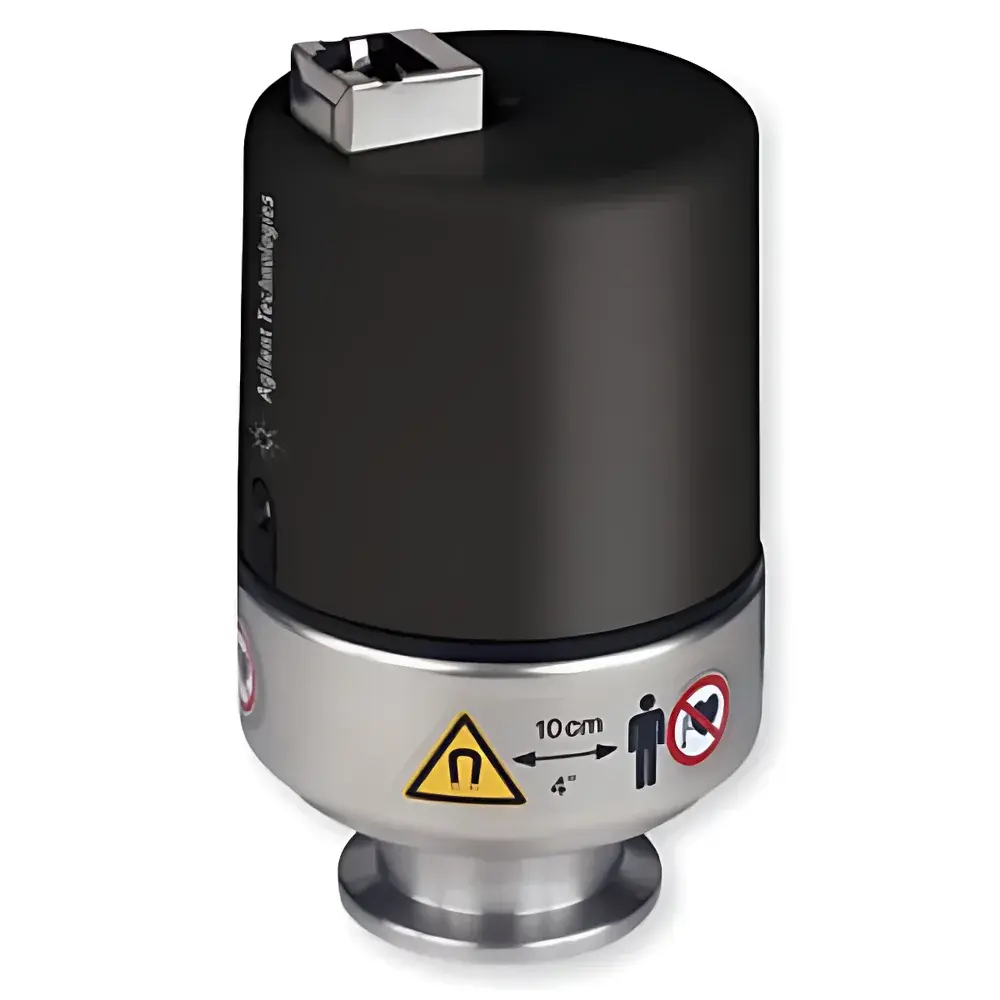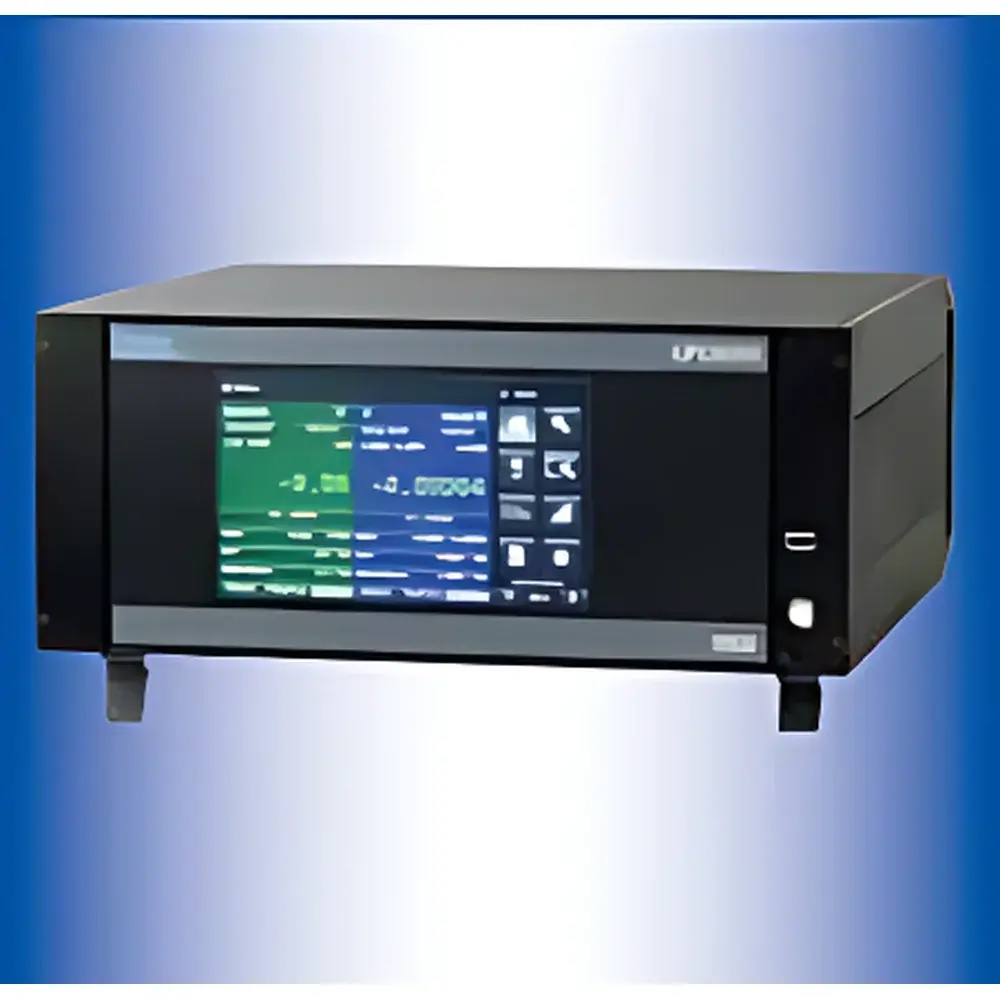
York Instrument CPC6050 Modular Pressure Controller
| Brand | York Instrument |
|---|---|
| Origin | Germany |
| Manufacturer Type | Manufacturer |
| Origin Category | Imported |
| Model | CPC6050 |
| Pricing | Upon Request |
| Operating Principle | Electronic Pressure Control |
| Display | Digital |
| Control Stability | < 0.003 % FS (typical 0.001 % FS) |
| Pressure Range | –0.1 to 21 MPa |
| Control Response Time | < 10 s |
| Accuracy | ±0.01 % of reading (upper half of span, IS-50 compliant) |
| Uncertainty Budget | k=2, includes instrument intrinsic performance, reference standard uncertainty, long-term stability, environmental effects, zero-drift beyond auto-compensation range, and temperature influence |
| Calibration Interval | 180 days for gauge/absolute pressures ≤ 0.1 MPa and bidirectional ranges ≤ 1 MPa |
| Sensor Recommendation | Absolute pressure sensor preferred for pressure simulation to enable effective zero-point drift compensation |
Overview
The York Instrument CPC6050 Modular Pressure Controller is an electronically actuated, high-stability pressure generation and regulation system engineered for metrological-grade calibration, verification, and functional testing in regulated and research-intensive environments. Based on closed-loop piezoresistive sensing and proportional-integral-derivative (PID) controlled pneumatic or hydraulic actuation, the CPC6050 delivers precise, repeatable pressure setpoints across a wide dynamic range—from vacuum (–0.1 MPa) to high-pressure (21 MPa). Its modular architecture supports configuration flexibility: users may integrate optional pressure modules (e.g., absolute, gauge, differential), fluid compatibility kits (gas or liquid media), and auxiliary I/O for external triggering or synchronization. Designed and manufactured in Germany, the system adheres to stringent European engineering standards and is intended for use where traceable, ISO/IEC 17025–aligned pressure control is required—particularly in accredited calibration laboratories, aerospace test benches, medical device validation facilities, and industrial R&D centers.
Key Features
- Modular hardware platform enabling field-upgradable pressure modules, media options (dry air, nitrogen, oil), and communication interfaces (RS-232, Ethernet, USB)
- Digital front-panel display with real-time pressure readout, status indicators, and intuitive menu navigation
- Control stability of < 0.003 % full scale (FS), with typical performance at 0.001 % FS under stable thermal and mechanical conditions
- Response time < 10 seconds to reach 99.5 % of target setpoint within specified operating envelope
- Accuracy of ±0.01 % of reading over the upper half of the selected pressure span (per IS-50 specification), validated against NIST-traceable primary standards
- Comprehensive uncertainty budget (k = 2) documented per ISO/IEC Guide 98-3, incorporating contributions from sensor linearity, hysteresis, thermal coefficient, long-term drift, zero-point stability, and environmental perturbations
- Zero-point compensation algorithm optimized for absolute sensor configurations, minimizing drift-induced errors during extended pressure simulation tasks
Sample Compatibility & Compliance
The CPC6050 supports calibration and functional testing of a broad spectrum of pressure-sensitive devices, including analog and digital pressure transmitters, mechanical gauges (Bourdon, diaphragm), deadweight testers, OEM pressure sensors, and medical pneumatic subsystems (e.g., ventilator pressure regulators, infusion pump monitors). It complies with key international standards relevant to pressure metrology: EN 837-1 (pressure gauge construction), ISO 5725 (accuracy and precision of measurement methods), and ASTM E74 (calibration of force-measuring instruments used in pressure calibration systems). For applications requiring regulatory compliance, the controller’s firmware supports audit-trail logging and user-access controls aligned with FDA 21 CFR Part 11 requirements when paired with validated software. Calibration intervals are defined per application profile: 180 days for low-range gauge/absolute (≤0.1 MPa) and bidirectional (≤1 MPa) configurations; 365 days for all other ranges—consistent with ILAC-P10:2022 guidance on calibration interval determination.
Software & Data Management
The CPC6050 operates natively with York Instrument’s PC-based ControlSuite™ software (Windows 10/11, 64-bit), which provides automated calibration sequence scripting, multi-point ramp/soak protocols, real-time deviation plotting, and export to CSV, XML, or PDF report formats. All measurement data—including timestamps, environmental parameters (optional external temperature/humidity input), operator ID, and uncertainty components—is stored with cryptographic integrity. The software maintains full GLP/GMP-compliant audit trails: every parameter change, calibration event, or firmware update is timestamped, user-attributed, and non-erasable. Optional integration with LIMS platforms via OPC UA or RESTful API enables seamless traceability across enterprise quality management systems.
Applications
- Primary and secondary calibration of pressure standards in ISO/IEC 17025-accredited laboratories
- Functional verification of aircraft cabin pressure controllers, brake system simulators, and fuel delivery manifolds
- Design validation and production-line testing of implantable medical devices (e.g., intraocular pressure monitors, dialysis pressure sensors)
- R&D characterization of novel MEMS pressure transducers under variable thermal and dynamic loading conditions
- Supporting ISO 13485-compliant manufacturing processes for pressure-critical medical equipment
- Traceable pressure simulation for sensor fusion algorithm development in autonomous vehicle braking and suspension control systems
FAQ
What pressure media are supported by the CPC6050?
Dry, oil-free compressed air and nitrogen are standard for pneumatic operation. Liquid-compatible variants (with stainless-steel wetted parts and hydraulic actuation) are available upon request for applications requiring hydrostatic pressure generation.
Is the CPC6050 suitable for vacuum calibration?
Yes—the instrument covers a full range from –0.1 MPa (absolute) to +21 MPa, enabling accurate generation and regulation of sub-atmospheric pressures down to 0.1 MPa abs.
How is traceability maintained across calibration intervals?
Each unit ships with a UKAS-accredited calibration certificate (ref. CT 27.621), and the documented uncertainty budget (k=2) remains valid throughout the stated calibration interval when operated within environmental and procedural specifications.
Can the CPC6050 be integrated into automated test systems?
Yes—via SCPI command set over RS-232/Ethernet, or through programmable digital I/O lines for TTL-level triggering and status feedback.
Does the system support both gauge and absolute pressure control simultaneously?
No—pressure mode is determined by the installed sensor module. However, modular design allows rapid physical swap between gauge, absolute, and differential configurations without recalibration.