
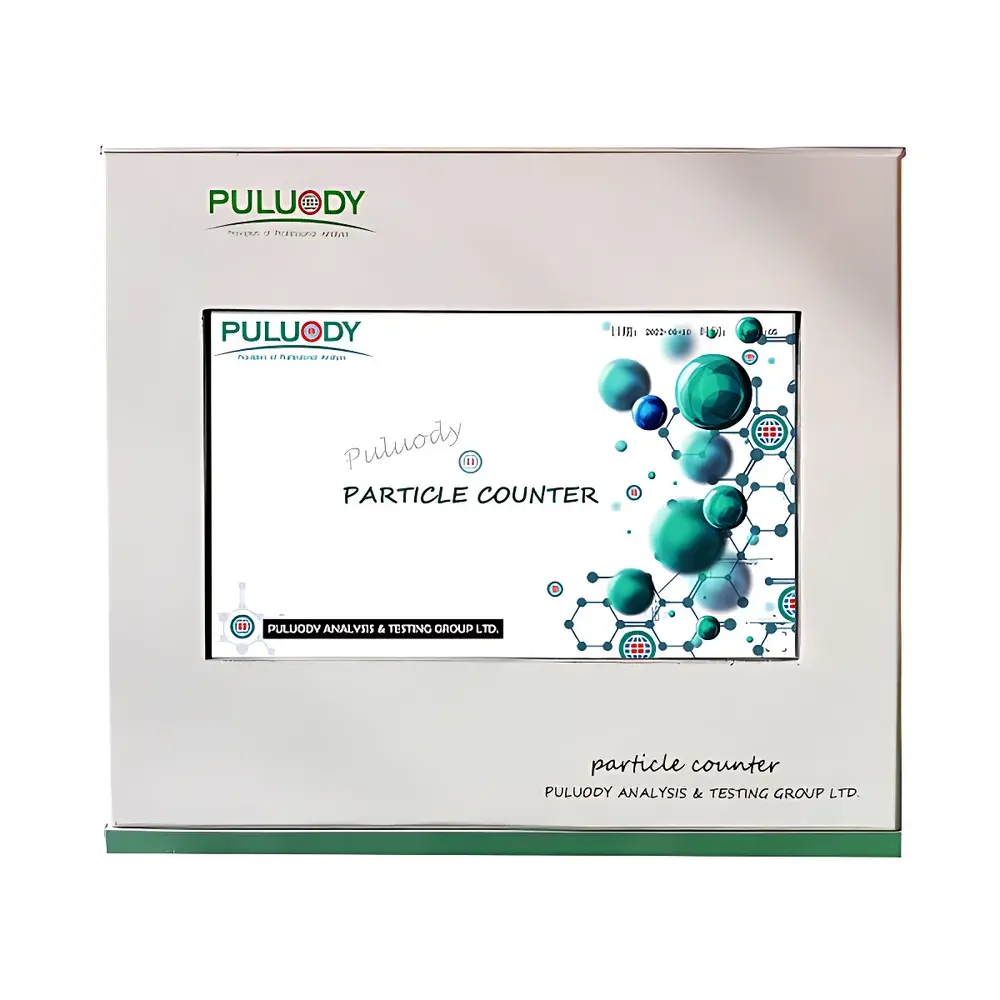
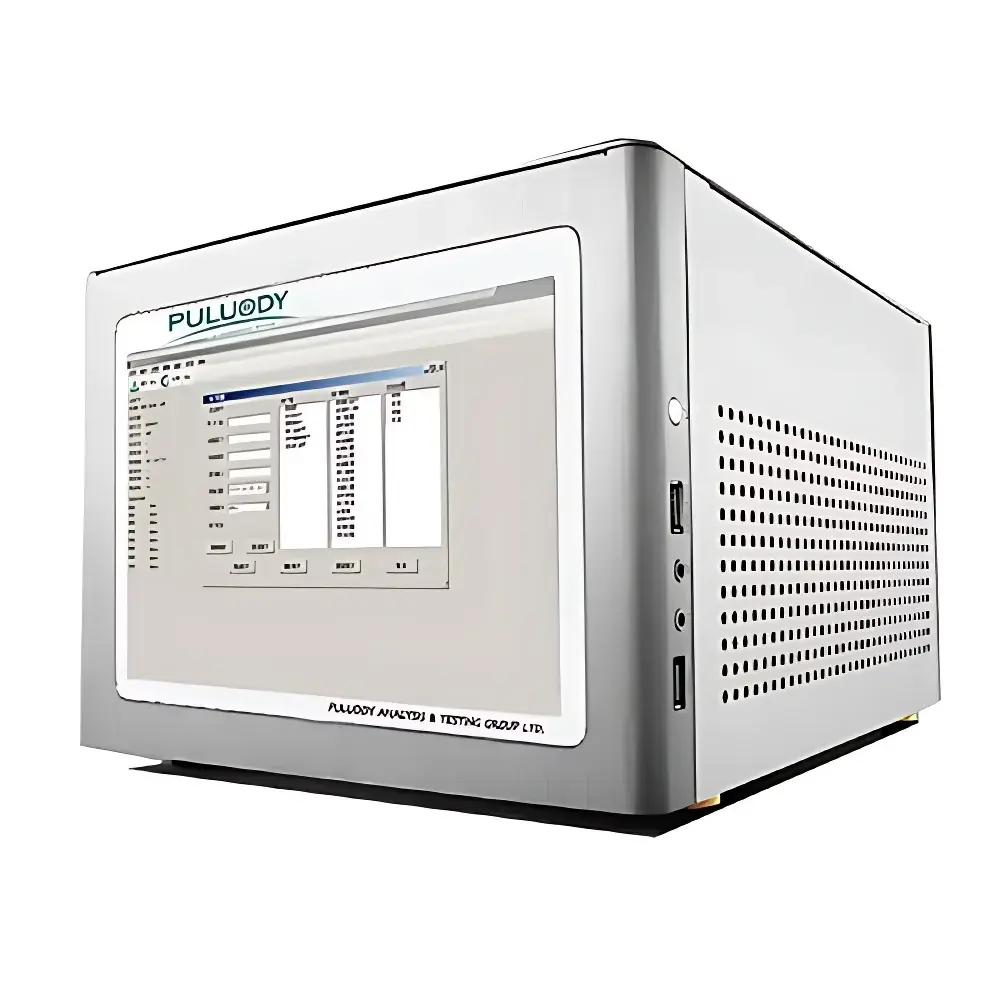
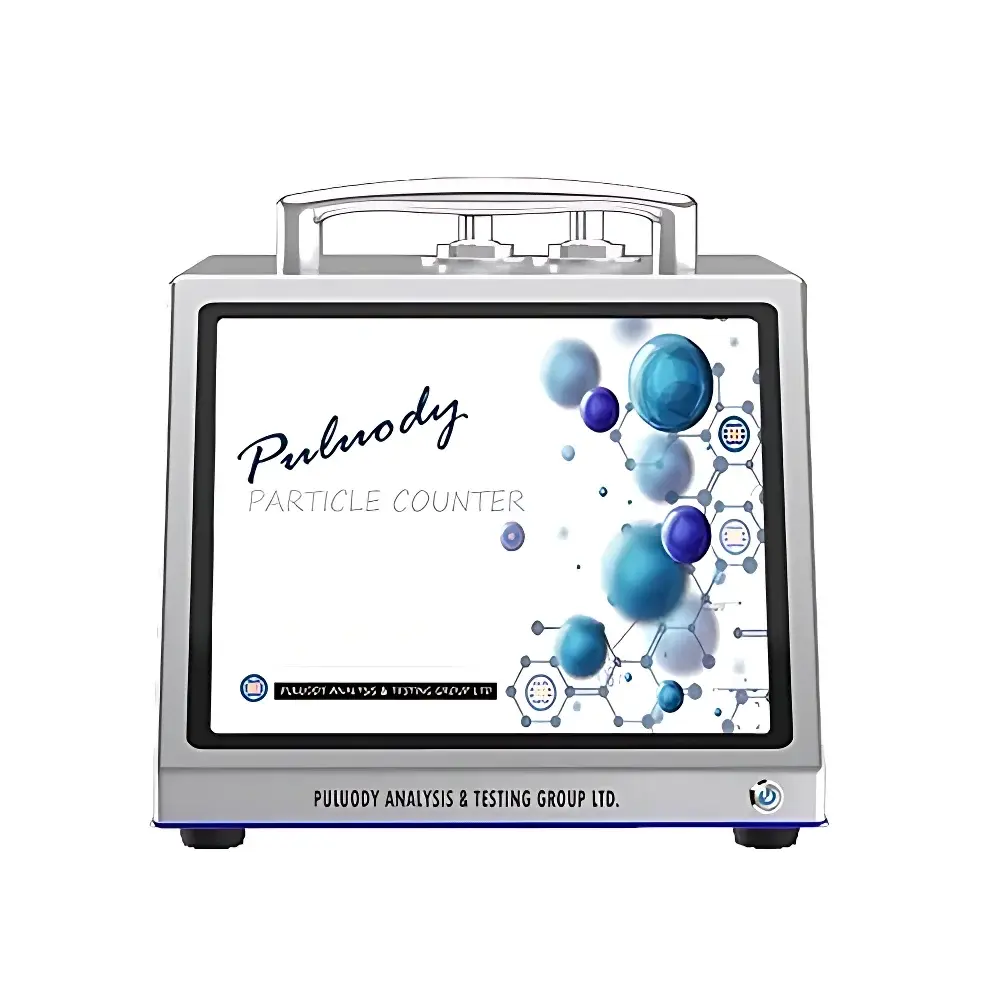
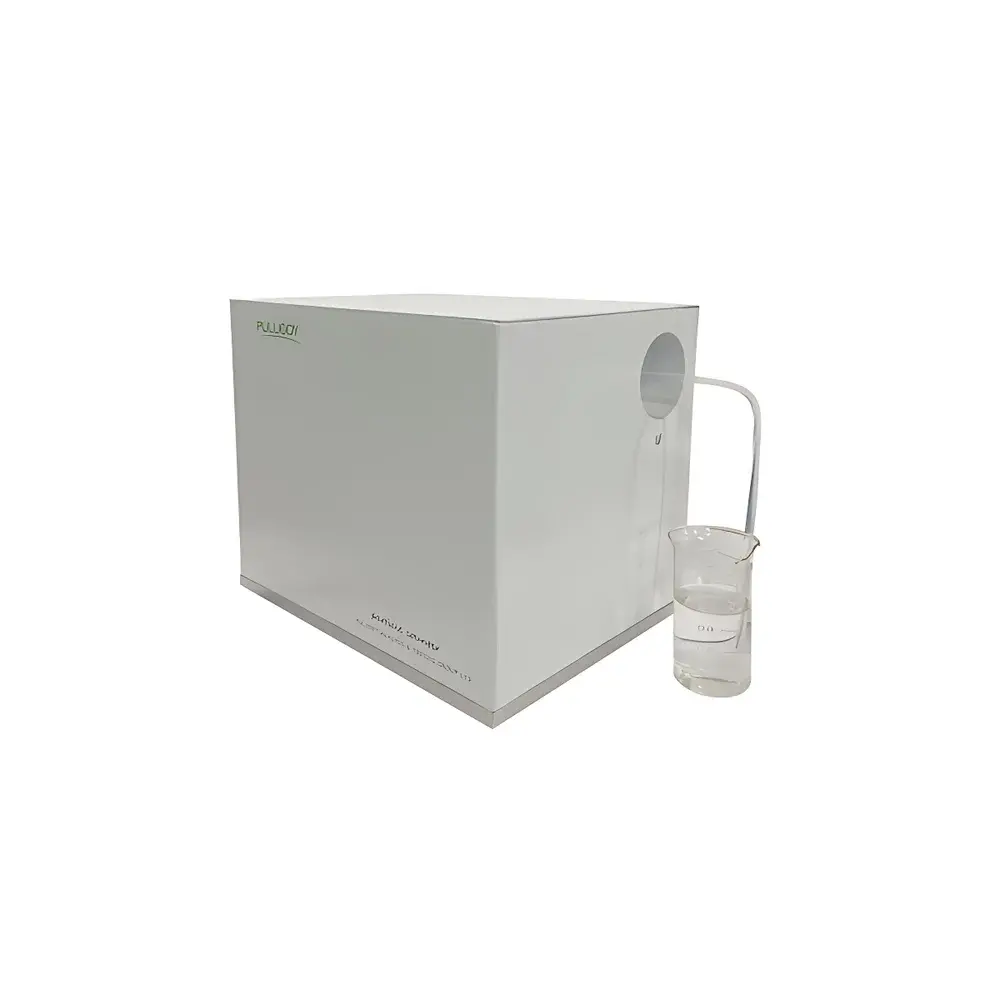
PULUODY PMT-2 Online Ultra-Pure Water Particle Counter
| Brand | PULUODY |
|---|---|
| Origin | Shaanxi, China |
| Manufacturer Type | Authorized Distributor |
| Country of Origin | China |
| Model | PMT-2 |
| Price | USD 67,500 (FOB) |
| Detection Principle | Dual-Laser Narrow-Beam Light Scattering |
| Sensor Generation | 8th-Generation Dual-Laser Optical Sensor |
| Flow Control | Precision Piston Pump + High-Accuracy Electromagnetic Flow Regulation |
| Calibration Standards | ISO 21501-4, USP <788>, EP 2.9.19, ChP 2020 Vol. IV, GB 8368-2018 |
| Measurement Range | 0.1–0.5 µm and 0.1–1.0 µm (standard) |
| Sampling Accuracy | <±1% |
| Counting Accuracy | ±3% typical |
| Coincidence Limit | ≤2.5% error at 1000 particles/mL |
| Output Interface | 4–20 mA analog output with programmable alarm thresholds |
| Data Acquisition | Integrated iPad-compatible wireless data capture |
| Software | PULUODY V8.3 Particle Analysis & Calibration Separation Platform (PC + embedded GUI) |
| Display | Color LCD touchscreen + optional wireless keyboard/mouse |
| Power Input | 100–265 VAC, 50–60 Hz |
| Compliance | Designed for GLP/GMP environments |
Overview
The PULUODY PMT-2 Online Ultra-Pure Water Particle Counter is an engineered solution for real-time, continuous particulate contamination monitoring in critical liquid process streams—specifically ultra-pure water (UPW), semiconductor cleaning chemistries, electronic-grade solvents, and high-purity process fluids. Built upon the 8th-generation dual-laser narrow-beam optical sensing architecture developed by PULUODY Analytical Testing Group (UK), the instrument applies Mie scattering theory under precisely controlled laminar flow conditions to detect and size non-volatile insoluble particles from 0.1 µm upward. Its core measurement principle relies on simultaneous detection via two spatially separated laser paths, enabling improved signal-to-noise ratio, reduced coincidence error, and enhanced discrimination of sub-micron particles in low-conductivity, low-refractive-index matrices such as UPW (resistivity >18.2 MΩ·cm). Unlike batch-mode laboratory counters, the PMT-2 integrates directly into recirculating loops or point-of-use lines, supporting uninterrupted 24/7 surveillance with automated alarm triggers—making it a validated component for semiconductor fab front-end process control, pharmaceutical water system qualification, and advanced materials manufacturing.
Key Features
- Dual-laser narrow-beam optical sensor with independent wavelength alignment and thermal stabilization for long-term signal fidelity
- High-precision piston metering pump combined with electromagnetic flow regulation ensures volumetric sampling accuracy better than ±1% across dynamic flow rates (0.5–50 mL/min)
- Modular optical path design allows field-swappable sensor heads optimized for different refractive index ranges (e.g., water vs. organic solvents)
- Calibration separation architecture: analytical counting algorithms operate independently from metrological calibration routines to eliminate software-induced drift
- Embedded V8.3 firmware with dual operating modes—online continuous monitoring and offline portable verification—each with dedicated data integrity protocols
- Comprehensive analog (4–20 mA) and digital (RS485, Ethernet) I/O for integration into DCS, SCADA, and MES platforms
- Configurable alarm logic including particle concentration thresholds, rate-of-change alerts, and cumulative count deviation warnings
Sample Compatibility & Compliance
The PMT-2 is validated for use with ultrapure water (UPW), deionized water, hydrogen peroxide solutions, SC-1/SC-2 cleans, photoresist developers, CMP slurries, and polymer-based coating fluids. It meets the physical and procedural requirements of multiple pharmacopoeial standards—including United States Pharmacopeia , European Pharmacopoeia 2.9.19, Japanese Pharmacopoeia 6.07, and Chinese Pharmacopoeia 2020 Edition Volume IV—for sub-visible particle enumeration in parenteral preparations and purified water systems. For industrial applications, it aligns with SEMI F63 (for UPW in semiconductor fabs), ISO 21501-4 (calibration and verification of liquid-borne particle counters), and GB/T 18853-2015 (Chinese national standard for hydraulic fluid contamination control). All firmware configurations support audit-trail-enabled operation compliant with FDA 21 CFR Part 11 when paired with optional electronic signature modules and time-stamped logging.
Software & Data Management
The PMT-2 runs the proprietary PULUODY V8.3 Particle Analysis Platform—a dual-environment software suite comprising an embedded real-time acquisition interface and a PC-based post-processing workstation. The embedded GUI provides touch-screen configuration of sampling parameters, alarm setpoints, and report templates (e.g., ISO 4406, NAS 1638, or custom grading schemes). Raw pulse-height data is stored locally with SHA-256 hash verification and can be exported via USB or network transfer in CSV, PDF, or ASTM E2913-compliant XML formats. The desktop application enables advanced statistical analysis: trend charting with moving averages, particle size distribution histograms (log-normal fit), batch comparison overlays, and root-cause correlation mapping against process variables (e.g., filter differential pressure, pump speed, temperature). All software updates are digitally signed and version-controlled to maintain validation status under GxP frameworks.
Applications
- Semiconductor manufacturing: In-line UPW monitoring at wafer rinse stations, chemical delivery systems, and immersion lithography tools
- Pharmaceutical production: Continuous surveillance of purified water (PW) and water-for-injection (WFI) distribution loops per EU Annex 1 and WHO TRS 970
- Flat-panel display fabrication: Real-time detection of abrasive residues in etchant and stripper solutions used in TFT-LCD and OLED processes
- Battery electrolyte purity control: Quantification of metallic particulates in LiPF6 solutions prior to cell filling
- Nanofiltration membrane validation: Challenge testing with traceable latex standards to verify retention efficiency down to 0.1 µm
- Medical device manufacturing: Verification of particulate cleanliness in final rinse water for implantable components per ISO 10993-12
FAQ
Does the PMT-2 require periodic recalibration with NIST-traceable standards?
Yes. Annual calibration using ISO 21501-4 compliant polystyrene latex (PSL) reference particles is recommended. The instrument supports automated calibration verification sequences via its integrated flow cell and built-in photodiode reference channel.
Can the PMT-2 distinguish between metallic and polymeric particles?
No. It performs light-scattering-based sizing only. Morphological or compositional differentiation requires coupling with Raman spectroscopy or SEM-EDS—though the PMT-2’s high-resolution data stream is compatible with such hybrid workflows via timestamp-synchronized export.
Is the system suitable for installation in Class 10 cleanrooms?
Yes. The enclosure meets IP54 ingress protection rating and is constructed from electropolished 316L stainless steel with zero-outgassing elastomers. Optional HEPA-filtered purge gas inlet available for ISO Class 3–5 environments.
How is data integrity ensured during power interruption?
All active measurements are buffered in non-volatile FRAM memory. Upon recovery, the system resumes counting from the last confirmed pulse timestamp and logs the interruption event with duration and system state.
What documentation is provided for regulatory submissions?
A full Validation Support Package is included: IQ/OQ protocols, traceable calibration certificates, software verification reports (per GAMP 5), and a Design Qualification Summary aligned with ICH Q5C and ISO 13485:2016 requirements.





