
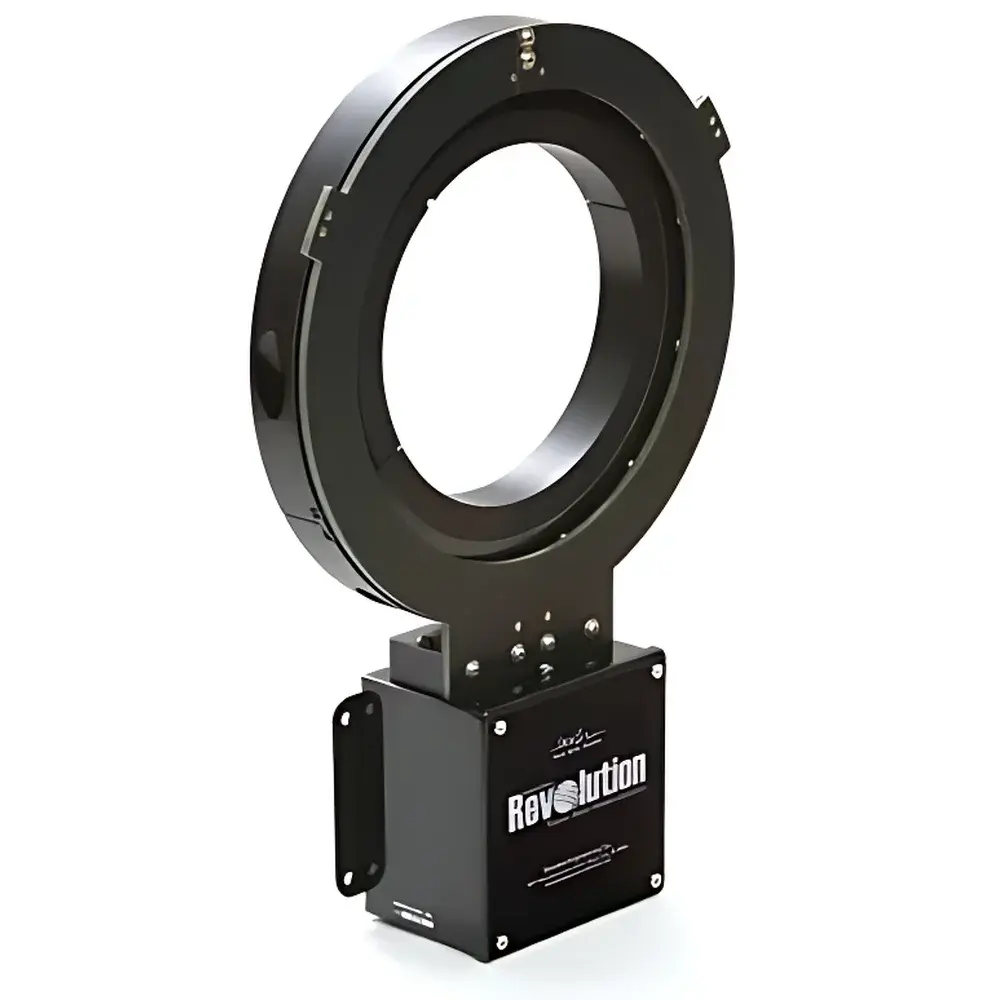
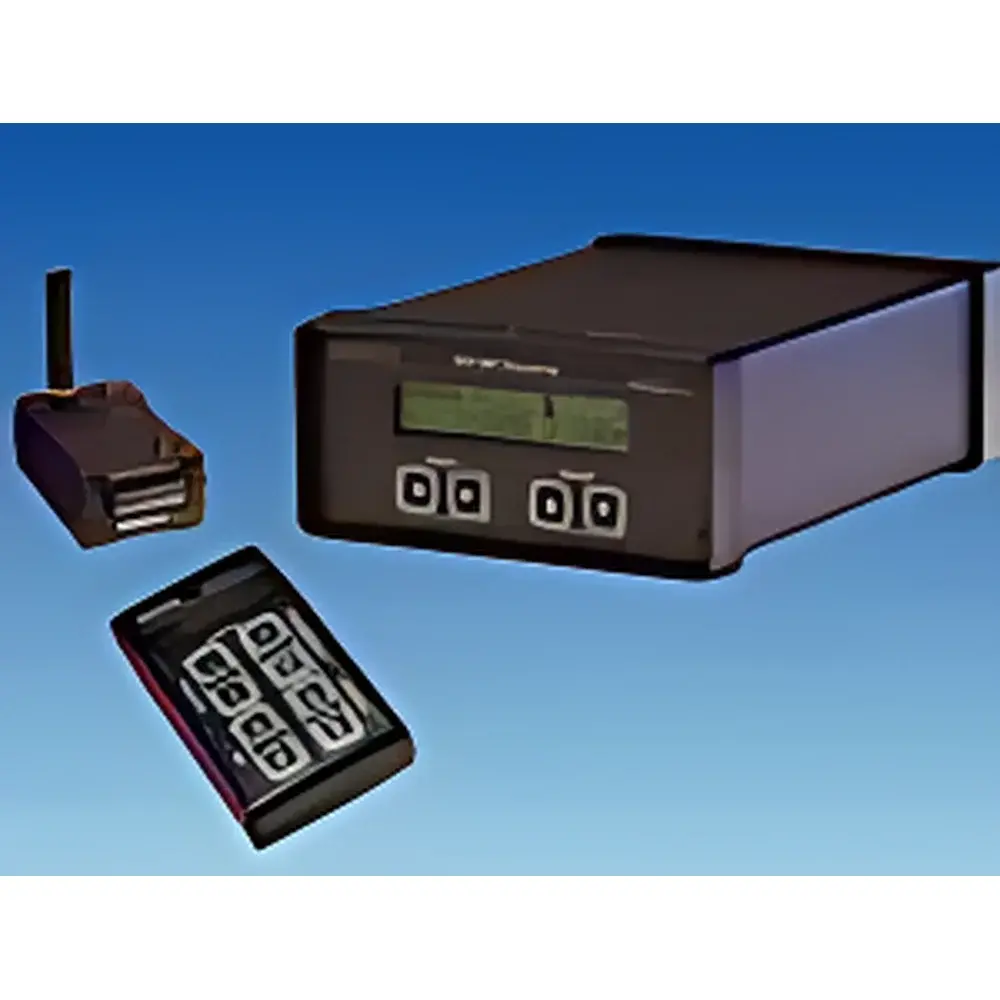
Binsfeld TT-R Torque and Shaft Power Telemetry System
| Brand | Binsfeld |
|---|---|
| Origin | USA |
| Model | TT-R |
| Sensor Input | Full-bridge strain gauge (350 Ω, optional other resistances), 4 VDC excitation |
| Strain Range | ±500 με (full-bridge, 4-arm, torsion or bending) |
| Resolution | 14-bit |
| Frequency Response | DC to 1000 Hz (–3 dB) |
| Operating Environment | –40 °C to +85 °C, 0–90% RH (non-condensing) |
| Power Supply | 11–16 VDC, nominal 0.5 A, max 2 A (AC option available) |
| Output Signals | Four isolated 4–20 mA analog outputs (torque, speed, power, direction) |
| Telemetry Architecture | Non-contact inductive power coupling and digital RF data transmission |
| Mechanical Configuration | Rotating torque ring (integrated transmitter) + stationary power ring & master control unit |
| Size Series | Outer diameters increment in 2-inch steps for scalable shaft diameter coverage |
Overview
The Binsfeld TT-R Torque and Shaft Power Telemetry System is an industrial-grade, non-contact rotational torque measurement platform engineered for continuous, high-fidelity monitoring of rotating shafts in demanding mechanical environments. Based on precision strain gauge instrumentation coupled with robust digital telemetry architecture, the TT-R system measures torque via calibrated full-bridge strain gauges bonded directly to the shaft surface—or integrated into a slip-on torque ring—while simultaneously acquiring rotational speed, calculating real-time mechanical power (P = τ × ω), and detecting rotational direction. Unlike conventional slip-ring-based transducers, the TT-R employs inductive power transfer and digitally modulated RF telemetry to eliminate mechanical wear, electrical noise coupling, and signal degradation over extended operational lifetimes. Its DC-coupled frequency response (DC to 1000 Hz at –3 dB) supports both static torque calibration and dynamic event capture—including transient loading, start-up surges, and harmonic torsional vibration analysis—making it suitable for long-term condition monitoring, predictive maintenance, and closed-loop control integration in mission-critical rotating equipment.
Key Features
- Digital telemetry architecture with error-checked RF data transmission ensures immunity to electromagnetic interference (EMI) and ground-loop artifacts common in industrial motor drive environments.
- Non-contact inductive power coupling eliminates brush wear, contact resistance drift, and maintenance downtime associated with traditional slip rings.
- Four isolated 4–20 mA analog outputs—each independently scaled and linearized—provide direct compatibility with PLCs, DCS systems, SCADA networks, and legacy analog data loggers without signal conditioning.
- Modular mechanical design: torque rings and power rings are available in standardized outer diameters incremented in 2-inch steps (e.g., 4″, 6″, 8″, etc.), enabling rapid adaptation across shaft diameters from 1.5″ to 24″ using custom-machined adapter sleeves or split-collar mounting kits.
- 14-bit data resolution and factory-calibrated linearity (<±0.25% FS typical) support traceable metrology in accordance with ISO/IEC 17025–accredited calibration practices.
- Wide operating temperature range (–40 °C to +85 °C) and conformal-coated electronics ensure reliable deployment in marine engine rooms, steel mill roll stands, wind turbine nacelles, and outdoor paper machine drives.
Sample Compatibility & Compliance
The TT-R system is compatible with solid and hollow rotating shafts fabricated from ferrous and non-ferrous alloys, including carbon steel, stainless steel, aluminum, and titanium. It accommodates both static-torque verification (e.g., brake-dynamometer validation per ASTM E2624) and dynamic in-situ monitoring under variable-speed operation. The system complies with IEC 61000-6-2 (immunity) and IEC 61000-6-4 (emissions) for industrial environments. All analog outputs meet NAMUR NE43 fault signaling standards. When integrated into validated manufacturing systems, the TT-R supports audit readiness for FDA 21 CFR Part 11 (electronic records/signatures) and GMP/GLP data integrity requirements through external time-stamped logging and change-control documentation of configuration parameters.
Software & Data Management
While the TT-R operates autonomously as a hardwired analog output device, its configuration and diagnostics are managed via the optional Binsfeld TT-Config software suite running on Windows-based engineering workstations. This application enables user-defined scaling of each 4–20 mA channel, real-time spectral analysis (FFT up to 1 kHz), zero-balance and sensitivity calibration storage, and firmware updates via USB-connected master controller. All configuration changes are logged with timestamps and operator IDs, satisfying ALCOA+ data governance principles. Raw telemetry metadata—including thermal drift compensation coefficients and sensor health diagnostics—is embedded in Modbus RTU register maps for integration with MES and CMMS platforms.
Applications
- Marine propulsion systems: Continuous torque profiling of main reduction gears and propeller shafts to detect misalignment, bearing degradation, or cavitation-induced load fluctuations.
- Hot/cold rolling mill drives: Real-time torque mapping across tandem stands to optimize tension control, prevent strip breakage, and validate mill model predictions per ISO 10375.
- Automotive powertrain test cells: In-line torque measurement on transmission output shafts during durability cycling, shift quality analysis, and e-axle efficiency characterization.
- Wind turbine drivetrains: Low-speed shaft torque monitoring upstream of the gearbox to identify asymmetric blade loading, yaw misalignment, or pitch actuator faults.
- Crane and hoist gearmotors: Overload detection and duty-cycle analytics to inform preventive maintenance intervals and comply with OSHA 1910.179 and EN 13001 standards.
- Paper machine calender and dryer sections: Torque trending to detect roll deflection, bearing seizure precursors, or web tension anomalies affecting sheet quality.
FAQ
Can the TT-R be used on hollow shafts?
Yes—the torque ring assembly supports both solid and hollow shaft configurations; wall thickness and material modulus must be specified during ordering to ensure proper strain transfer calibration.
Is hazardous area certification available?
ATEX and IECEx certifications (Zone 1/21, II 2G/2D) are available for select TT-R configurations with intrinsically safe barrier integration—consult factory for model-specific declarations.
What is the maximum shaft rotational speed supported?
Standard TT-R systems are rated to 6000 RPM; high-speed variants (up to 15,000 RPM) are available with balanced torque rings and enhanced RF shielding.
Does the system require shaft modification or bonding?
No—TT-R uses a clamp-on or shrink-fit torque ring that avoids permanent shaft alterations; strain gauge installation is optional and only required for highest accuracy applications.
How is calibration traceability maintained?
Each unit ships with a NIST-traceable calibration certificate; field recalibration can be performed using portable torque standards compliant with ISO 376 and ASTM E2504.



