
Binsfeld TT Revolution Online Torque Telemetry System
| Brand | Binsfeld |
|---|---|
| Origin | USA |
| Manufacturer Type | Authorized Distributor |
| Origin Category | Imported |
| Model | TT |
| Pricing | Upon Request |
Overview
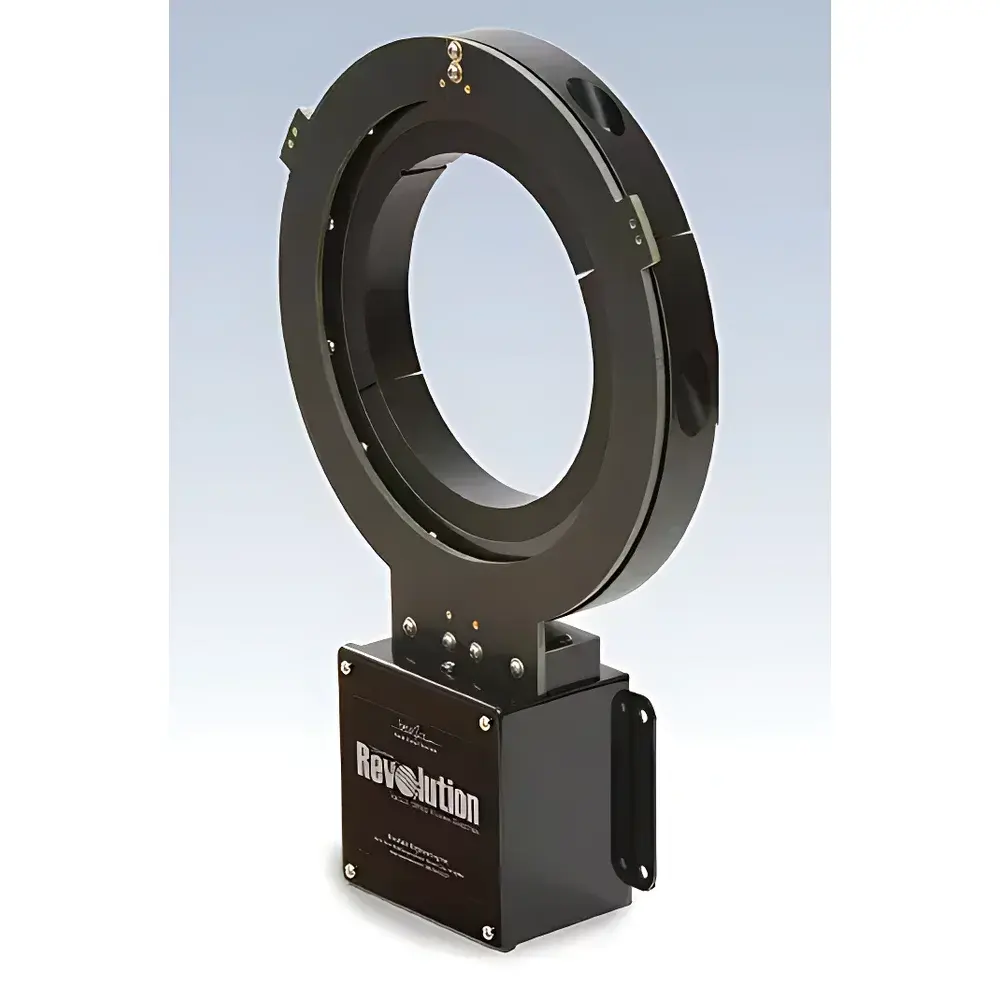
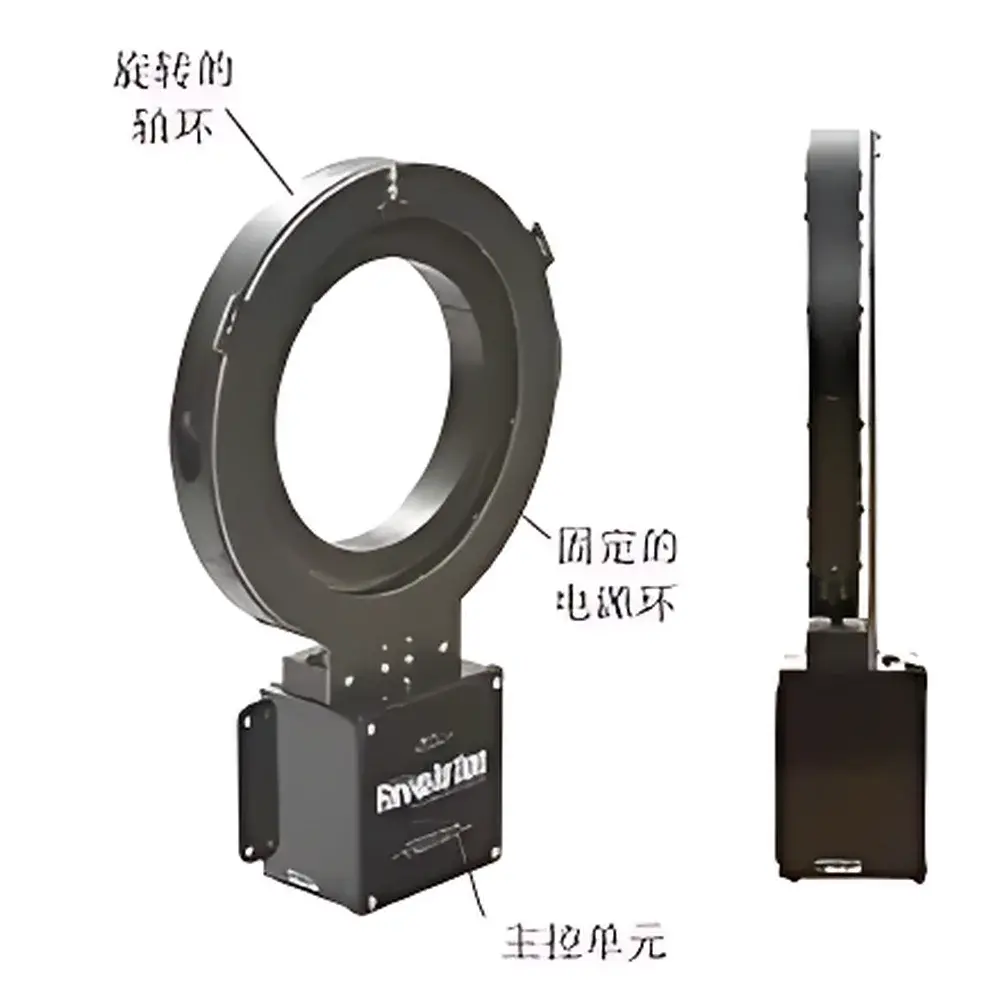
The Binsfeld TT Revolution Online Torque Telemetry System is a high-integrity, non-contact rotating shaft monitoring solution engineered for continuous, real-time measurement of torque and rotational power (kW or HP) in industrial machinery. Utilizing electromagnetic induction for both power delivery and digital data transmission, the system eliminates slip rings, brushes, batteries, and physical wiring across the rotating interface—thereby ensuring maintenance-free operation, long-term signal stability, and immunity to mechanical wear. At its core, the TT Revolution employs strain-gauge-based torque transduction integrated with precision angular velocity sensing, enabling calculation of instantaneous mechanical power (P = τ × ω). Its microprocessor-based signal conditioning architecture features 14-bit analog-to-digital conversion and on-board digital filtering, delivering high-fidelity output under dynamic load conditions typical of marine propulsion drives, rolling mill motors, wind turbine gearboxes, and heavy-duty material handling systems.
Key Features
- Non-contact power and telemetry: Inductive coupling enables uninterrupted operation without physical contact between rotating and stationary components.
- Tool-free installation: Split-ring design allows mounting directly onto shafts up to 1016 mm (40 in) in diameter—no machine shutdown, shaft disassembly, or machining required.
- Four independent analog/digital outputs: (1) Torque (4–20 mA, field-adjustable span); (2) Power (4–20 mA, scalable to kW or HP); (3) RPM (frequency-based pulse output); (4) Rotation direction (dual-level current signal: 5 mA for CW, 19 mA for CCW).
- Digital telemetry architecture: Built-in noise suppression algorithms and differential signaling ensure robust performance in electrically noisy environments (e.g., VFD-driven motors, arc furnaces, cranes).
- Ruggedized enclosure: IP67-rated housing with conformal-coated PCBs and industrial-grade connectors for reliable deployment in high-vibration, temperature-variable, and humid operational settings.
- Real-time system diagnostics: LED status indicators provide immediate visual feedback on power coupling integrity, signal lock, and telemetry health—supporting rapid commissioning and field troubleshooting.
Sample Compatibility & Compliance
The TT Revolution is compatible with solid and hollow rotating shafts ranging from 25 mm to 1016 mm in diameter. It supports standard metallurgical interfaces (steel, stainless steel, aluminum, and cast iron shafts) and accommodates surface roughness up to Ra 6.3 µm without requiring surface modification. The system complies with IEC 61000-6-2 (immunity to industrial electromagnetic disturbances) and IEC 61000-6-4 (emission limits for industrial environments). While not certified as SIL-rated, its architecture meets functional safety prerequisites for use in non-safety-critical predictive maintenance and process optimization applications aligned with ISO 13374-1 (Condition Monitoring and Diagnostics of Machines) and ISO 5344 (Torque Measurement — General Principles).
Software & Data Management
The TT Revolution operates as a stand-alone sensor node but integrates seamlessly into existing SCADA, DCS, and IIoT platforms via its analog outputs and optional RS-485 Modbus RTU interface (available upon request). Raw torque and RPM signals are timestamped and traceable, supporting audit-ready data logging when connected to compliant historian systems. For configuration and calibration verification, Binsfeld provides the TorqueTrak Configuration Utility—a Windows-based tool enabling zero/span adjustment, linearization coefficient loading, and firmware updates. All calibration records and system logs adhere to GLP/GMP documentation standards, with optional support for FDA 21 CFR Part 11-compliant electronic signatures when deployed with validated third-party data acquisition software.
Applications
- Marine propulsion shaft monitoring: Continuous torque profiling during sea trials and operational duty cycles to assess gearbox efficiency and detect misalignment or bearing degradation.
- Hot/cold rolling mill motor shafts: Real-time load tracking for roll force modeling, energy consumption analysis, and early-stage fault detection in tandem mill configurations.
- Wind turbine drivetrain validation: In-situ torque measurement at low-speed shafts during commissioning and post-maintenance verification per IEC 61400-22 requirements.
- Automotive powertrain test benches: High-bandwidth torque capture during transient acceleration/deceleration events for calibration of torque vectoring and e-axle control algorithms.
- Paper machine drive systems: Monitoring of multi-motor synchronized drives to identify torque imbalance, belt slippage, or roll load anomalies affecting sheet quality.
- Crane and hoist drive shafts: Duty-cycle analysis for predictive maintenance scheduling and overload event logging in port and construction environments.
FAQ
Does the TT Revolution require shaft modification or downtime for installation?
No. The split-ring design clamps around the shaft without cutting, welding, or disassembly. Installation can be completed while the machine remains operational.
What is the maximum shaft speed supported?
The system is rated for continuous operation up to 6000 RPM; higher speeds are feasible with custom rotor balancing and thermal management—consult Binsfeld engineering for application-specific validation.
Can the system measure bidirectional torque?
Yes. Full-scale torque measurement includes both clockwise and counterclockwise directions, with polarity encoded in the analog output and explicitly indicated by the directional current signal.
Is factory calibration traceable to NIST standards?
All production units undergo end-of-line calibration using torque transfer standards accredited to ISO/IEC 17025, with full calibration certificates available upon request.
What environmental certifications does the stationary electronics housing meet?
The base station enclosure meets IP67 ingress protection, UL 508A industrial control panel listing, and CE marking for EMC and LVD compliance.



