
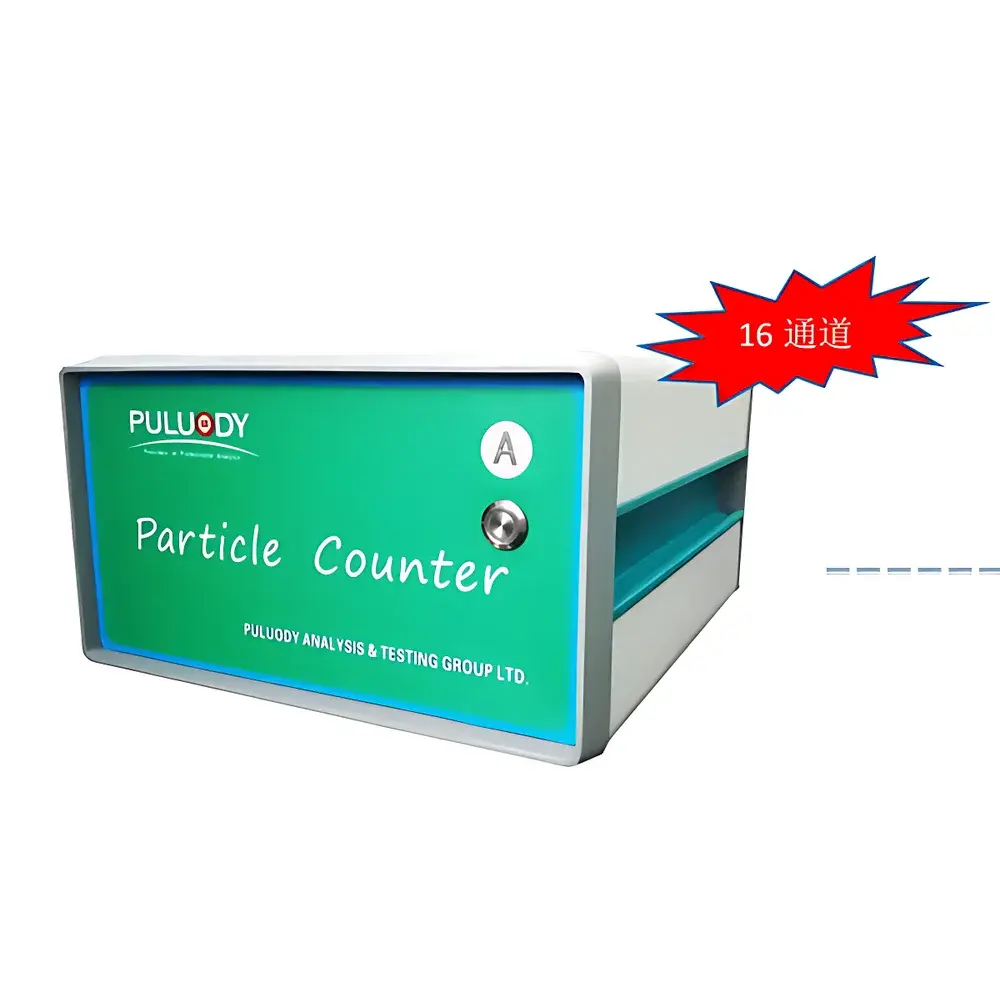
PULUODY OPC Online Oil Contamination Analyzer
| Brand | PULUODY |
|---|---|
| Origin | Shaanxi, China |
| Manufacturer Type | Authorized Distributor |
| Product Category | Domestic |
| Model | OPC Particle Detector |
| Instrument Type | Optical Particle Counter |
| Detection Principle | Dual-Laser Narrow-Beam Light Scattering (7th Generation) |
| Measurement Range | 1–150 µm |
| Channel Count | 8 |
| Calibration Standards Supported | ISO 4406, NAS 1638, SAE AS4059, ISO 11171, MIL-STD-1246C, GJB 420B, GOST 17216, GB/T 14039, DL/T 432, JB/T 9737, GB/T 18854 |
| Pressure Rating | 0–1.0 MPa (standard), up to 31.5 MPa (with integrated pressure reducer) |
| Flow Rate | 15–500 mL/min |
| Fluid Temperature Range | −10 °C to +80 °C |
| Viscosity Limit | ≤500 cSt (online mode) |
| Output Interfaces | RS232, RS485, optional 4–20 mA / 0–5 V analog |
| Power Supply | 9–30 VDC |
| Reporting | particles/mL + ISO/NAS/GJB contamination code |
| Enclosure Rating | IP65 (industrial-grade robust housing) |
Overview
The PULUODY OPC Online Oil Contamination Analyzer is an industrial-grade optical particle counter engineered for continuous, real-time monitoring of particulate contamination in hydraulic, lubricating, and insulating oils under operational conditions. Based on the 7th-generation dual-laser narrow-beam light scattering detection principle, it delivers high reproducibility and long-term stability in harsh environments—including high-pressure hydraulic circuits, offshore drilling platforms, and mobile machinery systems. Unlike laboratory-based offline analyzers, the OPC integrates directly into fluid loops via inline or bypass sampling configurations, enabling dynamic assessment of system cleanliness, component wear progression, and filter performance degradation without process interruption. Its design complies with core international calibration traceability frameworks defined in ISO 11171 (calibration standards for liquid-borne particle counters) and supports full alignment with regulatory reporting requirements under ISO 4406:2017, NAS 1638:2019, and GJB 420B–2015.
Key Features
- True online operation: Continuous flow-through measurement at pressures up to 31.5 MPa (with integrated pressure-reducing module), eliminating need for external pressure regulation.
- Dual-laser optical sensing architecture: Simultaneous excitation at two narrow-band wavelengths improves signal-to-noise ratio and reduces misclassification of elongated or semi-transparent particles.
- Eight calibrated size channels spanning 1–150 µm: Enables granular resolution across critical wear debris bands (e.g., 4–6 µm for early-stage bearing fatigue, 14–25 µm for gear tooth spalling).
- Multi-standard compliance engine: On-device computation of contamination codes per ISO 4406 (00–28), NAS 1638 (00–12), GJB 420B (00–12), and GOST 17216 (00–17), with user-selectable default reporting mode.
- Ruggedized industrial enclosure: IP65-rated aluminum alloy housing rated for ambient temperatures from −10 °C to +80 °C and resistant to electromagnetic interference (EMI) in plant-floor environments.
- Flexible connectivity: Standard RS232/RS485 serial interfaces; optional analog outputs (4–20 mA, 0–5 V) and digital alarm relays for integration with DCS, SCADA, or PLC-based condition monitoring systems.
Sample Compatibility & Compliance
The OPC analyzer is validated for use with mineral oils, synthetic hydrocarbons, phosphate esters, and polyol esters within a viscosity range of 0–500 cSt. It maintains measurement integrity across fluid temperatures from −10 °C to +80 °C, supporting applications in turbine lube oil systems, servo-valve hydraulics, and marine propulsion lubricants. All internal wetted materials—including sapphire optical windows, stainless steel flow cells, and fluoropolymer seals—meet ASTM F2222 and ISO 8502-2 compatibility guidelines for non-reactivity with hydrocarbon and ester-based fluids. Calibration traceability is maintained through NIST-traceable reference particle suspensions (ISO Medium Test Dust, IRM 903) and certified by third-party metrology labs accredited to ISO/IEC 17025. The device satisfies functional requirements for GLP-compliant maintenance records and supports audit-ready data logging per FDA 21 CFR Part 11 when used with compliant software configurations.
Software & Data Management
The embedded firmware includes a real-time contamination trending engine capable of storing >10,000 timestamped measurement events locally. Optional PC-based analysis software (PULUODY ParticleView™) provides advanced diagnostics including delta-count trend analysis, wear mode classification (cutting, sliding, fatigue), and automated alert escalation based on user-defined threshold matrices. All raw count data and derived contamination grades are exportable in CSV, XML, and PDF formats compliant with ISO 17025 documentation requirements. Audit trails record operator login, parameter changes, calibration events, and report generation timestamps—ensuring full accountability for QA/QC workflows in regulated industries.
Applications
- Real-time health monitoring of aviation hydraulic systems (per MIL-STD-1246C Class 100/Class 500 specifications)
- Condition-based maintenance of wind turbine gearbox oils (aligned with IEC 61400-25 and ISO 4406:2017 Level 16/13/10)
- Filter efficiency validation in power plant turbine lube oil purification skids
- Wear debris tracking during accelerated life testing of hydraulic pumps and motors
- Contamination control in semiconductor manufacturing tool coolant circuits (meeting SEMI F57 purity thresholds)
- Offshore platform hydraulic system surveillance under API RP 17N and DNVGL-RP-0272 guidelines
FAQ
Does the OPC analyzer require periodic recalibration?
Yes. Annual recalibration against ISO 11171-certified reference particles is recommended and supported by PULUODY’s ISO/IEC 17025-accredited service centers.
Can the device operate continuously at 31.5 MPa without external pressure reduction?
Yes—the integrated pressure-reducing module enables direct installation into high-pressure main lines up to 31.5 MPa, with no external regulators required.
Is the instrument compatible with non-oil fluids such as water-glycol or phosphate ester fire-resistant fluids?
Yes—provided fluid viscosity remains ≤500 cSt and temperature stays within −10 °C to +80 °C; material compatibility verification is advised prior to deployment.
How is data integrity ensured during power interruptions or network outages?
All measurements are buffered in non-volatile memory; unsent data is automatically transmitted upon recovery without loss.
What documentation is provided for regulatory audits?
Each unit ships with a Factory Calibration Certificate, Material Compliance Statement (RoHS/REACH), and ISO 11171 Traceability Report—fully editable for site-specific QA templates.



