Ducom HFRR Diesel and Additive Lubricity Tester
| Origin | Hong Kong |
|---|---|
| Manufacturer Type | Authorized Distributor |
| Regional Origin | China-made |
| Model | Ducom HFRR Diesel and Additive Lubricity Tester (HFRR) |
| Pricing | Upon Request |
Overview
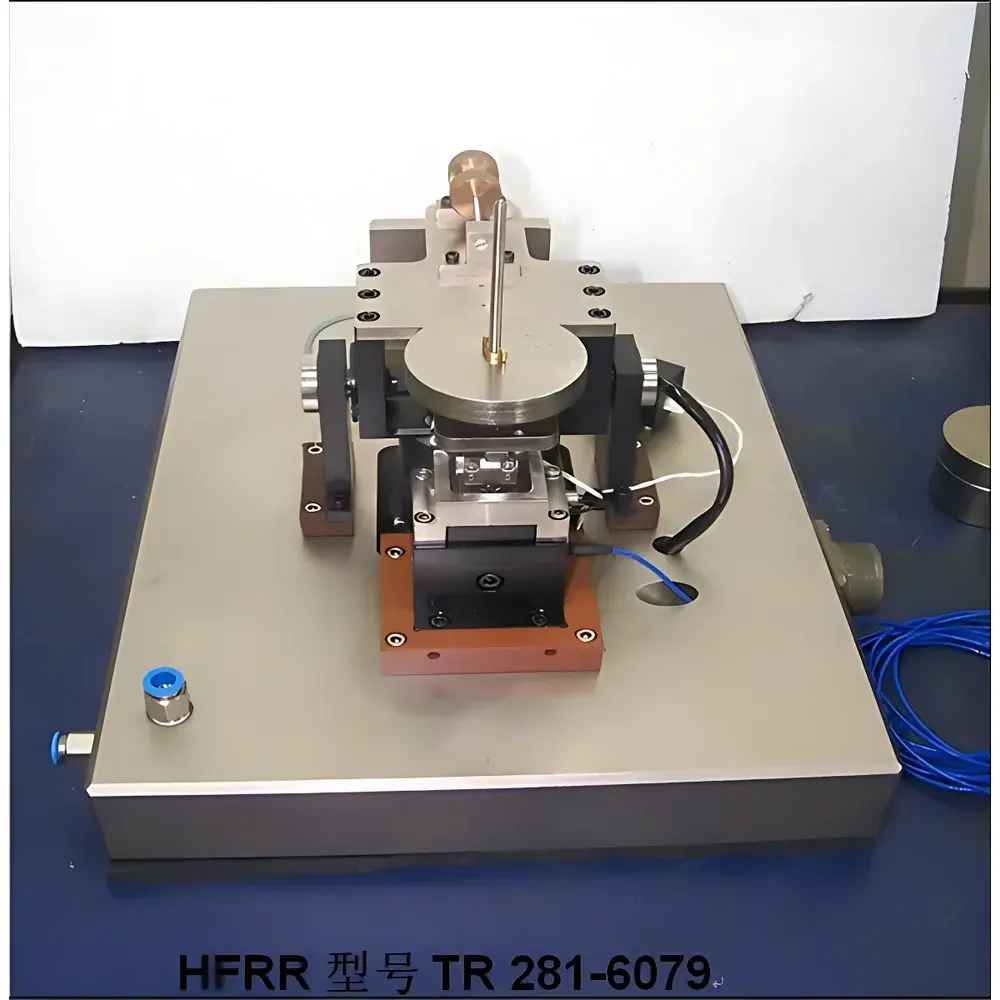
The Ducom HFRR Diesel and Additive Lubricity Tester is a precision-engineered high-frequency reciprocating rig conforming to ASTM D6079, ISO 12156-1, and EN 590 Annex C standards for evaluating the lubricating performance of diesel fuels, biodiesel blends, and fuel additives under controlled tribological conditions. Operating on the ball-on-flat (point contact) configuration, the instrument subjects a hardened AISI E-52100 steel ball (6 mm diameter, HRC 58–66, Ra < 0.05 µm) to oscillatory motion against a stationary disc (10 mm diameter × 3 mm thick, AISI E-52100, annealed, HV 30, Ra < 0.02 µm) under precisely regulated normal load, frequency, temperature, and ambient humidity. The test simulates boundary lubrication regimes encountered in fuel injection systems—particularly high-pressure common rail (HPCR) components—where wear scar formation directly correlates with fuel lubricity. Real-time friction force measurement via calibrated piezoelectric sensor (±40 N range, ±1% accuracy), combined with sub-micron displacement control (1.00 ± 0.02 mm stroke), ensures high reproducibility and metrological traceability required for regulatory compliance and R&D validation.
Key Features
- High-precision reciprocating motion: Frequency programmable from 10 to 60 Hz (0.1 Hz resolution), enabling simulation across multiple engine operating conditions.
- Integrated piezoelectric friction force transducer with ±40 N dynamic range and ±1% full-scale accuracy—calibrated in situ using traceable reference loads.
- Environmental control system: Integrated humidity chamber (5–85% RH, ±2% accuracy) and heated sample chamber (ambient to 75 °C, ±2 °C accuracy) ensure strict adherence to test condition specifications per ASTM D6079.
- Fixed-load architecture: Pre-set masses (100 g, 200 g, 500 g, and 1–10 N range) eliminate actuator-induced variability—critical for inter-laboratory comparability.
- Built-in optical microscope (40× magnification) with X/Y micrometer stage (0.01 mm resolution) for direct post-test wear scar diameter measurement per ISO 12156-1.
- Dedicated data acquisition hardware: National Instruments PCI-6221 DAQ card enables synchronized sampling of load, displacement, friction, temperature, and humidity at ≥1 kHz.
Sample Compatibility & Compliance
The HFRR tester accommodates standard test specimens compliant with international fuel lubricity protocols: upper specimen—a 6 mm AISI E-52100 steel ball meeting ASTM E18 hardness and surface finish requirements; lower specimen—a 10 mm × 3 mm AISI E-52100 steel disc, vacuum-annealed and polished to Ra < 0.02 µm. All mechanical interfaces—including sample holders, clamping fixtures, and linear guides—are engineered for zero parasitic torque and minimal thermal drift. The system supports full audit trails and electronic signatures as required under GLP and GMP environments. Software logs include timestamped raw sensor outputs, environmental metadata, operator ID, and calibration history—fully compatible with FDA 21 CFR Part 11 readiness when deployed with validated IT infrastructure.
Software & Data Management
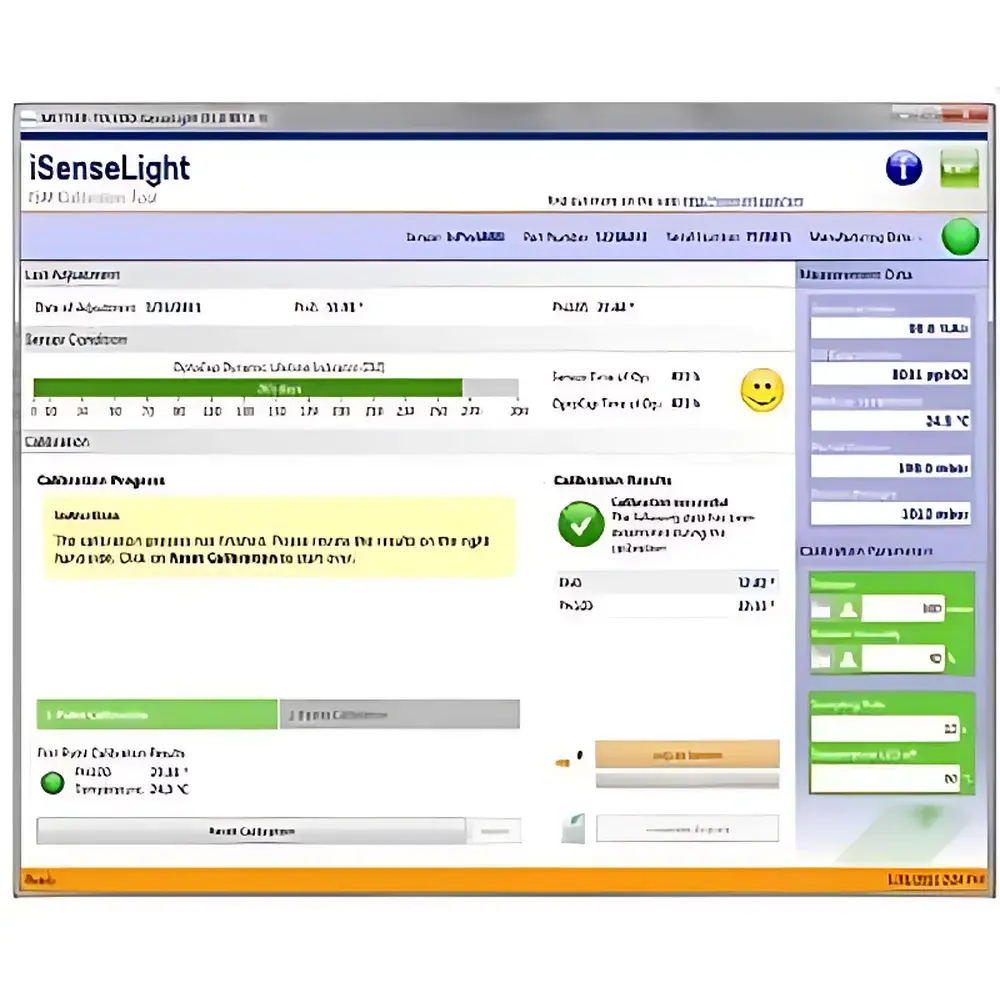
Winducom 2010 software provides an intuitive, parameter-driven interface for test method setup, real-time monitoring, and automated post-processing. Users define test sequences—including frequency ramping, dwell periods, and multi-step load profiles—via graphical workflow templates aligned with ASTM D6079 Annex A1. Friction coefficient, wear scar diameter (WSD), and scar morphology metrics are computed automatically using embedded algorithms per ISO 12156-1 Annex B. All acquired data (including analog waveforms and environmental logs) are stored in hierarchical binary format (.wcd) with embedded MD5 checksums for integrity verification. Export options include CSV, PDF reports (with embedded microscope images), and XML for LIMS integration. Audit trail functionality records all user actions, parameter changes, and software updates with immutable timestamps.
Applications
- Quantitative assessment of diesel fuel lubricity for compliance with EN 590, ASTM D975, and GB 19147 specifications.
- Evaluation of lubricity-enhancing additives (e.g., fatty acid methyl esters, amine-based compounds) in low-sulfur and ultra-low-sulfur diesel (ULSD).
- Stability testing of biodiesel (FAME) and hydrotreated vegetable oil (HVO) blends under accelerated aging and oxidation conditions.
- Research into tribofilm formation mechanisms on injector nozzle surfaces using synchrotron-compatible sample geometries.
- Interlaboratory round-robin studies supporting method validation and proficiency testing programs administered by API, CEN, or national petroleum institutes.
FAQ
What standards does this HFRR tester comply with?
It fully supports ASTM D6079, ISO 12156-1, EN 590 Annex C, and JIS K 2286 for diesel fuel lubricity testing.
Is humidity control mandatory for standard testing?
Yes—ASTM D6079 requires 10 ± 0.5% RH for baseline tests; the integrated humidity chamber maintains setpoints within ±2% RH across the full 5–85% range.
Can wear scar diameter be measured without external microscopy?
Yes—the built-in 40× optical microscope with micrometer-adjustable stage enables direct WSD measurement per ISO 12156-1 Section 8.3.
What data acquisition rate is supported during dynamic testing?
The NI PCI-6221 DAQ card acquires synchronized load, friction, displacement, temperature, and humidity signals at up to 250 kS/s (shared bandwidth), with typical test configurations using 10 kHz sampling.
Is the system suitable for GLP-regulated laboratories?
Yes—Winducom 2010 supports electronic signatures, audit trails, calibration management, and report generation meeting OECD GLP Principles and FDA 21 CFR Part 11 requirements when implemented with appropriate SOPs and infrastructure validation.