TO2 Series Oxygen Sensors (Fuel Cell & Zirconia-Based)
| Origin | USA |
|---|---|
| Manufacturer Type | Authorized Distributor |
| Origin Category | Imported |
| Model | TO2 |
| Price Range | USD 700 – 1,400 |
Overview
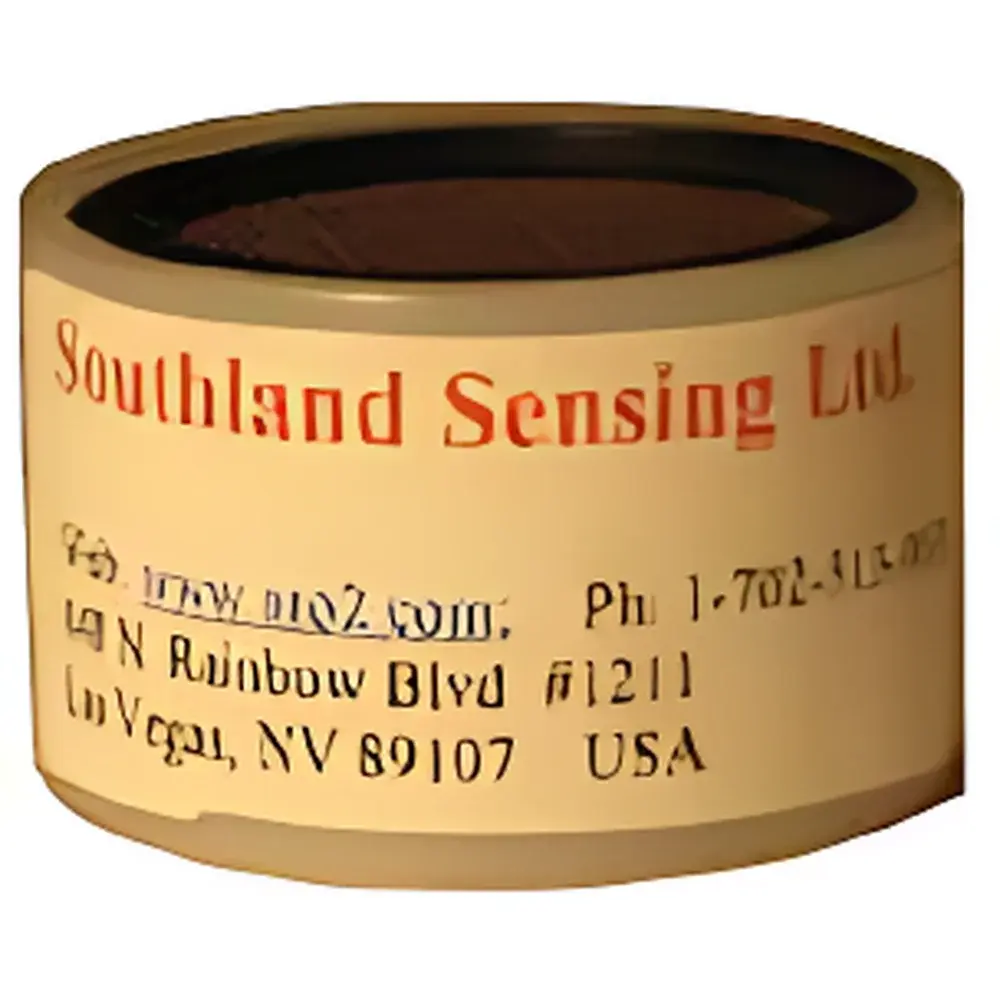
The TO2 Series Oxygen Sensors are high-reliability, field-proven electrochemical sensing platforms engineered for precise oxygen concentration measurement across trace and percent-level ranges. Designed as direct drop-in replacements for legacy sensors from Teledyne Analytical, Panametrics (GE Sensing), and Analytical Industries (AII), the TO2 family comprises two core technologies: micro-fuel-cell-based sensors for ultra-trace O₂ detection (0–10 ppm to 0–10,000 ppm) and stabilized zirconia (ZrO₂) electrochemical cells for higher-range applications (0.1–25% and 1.0–96% O₂). The fuel cell variants operate on galvanic principle—oxygen diffuses through a selective membrane and is reduced at the cathode, generating a current linearly proportional to partial pressure—enabling inherently stable zero and minimal drift without external power. Zirconia-based models utilize high-temperature solid electrolyte technology with internal reference air, delivering robust performance in demanding industrial process streams, including CO₂-rich or high-humidity environments.
Key Features
- Fuel cell models (e.g., TO2-1, TO2-1L, TO2-2): No external bias required; self-powered operation ensures intrinsic safety and low power system integration.
- Zirconia-based models (e.g., TO2-10, TO2-25): High-temperature electrochemical cell architecture enables wide dynamic range and resistance to poisoning in aggressive gas matrices.
- Drop-in mechanical and electrical compatibility with B-2/B-2C/S-2/Z-2 (Teledyne), OX-1/OX-2 (Panametrics/GE), PSR-12-223/XLT-12-123 (AII), and B1SA (Scottish Anglo) sensor footprints.
- Optimized flow sensitivity: Recommended sample flow of 0.5–2 SCFH (0.24–0.94 L/min) ensures consistent diffusion-limited response without over-pressurization.
- Wide environmental tolerance: Operational range of 0–50°C ambient temperature and 0–100% RH (non-condensing); storage stability maintained at 0–45°C for up to 3 months prior to installation.
- Traceable calibration: Each unit shipped with factory calibration data referenced to NIST-traceable standards; supports user verification per ASTM D6298 or ISO 8573-7 protocols.
Sample Compatibility & Compliance
The TO2 series demonstrates broad compatibility with inert carrier gases (N₂, Ar, He), CO₂, natural gas, compressed air, and purified process streams. Fuel cell sensors exhibit minimal cross-sensitivity to CO₂, H₂, CH₄, and hydrocarbons below 1% v/v, making them suitable for semiconductor purge monitoring, inert glovebox atmosphere control, and pharmaceutical nitrogen blanketing. Zirconia variants maintain accuracy in elevated CO₂ (up to 100%) and moderate H₂S (<5 ppm) environments when operated within specified temperature windows. All TO2 sensors comply with IEC 61000-6-2 (EMC immunity) and meet RoHS Directive 2011/65/EU requirements. When integrated into validated systems, they support adherence to FDA 21 CFR Part 11 data integrity expectations via compatible transmitter firmware with audit trail logging.
Software & Data Management
While the TO2 sensors themselves are analog-output devices (330–585 µA full-scale current loop), they are designed for seamless integration with third-party transmitters, PLCs, and DAQ systems supporting 4–20 mA or voltage input scaling. Recommended signal conditioning includes temperature compensation using the documented 2.5 %/°C coefficient and linearization per published calibration curves. OEMs and system integrators may access comprehensive technical documentation—including dimensional drawings, pinout schematics (center foil negative / outer foil positive PCB interface), and application notes—in PDF format directly from the manufacturer’s secure portal. Firmware-upgradable transmitters (e.g., those compliant with Modbus RTU or HART 7) enable remote diagnostics, lifetime usage tracking, and predictive maintenance alerts based on signal decay trends.
Applications
- Ultra-low oxygen monitoring in semiconductor fabrication tool purges and vacuum chamber leak testing (TO2-1, TO2-1L).
- O₂-in-CO₂ verification for food packaging modified atmosphere (MAP) lines and beverage carbonation control (TO2-2).
- Continuous ambient oxygen depletion verification in nitrogen-inerted reactors and storage vessels (TO2-10, TO2-25).
- Quality assurance in medical gas production (USP , ISO 8573-7) and cryogenic liquid O₂ purity verification.
- Process safety interlocks in hydrogen generation and fuel cell test stands where sub-ppm O₂ detection prevents explosive mixture formation.
FAQ
What is the expected operational lifetime under continuous use?
Typical functional lifespan is 15–21 months when operated within specified temperature, humidity, and flow conditions. Lifetime is consumption-dependent and correlates with cumulative oxygen exposure.
Can TO2 sensors be used in high-CO₂ applications such as biogas or fermentation off-gas?
Yes—zirconia-based TO2 models (e.g., TO2-25) are specifically qualified for CO₂ matrices up to 100%, provided operating temperature remains ≥600°C at the sensing element and condensable vapors are removed upstream.
Is factory calibration traceable to national standards?
Yes—each sensor is calibrated against NIST-traceable gas standards in accordance with ISO/IEC 17025-accredited procedures; calibration certificates include uncertainty budgets and environmental condition records.
Do TO2 fuel cell sensors require warm-up time before achieving T90 response?
No—micro-fuel-cell sensors achieve stable baseline and full T90 response (13 seconds) immediately upon gas exposure; no pre-conditioning or polarization period is needed.
How is long-term stability maintained during storage prior to installation?
Sensors retain calibration integrity for up to 3 months when stored sealed in original packaging at 0–45°C and <60% RH; extended storage requires re-verification per ASTM D6298 Annex A3.