
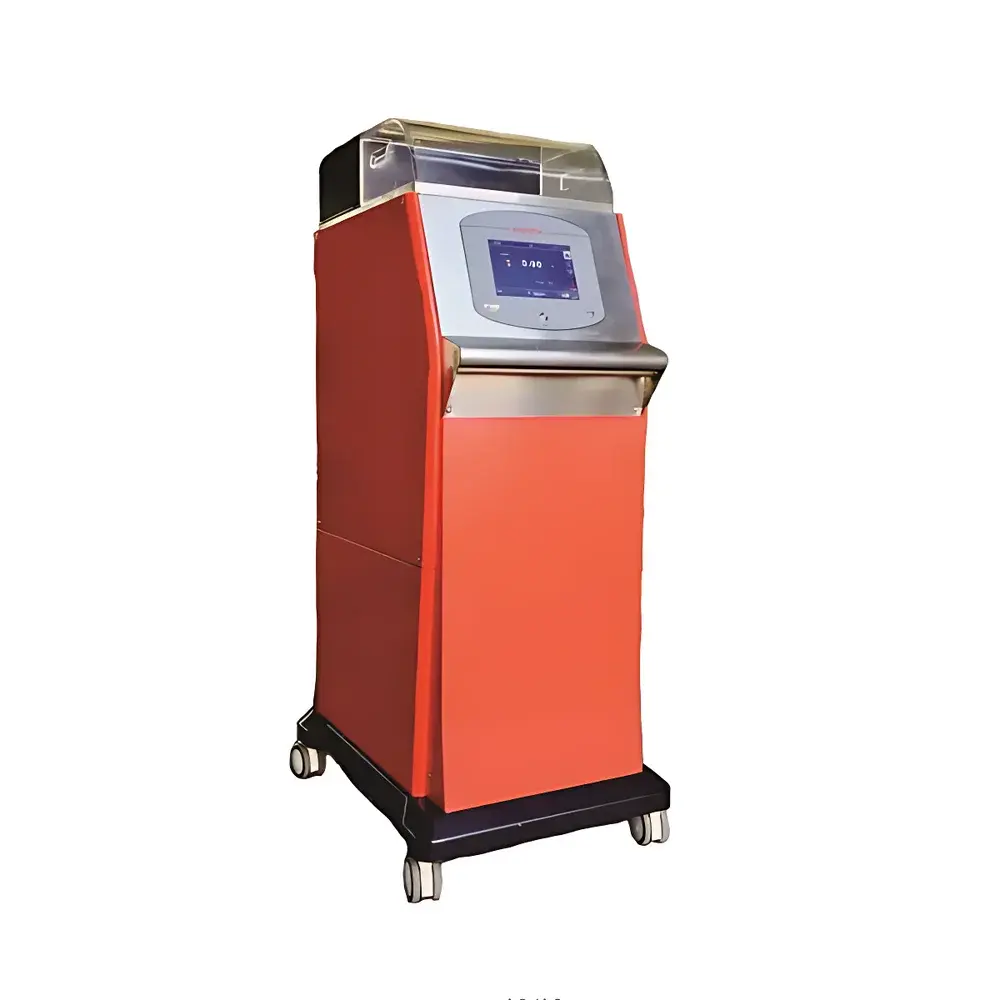
ISOTECH Large-Capacity Precision Circulating Bath Series 785, 796, 813 & 820
| Brand | ISOTECH |
|---|---|
| Origin | United Kingdom |
| Model Numbers | 785LA / 785MA / 785HA / 796LA / 796MA / 796HA / 813TPA / 820SRA |
| Temperature Range | −120 °C to +300 °C (model-dependent) |
| Stability | ±0.002 °C to ±0.015 °C |
| Uniformity | ≤0.002 °C to ≤0.015 °C |
| Calibration Volume | 15.0 L to 30.6 L (300 × 300 × 340 mm) |
| Noise Level | 48–62 dB(A) |
| Power Supply | 220 VAC, 50/60 Hz |
| Heating Power | 1.5–3.5 kW |
| Cooling Time (to min temp) | 30–240 min |
| Heating Time (to max temp) | 30–90 min |
| Interface | RS-232, USB |
| Display | Full-color programmable touchscreen |
Overview
The ISOTECH Large-Capacity Precision Circulating Bath Series (Models 785, 796, 813 and 820) is engineered for metrological-grade temperature calibration and thermodynamic stability in national metrology institutes, accredited calibration laboratories, and R&D facilities requiring traceable thermal control. These baths operate on the principle of forced convection via high-efficiency circulation pumps and dual-stage PID-controlled heating/cooling systems, enabling precise maintenance of setpoint temperatures across ultra-wide ranges—from cryogenic −120 °C up to +300 °C—depending on model configuration. Each unit integrates a low-turbulence fluid path design and vibration-damped thermal enclosure to minimize mechanical perturbation, supporting high-fidelity calibration of PRTs, thermistors, liquid-in-glass thermometers, thermocouples, and fixed-point cells. The series was co-developed by ISOTECH and York Instruments to address growing demand for silent operation without compromising thermal performance—making it suitable for noise-sensitive environments such as cleanrooms, acoustic labs, and shared metrology suites.
Key Features
- Ultra-stable temperature control: Achieves short-term stability down to ±0.002 °C (e.g., Models 813TPA and 820SRA), validated per ISO/IEC 17025 and ASTM E644 practices.
- Exceptional spatial uniformity: Thermal gradients maintained at ≤0.002 °C across the full calibration volume—critical for multi-sensor intercomparison and fixed-point realization.
- Acoustically optimized architecture: Noise emissions reduced to 48 dB(A) at ≥50 °C and ≤56 dB(A) below 50 °C, meeting ISO 7779 and IEC 60068-2-64 vibration/noise criteria for laboratory instrumentation.
- Intuitive full-color touchscreen interface: 7-inch high-brightness display with multilingual support (including English), real-time trend logging, and embedded programmable controller for ramp/soak profiles.
- Modular thermal management: Independent heating and cooling circuits with redundant safety cut-offs, overtemperature protection, low-level detection, and dry-run prevention.
- Robust mechanical construction: Stainless-steel bath vessel, insulated cabinet housing, and precision-machined immersion ports compatible with standard probe diameters (6–12 mm).
Sample Compatibility & Compliance
All models accommodate standard temperature sensors—including 100 Ω and 1000 Ω Pt100/Pt1000 RTDs, thermistors (NTC/PTC), Type T/E/J/K thermocouples, and mercury/galinstan-filled glass thermometers—within defined immersion depths (≥150 mm recommended). The 813TPA model is specifically configured for triple-point-of-water (0 °C) cell immersion, while the 820SRA supports Standard Reference Material (SRM)-traceable resistor calibration at 20 °C. Units comply with CE marking requirements under the EU Machinery Directive 2006/42/EC and Electromagnetic Compatibility Directive 2014/30/EU. Design and validation procedures align with ISO/IEC 17025:2017 Clause 6.4 (Equipment) and support GLP/GMP audit readiness when paired with optional digital loggers and 21 CFR Part 11-compliant software add-ons.
Software & Data Management
Baths include native RS-232 and USB host/device interfaces for bidirectional communication with external PCs or data acquisition systems. Optional ISOTECH CalSoft™ v4.x enables automated calibration sequences, uncertainty budgeting per GUM (JCGM 100), report generation in PDF/XLSX formats, and secure electronic signature workflows compliant with FDA 21 CFR Part 11 Annex 11. All units record internal sensor readings (bath core, circulation loop, ambient) at user-defined intervals (1 s to 60 min), storing up to 1 million timestamped records onboard. Data export supports CSV, XML, and NIST-traceable .cal file formats compatible with MET/CAL®, DATACAL®, and LabVIEW™ integration frameworks.
Applications
- Primary and secondary temperature calibration against ITS-90 reference standards
- Verification and adjustment of industrial process sensors prior to field deployment
- Thermal characterization of materials (e.g., coefficient of thermal expansion, specific heat capacity)
- Stability testing of electronic components under controlled thermal stress
- Supporting fixed-point realizations including water triple point (0 °C), indium (156.5985 °C), and zinc (419.527 °C)
- Environmental simulation for pharmaceutical stability chambers and packaging validation
FAQ
What is the minimum immersion depth required for accurate sensor calibration?
For optimal thermal coupling and minimal stem conduction error, a minimum immersion depth of 150 mm is recommended for all sensor types. Deeper immersion (≥200 mm) is advised for high-accuracy work involving ITS-90 interpolation.
Can these baths be used for both heating and cooling simultaneously?
No. Each model employs sequential heating/cooling control logic; simultaneous operation is not supported. However, rapid thermal transitions are enabled via optimized refrigerant charge and high-flow circulation (up to 25 L/min depending on model).
Are calibration certificates included with purchase?
Factory-as-shipped calibration certificates (NIST-traceable, ISO/IEC 17025-accredited) are available as optional add-ons. On-site verification services can be arranged through ISOTECH’s global partner network.
Is remote monitoring possible without additional hardware?
Yes—via built-in USB virtual COM port or RS-232 serial interface. No external gateway or IoT module is required for basic telemetry and setpoint control using standard terminal emulators or custom Python/Matlab scripts.



