
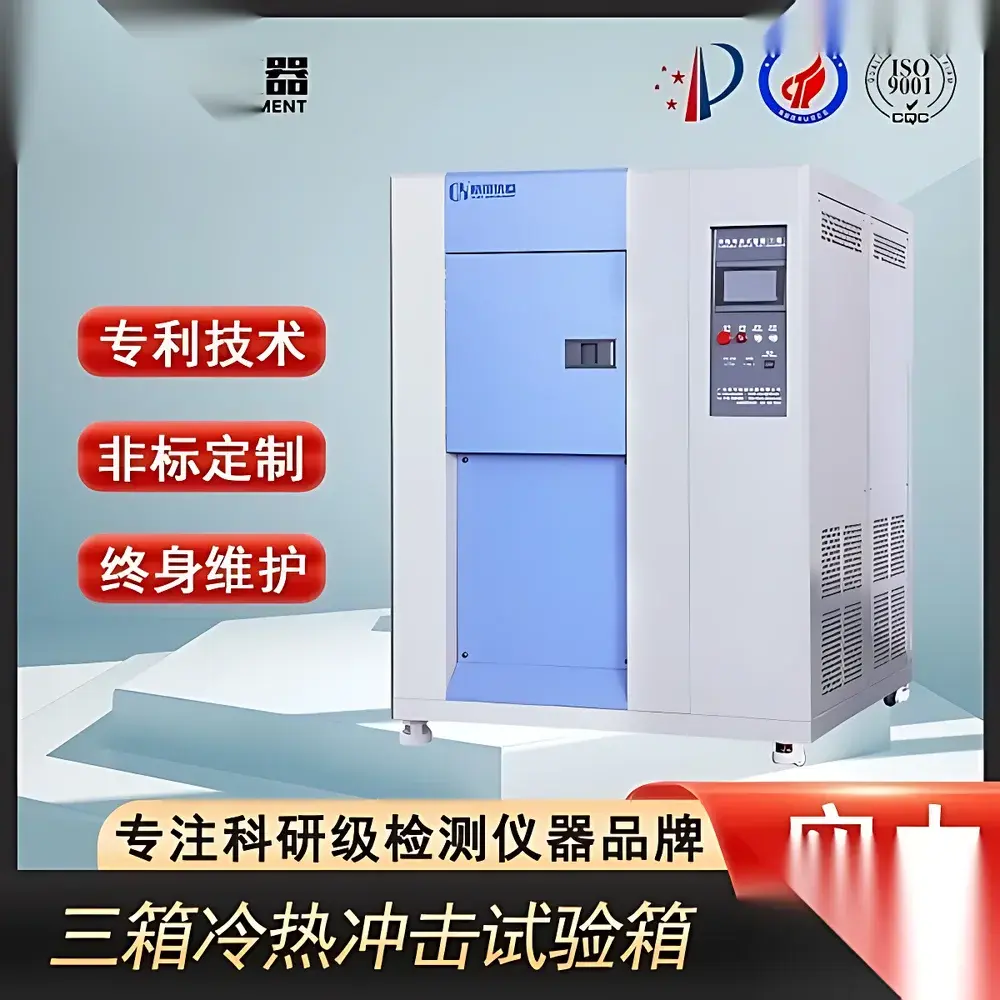
OK-TS-49 Thermal Shock Test Chamber
| Brand | OEM |
|---|---|
| Origin | Imported |
| Manufacturer Type | Authorized Distributor |
| Category | Environmental Test Chamber |
| Model | OK-TS-49 |
| Price | USD 11,200 (FOB) |
Overview
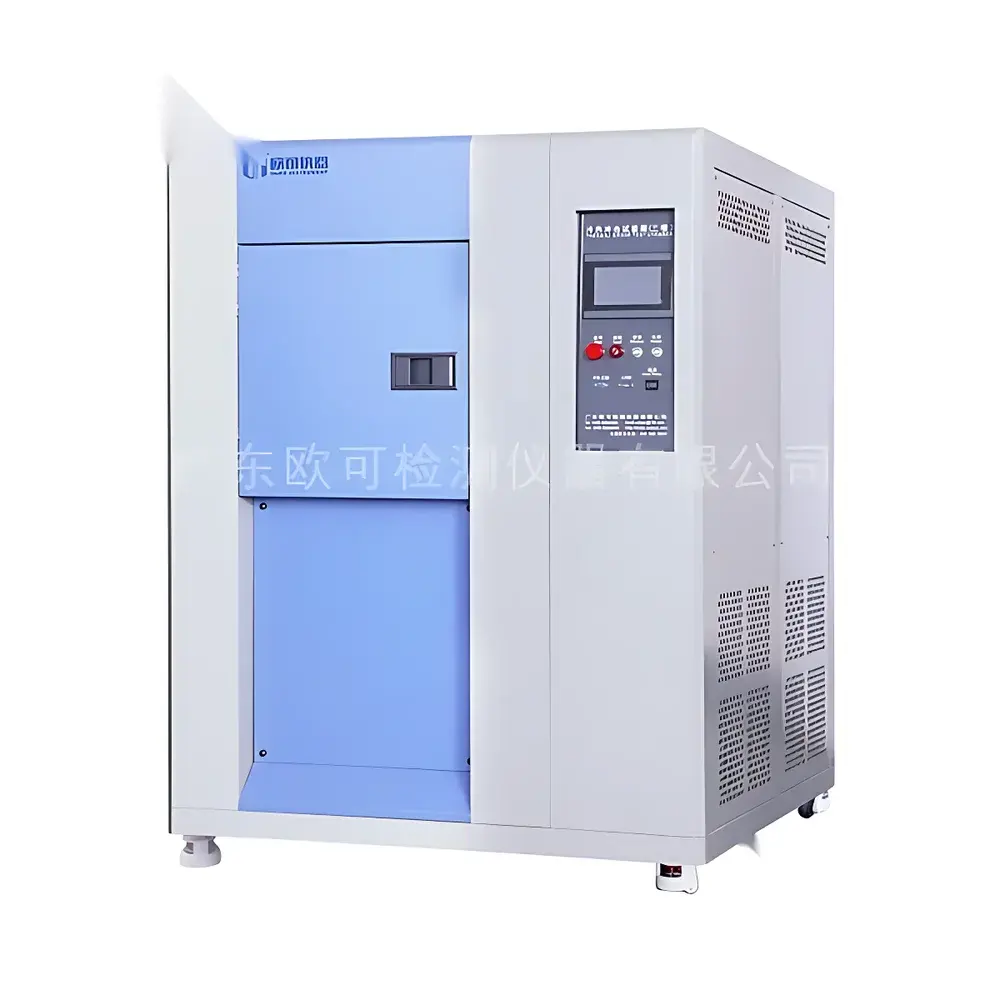
The OK-TS-49 Thermal Shock Test Chamber is a dual-chamber, dynamic-basket-type environmental stress screening system engineered for rapid, high-fidelity thermal shock testing in accordance with international standards including IEC 60068-2-14, MIL-STD-810H Method 503.5, and JESD22-A104D. It subjects test specimens to abrupt transitions between extreme high-temperature and low-temperature environments—typically ranging from −65 °C to +150 °C—to evaluate material integrity, interfacial adhesion, solder joint reliability, and structural fatigue under repeated thermal cycling. Unlike static chamber designs, the OK-TS-49 employs a vertically actuated stainless steel transfer basket that physically moves samples between thermally isolated hot and cold zones within ≤10 seconds, enabling true step-change thermal profiles with minimal dwell-time deviation. This architecture ensures precise control over transition time, dwell duration, and cycle repeatability—critical parameters for accelerated life testing of electronic assemblies, aerospace composites, automotive ECUs, LED modules, and precision optical components.
Key Features
- Dual-zone construction: Independent high-temperature chamber (up to +150 °C) and low-temperature chamber (down to −65 °C), thermally isolated by vacuum-insulated stainless steel partition walls.
- Dynamic sample transfer: Pneumatically driven SUS304 transfer basket with position feedback sensors; transfer time ≤8 s (typical), acceleration-controlled motion to minimize mechanical shock during transit.
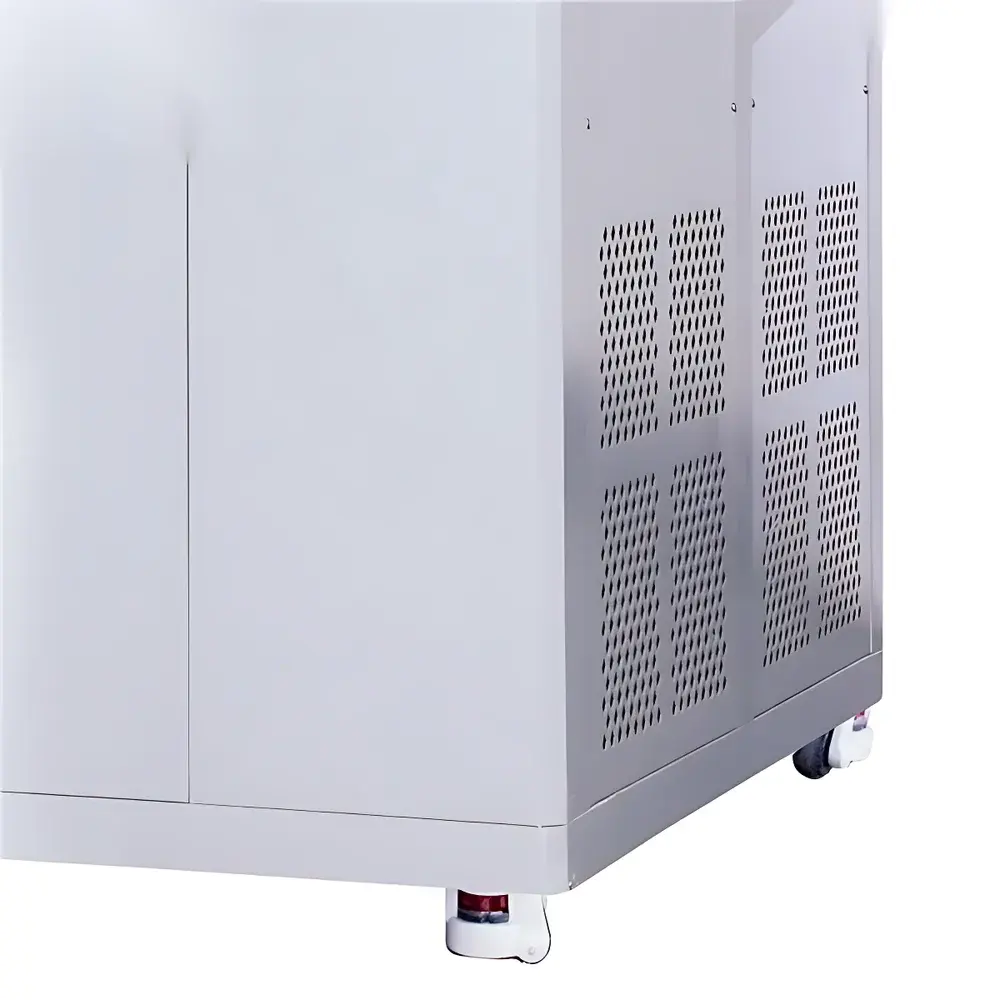
- Two-stage refrigeration system: Dual-cascade R404A refrigeration circuit with French Tecumseh hermetic compressors, finned-tube evaporators, Danfoss thermostatic expansion valves, and air-cooled condensers—enabling sub-zero ramp rates up to 30 K/min (from 25 °C to −55 °C).
- TEMI300 programmable controller: 7-inch color LCD touchscreen interface with English-language firmware; supports up to 9999 programmable cycles, individual segment dwell times (1–999 hours), and real-time graphical display of setpoint vs. actual temperature curves (PROG mode).
- Robust thermal insulation: 100 mm thick ultra-fine glass fiber blanket (thermal conductivity ≤0.035 W/m·K at 25 °C) combined with seamless SUS304 mirror-finish interior lining (electropolished, passivated) for corrosion resistance and cleanroom-compatible operation.
- Comprehensive safety architecture: Dual independent overtemperature cutouts (mechanical + electronic), high-pressure and overcurrent protection for compressors, auto-refill water level control for humidification (if equipped), and UL/CE-compliant electrical cabinet with molded-case circuit breakers and fully sheathed terminal blocks.
Sample Compatibility & Compliance
The OK-TS-49 accommodates standard test specimens up to 400 mm × 400 mm × 400 mm (W×D×H) and maximum payload of 25 kg per cycle. Its chamber geometry and basket kinematics are optimized for PCBs, wafer-level packages, plastic housings, metal castings, and multi-material laminates. The system meets essential requirements for GLP-compliant validation protocols—including traceable calibration records for PT100 Class A sensors (IEC 60751), audit-ready event logging (timestamped fault codes, door open/close events, compressor run-hours), and configurable alarm thresholds per test phase. While not pre-certified for FDA 21 CFR Part 11, the controller supports external data export via RS485/Modbus RTU or optional Ethernet interface for integration into validated LIMS or MES environments.
Software & Data Management
The TEMI300 controller stores ≥100 test programs with up to 99 segments each, and retains ≥10,000 data points of time-stamped temperature readings (sampling interval adjustable from 1–60 s). All operational logs—including alarm history, maintenance alerts (e.g., filter replacement reminders), and power interruption recovery status—are exportable as CSV files via USB flash drive. Optional PC-based software (OK-DataLink v2.1) enables remote monitoring, automated report generation (PDF/Excel), statistical process control charting (X-bar R charts), and comparative analysis across multiple test runs—supporting ISO/IEC 17025 documentation workflows.
Applications
- Qualification testing of automotive ADAS sensors and power inverters per AEC-Q200 Rev D.
- Failure mode analysis of BGA and QFN packages under JEDEC J-STD-020 moisture sensitivity level (MSL) preconditioning sequences.
- Thermal fatigue evaluation of fiber-reinforced polymer (FRP) structural components used in UAV airframes.
- Reliability screening of medical device PCBAs prior to ISO 13485 design verification.
- Material compatibility assessment of conformal coatings and potting compounds exposed to aerospace thermal vacuum cycling profiles.
FAQ
What is the typical temperature transition time between chambers?
Standard transfer time from hot to cold zone (or vice versa) is ≤8 seconds, verified per IEC 60068-2-14 Annex B. Actual value depends on load mass and thermal mass of fixtures.
Does the system support humidity control?
The base OK-TS-49 configuration is dry thermal shock only. Humidity capability (up to 95% RH at 85 °C) requires optional steam generator and humidity sensor integration—quoted separately.
Can test data be exported for regulatory submission?
Yes. Raw temperature/time logs, alarm histories, and program execution reports are exportable in CSV format. For 21 CFR Part 11 compliance, third-party e-signature and audit trail modules must be deployed externally.
What maintenance intervals are recommended for the refrigeration system?
Compressor oil and refrigerant charge should be verified annually; dryer filters replaced every 18 months; heat exchanger coils cleaned quarterly in non-cleanroom environments.
Is CE marking included with delivery?
Yes. The OK-TS-49 ships with full EU Declaration of Conformity covering Machinery Directive 2006/42/EC and EMC Directive 2014/30/EU, including harmonized standards EN 61000-6-2 and EN 61000-6-4.



