
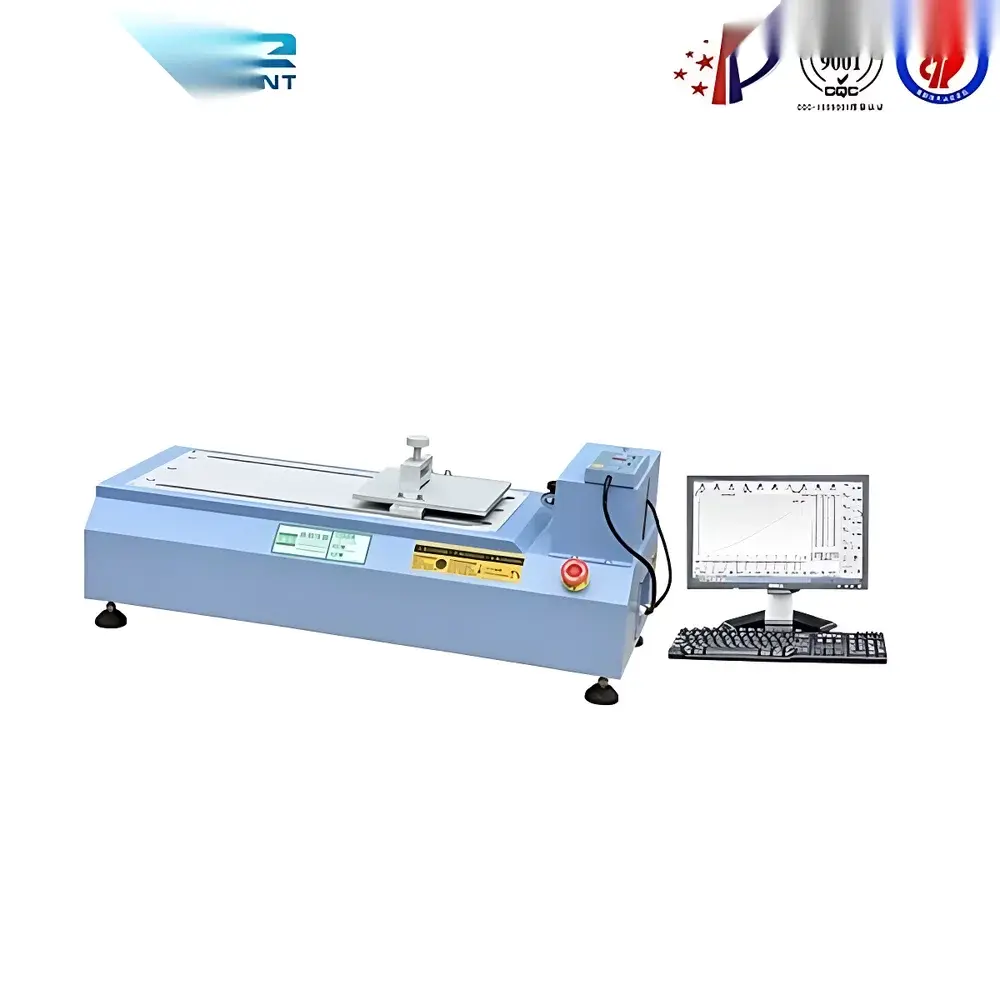
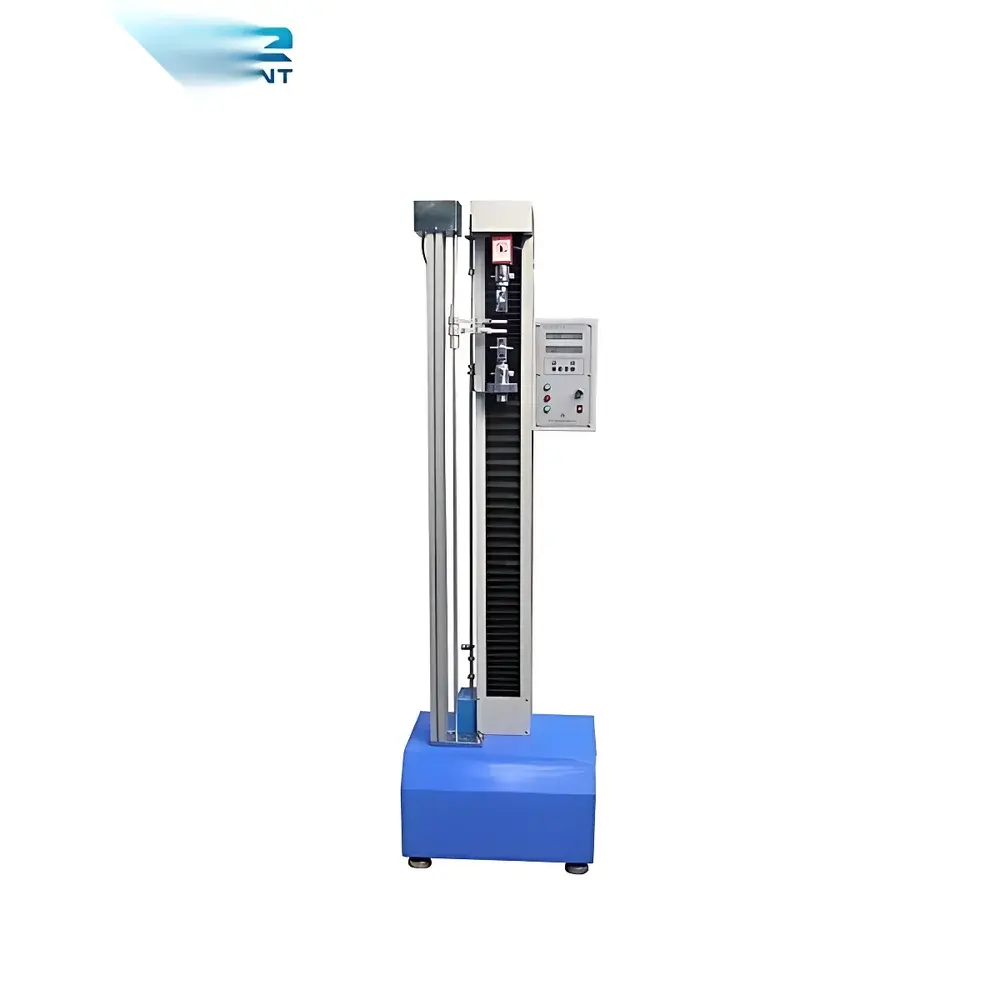
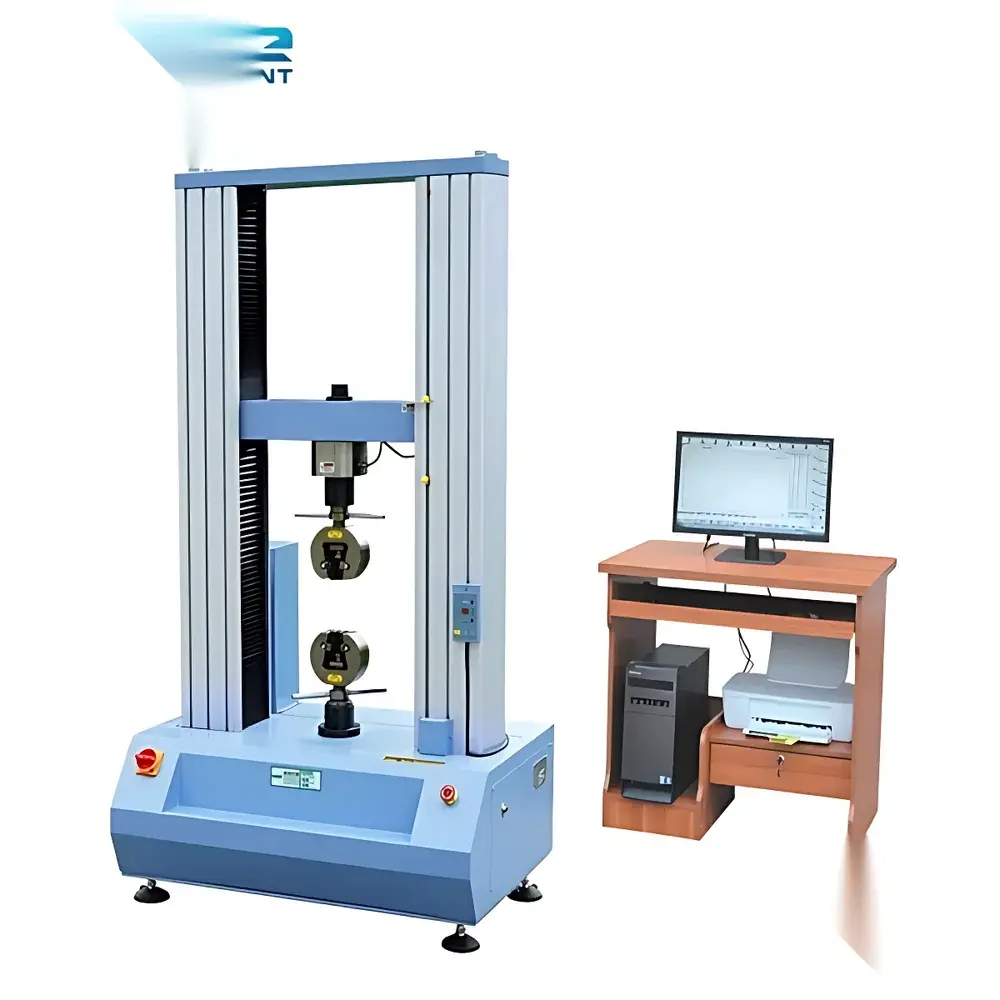
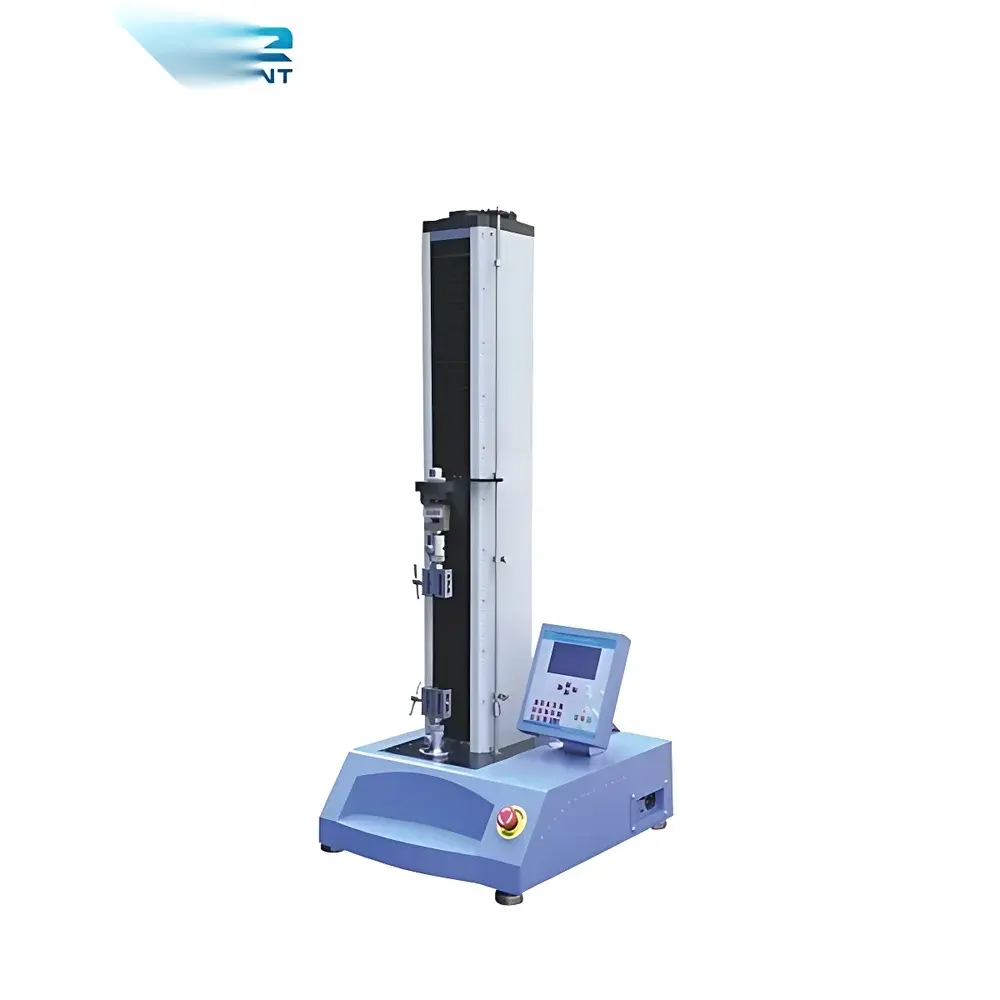
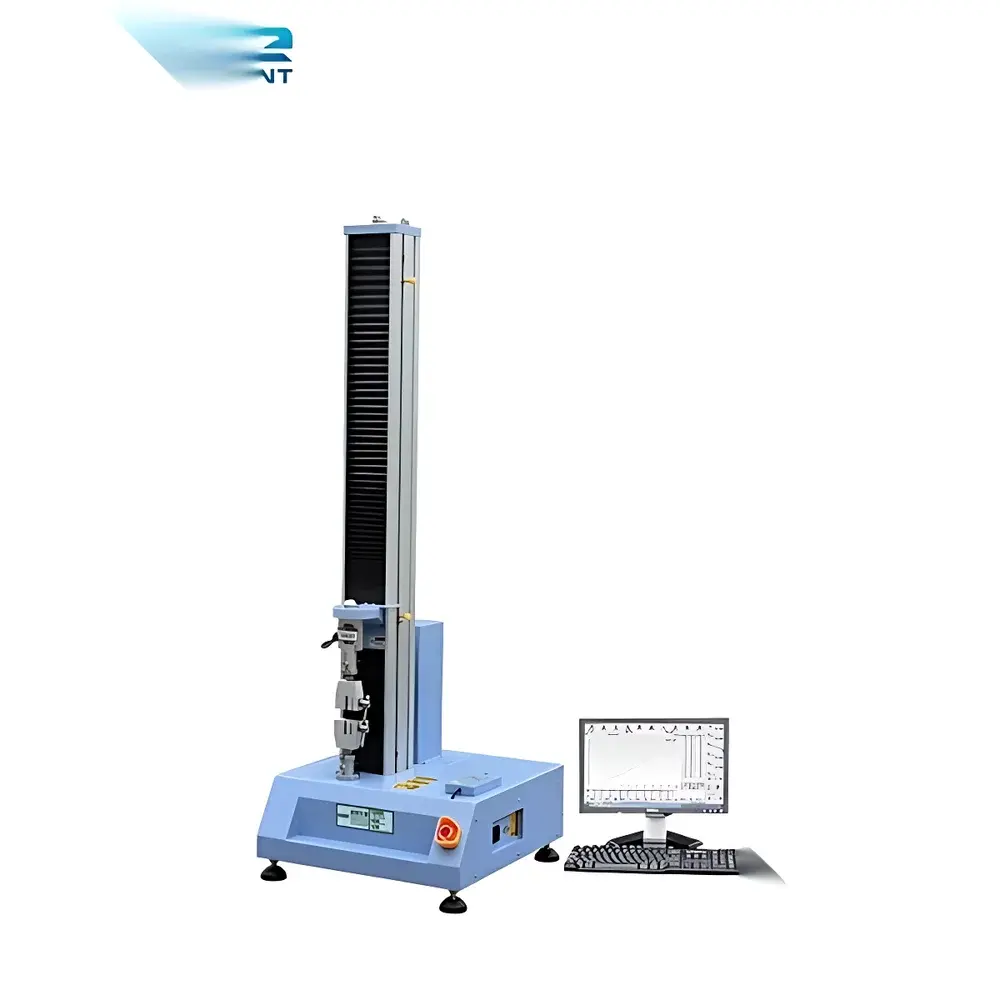
Dongguan Universal Tensile Testing Machine
| Brand | Other Brands |
|---|---|
| Origin | Imported |
| Manufacturer Type | Authorized Distributor |
| Price | USD 3,200 (FOB) |
| Standards Compliance | GB/T 16491, GB/T 1040, GB/T 8808, GB/T 13022, GB/T 2790–2792, GB/T 16825, GB/T 17200, GB/T 3923.1, GB/T 528, GB/T 2611, GB/T 6344, GB/T 20310, GB/T 3690, GB/T 4944, GB/T 3686, GB/T 529 |
Overview
The Dongguan Universal Tensile Testing Machine is a microprocessor-controlled electromechanical testing system engineered for precision mechanical property evaluation of metallic and non-metallic materials under uniaxial loading conditions. Based on the principle of controlled displacement actuation via servo-driven linear motion, it applies calibrated tensile, compressive, flexural, peel, shear, and tear forces to standardized specimens while continuously recording load-displacement data in real time. Designed for routine quality control and R&D laboratories, the system complies with internationally recognized static mechanical testing standards—including China’s GB/T series—and supports traceable calibration protocols aligned with ISO/IEC 17025 requirements. Its modular architecture enables adaptation to diverse specimen geometries and test configurations without hardware modification, ensuring long-term utility across polymer science, metallurgy, packaging engineering, textile physics, and biomedical material characterization.
Key Features
- High-precision ball-screw transmission system coupled with precision linear guideways ensures smooth, low-noise actuation and minimal mechanical hysteresis.
- Explosion-proof load cell with automatic thermal drift compensation, ±0.03% full-scale (F.S.) repeatability, and transient overload capacity up to 150% F.S.
- Panasonic AC servo motor drive with 2500 pulses/revolution optical encoder—delivering high-resolution speed control (0.001–500 mm/min), torque stability, and dynamic response fidelity.
- Integrated travel-limit protection and software-based overload warning to prevent sensor damage during abrupt failure or operator error.
- Dual-mode operation: standalone digital display panel for quick verification tests; PC-based software interface for advanced protocol definition, real-time curve plotting, and statistical post-processing.
- Data resolution of 1 part in 100,000 full scale, enabling accurate detection of subtle yield transitions, plateau regions, and post-yield deformation behavior.
Sample Compatibility & Compliance
The system accommodates a broad spectrum of specimen types—including elastomers, thermoplastics, fiber-reinforced composites, metal wires, thin films, laminated packaging, woven/nonwoven textiles, safety harness webbing, adhesives, and biomedical polymers—within standard gauge lengths (e.g., 25–250 mm) and cross-sectional dimensions (up to 50 mm width × 10 mm thickness). All test routines are programmable to conform to GB/T 1040 (plastics), GB/T 528 (rubber), GB/T 3923.1 (fabrics), GB/T 2790–2792 (adhesive peel), and GB/T 16491 (universal testing machine verification). While not certified to ASTM E4 or ISO 7500-1 out-of-the-box, the instrument’s metrological design permits third-party verification and calibration against national standards, supporting GLP-compliant documentation workflows.
Software & Data Management
The proprietary Windows-based control software provides ISO/IEC 17025-aligned data integrity features: audit-trail logging of all user actions, timestamped test records, electronic signature support, and encrypted database storage. It supports automated report generation in PDF/Excel formats compliant with internal QA templates and external regulatory submissions. Real-time stress-strain curve rendering includes peak-hold, rupture detection, modulus calculation (secant/tangent), elongation at break, and yield point identification per ASTM D638 or GB/T 1040 methodologies. Raw data export (CSV, TXT) enables integration with MATLAB, Python-based analysis pipelines, or LIMS platforms. Software updates are delivered via secure HTTPS channel with version-controlled release notes.
Applications
This tensile tester serves critical functions across industrial and academic domains: incoming raw material verification per supplier specifications; in-process QC of extruded profiles, injection-molded parts, and coated substrates; comparative evaluation of formulation variants (e.g., plasticizer content, filler loading); mechanical aging studies (UV, thermal, humidity exposure); validation of biodegradable polymer degradation kinetics; and mechanical benchmarking of recycled-content composites. It is routinely deployed in automotive component labs (seatbelt webbing, gasket tensile strength), medical device manufacturing (suture tensile integrity, catheter shaft stiffness), and packaging R&D (peel strength of laminated pouches, seal integrity of thermoformed trays).
FAQ
Does this machine meet FDA 21 CFR Part 11 requirements for electronic records?
The system supports audit trails, electronic signatures, and data immutability—but formal Part 11 compliance requires site-specific validation protocols and documented SOPs, which are the responsibility of the end-user laboratory.
Can I perform cyclic loading or fatigue tests with this unit?
No. This is a static universal testing machine designed for quasi-static monotonic loading. Fatigue testing requires dedicated servo-hydraulic or resonant systems with closed-loop strain control.
What calibration certificates are provided upon delivery?
A factory-issued calibration report traceable to NIM (China National Institute of Metrology) is included, covering load cell linearity, displacement accuracy, and speed verification per GB/T 16491 Annex B.
Is technical support available outside mainland China?
Yes—authorized distributors provide remote diagnostics, firmware updates, and application engineering support in Southeast Asia, the Middle East, and Latin America; on-site service is coordinated regionally.
How is test method validation performed for new material types?
Users define custom test parameters (grip type, pre-load, crosshead speed, extensometer use) and validate repeatability per ISO 5725 or ASTM E691 using reference materials with certified mechanical properties.



