
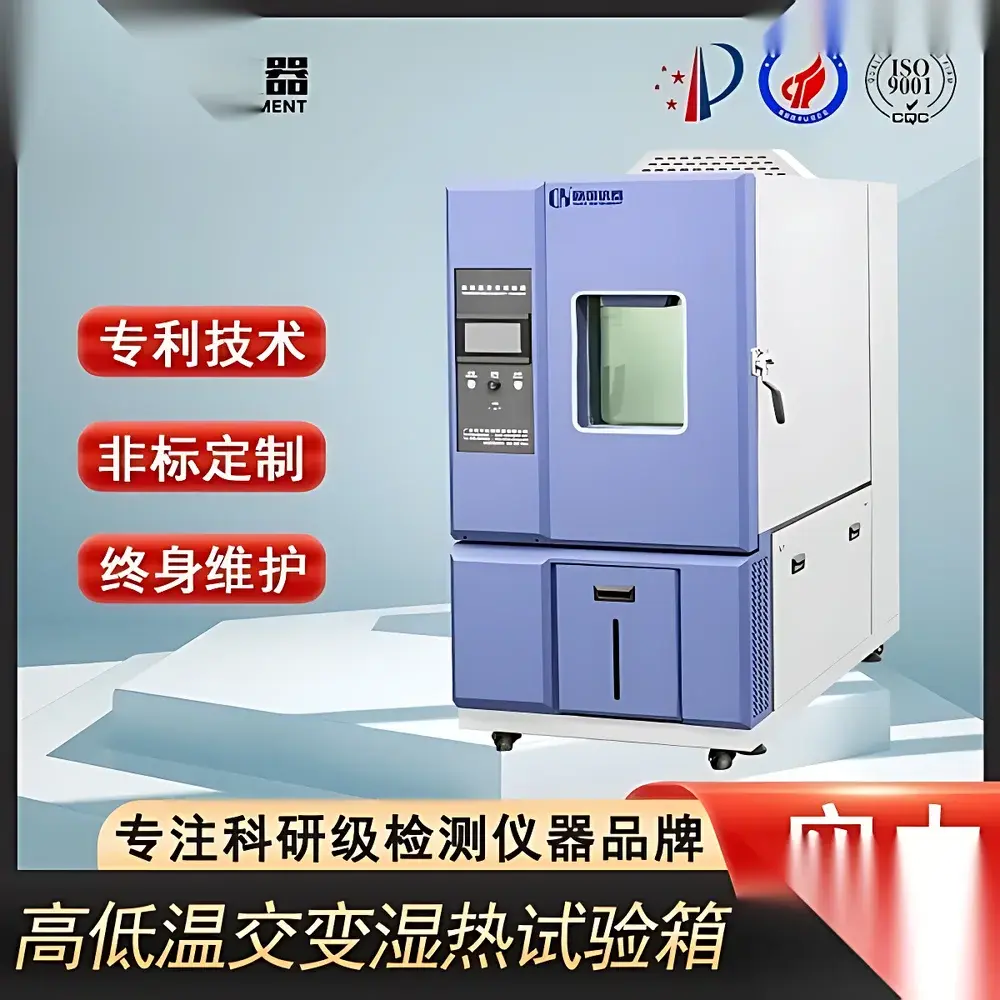
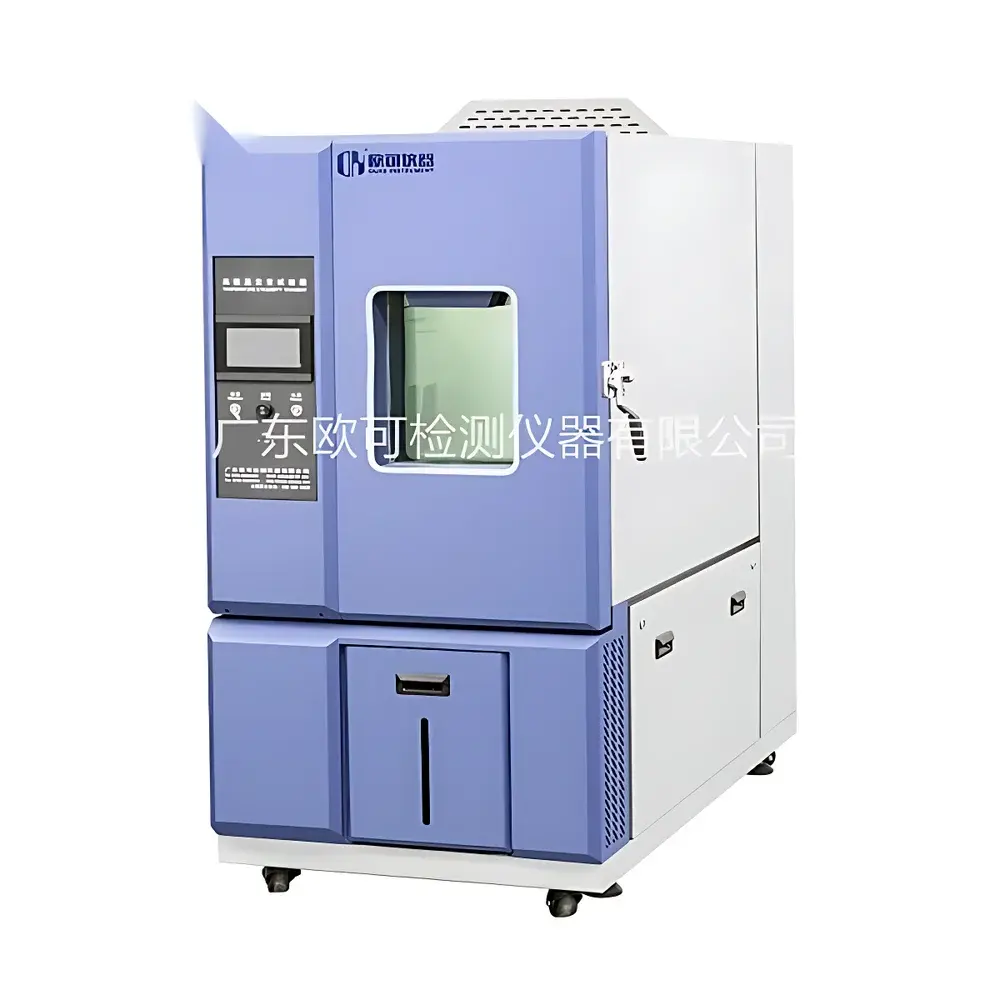
High-Low Temperature Environmental Test Chamber
| (在此处输出精准翻译� | �纯英文产品名称。极其重要:仅输出一行名称,严禁输出备选名、严禁换行重复、严禁包含任何中文字符) |
|---|---|
| [Brand | OEM / Generic |
| Origin | Imported |
| Manufacturer Type | Authorized Distributor |
| Price | USD 2,650 (FOB) |
| Compliance | GB/T 5170.2–1996, GB/T 10592–2021, GB/T 2423.2–2008 (IEC 60068-2-2), GJB 150.3A–2009, GJB 150.4A–2009, MIL-STD-810G, ISO 16750-4] |
Overview
The High-Low Temperature Environmental Test Chamber is a precision-engineered climatic simulation system designed to evaluate the thermal resilience and functional stability of electronic components, automotive modules, aerospace hardware, and industrial materials under controlled extreme temperature conditions. Operating on a dual-stage refrigeration cycle with forced-air convection, the chamber delivers stable and uniform thermal profiles across its working volume—enabling rigorous validation of product behavior during exposure to sustained high-temperature soak, low-temperature storage, and programmable temperature cycling (including ramp-and-soak and step-change profiles). Its architecture adheres to fundamental thermodynamic principles of vapor-compression refrigeration, integrating a hermetic scroll compressor, copper-finned air-cooled condenser, thermostatic expansion valve (TXV), and high-efficiency finned-tube evaporator. Thermal uniformity is maintained via axial-flow centrifugal fans with adjustable speed control and optimized internal airflow ducting—ensuring ≤ ±1.0 °C temperature deviation within the test zone per GB/T 5170.2–1996.
Key Features
- Energy-efficient adaptive cooling control: Dynamically modulates compressor output in response to real-time thermal load, reducing power consumption by up to 30% compared to conventional on/off or heater-balanced systems.
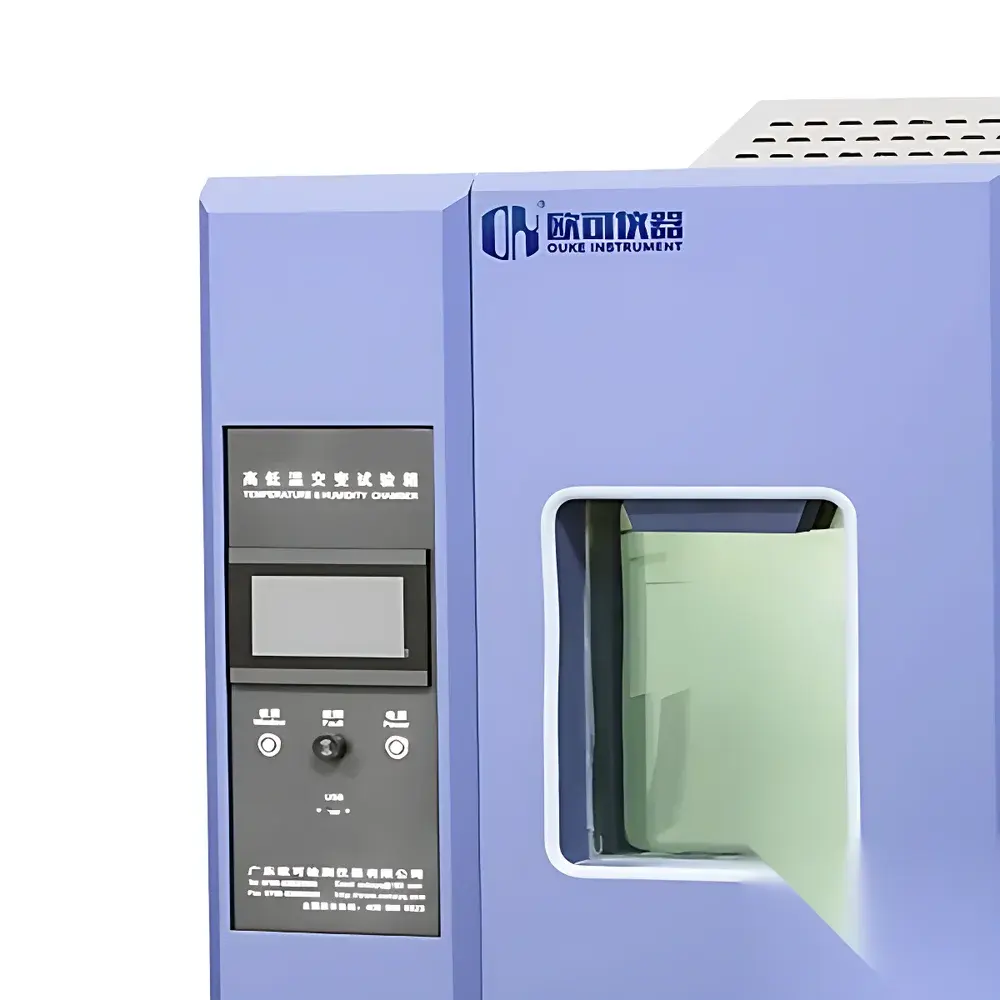
- Multi-protocol communication interface: Equipped with RS-232, RS-485, USB 2.0, and Ethernet (LAN) ports supporting Modbus RTU/TCP and TCP/IP protocols for seamless integration into centralized lab monitoring networks and SCADA systems.
- Industrial-grade component sourcing: Critical subsystems—including compressor (Embraco or Panasonic), PID controller (Yokogawa or Omron), and solid-state relays—are sourced from Tier-1 global suppliers to ensure long-term repeatability and MTBF > 25,000 hours.
- Powered test capability: Integrated 30 A/250 VAC load terminals with independent overcurrent protection allow continuous operation of DUTs under thermal stress—enabling functional performance assessment during temperature transitions.
- Optimized observation system: Tempered double-glazed viewing window with Philips LED illumination and embedded resistive anti-fog heating element ensures unobstructed visual inspection at all operating temperatures (–70 °C to +150 °C).
- Comprehensive safety architecture: Includes independent mechanical high/low temperature cutouts, compressor discharge overheat protection, phase failure detection, door interlock switch, and refrigerant leak alarm (optional R-134a/R-404A sensor).
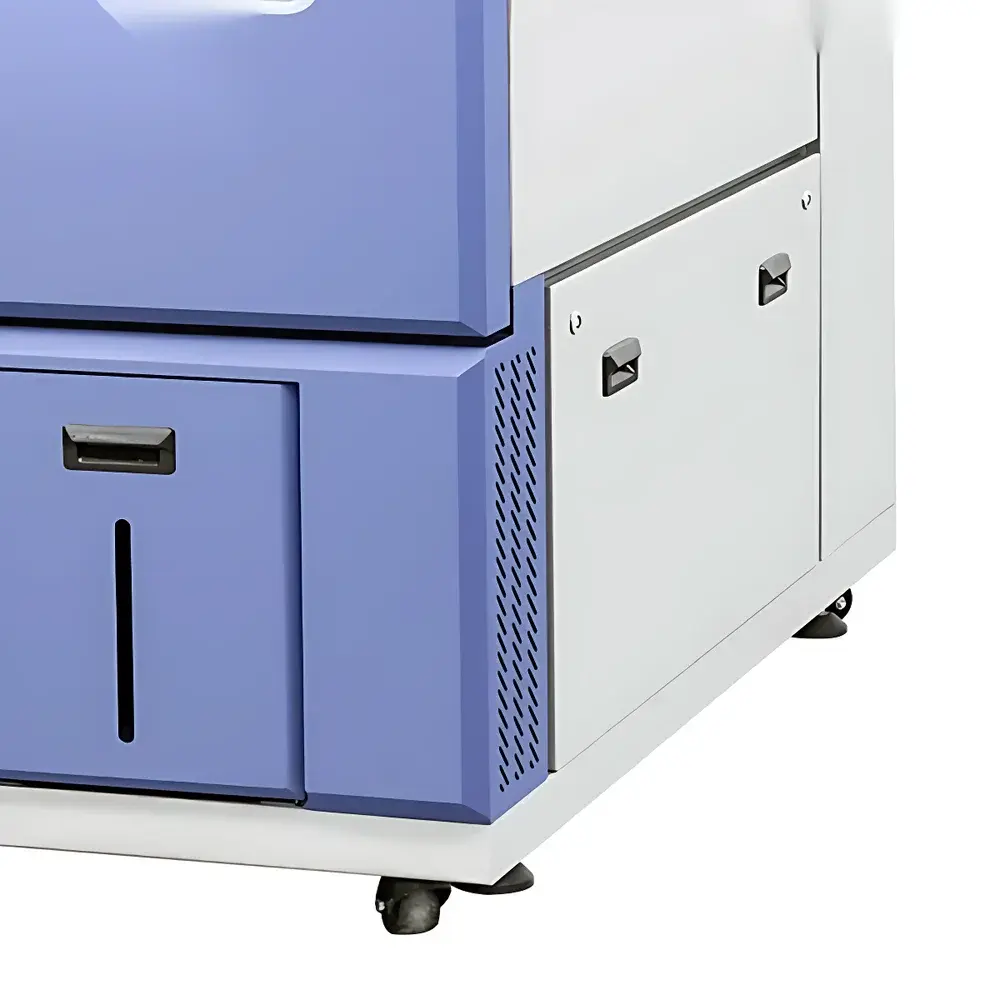
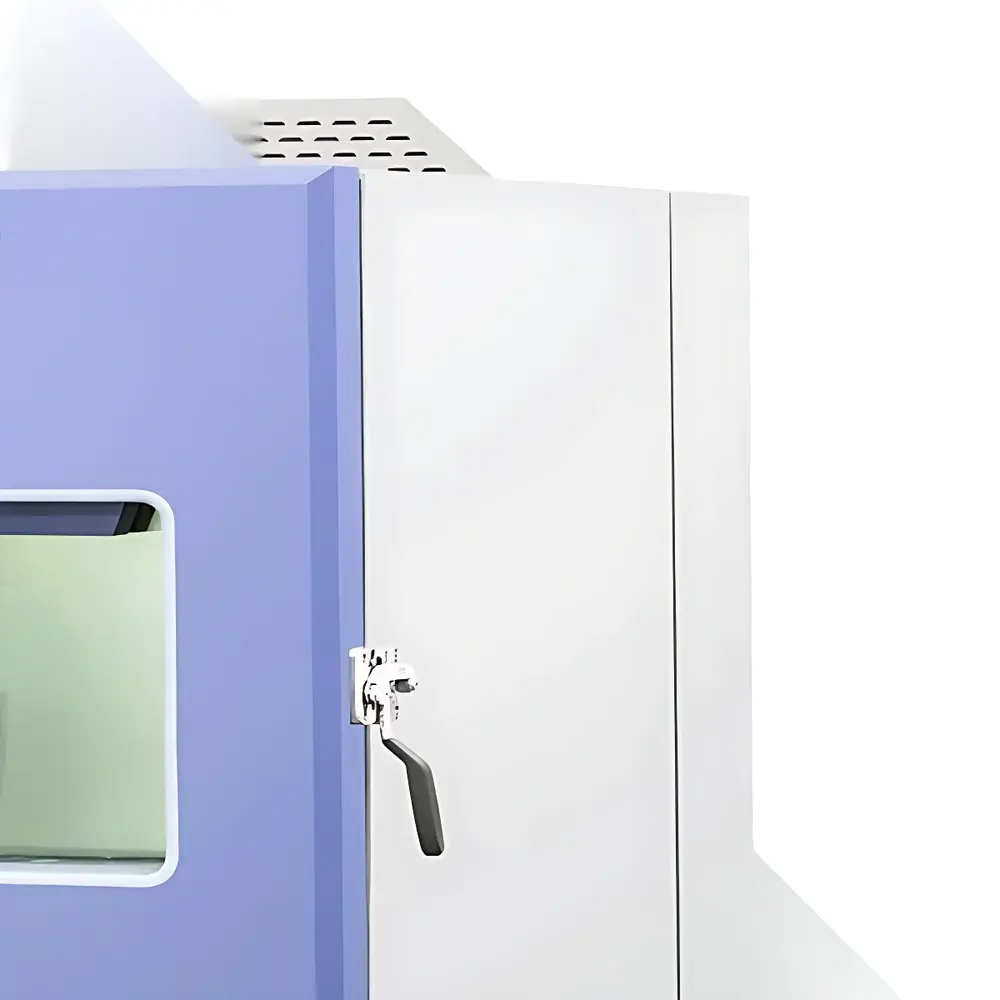
- Precision-machined enclosure: CNC-formed SUS304 stainless steel inner chamber and powder-coated cold-rolled steel outer shell; ergonomic counterbalanced door with non-reactive silicone gasket and cam-lock handle meeting IP54 ingress protection requirements.
Sample Compatibility & Compliance
This chamber accommodates standard test specimens up to 600 mm × 600 mm × 600 mm (W×D×H) and supports mounting fixtures for PCB assemblies, ECUs, battery packs, optical sensors, and polymer housings. It is validated for use in GLP- and GMP-aligned laboratories conducting qualification testing per IEC 60068-2 series, ISO 16750-4 (road vehicles), AEC-Q200 (passive components), and MIL-STD-810G Method 501.5/502.5. Calibration traceability follows ISO/IEC 17025 requirements, with optional NIST-traceable certificate available upon request. All electrical safety complies with IEC 61010-1:2010 Ed.3.
Software & Data Management
Bundled with Windows-based chamber control software (v5.2+), the system enables full-cycle programming—including multi-segment ramps, dwell times, rate limiting (0.5–10 °C/min), and event-triggered data logging. Software supports audit trail functionality compliant with FDA 21 CFR Part 11 (electronic signatures, user access levels, immutable log files) and exports time-stamped CSV/Excel reports with ambient pressure, chamber setpoint, actual temperature, and alarm history. Optional cloud gateway module enables secure MQTT-based telemetry to AWS IoT Core or Azure IoT Hub for enterprise-level asset monitoring and predictive maintenance analytics.
Applications
- Reliability screening of printed circuit boards (PCBs) and semiconductor packages under accelerated thermal cycling (e.g., JEDEC JESD22-A104D).
- Pre-conditioning of lithium-ion battery cells prior to electrochemical characterization (e.g., EIS, dQ/dV analysis).
- Validation of adhesive bond strength retention in automotive lighting assemblies after thermal shock (-40 °C ↔ +85 °C).
- Environmental stress screening (ESS) of avionics line-replaceable units (LRUs) per DO-160 Section 4.
- Material coefficient of thermal expansion (CTE) estimation via dimensional metrology under controlled thermal gradients.
- Accelerated life testing of elastomeric seals and gaskets used in medical device enclosures.
FAQ
What temperature range does this chamber support?
Standard configuration operates from –70 °C to +150 °C; extended low-temperature options down to –80 °C are available with cascade refrigeration.
Is the chamber suitable for humidity-controlled testing?
No—this is a dry-temperature-only chamber. For combined temperature/humidity profiling, refer to our TH-8000 Series Environmental Test Chambers.
Can I integrate third-party data acquisition systems?
Yes—RS-485 Modbus RTU output provides direct readout of chamber temperature, setpoint, and alarm status to PLCs, LabVIEW, or custom Python-based DAQ platforms.
What is the typical temperature stabilization time after a 100 °C step change?
From 25 °C to 100 °C: ≤ 12 minutes; from 25 °C to –40 °C: ≤ 22 minutes (per GB/T 10592–2021, 150 L internal volume, no load).
Does the unit include calibration documentation?
A factory calibration report covering temperature uniformity and accuracy at three points (–40 °C, 25 °C, +85 °C) is included; ISO/IEC 17025 accredited calibration is available as an add-on service.



