
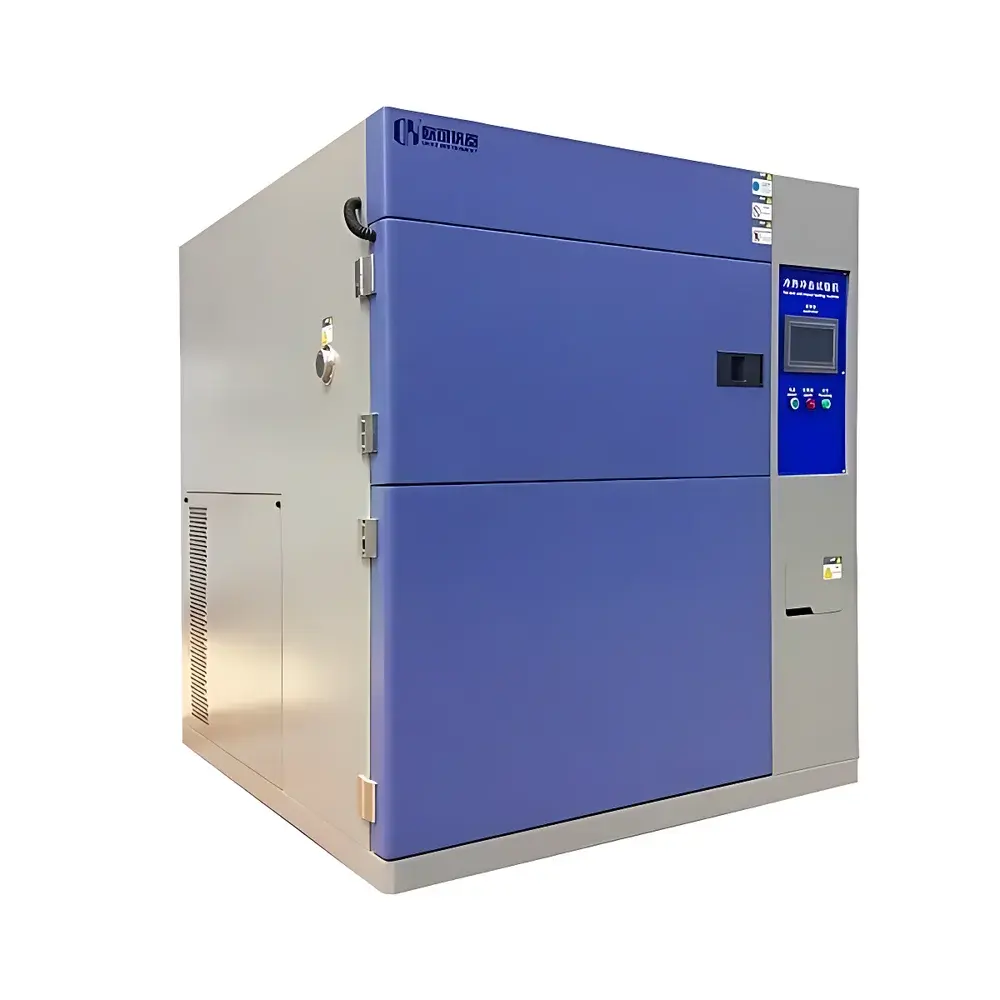
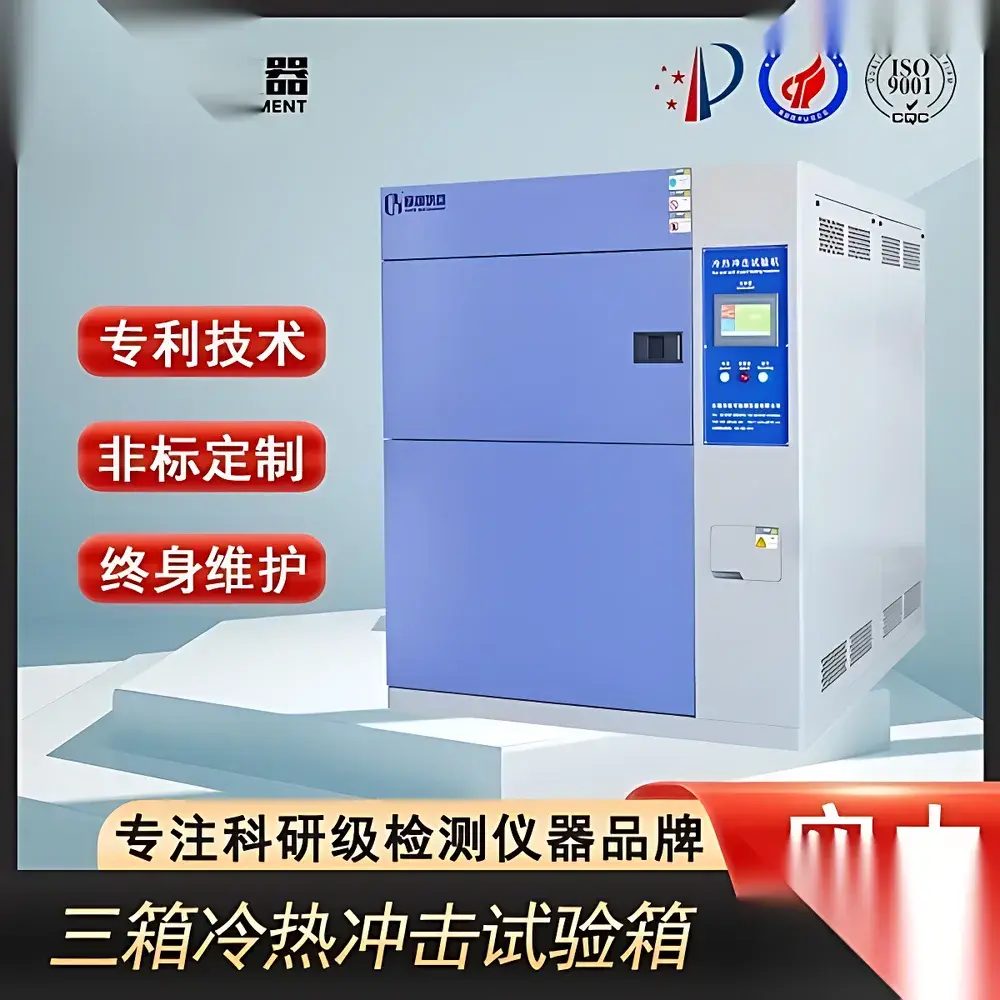
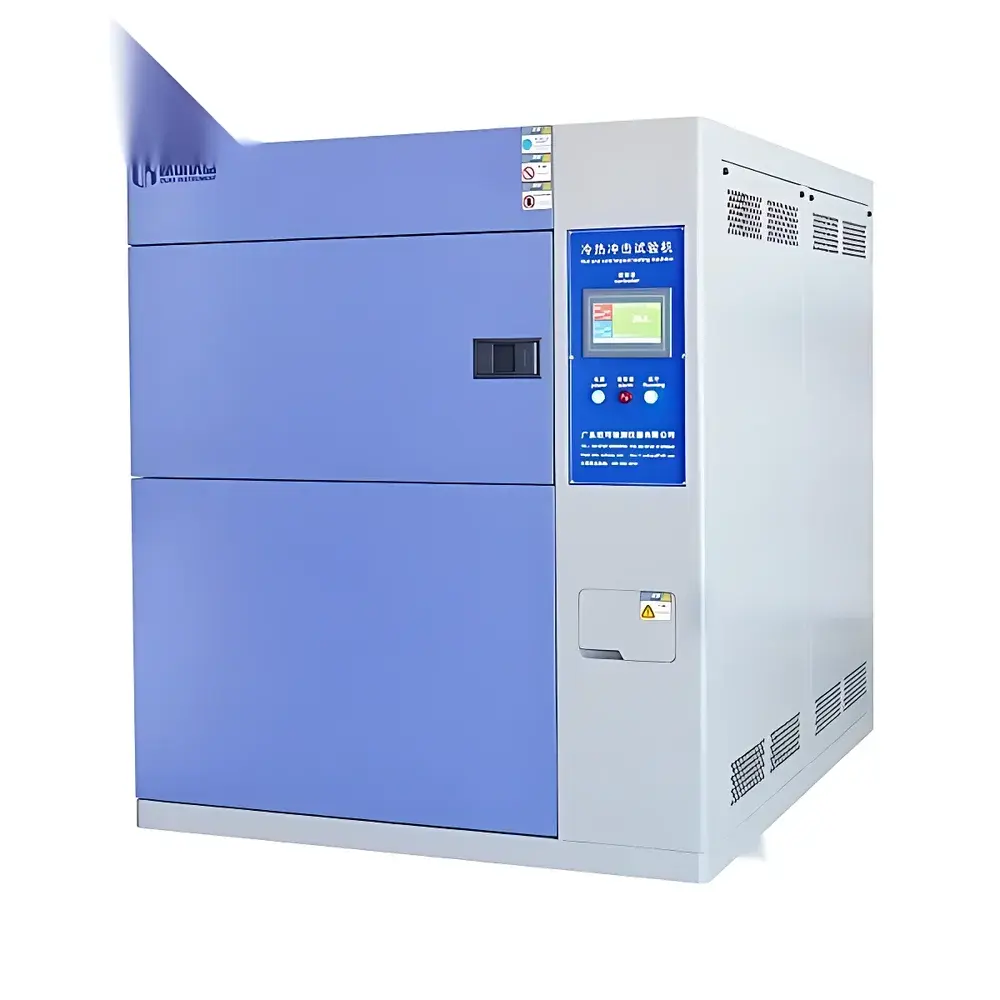
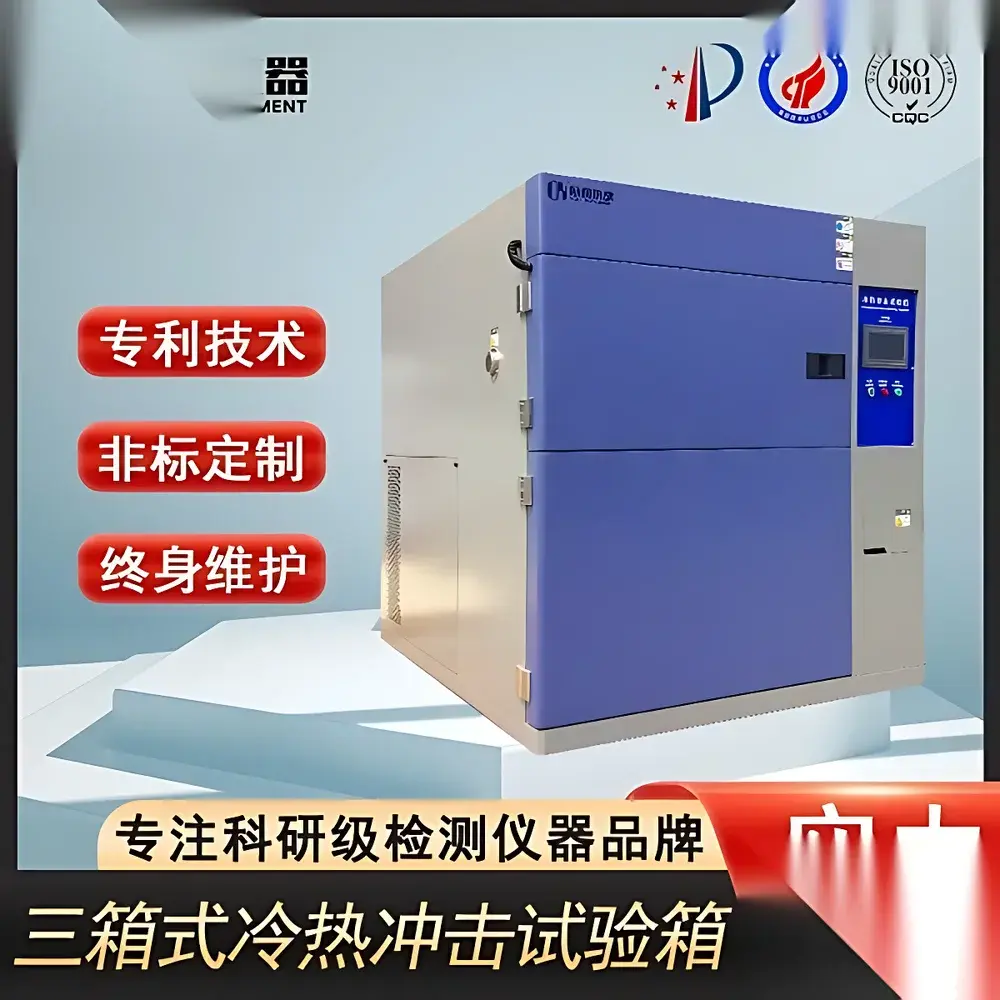
Touchscreen Thermal Shock Test Chamber OK-HH Series
| Key | Brand: Other Brands |
|---|---|
| Origin | Imported |
| Manufacturer Type | Authorized Distributor |
| Price | USD 12,500 (FOB) |
| Temperature Range (Hot Zone) | RT to +200 °C |
| Temperature Range (Cold Zone) | RT to −70 °C |
| Test Zone Range | +60 °C to +150 °C (Hot Shock) |
| Switching Method | Pneumatic Air-Damper–Actuated Static Specimen Transfer |
| Recovery Time | <5 min |
| Temperature Uniformity | ±2.0 °C |
| Control Accuracy | ±0.5 °C |
| Refrigeration System | Dual-Stage Cascade with Semi-Hermetic German Compressors (R404A/R23) |
| Insulation | High-Density Fire-Retardant PU Foam |
| Interior Material | Mirror-Finish SUS304 Stainless Steel |
| Exterior Material | SUS304 or Powder-Coated Steel |
| Power Supply | AC 380 V ±5%, 50 Hz ±0.5 Hz, 3-Phase 5-Wire |
Overview
The Touchscreen Thermal Shock Test Chamber OK-HH Series is an engineered environmental test system designed for rapid, high-fidelity evaluation of material and component reliability under extreme thermal transients. It operates on the principle of accelerated thermal stress induction—subjecting specimens to abrupt transitions between pre-conditioned high-temperature and low-temperature environments—to quantify resistance to thermally induced mechanical fatigue, interfacial delamination, solder joint failure, seal integrity loss, and microstructural phase instability. Unlike conventional temperature cycling chambers, this system implements a true thermal shock methodology compliant with ISO 16750-4, IEC 60068-2-14 (Test N), MIL-STD-810H Method 503.5, and automotive-specific standards such as SAE J2223 and QC/T 17–92. The chamber’s static test zone architecture eliminates specimen motion during thermal transition—ensuring mechanical stability and eliminating vibration artifacts—while pneumatic damper-controlled airflow enables repeatable, contamination-free thermal transfer between isolated hot and cold reservoirs.
Key Features
- Intuitive 10.1-inch industrial-grade touchscreen HMI with multilingual UI (English, German, Japanese, Chinese), real-time trend logging, and user-defined profile sequencing
- Dual-zone cascade refrigeration architecture using semi-hermetic German compressors (Bitzer or Copeland), enabling stable operation down to −70 °C in the cold reservoir and up to +200 °C in the hot reservoir
- High-efficiency evaporative condenser interface between high- and low-stage refrigeration circuits, minimizing energy transfer losses and ensuring consistent thermal ramp rates
- Energy modulation control logic dynamically adjusts compressor loading and expansion valve positioning to maintain target temperatures while optimizing power consumption and reducing mechanical wear
- Mirror-finish SUS304 stainless steel interior chamber walls and reinforced PU insulation (≥120 mm thickness) ensure long-term corrosion resistance and thermal inertia minimization
- Configurable test zone dimensions (OK-HH-49 to OK-HH-225 models), optional 50 mm diameter cable/port access, dual-tier SUS304 adjustable shelves, and integrated grounding terminals for ESD-sensitive applications
Sample Compatibility & Compliance
This thermal shock chamber accommodates rigid and semi-rigid samples—including PCB assemblies, automotive ECUs, aerospace fasteners, polymer housings, battery modules, and optoelectronic packages—without requiring mechanical fixtures or repositioning during testing. Its static test zone design supports specimens up to 60 kg (OK-HH-225 model) and maintains dimensional stability across repeated thermal cycles. The system complies with critical regulatory and industry frameworks including: ASTM D6982 (thermal cycling of elastomers), ISO 9001:2015 calibration traceability requirements, GLP-compliant audit trails (via optional software module), and FDA 21 CFR Part 11–ready electronic record generation when paired with validated data acquisition firmware. All temperature sensors are calibrated per ISO/IEC 17025–accredited procedures, with certificate-of-calibration included at shipment.
Software & Data Management
Built-in embedded controller firmware supports automated test execution, real-time deviation alarms (±0.5 °C threshold), and CSV-exportable time-stamped logs (temperature, chamber status, alarm events). Optional PC-based software (OK-DataLink v3.2) provides advanced features: multi-channel synchronized data visualization, statistical process control (SPC) charting (X-bar/R charts), automatic report generation (PDF/Excel), and secure role-based user access (admin/operator/viewer). Audit trail functionality records all parameter modifications, user logins, and calibration actions with immutable timestamps—meeting GLP, GMP, and ISO 17025 documentation requirements. Data encryption (AES-256) and local network isolation options support IT security policies in regulated laboratories.
Applications
- Qualification testing of printed circuit board assemblies (PCBAs) per IPC-9701 and JEDEC JESD22-A104
- Validation of adhesive bond strength and encapsulant integrity in MEMS and sensor packaging
- Reliability screening of lithium-ion battery cells and modules under thermal shock per UL 1642 and UN 38.3 Section 5.1
- Thermal fatigue assessment of turbine blade coatings and thermal barrier systems (TBCs)
- Automotive component validation per ISO 16750-4 (road vehicles) and GMW3172 (General Motors)
- Accelerated life testing of optical fiber connectors, laser diodes, and photonic integrated circuits
FAQ
What is the difference between two-box and three-box thermal shock configurations?
Two-box systems (like the OK-HH Series) use a single test zone with alternating exposure via pneumatic air dams—ideal for high-reproducibility static testing. Three-box designs incorporate separate hot/cold/test chambers and require specimen movement; they offer faster transition times but introduce mechanical handling variables.
Is external cooling water required for operation?
Yes. The dual-stage cascade refrigeration system requires a dedicated closed-loop cooling water supply (10 m³/h flow rate, 25–32 °C inlet temperature) delivered via an external cooling tower. Water quality must meet ASTM D1141–98 standards to prevent heat exchanger fouling.
Can the chamber be integrated into a factory MES or LIMS environment?
Yes. Modbus TCP and OPC UA interfaces are standard; optional Ethernet/IP and Profibus DP gateways enable direct integration with Siemens SIMATIC, Rockwell FactoryTalk, or LabWare LIMS platforms.
What maintenance intervals are recommended for the refrigeration system?
Compressor oil analysis every 2,000 operating hours; refrigerant leak detection and filter-drier replacement every 12 months; full system performance verification (per ISO 10012) annually by an accredited service technician.
Does the system support custom test profiles beyond standard specifications?
Yes. Up to 99 programmable profiles can be stored locally, each supporting variable dwell times, ramp rates (0.5–15 °C/min), and conditional branching logic (e.g., “if deviation >1.0 °C, pause and alert”).
Related Products



