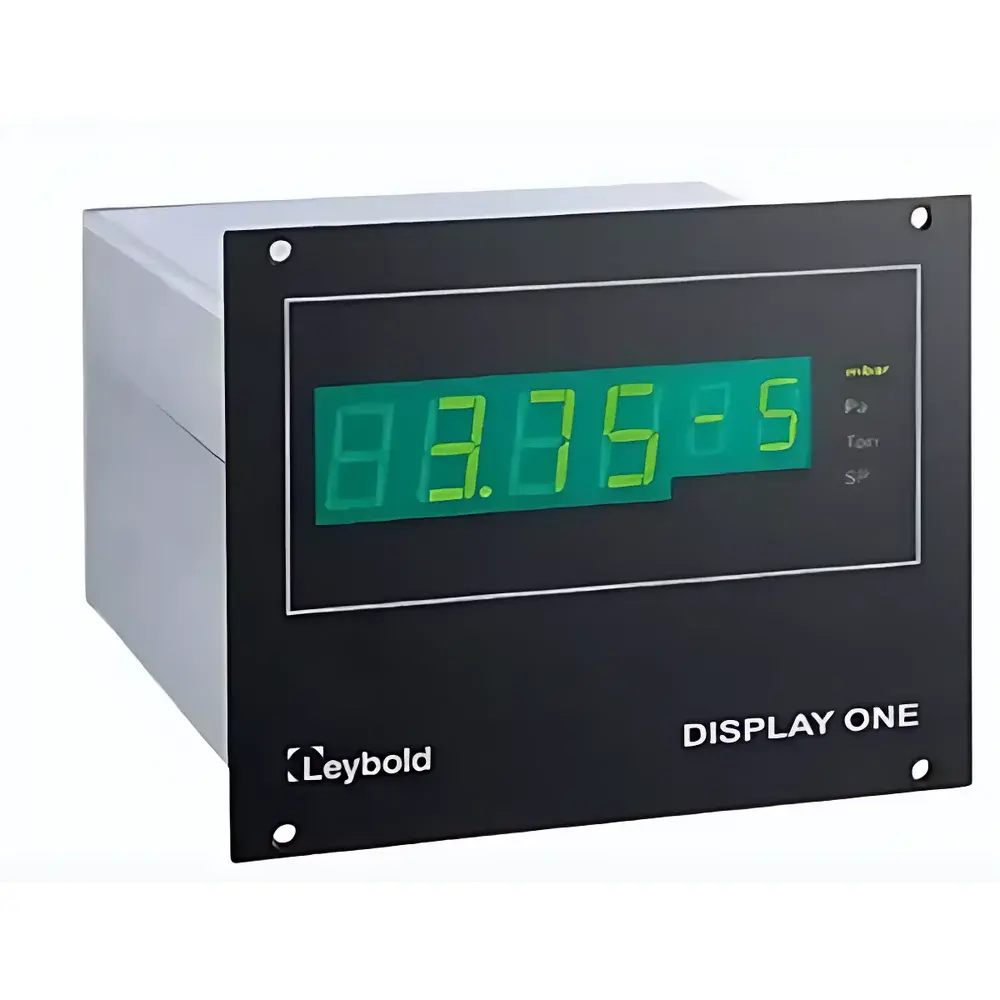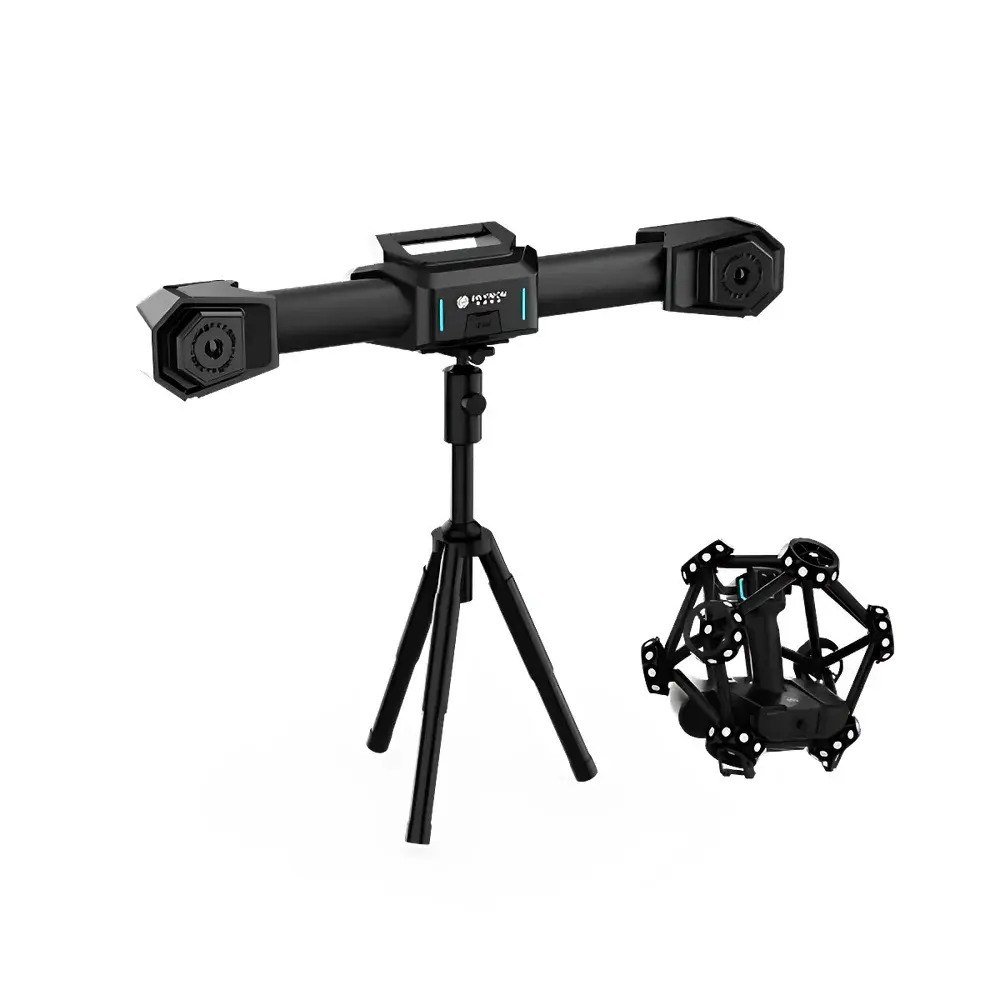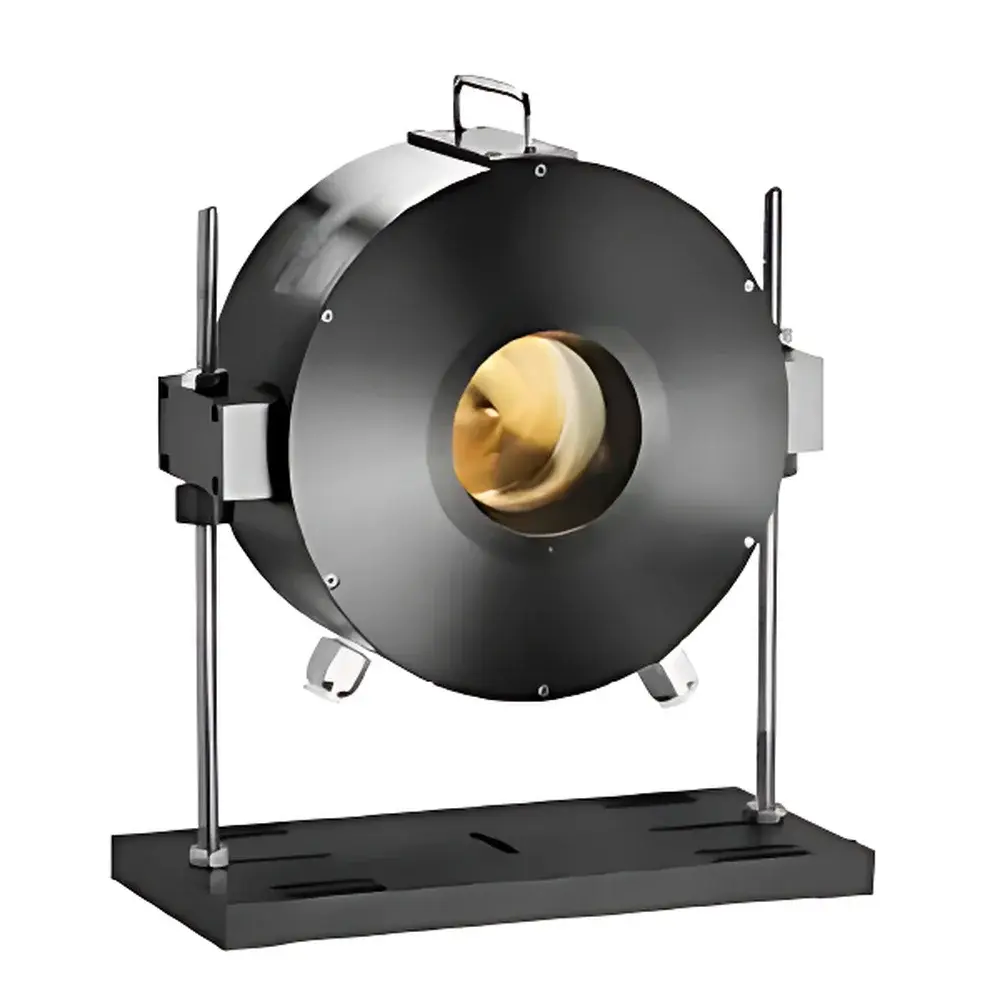
Ophir L100(500)A-PF-120 Water-Cooled Thermopile Power Sensor
| Brand | Ophir |
|---|---|
| Origin | Israel |
| Model | L100(500)A-PF-120 |
| Aperture Diameter | 120 mm |
| Spectral Range | 0.19–20 µm |
| Power Range | 20 W–120 kW |
| Position Accuracy | ±0.1 mm |
| Beam Size Accuracy | ±5% |
| Cooling | Active Water Cooling |
| Calibration | Multi-wavelength NIST-traceable |
| Compatible Meters | Vega, Nova II, StarLite, Juno Interface |
Overview
The Ophir L100(500)A-PF-120 is a high-power, water-cooled thermopile-based laser power sensor engineered for continuous and pulsed laser measurement in industrial, defense, and R&D environments where extreme thermal load management and metrological integrity are critical. Operating on the principle of thermoelectric voltage generation via absorbed radiant energy across a multi-junction thermopile array, this sensor converts incident optical power into a proportional DC output signal with minimal dependence on beam profile, polarization, or angle of incidence—making it inherently suitable for high-energy CO₂, fiber, diode-pumped solid-state (DPSS), and ultrafast laser systems. Its robust thermal architecture enables stable operation at up to 120 kW continuous wave (CW) power, with active water cooling maintaining thermal equilibrium under sustained irradiation. The sensor integrates BeamTrack functionality, enabling simultaneous real-time acquisition of total power, centroid position (X/Y), and beam diameter—critical parameters for laser alignment verification, cavity optimization, and process monitoring in high-power material processing applications such as laser welding, cladding, and directed energy systems.
Key Features
- Water-cooled thermopile design rated for continuous operation up to 120 kW at 1.06 µm (YAG/Nd:YAG) and 10.6 µm (CO₂), with derated capability across 0.19–20 µm spectral range
- 120 mm effective aperture with black-body absorber coating optimized for high damage threshold (>10 kW/cm² for CW lasers at 10.6 µm)
- Integrated BeamTrack technology delivering synchronized measurements of power, beam position (±0.1 mm repeatability), and beam width (±5% relative uncertainty per ISO 11146-1)
- NIST-traceable multi-wavelength calibration across key industrial laser lines including 1064 nm, 10.6 µm, 980 nm, 808 nm, and 532 nm
- Low thermal drift (<0.5% over 30 min at full rated load) enabled by precision-machined copper heat sink and regulated coolant flow path (recommended flow rate: 4–6 L/min, ΔT < 5°C)
- Compatible with Ophir’s Vega, Nova II, StarLite, and Juno meter platforms for full GUI-based configuration, data logging, and alarm-triggered shutdown protocols
Sample Compatibility & Compliance
The L100(500)A-PF-120 supports measurement of both CW and long-pulse lasers (pulse duration > 10 ms) with beam diameters ranging from 5 mm to 110 mm. It is not intended for femtosecond or picosecond pulse energy measurement without external attenuation and temporal integration verification. The sensor complies with IEC 61000-6-3 (EMC emission standards) and meets mechanical safety requirements per IEC 61010-1 for Class 1 laser measurement instrumentation. Its calibration documentation adheres to ISO/IEC 17025:2017 requirements when performed by Ophir’s A2LA-accredited calibration laboratory. For GMP/GLP-regulated environments, the sensor supports audit-trail-enabled data capture when used with StarLite or Vega meters configured for FDA 21 CFR Part 11 compliance (electronic signatures, user access control, and immutable record retention).
Software & Data Management
Ophir’s StarLab v3.30+ software provides native support for real-time dual-channel visualization of power and spatial metrics, including dynamic centroid tracking plots, beam ellipticity analysis, and time-resolved power stability histograms. Raw analog outputs (0–10 V for power; ±5 V differential for X/Y position) enable integration into PLC-controlled manufacturing cells or custom DAQ systems. All measurement sessions export standardized CSV and XML files containing timestamped metadata (wavelength, calibration ID, coolant temperature, serial number), facilitating traceability in quality management systems (QMS). Firmware updates and sensor diagnostics—including thermal gradient monitoring and absorber health assessment—are accessible via USB or Ethernet interface.
Applications
- High-power laser source validation and certification in OEM laser system manufacturing
- In-line power and beam alignment monitoring during robotic laser welding and additive manufacturing processes
- Thermal load characterization of multi-kilowatt fiber laser arrays in defense-grade directed energy weapon test beds
- Calibration transfer between national metrology institutes (NMIs) and accredited laser power calibration labs
- Beam delivery system commissioning, including scanner galvanometer and focusing optic alignment verification
- Long-term stability testing of industrial CO₂ lasers operating at 6–30 kW output levels
FAQ
What is the maximum recommended coolant temperature rise across the sensor inlet and outlet?
The maximum allowable ΔT is 5°C; typical operation maintains ≤3°C rise at 120 kW with 5 L/min flow rate.
Can this sensor measure single-shot pulse energy?
No—it is designed for average power measurement of pulses ≥10 ms duration. For single-shot energy, a calibrated pyroelectric or photodiode-based joulemeter is required.
Is the position measurement affected by beam non-uniformity or hot spots?
Yes—centroid accuracy assumes near-Gaussian or top-hat intensity distribution. Severe asymmetry or multiple peaks may degrade positional repeatability beyond ±0.1 mm.
Does the sensor require periodic recalibration?
Annual recalibration is recommended for ISO/IEC 17025-compliant use; Ophir provides certified recalibration with uncertainty budgets traceable to NIST SRM 2211.
How is damage threshold defined for this sensor?
Damage threshold refers to the maximum irradiance (W/cm²) that causes permanent change in responsivity or absorber morphology after 10 s exposure—tested per ISO 11551 using calibrated reference beams.