
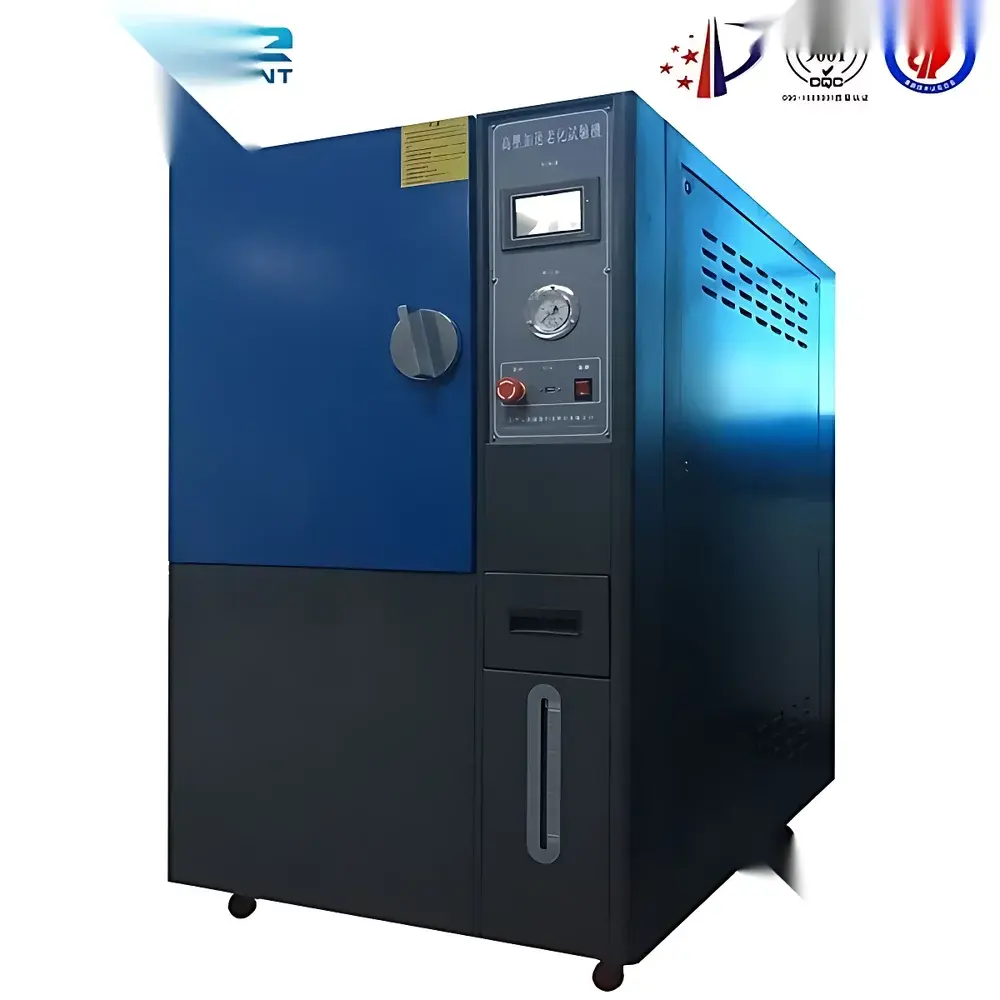
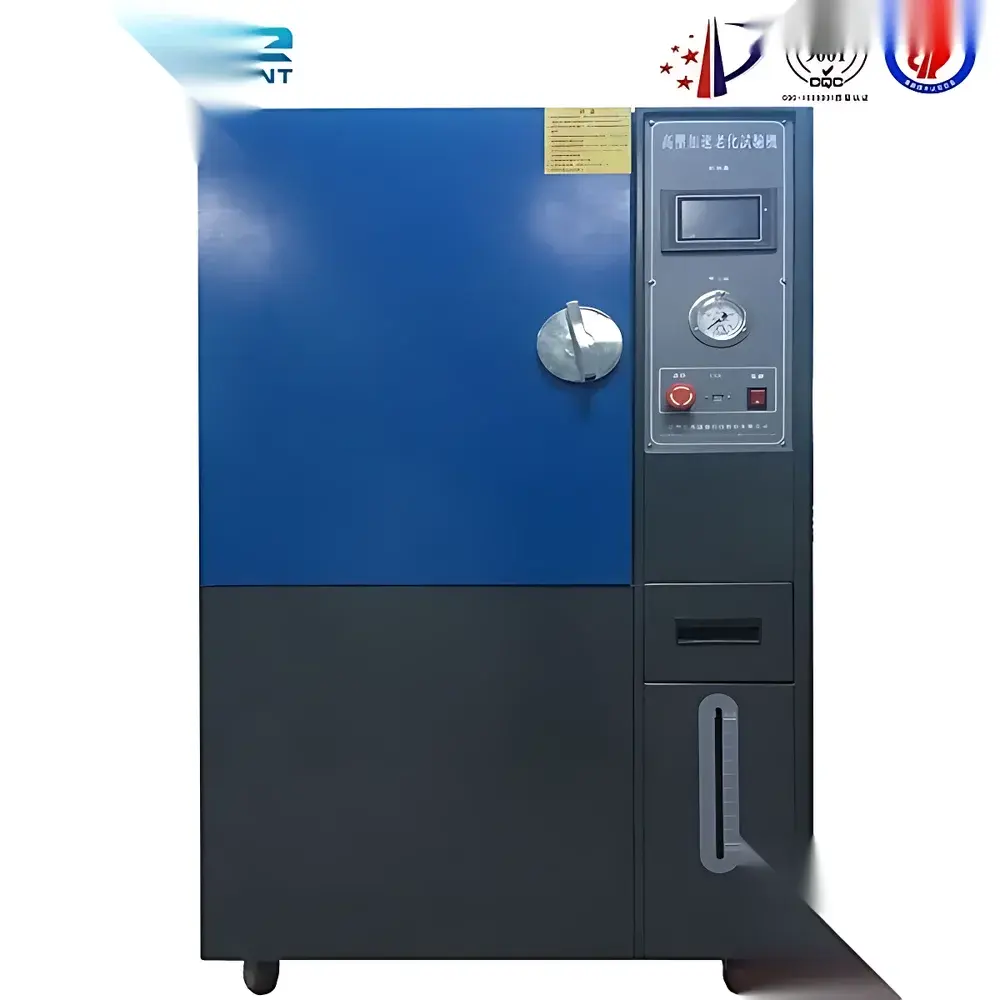
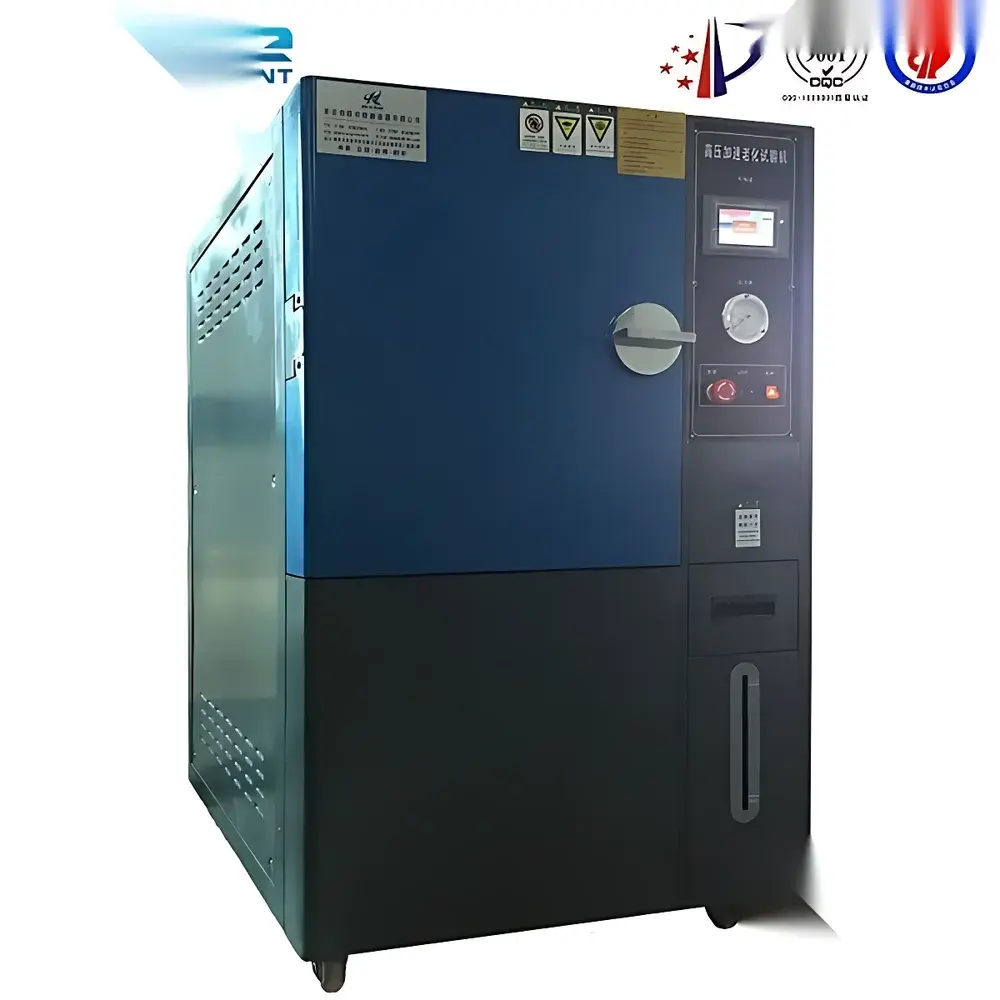
OK-PCT Series High-Pressure Saturated Steam Aging Test Chamber
| Brand | OK Instruments |
|---|---|
| Origin | Imported |
| Manufacturer Type | Authorized Distributor |
| Price | USD 4,100 (FOB) |
| Internal Dimensions (Φ×D, cm) | 30×45 |
| External Dimensions (W×H×D, cm) | 65×100×65 |
| Temperature Range | 121 °C, 132 °C (143 °C optional) |
| Humidity | 100 % RH (saturated steam) |
| Operating Pressure | 0.0–2.0 kgf/cm² (gauge), up to 3.0 kgf/cm² on special order |
| Temp. Uniformity | ≤ ±2 °C |
| Humidity Uniformity | ≤ ±3 % RH |
| Circulation Method | Natural convection of saturated steam |
| Safety Protections | Low-water cutoff, overpressure relief valve, overtemperature cutout, automatic/manual water replenishment, pressure-actuated safety interlock |
| Power Supply | AC 220 V ±5 %, 50 Hz ±0.5 Hz |
Overview
The OK-PCT Series High-Pressure Saturated Steam Aging Test Chamber is an engineered environmental stress test system designed for accelerated reliability evaluation under controlled high-pressure saturated steam conditions. Based on the fundamental principle of pressurized steam aging—where elevated temperature and humidity synergistically accelerate hydrolytic degradation, interfacial delamination, and corrosion mechanisms—the chamber replicates worst-case operational environments encountered by hermetically sealed electronic assemblies, multilayer PCBs, IC packages, LED modules, medical device housings, and automotive sensors. Unlike conventional thermal-humidity chambers, the OK-PCT operates strictly within the saturated steam region of the water phase diagram, ensuring 100 % RH at precisely defined temperature–pressure equilibrium points (e.g., 121 °C @ ~2.0 kgf/cm² gauge, per ASTM F1876 and JEDEC JESD22-A102D). Its cylindrical stainless-steel pressure vessel architecture complies with ASME BPVC Section VIII Div. 1 design criteria for low-pressure vessels, enabling repeatable, traceable, and auditable test cycles essential for qualification testing in aerospace (MIL-STD-883), automotive (AEC-Q200), and medical device (ISO 13485) development workflows.
Key Features
- Microprocessor-based PID temperature controller with digital LED display, maintaining setpoint accuracy within ±0.5 °C during steady-state saturation.
- Integrated pressure–temperature interlocked safety door mechanism: internal overpressure (>0.1 kgf/cm²) automatically engages mechanical latching; door release is inhibited until pressure returns to ambient.
- Cylindrical inner chamber and arc-shaped stainless-steel liner minimize thermal gradient asymmetry and prevent direct impingement of latent heat from condensing steam onto test specimens.
- Self-regulating water level management system with float-switch monitoring and automatic refill—designed for uninterrupted operation up to 200 hours per fill cycle.
- High-integrity silicone gasket seal (one-piece molded) rated for >10,000 thermal-pressure cycles with no measurable compression set or leakage at rated operating conditions.
- Dual analog pressure/temperature gauges plus digital LED readouts provide redundant verification of process parameters in real time.
- Condensate purge system continuously removes non-saturated vapor fractions, preserving steam quality and minimizing chamber wall condensation that could affect test uniformity.
Sample Compatibility & Compliance
The OK-PCT accommodates a broad range of sample geometries via two-tier stainless-steel adjustable shelves. Its uniform steam distribution supports concurrent testing of heterogeneous assemblies—including stacked PCBs, wire-bonded ICs, conformally coated connectors, and encapsulated optoelectronic modules—without shadowing or localized dry spots. The chamber meets functional requirements of multiple international standards: ASTM F1876 (Moisture Resistance of Plastic-Encapsulated Microcircuits), JEDEC JESD22-A102D (Pressure Cooker Test), MIL-STD-202G Method 108 (Humidity Resistance), and IEC 60068-2-66 (Test Db: Damp Heat, Steady State, High Pressure). All control logic and data logging functions are architected to support GLP/GMP-aligned validation protocols, including IQ/OQ documentation templates and audit-ready event logs.
Software & Data Management
While the base configuration utilizes embedded microcontroller logic for autonomous cycle execution, optional RS-485 Modbus RTU interface enables integration with laboratory-wide LIMS or MES platforms. All critical process events—including temperature ramp rates, pressure stabilization times, water level alerts, and safety interlock triggers—are timestamped and stored internally for ≥30 days. Optional PC-based software provides graphical trend analysis, export to CSV/PDF, and configurable alarm thresholds aligned with FDA 21 CFR Part 11 requirements (electronic signatures, audit trail, user access levels). No cloud connectivity is implemented by default; data residency remains fully on-premise unless explicitly configured by the end user.
Applications
This chamber serves as a primary tool in early-stage reliability screening and failure mode identification. It is routinely deployed for: moisture-induced bond wire lift-off in power modules; solder mask blistering on HDI substrates; delamination at die-attach interfaces in SiC MOSFET packages; hydrolytic degradation of polyimide flex circuits; and seal integrity validation of MEMS sensor cavities. In R&D labs, it shortens time-to-failure estimation by orders of magnitude compared to 85/85 testing—enabling rapid iteration of material selections, encapsulant formulations, and hermetic sealing processes prior to formal qualification runs.
FAQ
What pressure–temperature combinations are certified for standard operation?
Standard configurations are validated for 121 °C @ 2.0 kgf/cm² and 132 °C @ 3.0 kgf/cm² (optional); all calibrations are traceable to NIST-certified reference instruments.
Is the chamber suitable for testing lithium-ion battery cells?
No—this unit is not intrinsically safe for volatile electrochemical systems. It is intended exclusively for non-energy-storage electronic and polymer components.
Can test parameters be logged externally in real time?
Yes, via optional RS-485 Modbus interface with open protocol documentation provided for SCADA/LabVIEW integration.
Does the system include validation documentation for GxP environments?
IQ/OQ templates, calibration certificates, and materials of construction (316L SS, food-grade silicone) documentation are supplied with each unit.
What maintenance intervals are recommended?
Quarterly inspection of gasket integrity and pressure relief valve function; annual recalibration of temperature and pressure transducers by accredited third-party metrology lab.



