
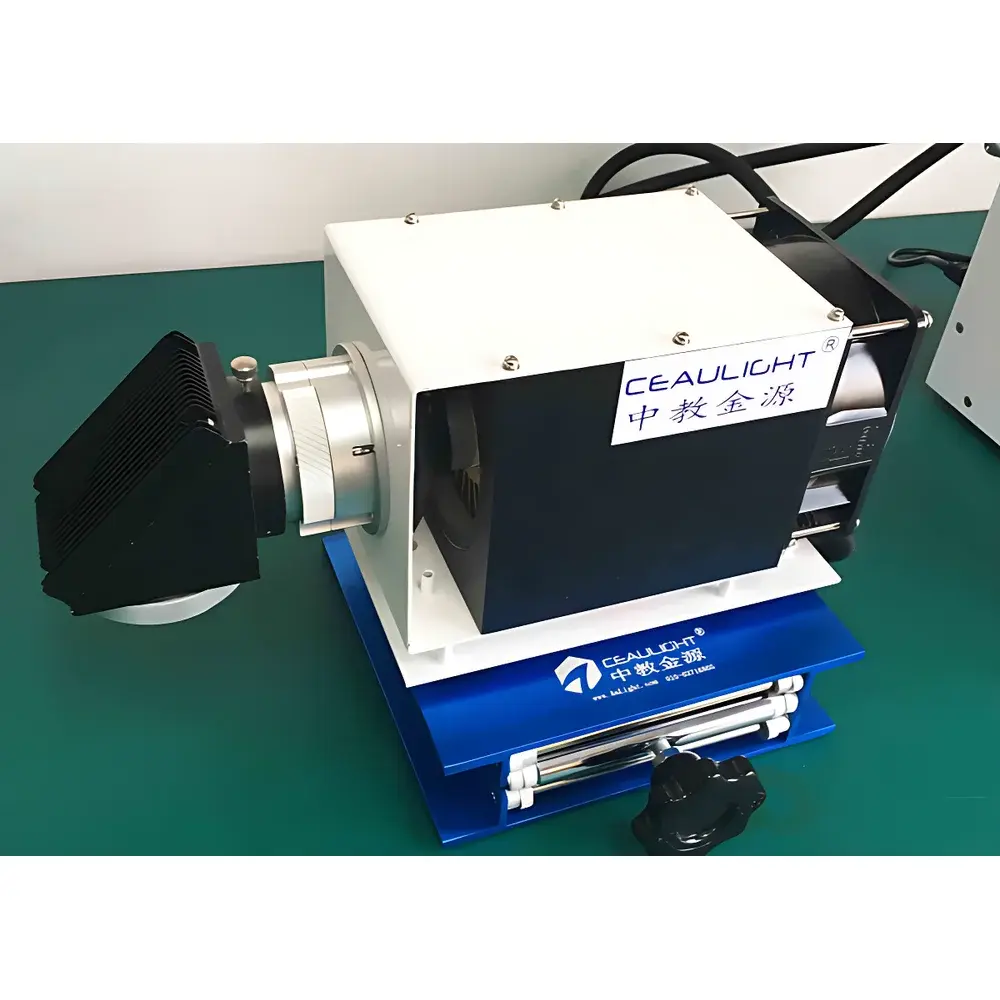
CEL-PE300L Uniform Illumination Xenon Light Source
| Brand | CEL (China Education Goldsource) |
|---|---|
| Origin | Beijing, China |
| Manufacturer Type | Direct Manufacturer |
| Product Category | Domestic |
| Model | CEL-PE300L |
| Light Source Type | Xenon Arc Lamp |
| Illumination Configuration | External Irradiation |
| Output Power Range | 0.1–5 Sun (10–500 mW/cm²) |
| Uniformity (measured with reference silicon cell) | <5% |
| Beam Shape | Hexagonal (optional square) |
| Beam Diameter | 30–80 mm (distance-dependent) |
| Power Stability | <0.05% (advanced version), <0.1% (standard) |
| Intensity Stability | <0.5% (advanced), <1% (standard) |
| Compatible Filter Mounts | M62, M52 threaded |
| Standard Filter | VISREF (300–1100 nm) |
| Lamp | 300 W ceramic xenon arc lamp (PerkinElmer OEM) |
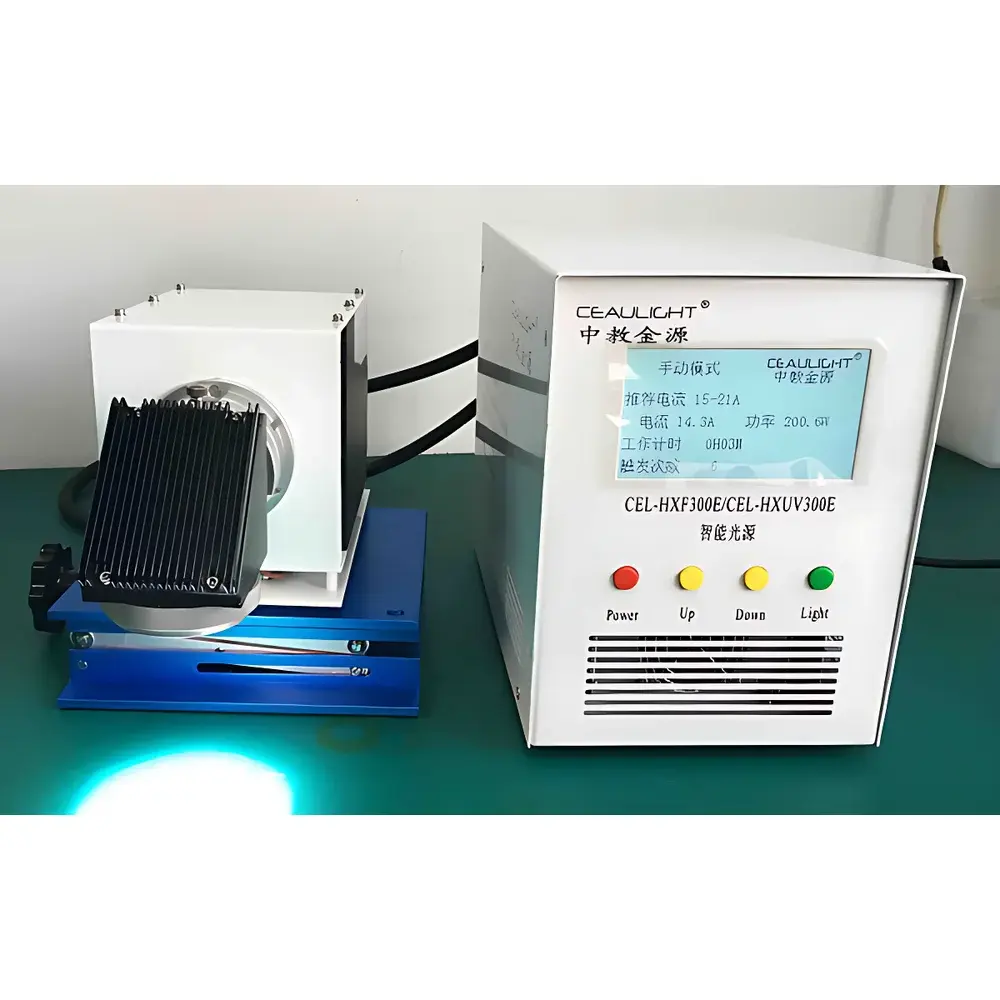
| Control Interface | PHCS300 dedicated software + 240×128 dpi LCD panel |
| Safety Features | Grounding protection, high-voltage interlock, thermal cutoff |
| Control Modes | Manual, Light-sensing, Auto, Intelligent, Programmed, Remote |
Overview
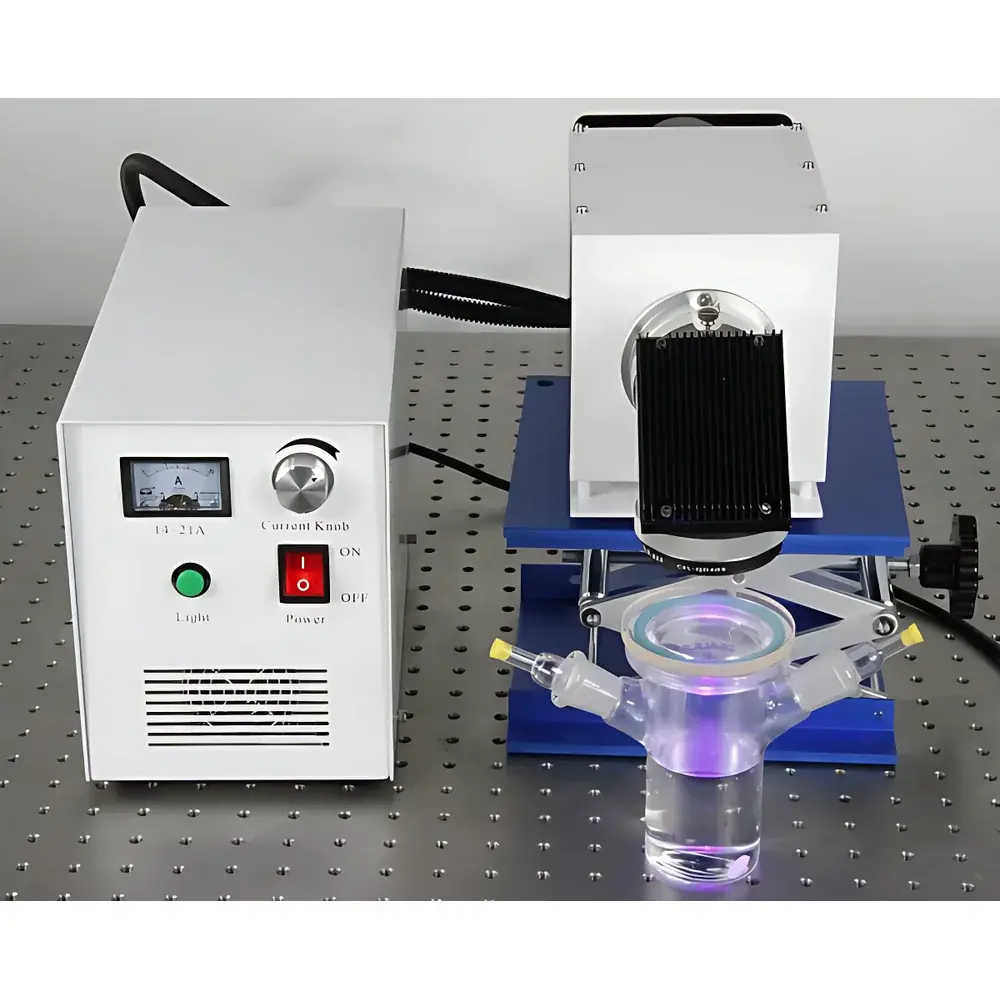
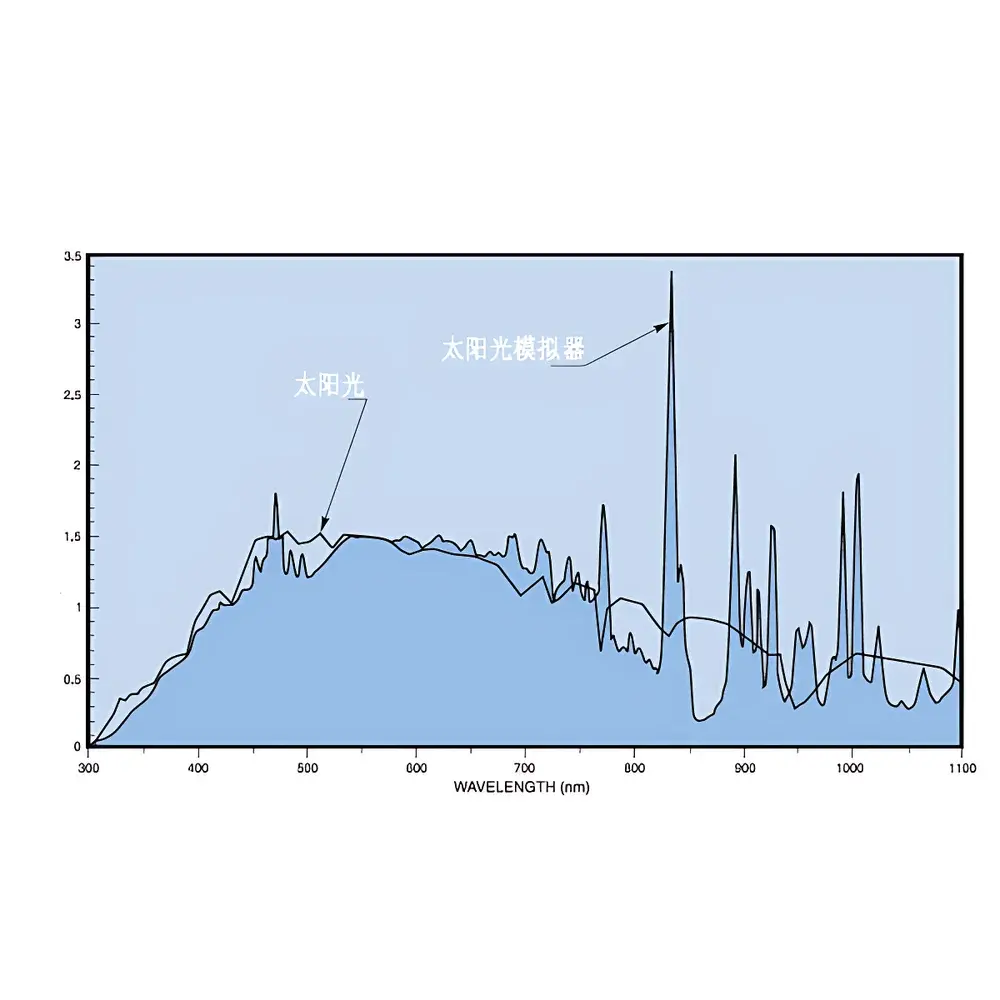
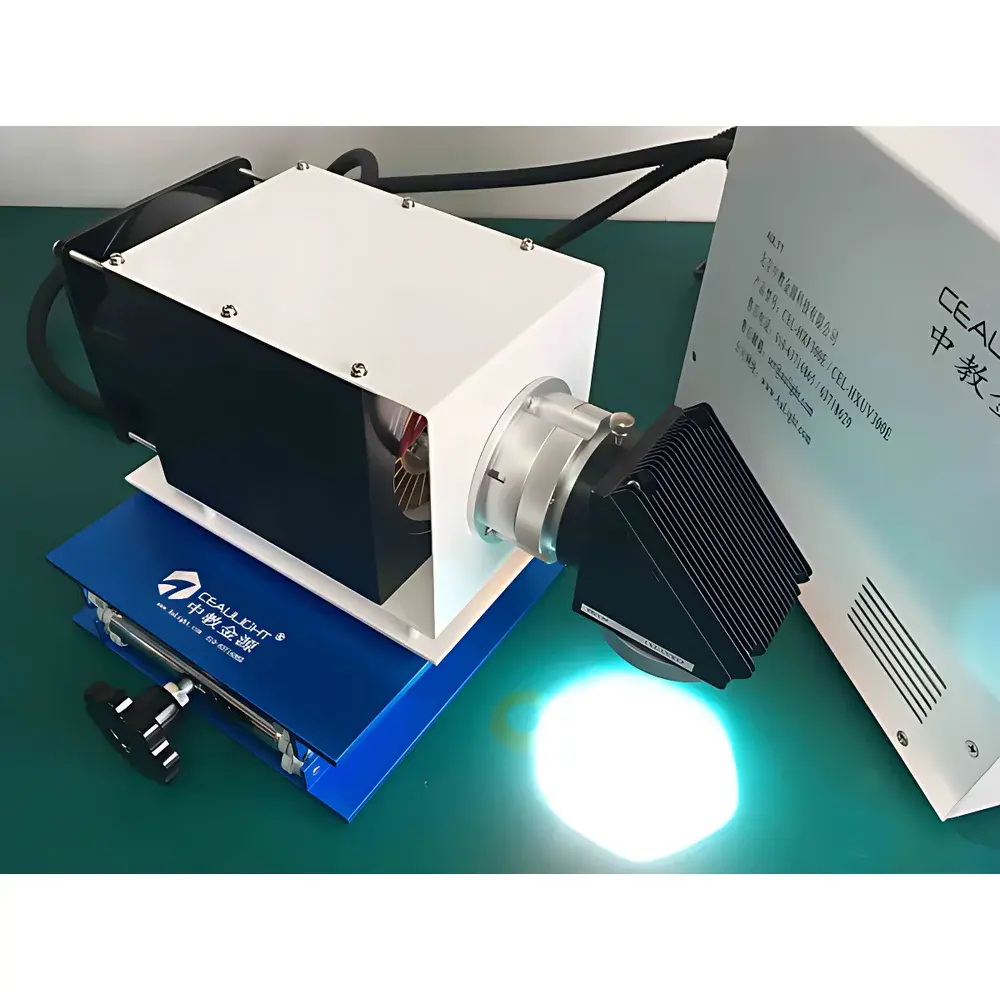
The CEL-PE300L Uniform Illumination Xenon Light Source is a precision-engineered optical instrument designed for laboratory-scale photoreactor systems, quantum efficiency measurements, and solar simulation applications requiring spectral fidelity and spatial uniformity. It employs a 300 W ceramic xenon arc lamp—sourced from PerkinElmer—to generate a continuous spectrum closely matching the ASTM G173-03 AM1.5G reference solar irradiance (300–1100 nm), achieving Class 3A solar simulator performance per IEC 60904-9:2020 and JIS C 8912 standards. Unlike conventional collimated or point-source xenon systems, the CEL-PE300L integrates a fly’s-eye lens array (also known as a homogenizing microlens array) to decouple beam divergence from intensity distribution, enabling highly uniform hexagonal illumination over defined target areas. This architecture ensures reproducible irradiance profiles critical for comparative photocatalytic kinetics, IPCE (Incident Photon-to-Current Efficiency) testing, and accelerated photobiological exposure studies.
Key Features
- Class 3A spectral match to AM1.5G solar irradiance (300–1100 nm), validated via calibrated spectroradiometry
- Fly’s-eye homogenizer delivering <5% spatial non-uniformity (per ISO 9050 and IEC 60904-9 Annex B) across hexagonal output field
- Continuously adjustable irradiance from 0.1 to 5 Sun (10–500 mW/cm²), traceable to NIST-traceable reference cells
- Dual-mode control: local 240×128 dpi monochrome LCD interface + PC-based PHCS300 software with real-time telemetry
- Multi-layer safety architecture: grounded chassis, high-voltage isolation relays, thermal shutdown, and lamp arc containment
- Programmable irradiance profiles—including diurnal cycle emulation—via time-stamped intensity ramps and step sequences
- Modular optical path: integrated M62/M52 filter threads and optional 50 mm × 50 mm planar filter stage for spectral shaping (e.g., UV cutoff, VIS pass, IR rejection)
- Real-time radiometric feedback loop compatible with NP2000-class optical power meters for closed-loop irradiance stabilization
Sample Compatibility & Compliance
The CEL-PE300L supports standard photovoltaic test geometries (e.g., 2 cm × 2 cm, 5 cm × 5 cm active areas) and accommodates common reactor configurations including top-irradiated slurry reactors, gas-phase flow cells, and thin-film electrochemical cells. Its output beam diameter (30–80 mm, adjustable via working distance) aligns with ISO 15387:2017 requirements for photocatalytic activity assessment. The system complies with IEC 61000-6-3 (EMC emission limits), IEC 61000-6-2 (immunity), and meets CE marking essential health and safety requirements. Optional AM1.5G filter sets enable full compliance with ASTM E927-22 for terrestrial solar simulator classification. All firmware and software logging functions adhere to ALCOA+ principles for data integrity in GLP-regulated environments.
Software & Data Management
The PHCS300 control suite provides deterministic, timestamped operation logging with audit trail functionality compliant with FDA 21 CFR Part 11 (electronic records and signatures). Users configure irradiance schedules, define multi-stage protocols (e.g., dark/light cycles, ramped intensity), and export CSV-formatted datasets containing lamp voltage/current, thermistor readings, and external sensor inputs (e.g., NP2000 irradiance values). Software supports TCP/IP and RS232 communication for integration into automated lab networks. Firmware updates are digitally signed and verified at boot; all operational parameters are stored in non-volatile memory with write-protection enabled by default.
Applications
- Quantitative photocatalytic degradation kinetics (e.g., methylene blue, phenol, NOₓ removal) under standardized solar-simulated conditions
- External quantum efficiency (EQE) and incident photon-to-current conversion efficiency (IPCE) mapping of perovskite, dye-sensitized, and organic photovoltaics
- Photoelectrochemical water splitting studies using three-electrode configurations with controlled irradiance onset/offset
- Photostability testing of polymers, pigments, and pharmaceuticals per ISO 4892-2 (xenon-arc exposure)
- Plant photomorphogenesis and circadian rhythm assays requiring programmable spectral-temporal irradiance profiles
- Calibration and validation of reference solar cells, pyranometers, and photodiode-based dosimeters
FAQ
What spectral range does the CEL-PE300L cover without filters?
The unfiltered output spans 200–2500 nm, with peak irradiance between 400–700 nm; effective usable range for solar simulation is 300–1100 nm when paired with the standard VISREF filter.
Can the system maintain stable irradiance during extended operation (e.g., 8+ hours)?
Yes—power stability is <0.05% RMS over 8 h (advanced version) and <0.1% RMS (standard), achieved via active current regulation and thermal management of the lamp envelope and reflector assembly.
Is remote operation supported via Ethernet or USB?
Yes—PHCS300 supports TCP/IP (LAN) and USB virtual COM port interfaces; scripts can be executed via Python or LabVIEW using documented ASCII command protocol.
How is beam uniformity verified and certified?
Uniformity is measured using a calibrated silicon reference cell scanned across the beam plane at 1 mm increments; raw data and certification report are provided with each unit.
Are replacement lamps supplied with spectral calibration certificates?
All PerkinElmer 300 W ceramic xenon lamps are factory-tested and supplied with individual spectral irradiance curves (350–1100 nm, 1 nm resolution) referenced to NIST SRM 2241.




