
CEL-LS50 Automatic Motorized Optical Shutter
| Brand | CEAULIGHT (Zhongjiaojinyuan) |
|---|---|
| Origin | Beijing, China |
| Manufacturer | CEAULIGHT Co., Ltd. |
| Type | CEL-LS50 |
| Category | Optical Instrument Component – Light Source Control Module |
| Compatible Light Sources | CEL-S500, CEL-S150, CEL-HXF300, CEL-HXUV300 Xenon Arc Lamps |
| Housing Material | Anodized Aluminum Alloy |
| Surface Finish | Matte Black Anti-Scatter Coating |
| Shutter Aperture Diameter | 50 mm |
| Host Dimensions | 246 × 100 × 55 mm |
| Control Box Dimensions | 200 × 140 × 45 mm |
| Thickness (Optical Path) | 35 mm |
| Timing Resolution | 0.01 s |
| Time Range (Auto Mode) | 0–999.9 min |
| Cycle Count Range | 1–999 cycles |
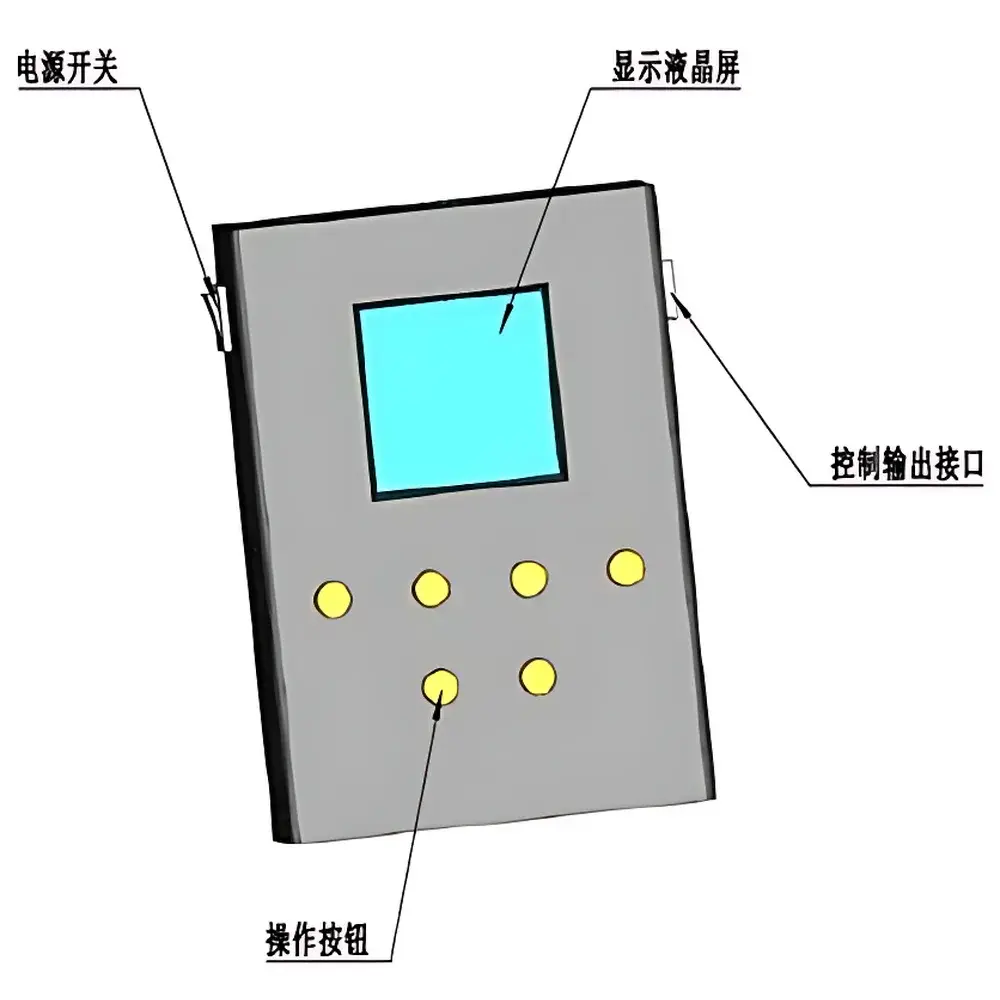
| Control Interface | Manual Keypad + LCD Display + RS232/USB PC Communication |
| Operating Modes | Manual, Cyclic Timed, PC-Hosted Remote Control |
| Cooling | Integrated Low-Noise DC Fan |
| Electrical Isolation | Opto-isolated Trigger Input (Optional) |
Overview
The CEL-LS50 Automatic Motorized Optical Shutter is an engineered optical control component designed specifically for precision irradiance modulation in solar simulation and photochemical experimentation. Unlike generic shutter mechanisms adapted from industrial or imaging applications, the CEL-LS50 integrates mechanical, thermal, and electronic design parameters to meet the stringent operational requirements of high-intensity xenon arc light sources—particularly those used in ASTM E927-compliant solar simulators and photocatalytic reactor systems. Its core function is to provide non-invasive, repeatable, and electrically isolated interruption of the optical beam path without modulating the lamp power supply. This preserves lamp stability, extends electrode and envelope lifetime, and eliminates voltage transients associated with frequent AC mains switching—a critical consideration for maintaining spectral fidelity and radiometric repeatability across long-duration exposure protocols.
Key Features
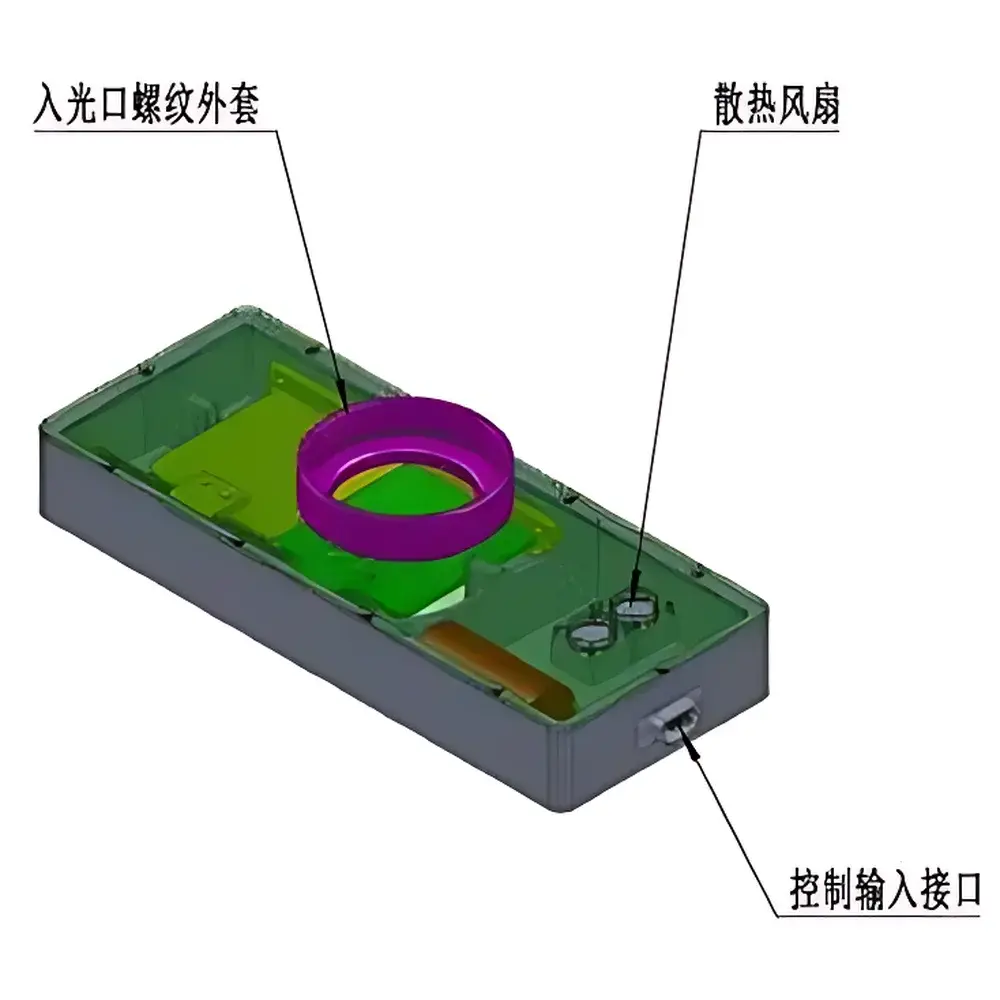
- 50 mm clear aperture with threaded M62×1.0 outer collar—mechanically and optically aligned to match CEAULIGHT’s standard xenon source output ports (CEL-S150/S500/HXF300/HXUV300), ensuring zero-light-leak integration.
- Ultra-low optical insertion loss: only 35 mm total thickness in the beam path minimizes vignetting and maintains collimation integrity for downstream optics and integrating spheres.
- Matte black anodized aluminum housing with optimized internal baffling suppresses stray light, reducing scatter-induced measurement uncertainty in quantum yield and action spectrum studies.
- Monolithic CNC-machined chassis with integrated thermal management—low-RPM DC cooling fan maintains junction temperatures below 55 °C during continuous cyclic operation (>10⁵ actuation cycles verified).
- Dual-unit architecture separates high-voltage motor driver electronics (host unit) from user interface and timing logic (control box), enabling safe remote placement up to 3 m from heat-generating light sources.
- Embedded 8-bit microcontroller with real-time clock supports three deterministic operating modes: manual toggle, programmable cyclic timing (on/off duration + repetition count), and external command via ASCII protocol over RS232 or USB virtual COM port.
- Backlit monochrome LCD with menu-driven navigation displays elapsed time, remaining cycles, and current mode status—no software installation required for basic operation.
Sample Compatibility & Compliance
The CEL-LS50 is validated for use with CEAULIGHT’s full line of Class AAA solar simulators and broadband xenon sources operating at DC-stabilized or high-frequency AC ballasted conditions (up to 300 W–500 W). It complies with IEC 60825-1:2014 (Laser Products — Safety Requirements) for Class 1 optical enclosure integrity when installed per manufacturer instructions. While not a standalone safety device, its mechanical shutter function contributes to ALARA (As Low As Reasonably Achievable) exposure control in UV–VIS–NIR photobiological testing. The unit meets RoHS 2011/65/EU directive for hazardous substances and carries CE marking under the EMC Directive 2014/30/EU (EN 61326-1:2013).
Software & Data Management
A Windows-compatible PC application (CEAULIGHT ShutterControl v2.1) provides GUI-based scheduling, scriptable sequence generation, and timestamped log export (.csv). The software supports synchronization with external triggers (TTL input) and enables integration into LabVIEW, MATLAB, or Python-controlled experimental workflows via serial API documentation (available upon request). All timing events—including manual actuations—are recorded with millisecond-resolution timestamps and stored in non-volatile memory, satisfying GLP audit trail requirements for regulated photoreactor validation (e.g., ISO 17025 accredited labs).
Applications
- Time-resolved photocatalysis kinetics (e.g., TiO₂ degradation studies under pulsed illumination)
- Photovoltaic quantum efficiency mapping with controlled photon flux duty cycling
- Accelerated aging tests requiring intermittent UV exposure per ISO 4892-2
- Calibration of radiometers and spectroradiometers using reference-grade shuttered sources
- In-situ spectroelectrochemical measurements where light gating prevents detector saturation
- Multi-wavelength action spectrum acquisition with synchronized lamp/shutter sequencing
FAQ
What is the maximum recommended duty cycle for continuous operation?
The CEL-LS50 is rated for ≤50% duty cycle (e.g., 10 s ON / 10 s OFF) at ambient temperatures ≤30 °C. Extended 100% ON operation beyond 30 minutes requires active airflow across the host unit.
Can the shutter be triggered externally by a TTL signal?
Yes—an optional TTL-triggered interface module (part no. LS50-TTL) provides opto-isolated 3.3 V/5 V compatible input with configurable polarity and debounce filtering.
Is firmware upgrade supported in the field?
Firmware updates are performed via UART bootloader using CEAULIGHT-provided utility; version history and release notes are published on the official support portal.
Does the unit include calibration documentation traceable to NIST standards?
No intrinsic calibration is required—the shutter functions as a binary optical gate. However, timing accuracy (±0.01 s) is factory verified against GPS-synchronized oscilloscope measurements and documented in the Certificate of Conformance shipped with each unit.




