
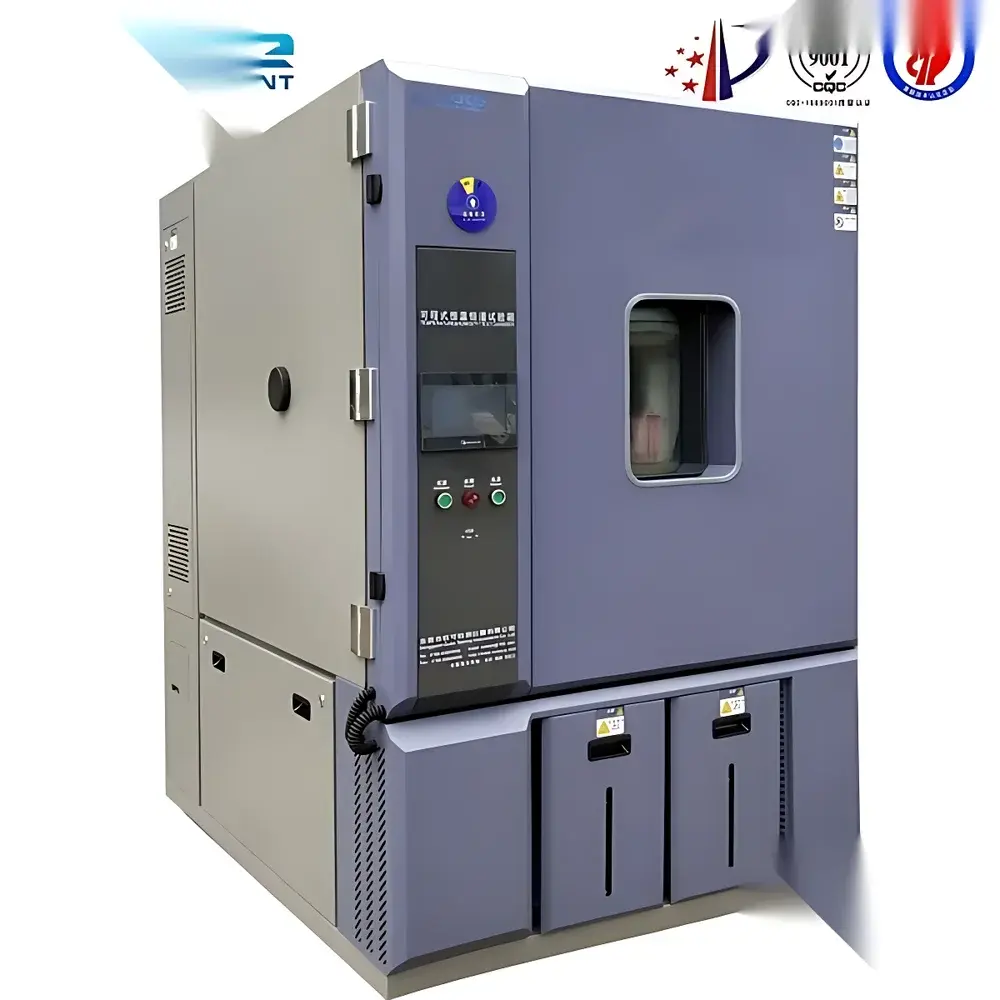
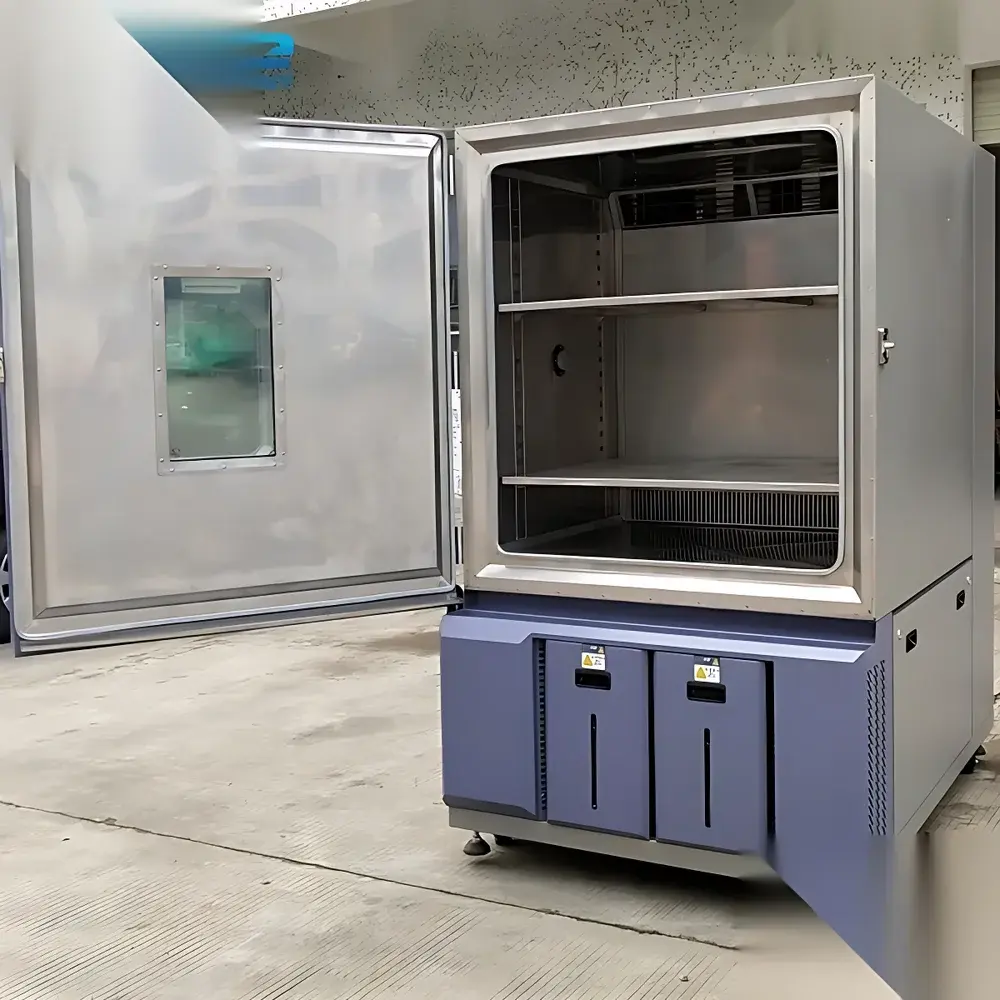
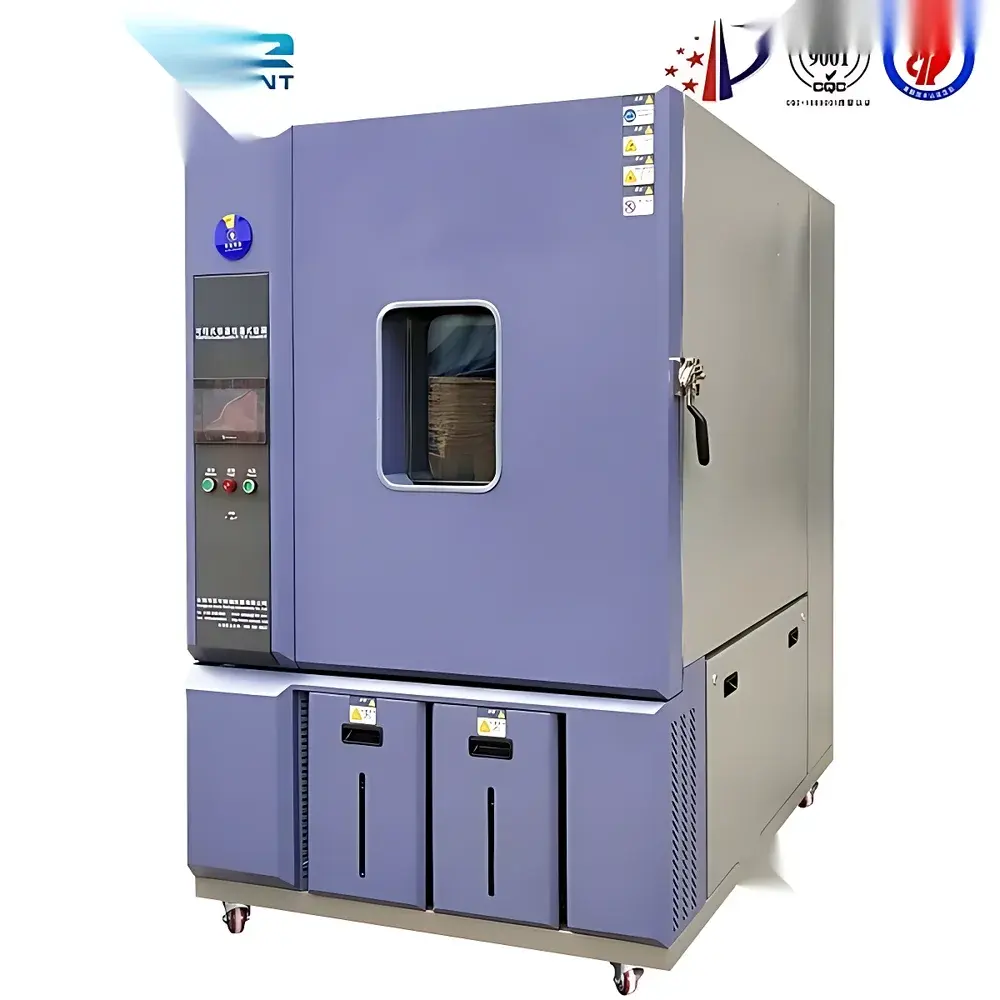
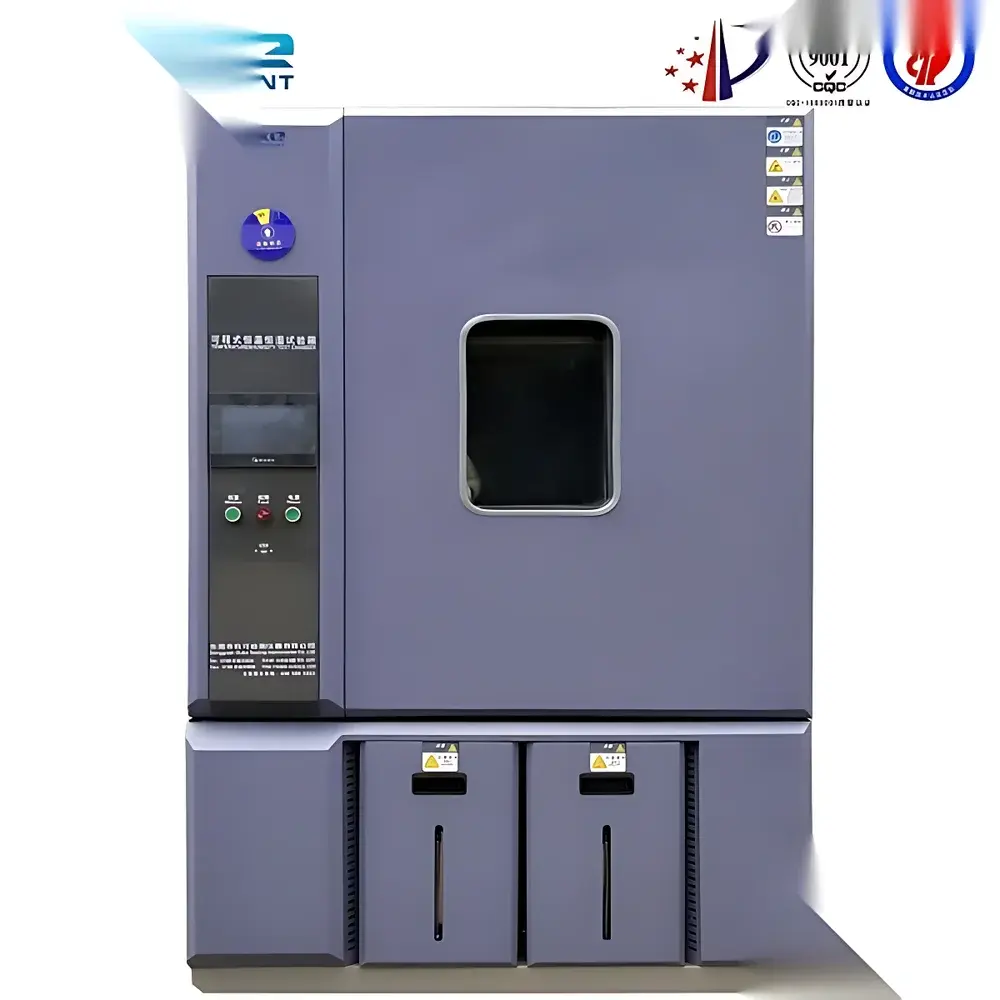
Environmental Test Chamber – Temperature and Humidity Controlled Chamber (Generic Industrial Grade)
| Brand | Other Brands |
|---|---|
| Origin | Imported |
| Manufacturer Type | Authorized Distributor |
| Price | USD 2,650 (approx. ¥19,000) |
| Compliance | GB/T 2423.1–2023, GB/T 2423.2–2023, IEC 60068-2-1, IEC 60068-2-2, GJB 1032A–2021, MIL-STD-2164A |
| Control System | PID-based Balanced Temperature & Humidity Control (BTHC) |
| Safety Protections | Dry-run protection for humidifier, independent over-temperature cutoff, low-water level interlock, compressor overload/overheat/overcurrent protection, high-pressure refrigerant switch, circuit breaker, earth-leakage circuit interrupter (ELCI) |
| Operating Ambient | 25°C ± 6°C, no-load condition |
| Cooling Water Requirement | 10–28°C, 0.1–0.3 MPa |
| Structural Design | Full-arc exterior, flat non-reactive door handle, customizable external dimensions |
Overview
The Environmental Test Chamber – Temperature and Humidity Controlled Chamber is an industrial-grade climatic simulation system engineered to replicate precise, stable, and programmable temperature and humidity conditions for reliability validation, environmental stress screening (ESS), and product qualification testing. It operates on the principle of balanced thermal and moisture exchange—leveraging a dual-loop PID-controlled heating/humidification system and a capillary-tube-based refrigeration circuit—to maintain setpoint accuracy and minimize thermal inertia. Unlike single-stress chambers, this unit simultaneously controls both dry-bulb temperature (−40°C to +150°C typical range) and relative humidity (20% to 98% RH), enabling compliance-driven test profiles per international standards including IEC 60068, MIL-STD-2164A, and GJB 1032A. Its architecture integrates mechanical refrigeration with electric resistance heating and ultrasonic or steam-based humidification, ensuring uniform chamber-wide distribution via forced-air circulation with turbulence-minimized airflow design.
Key Features
- Full-arc ergonomic enclosure with high-gloss finish and non-reactive planar door handle—designed for cleanroom compatibility and operator safety.
- Advanced touch-screen controller with intuitive HMI interface, supporting multi-segment ramp-soak profiles, real-time trend logging, and USB data export.
- Balance Temperature & Humidity Control (BTHC) architecture: dynamically matches heating/humidification output to thermal and latent load losses using SSR-driven PID modulation—enabling long-duration stability (< ±0.5°C / ±2% RH over 24 h).
- Capillary tube expansion system (replacing traditional thermostatic expansion valves) ensures consistent refrigerant flow, improved low-temperature response, and reduced maintenance frequency.
- Comprehensive safety suite: independent over-temperature cutout (hardware-based), humidifier dry-run prevention, low-water-level sensor interlock, compressor thermal/current overload protection, high-pressure refrigerant switch, ELCI, and molded-circuit overcurrent breakers.
- Modular structural design allows customization of external footprint and internal volume—including optional access ports, viewing windows, and cable feedthroughs—to accommodate prototype-level DUT integration.
Sample Compatibility & Compliance
This chamber accommodates a broad spectrum of physical samples—from PCB assemblies and automotive ECUs to medical device housings and polymer packaging—provided dimensional and thermal mass constraints align with chamber capacity. All performance specifications (e.g., temperature ramp rates, humidity recovery time, uniformity tolerances) are validated under no-load, ambient-conditioned environments (25°C ± 6°C) per GB/T 2423.1–2023 Annex A and IEC 60068-2-1 Clause 5. Load-dependent deviations are explicitly documented in user manuals and must be accounted for during test plan development. The system meets functional requirements for environmental stress screening (ESS) as defined in MIL-STD-2164A and GJB 1032A, including rapid thermal transition protocols and humidity dwell cycles intended to precipitate latent defects in electronic solder joints, conformal coatings, and adhesive bonds. Calibration traceability follows ISO/IEC 17025 guidelines when performed by accredited service providers.
Software & Data Management
The embedded controller firmware supports audit-ready data integrity: all setpoints, actual readings, alarm events, and manual interventions are timestamped and stored locally with configurable retention (≥30 days). Optional Ethernet or RS-485 interfaces enable integration into centralized lab management systems (LIMS) or MES platforms. For regulated environments, optional 21 CFR Part 11-compliant software modules provide electronic signatures, role-based access control, and immutable audit trails—fully compatible with GLP and GMP documentation workflows. Raw CSV exports include column headers compliant with ASTM E29–23 formatting conventions for third-party statistical analysis (e.g., Weibull, Cp/Cpk).
Applications
- Environmental stress screening (ESS) of avionics and military-grade electronics per MIL-STD-2164A.
- Accelerated aging of polymeric materials and sealants under combined thermal-humidity cycling (ISO 11358, ASTM D3045).
- Stability testing of Class II medical devices under IEC 60601-1 Clause 11 environmental conditions.
- Qualification of battery enclosures and BMS modules across extended temperature-humidity envelopes (UN 38.3, GB/T 31467.3).
- Validation of packaging integrity for pharmaceutical primary containers (USP , ISO 11607-1).
- Thermal shock pre-conditioning prior to HALT/HASS routines.
FAQ
What is the typical temperature and humidity range for this chamber?
Standard configuration supports −40°C to +150°C and 20–98% RH; extended ranges available upon request with modified refrigeration or humidification subsystems.
Are ramp rates specified per standard or per load condition?
Published ramp rates (e.g., 3°C/min) reflect air temperature change under no-load, ambient reference conditions per GB/T 2423.1–2023 Annex B. Actual DUT-influenced rates require empirical characterization during qualification runs.
Does the chamber support remote monitoring and control?
Yes—via optional TCP/IP interface with Modbus TCP or HTTP API endpoints; integration with SCADA or LabVIEW requires vendor-provided driver libraries.
Is calibration certification included with delivery?
Factory calibration report (traceable to NIM or equivalent national metrology institute) is provided. ISO/IEC 17025-accredited field calibration is available as a separate service.
Can the chamber be configured for continuous operation under GMP conditions?
Yes—when equipped with 21 CFR Part 11 software, UPS-backed power supply, and scheduled preventive maintenance logs, it satisfies Annex 11 and EU GMP Chapter 4 requirements for automated equipment.



