
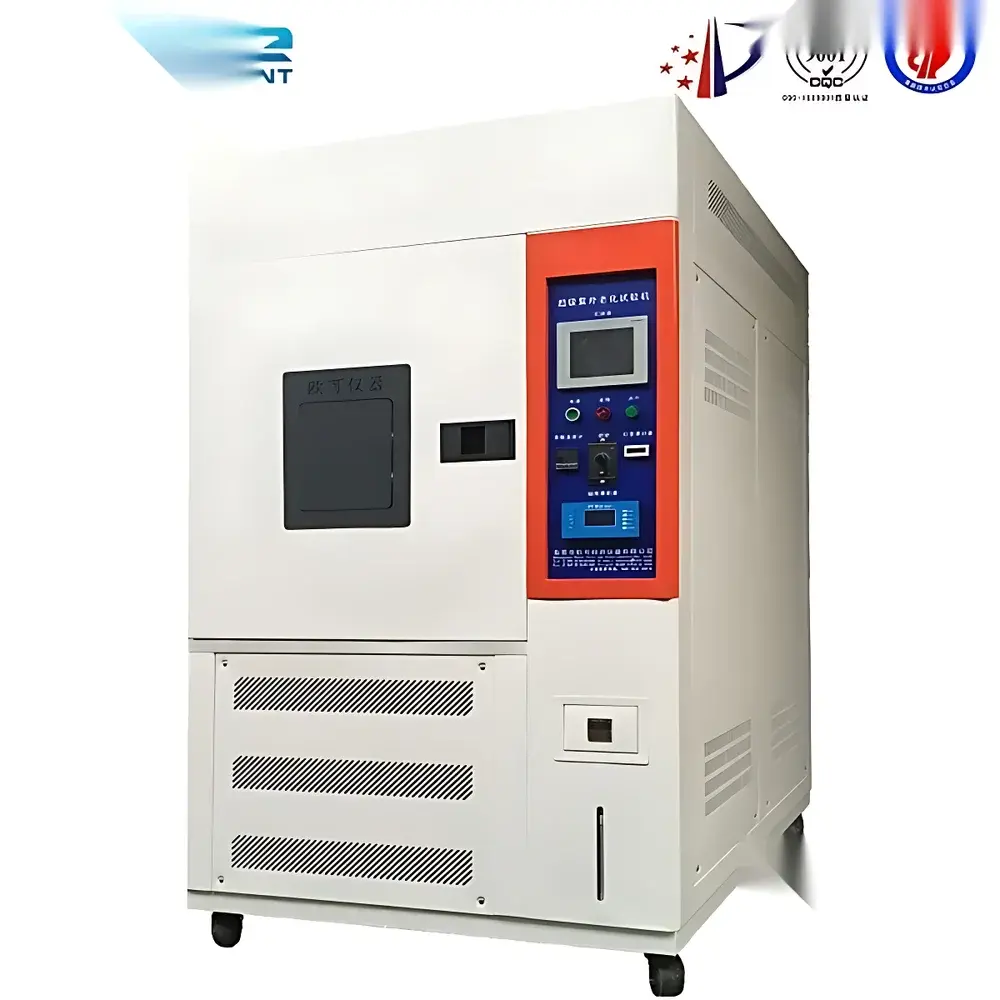
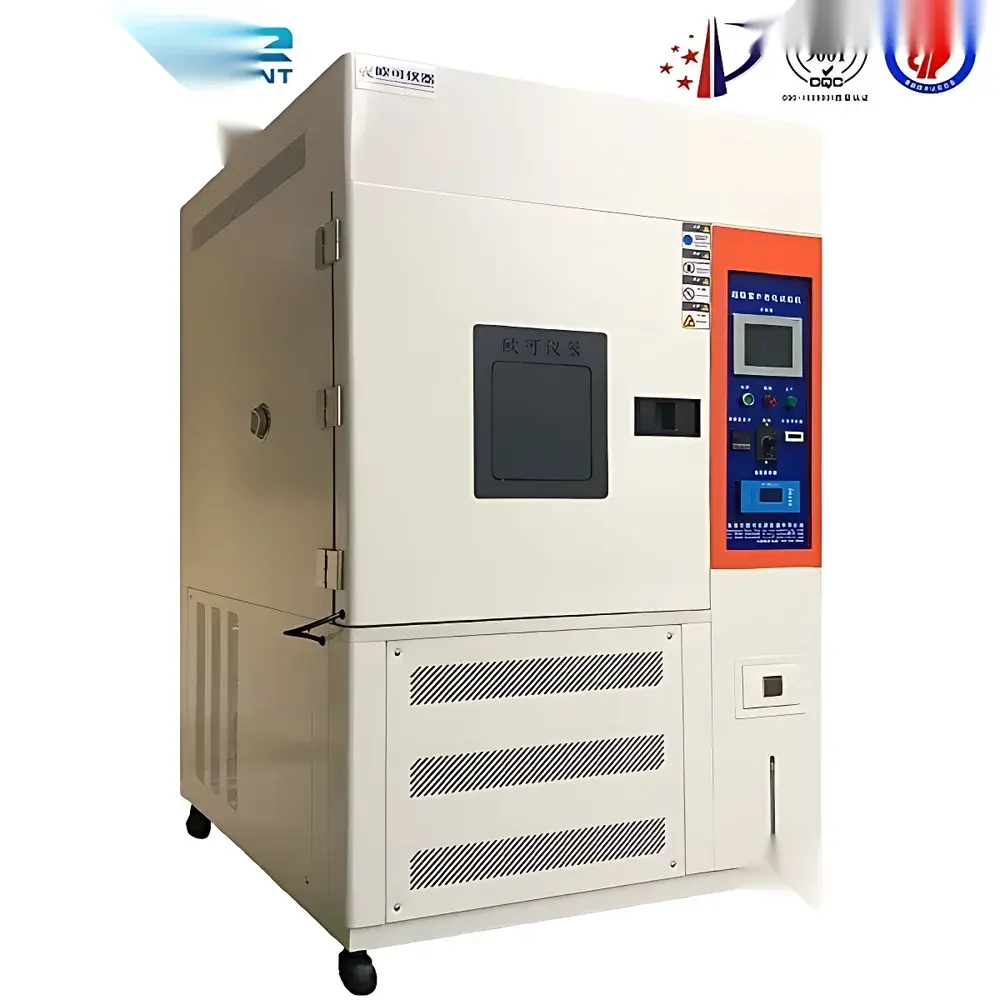
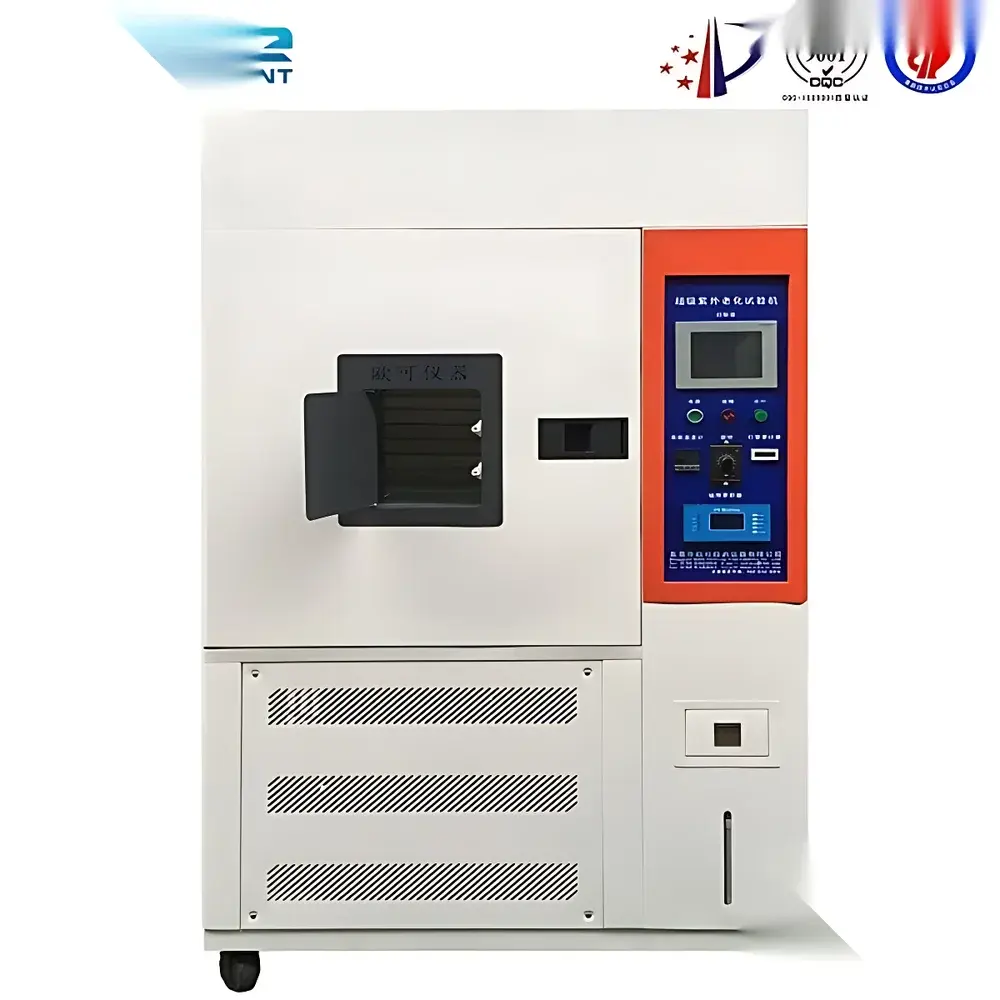
UV Accelerated Weathering Test Chamber with Metal Halide Lamp
| Key | Brand: Other Brands |
|---|---|
| Origin | Imported |
| Manufacturer Type | Authorized Distributor |
| Temperature Range | RT to 85 °C (operational test range: 50 ±10 °C) |
| Humidity Range | 40–70 % RH during irradiation |
| Temperature Control Accuracy | ±0.5 °C |
| Humidity Control Accuracy | ±2.0 % RH |
| Temperature Uniformity | ±2.0 °C |
| Humidity Uniformity | ±3.0 % RH |
| Heating Rate | ≤25 min (RT → 85 °C) |
| Light Source | 2.5 kW air-cooled metal halide lamp (1 unit) |
| Sample Tray Dimensions | 500 × 400 mm |
| Irradiation Geometry | Top-mounted lamp with reflective direct irradiation |
| Spectral Range | 295–450 nm |
| Irradiance Level | 200 ±8 W/m² |
| UV Uniformity | ≥90 % across sample plane |
Overview
The UV Accelerated Weathering Test Chamber with Metal Halide Lamp is an engineered environmental simulation system designed to replicate and accelerate the photochemical, thermal, and hygrothermal degradation mechanisms experienced by polymeric, coated, and composite materials under real-world outdoor exposure. Unlike fluorescent UV lamps limited to narrow spectral bands, this chamber employs a high-intensity air-cooled metal halide lamp emitting a broad continuum from 295 nm to 450 nm — closely matching the solar ultraviolet and visible spectrum filtered through 3 mm of atmospheric glass (ASTM G155 Annex A2). The system integrates precise temperature control (RT to 85 °C), programmable humidity cycling (40–90 % RH), and optional water spray or condensation phases to emulate diurnal weathering stressors including thermal expansion, moisture ingress, hydrolysis, and photolysis. It is widely deployed in R&D laboratories, quality assurance departments, and certification bodies for predictive durability assessment prior to field deployment.
Key Features
- High-fidelity spectral match: 295–450 nm output with optical filtering ensures irradiance distribution aligned with terrestrial solar radiation behind standard glazing — enabling correlation with outdoor exposure data per ISO 4892-2 and ASTM G155.
- Precision climate control: Dual PID-controlled heating and humidification systems maintain ±0.5 °C temperature accuracy and ±2.0 % RH accuracy across the test volume, critical for reproducible degradation kinetics.
- Uniform irradiation field: Reflective top-mounted lamp geometry delivers ≥90 % irradiance uniformity over the 500 × 400 mm sample plane — minimizing positional bias and supporting multi-sample comparative studies.
- Configurable exposure profiles: Programmable test sequences support alternating irradiation/humidity/condensation/spray cycles — simulating rain-wash, dew formation, and thermal shock as defined in ISO 11341 and SAE J2527.
- Robust chamber architecture: Stainless steel interior, insulated double-wall construction, and corrosion-resistant components ensure long-term stability and compliance with IEC 60068-2 environmental testing standards.
Sample Compatibility & Compliance
This chamber accommodates flat-panel specimens up to 500 × 400 mm and thicknesses compatible with standard mounting fixtures. It supports rigid and semi-flexible substrates including automotive coatings, architectural sealants, aerospace composites, packaging films, and photovoltaic encapsulants. All operational parameters adhere to international test method requirements for accelerated weathering: ASTM G155 (Cycle A, B, C), ISO 4892-2 (Method A), and GB/T 16422.2. Data traceability meets GLP-compliant audit requirements when integrated with validated software platforms supporting 21 CFR Part 11 electronic signatures and audit trails.
Software & Data Management
The chamber interfaces with industry-standard environmental test software (e.g., WinTest or custom SCADA-based platforms) for full-cycle programming, real-time monitoring, and automated data logging. Logged parameters include chamber temperature, relative humidity, irradiance (via calibrated UV sensor), elapsed time, and cycle phase status. Export formats include CSV and XML for integration into LIMS or statistical analysis tools (e.g., JMP, Minitab). Optional Ethernet/IP or Modbus TCP connectivity enables centralized fleet management in multi-chamber laboratories.
Applications
- Automotive OEMs evaluating paint chip resistance, headlamp lens yellowing, and interior trim fading per GMW 14124 and Ford CETP 00.00-L-467.
- Coatings manufacturers validating UV resistance of acrylic, polyurethane, and fluoropolymer topcoats per ISO 11341 and ASTM D4329.
- Photovoltaic module producers conducting IEC 61215-2 MQT10 UV preconditioning and adhesion testing of EVA encapsulants.
- Medical device packaging labs assessing print legibility, seal integrity, and polymer embrittlement under accelerated aging per ISO 11607-1.
- Academic research on polymer photo-oxidation kinetics, antioxidant depletion profiling, and nanocomposite UV stabilization efficacy.
FAQ
What standards does this chamber support for UV exposure testing?
It complies with ASTM G155, ISO 4892-2, ISO 11341, and SAE J2527 for xenon-arc and metal halide-based accelerated weathering protocols.
Can the irradiance level be calibrated and verified?
Yes — the system accepts NIST-traceable UV radiometers (e.g., Eppley TUVR or Kipp & Zonen UVS-E-T) for periodic irradiance calibration and mapping per ASTM E927.
Is condensation simulation available without water spray?
Yes — the chamber supports standalone humidity-driven condensation cycles via controlled cooling of the chamber walls, independent of spray functionality.
What maintenance intervals are recommended for the metal halide lamp?
Lamp life is rated at ≥1,500 hours under continuous operation; replacement is advised after 1,200 hours or upon measurable irradiance drift exceeding ±5 % of setpoint.
Does the chamber meet electrical safety and EMC requirements for laboratory use?
It conforms to IEC 61000-6-3 (EMI) and IEC 61010-1 (safety), with CE marking and UL recognition available upon configuration verification.



