
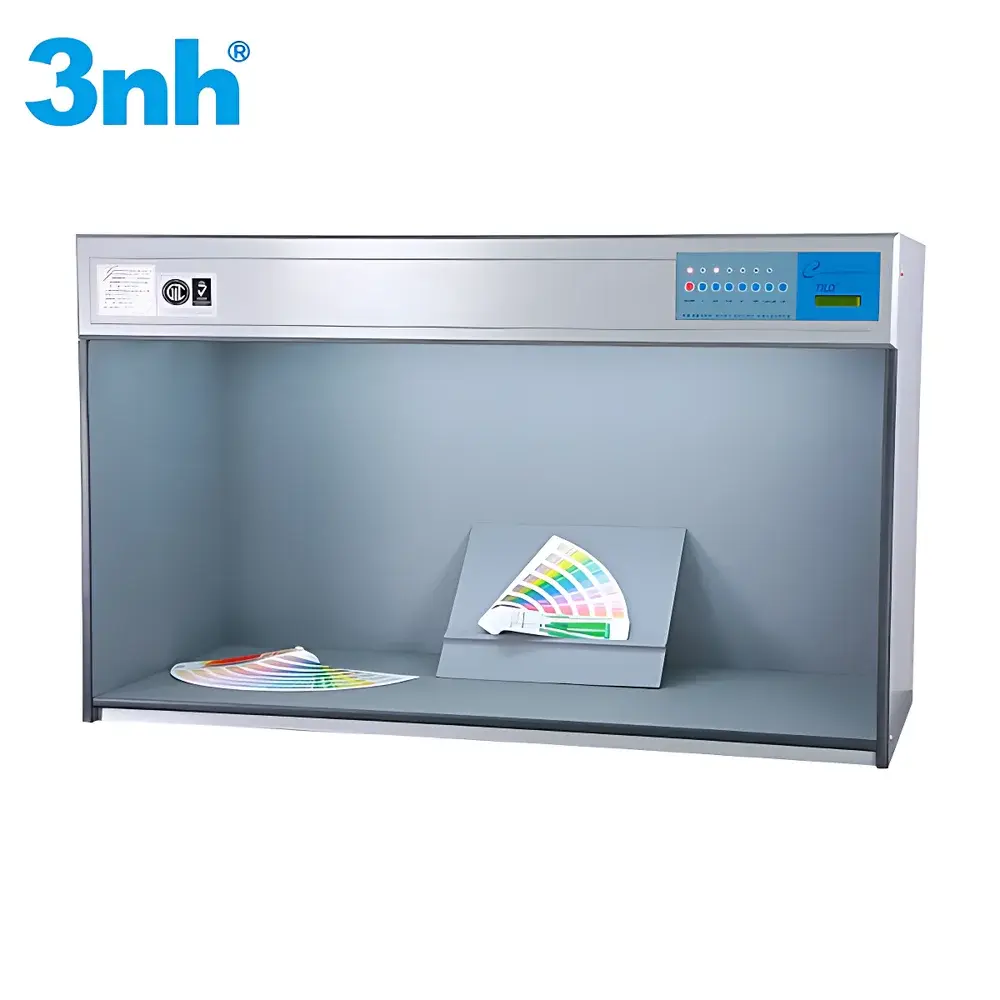
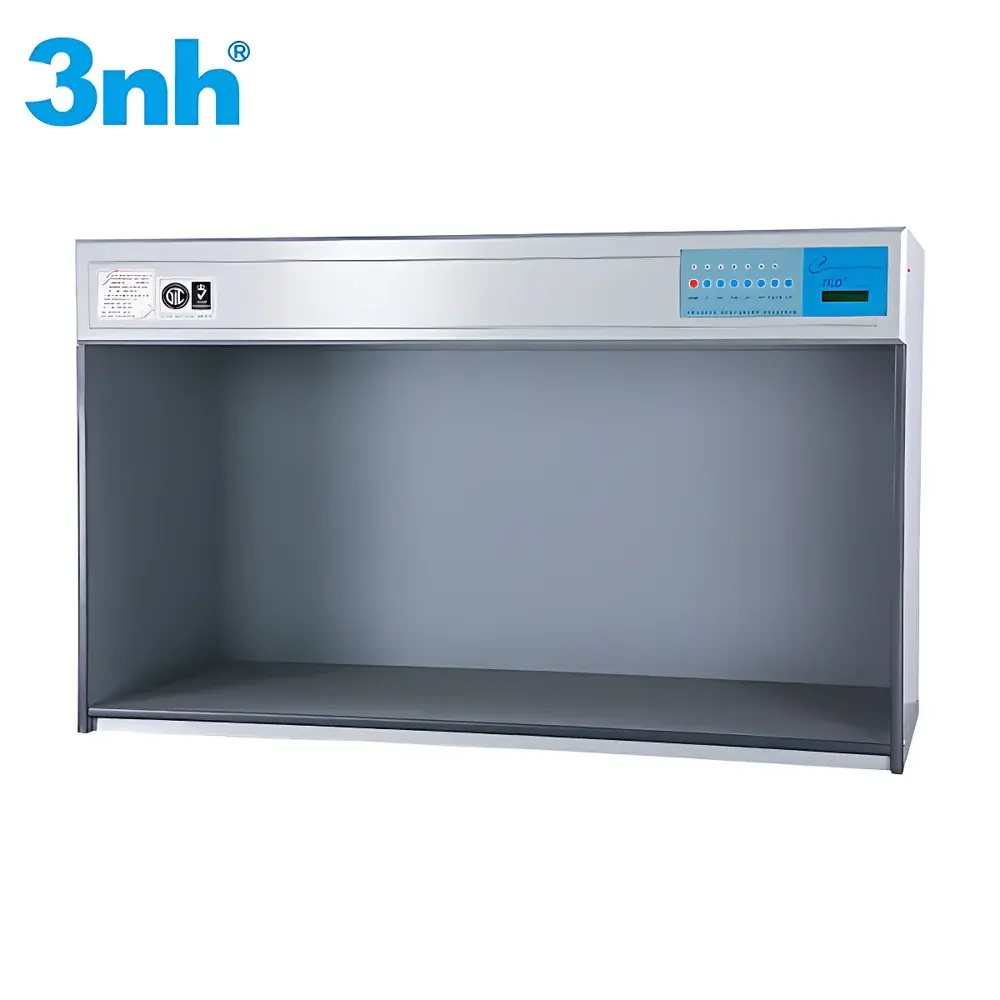
TILO P120 Extra-Large Standard Light Source Color Matching Cabinet
| Brand | TILO |
|---|---|
| Model | P120 |
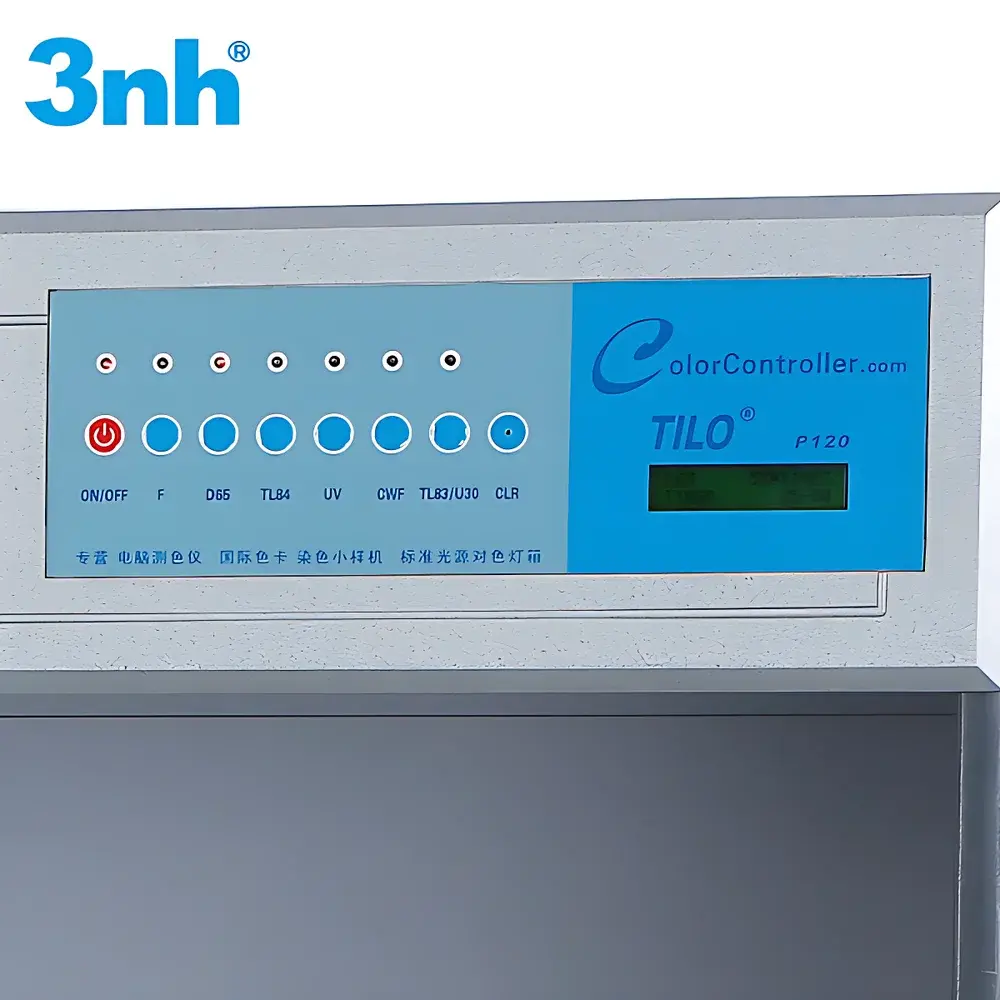
| Light Sources | D65, TL84, CWF, F, UV, TL83 |
| Net Internal Dimensions | 1286 × 591 × 590 mm |
| External Dimensions | 1318 × 622 × 802 mm |
| Weight | 60 kg |
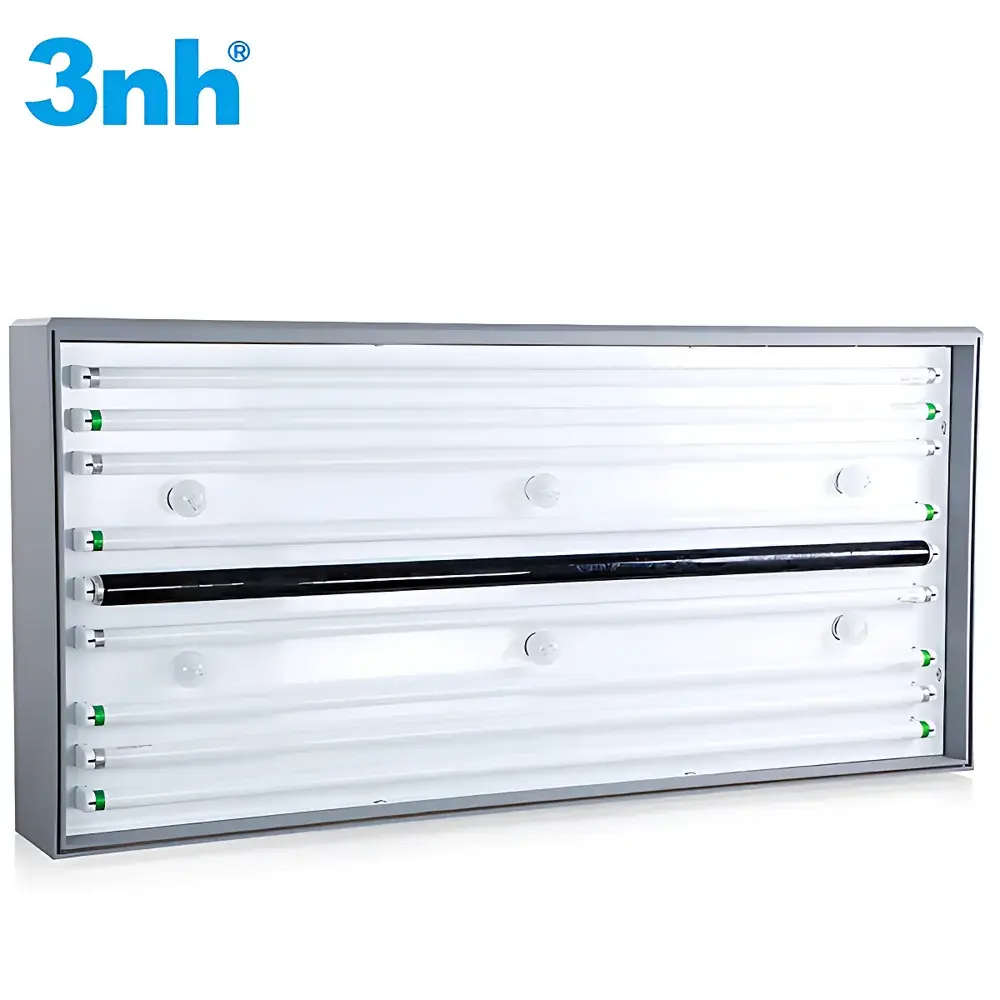
| Power Efficiency | High-efficiency LED light sources, no preheating required, minimal thermal output |
| Control Interface | Digital source selection with usage logging (source name, cumulative operating time, switch count) |
| Compliance | Designed to support visual color assessment per ISO 3664:2009, ASTM D1729, and ISO 9001-compliant quality workflows |
Overview
The TILO P120 Extra-Large Standard Light Source Color Matching Cabinet is an industrial-grade color evaluation system engineered for precision, repeatability, and ergonomic usability in large-sample applications. It operates on the principle of controlled spectral illumination—delivering standardized, spectrally stable light sources that replicate key daylight, commercial fluorescent, and ultraviolet conditions essential for objective color judgment. Unlike legacy tungsten-halogen or fluorescent-based cabinets, the P120 employs calibrated, high-CRI LED modules with narrow spectral bandwidths and negligible thermal drift, eliminating warm-up delays, flicker, and heat-induced sample distortion. Its extra-large internal cavity (1286 × 591 × 590 mm) accommodates oversized substrates—including automotive panels, architectural tiles, textile rolls, and printed packaging—without compromising uniformity of illumination across the viewing field. The cabinet conforms to the geometric and photometric requirements outlined in ISO 3664:2009 for graphic technology and photography, ensuring metrological traceability in cross-site and cross-supplier color communication.
Key Features
- Simultaneous integration of six internationally recognized standard illuminants: D65 (daylight simulator), TL84 (retail store lighting), CWF (cool white fluorescent), F (incandescent/tungsten), UV (ultraviolet blacklight), and TL83 (warm white fluorescent)—all compliant with CIE S 005/E:2017 spectral definitions.
- Digital control panel with real-time logging of each light source’s cumulative operational hours, activation count, and user-assigned naming—supporting preventive maintenance scheduling and GLP-aligned audit trails.
- Instant-on LED architecture: zero warm-up time, no intensity fluctuation during operation, and <0.5% irradiance variation over 10,000 hours (per IEC 62471 photobiological safety classification).
- Thermally passive design: no active cooling fans or heatsinks required; surface temperature rise <3°C above ambient after continuous 8-hour operation—critical for heat-sensitive samples such as plastics, films, and coated papers.
- Modular light engine architecture: facilitates future firmware-upgradable source addition (e.g., A, D50, or customer-specified spectra) without hardware replacement.
- Matte-black interior finish (RAL 9005) with diffuser-lined walls to minimize specular reflection and ensure uniform luminance distribution (±5% spatial uniformity per ISO/CIE measurement protocols).
Sample Compatibility & Compliance
The P120 supports visual and instrumental color assessment of rigid, flexible, and textured materials up to 1250 mm in length. Its depth-adjustable viewing shelf and front-opening double-door configuration enable safe, vibration-free handling of fragile or dimensionally unstable specimens. All integrated light sources are certified to meet spectral power distribution (SPD) tolerances defined in ISO/CIE 11664-2:2019 and ASTM E308-22 for colorimetric calculations. The cabinet is routinely deployed in laboratories adhering to ISO/IEC 17025:2017 accreditation requirements, and its operational logs satisfy documentation needs for FDA 21 CFR Part 11 electronic records (when paired with validated external data capture systems). It is widely used in QC environments governed by AATCC Evaluation Procedure 1, ISO 105-J03, and GMW14872 for multi-light-source metamerism detection.
Software & Data Management
While the P120 operates as a standalone visual assessment station, its digital interface provides RS-232 and optional USB outputs for integration into enterprise quality management systems (QMS). Logged source usage data can be exported in CSV format for trend analysis—enabling correlation between lamp aging and inter-rater variability in color matching tasks. Firmware updates are delivered via secure OTA protocol, maintaining backward compatibility with existing calibration certificates. For labs requiring full digital workflow integration, TILO offers optional SDK documentation supporting custom API development for synchronization with spectrophotometer platforms (e.g., X-Rite Ci7800, Konica Minolta CM-3700A) and LIMS environments.
Applications
- Automotive OEM and Tier-1 suppliers performing paint, trim, and interior component color audits across D65, CWF, and TL84 conditions.
- Textile mills validating dye lot consistency under retail lighting (TL84) and daylight (D65) for global brand compliance (e.g., H&M, Inditex).
- Printing and packaging converters verifying spot color fidelity and substrate metamerism prior to press runs.
- Plastics compounders assessing batch-to-batch hue stability under UV exposure for outdoor durability certification.
- Academic and contract testing labs conducting inter-laboratory color reproducibility studies under ISO 554 and ISO 291 conditioning protocols.
FAQ
Does the P120 require annual recalibration?
No—LED spectral stability eliminates the need for periodic photometric recalibration; however, annual verification of illuminance uniformity and CCT deviation against NIST-traceable reference sensors is recommended for ISO/IEC 17025 compliance.
Can third-party light sources be installed?
Only TILO-certified LED modules may be installed; unauthorized substitutions void warranty and invalidate conformance to ISO 3664.
Is the cabinet suitable for use in cleanroom environments?
Yes—the fanless design and sealed electronics meet ISO 14644-1 Class 8 (100,000) particulate limits when operated outside laminar flow hoods.
What is the expected lifetime of the LED light engines?
Rated L90 > 25,000 hours at nominal drive current, with gradual lumen depreciation rather than catastrophic failure.
How is metamerism evaluated using this cabinet?
By sequentially illuminating the same sample under D65 and TL84 (or other paired sources) while maintaining identical observer position, distance, and background—enabling direct visual detection of perceptual mismatch per ASTM D1729 Section 6.2.



