
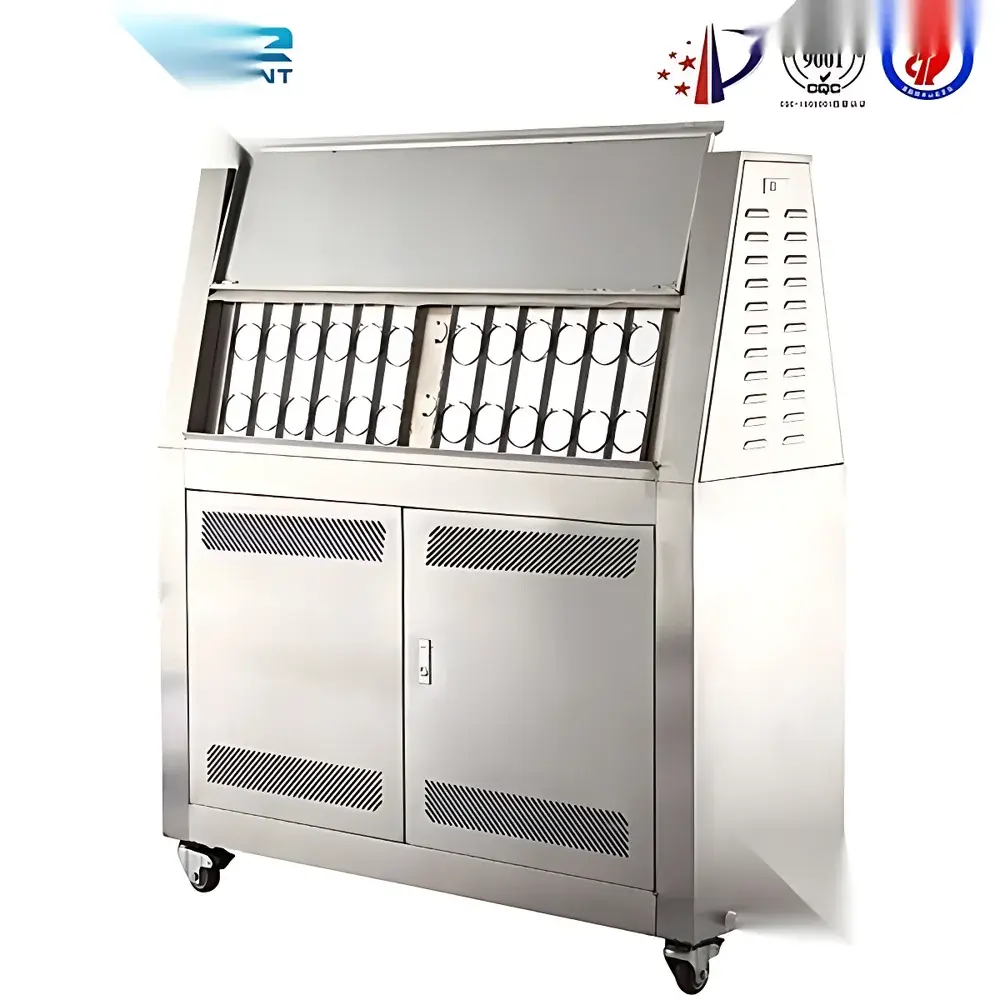
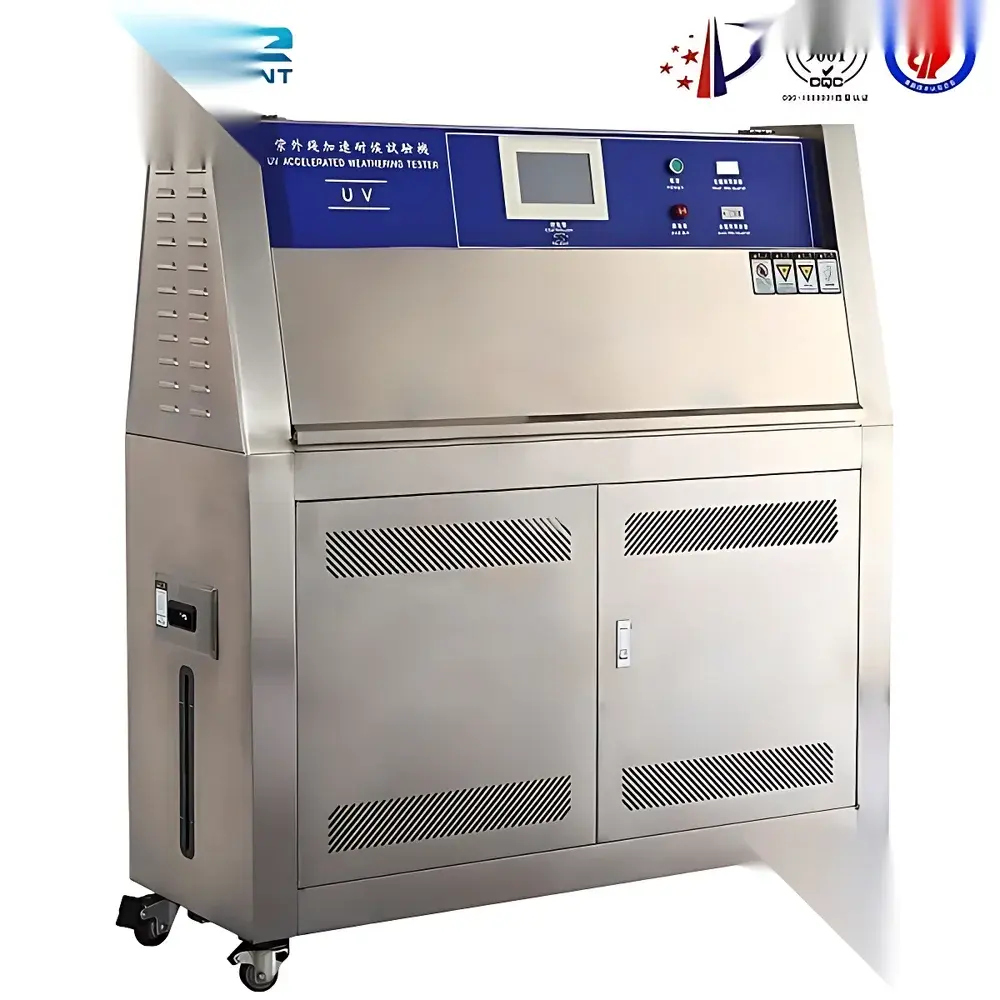
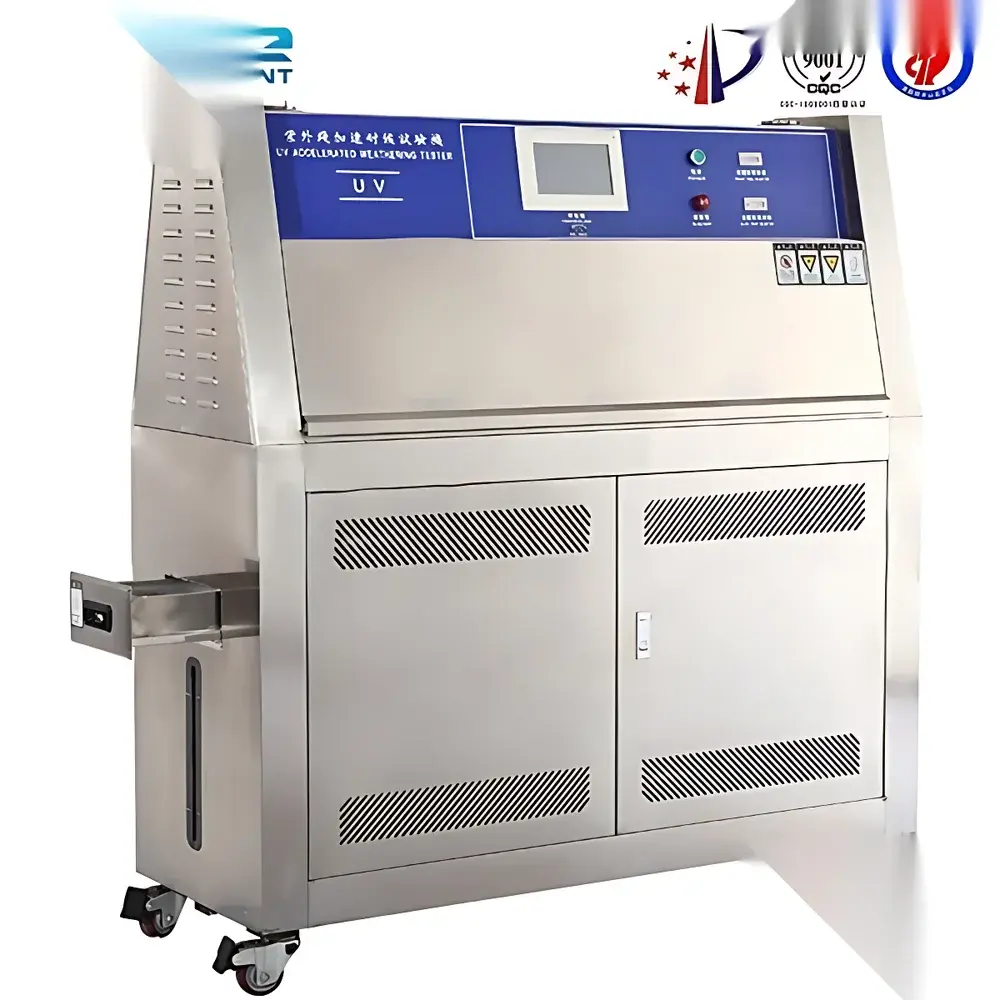
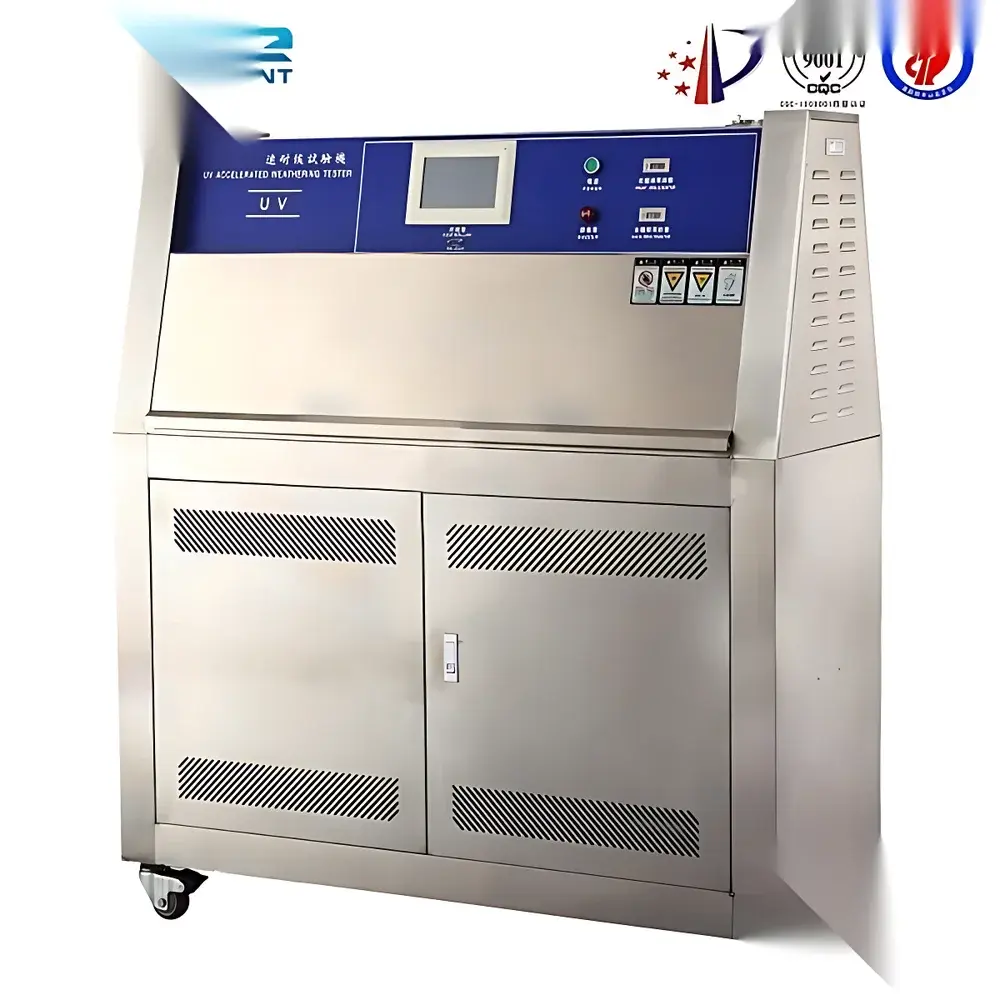
UV Accelerated Weathering Test Chamber
| Brand | Other Brands |
|---|---|
| Origin | Imported |
| Manufacturer Type | General Distributor |
| Price | USD 2,600 (Reference Only) |
| UV Source | Fluorescent UVA-340 / UVB-313 Lamps |
| Condensation Mechanism | Integrated Cold Condensation System |
| Temperature Range | 40–70 °C (Operational Control) |
| Humidity Control | Simulated Dew via Condensation |
| Spray Function | Optional Water Spray Nozzle Assembly |
| Compliance | Designed to meet ASTM G154, ISO 4892-3, and SAE J2020 test protocols |
Overview
The UV Accelerated Weathering Test Chamber is an engineered environmental simulation system designed to evaluate the degradation behavior of polymeric, coating, textile, automotive, and architectural materials under controlled ultraviolet radiation and moisture cycling. It operates on the fundamental principle of accelerated photodegradation—using fluorescent UV lamps (UVA-340 for near-sunlight spectral match or UVB-313 for aggressive, short-wavelength stress) to replicate the photochemical effects of solar UV exposure, while a built-in condensation cycle simulates nocturnal dew formation. Unlike broad-spectrum xenon arc testers, this chamber focuses specifically on UV-driven degradation mechanisms—including chain scission, oxidation, and chromophore breakdown—enabling rapid assessment of surface erosion, gloss loss, color shift, chalking, cracking, and embrittlement. Typical test durations range from 24 to 1,000 hours, compressing years of outdoor exposure into weeks of laboratory-controlled evaluation.
Key Features
- Programmable irradiance control with digital feedback loop to maintain stable UV intensity (typically 0.68–1.55 W/m² @ 340 nm, per ASTM G154 Cycle 1)
- Integrated condensation system utilizing temperature-controlled chamber walls to generate uniform dew-like moisture without external humidification
- Optional water spray module compliant with ASTM G154 Cycle 4, enabling thermal shock and surface washing simulation
- Dual-zone temperature regulation: black panel thermometer (BPT) and chamber air sensor for precise thermal profiling
- Stainless steel 304 interior chamber with quartz UV-transparent lamp housings and removable lamp trays for maintenance efficiency
- Touchscreen HMI with preloaded test standards (ASTM G154, ISO 4892-3, SAE J2020), user-defined cycle programming, and real-time data logging
- Over-temperature, over-irradiance, and low-water-level safety interlocks with audible/visual alarms
Sample Compatibility & Compliance
The chamber accommodates flat-panel specimens up to 150 mm × 300 mm (standard rack capacity: 48 samples at 12.7 mm thickness). Compatible substrates include thermoplastics (PP, ABS, PC), elastomers, paints, powder coatings, adhesives, roofing membranes, and exterior automotive trim. All operational parameters align with internationally recognized weathering standards: ASTM G154 (Standard Practice for Operating Fluorescent Ultraviolet (UV) Lamp Apparatus for Exposure of Non-Metallic Materials), ISO 4892-3 (Plastics — Methods of Exposure to Laboratory Light Sources — Part 3: Fluorescent UV Lamps), and SAE J2020 (Laboratory Weathering of Automotive Exterior Materials Using Fluorescent UV and Condensation). The system architecture supports GLP-compliant documentation when paired with validated software; audit trails, electronic signatures, and 21 CFR Part 11–compatible data export are achievable via optional firmware upgrade.
Software & Data Management
The embedded controller records irradiance (W/m²), chamber air temperature (°C), black panel temperature (°C), and cycle phase timing at 1-minute intervals. Raw data exports in CSV format for post-processing in Excel or statistical analysis platforms (e.g., JMP, Minitab). Optional PC-based software enables remote monitoring, multi-chamber fleet management, calibration certificate tracking, and automated report generation with pass/fail thresholds based on ΔE* color difference, gloss retention (%), or tensile strength decay. All stored data includes timestamp, operator ID, test ID, and version-stamped firmware metadata—ensuring traceability across QA/QC workflows.
Applications
This chamber serves as a core tool in R&D labs evaluating formulation stability of UV stabilizers (HALS, UV absorbers), quality assurance departments validating batch-to-batch consistency of exterior coatings, and regulatory compliance teams generating data for ISO 9001, IATF 16949, or UL 746C certification dossiers. It is routinely deployed in Tier-1 automotive suppliers for dashboard material validation, in paint manufacturers for weatherability benchmarking against competitors, and in solar panel encapsulant developers assessing EVA yellowing kinetics. Its reproducibility—supported by NIST-traceable lamp calibration services—makes it suitable for internal specification development and supplier qualification protocols.
FAQ
What UV lamp types are supported?
Standard configurations include UVA-340 (320–400 nm, peak at 340 nm) for realistic sunlight simulation and UVB-313 (280–360 nm, peak at 313 nm) for accelerated failure testing. Lamp replacement intervals are typically 1,600–2,000 hours.
Is humidity actively controlled or solely condensation-based?
Humidity is not regulated via vapor injection; instead, condensation is generated passively through differential cooling of the chamber walls relative to internal air—fully compliant with ASTM G154 Section 7.2.
Can the chamber operate unattended for extended cycles?
Yes—provided water reservoirs are filled, drain lines are clear, and ambient room temperature remains between 15–30 °C. Uninterrupted operation beyond 72 hours requires periodic visual inspection per facility safety policy.
Does the system meet FDA or pharmaceutical packaging validation requirements?
While not intended for sterile packaging validation, it supports ICH Q1B photostability testing when configured with UVB-313 lamps and calibrated radiometers—subject to lab-specific IQ/OQ/PQ protocol development.
How often should lamp output be recalibrated?
Radiometric calibration using a NIST-traceable UV radiometer is recommended every 500 operating hours or prior to critical qualification studies.



